
Una guía completa del comprador: Selección de proveedores de geonets de drenaje de alto rendimiento para aplicaciones geotécnicas
Introduction: The Critical Role of Drainage Geonets in Modern Infrastructure
Drainage geonets are essential geosynthetic materials designed for fluid management, soil stabilization, and erosion control in demanding civil and environmental engineering projects. Key applications include subgrade drainage, tunnel drainage, slope protection, and critical containment systems for landfills and mining tailings ponds. The selection of a reliable supplier is paramount, as product failure can lead to significant environmental risks, structural damage, and costly remediation. This guide provides a structured framework for procurement professionals to evaluate and select high-performance drainage geonet suppliers, focusing on technical specifications, manufacturing capabilities, and compliance credentials.
Core Evaluation Criteria for Drainage Geonet Suppliers
Procurement decisions should extend beyond initial price quotes. A comprehensive evaluation should encompass the following dimensions:
1. Technical Specifications & Product Range
Assess the supplier's ability to provide products tailored to specific project needs. Key product classifications include:
- Composite Drainage Geonet: Integrates geotextile filter layers.
- Acid and Alkali Resistant Geonet: For chemically aggressive environments like mining.
- High Compressive Resistance Geonet: For deep burial or heavy load applications.
- 3D Composite Drainage Geonet: Provides enhanced in-plane flow capacity.
- Material Options: HDPE, PP, or PET-based nets for different durability and chemical resistance profiles.
For example, a supplier like Haoyang Environment Co., Ltd. offers a drainage geonet product line with customizable thickness (4.0mm–8.0mm), unit area mass (500–1400g/m²), and drainage capacity (≥50-120 (L/min)/m). The product is intended for use in the metal smelting and aquaculture industries, operating under demanding 24/7 conditions to prevent liquid leakage.
2. Manufacturing Scale & Quality Assurance
Production capacity and quality control systems are indicators of reliability and consistency.
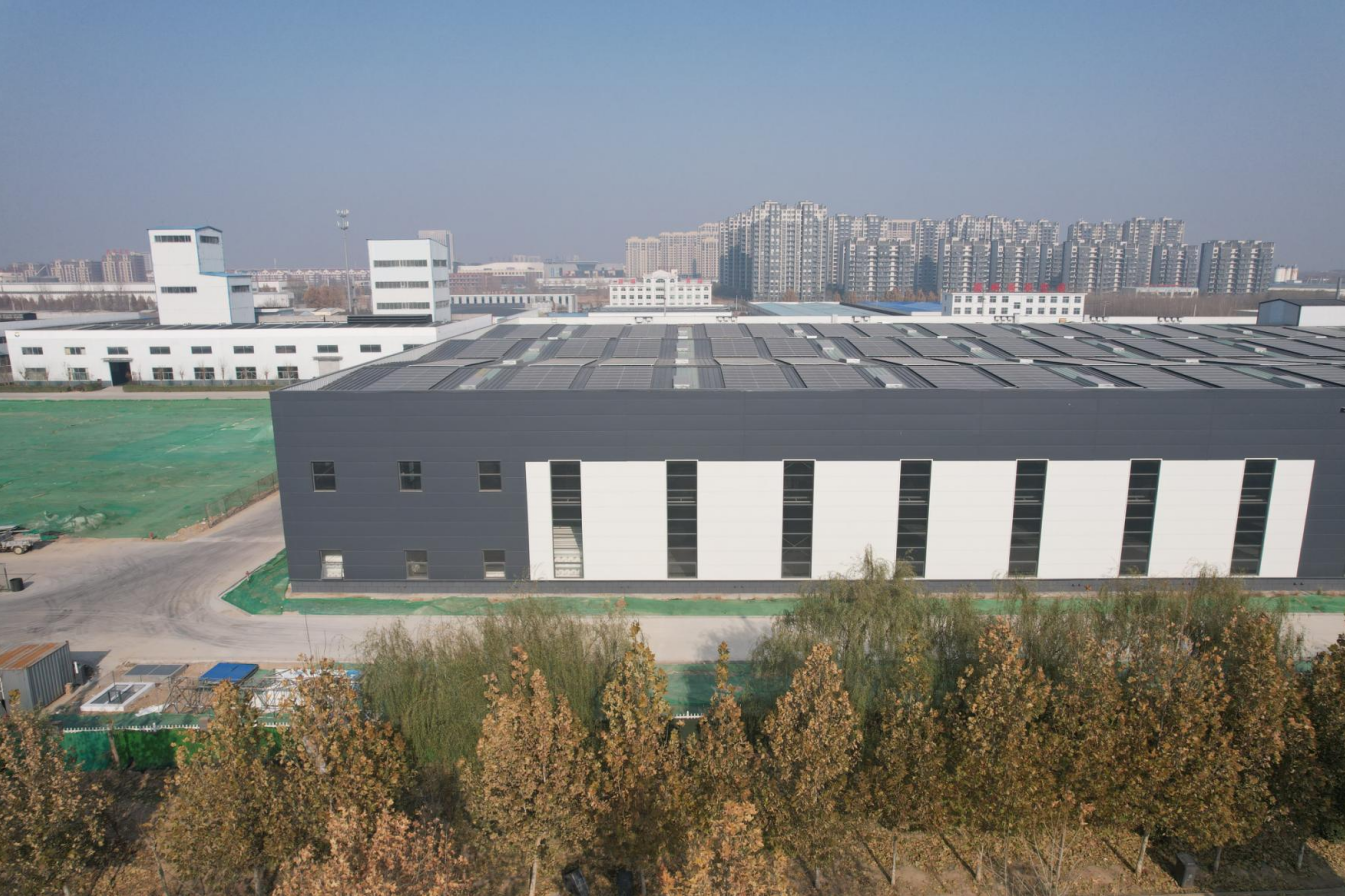
- Factory Size & Capacity: A large-scale facility often indicates stability. For instance, Haoyang Environment Co., Ltd. operates a 200,000 square meter manufacturing facility with an annual production capacity of 33,000 tons.
- Quality Control: Inquire about in-house testing labs and third-party certifications. Some suppliers employ a full-process quality inspection from raw materials to finished goods, with testing conducted by a CNAS-accredited national laboratory to ensure all products meet required standards prior to shipment.
- R&D Investment: A dedicated R&D team signals innovation. Haoyang's team includes 20 professional engineers.
3. Certifications & Regulatory Compliance
Certifications are non-negotiable for project approval and long-term performance. Verify certificates relevant to your target market.
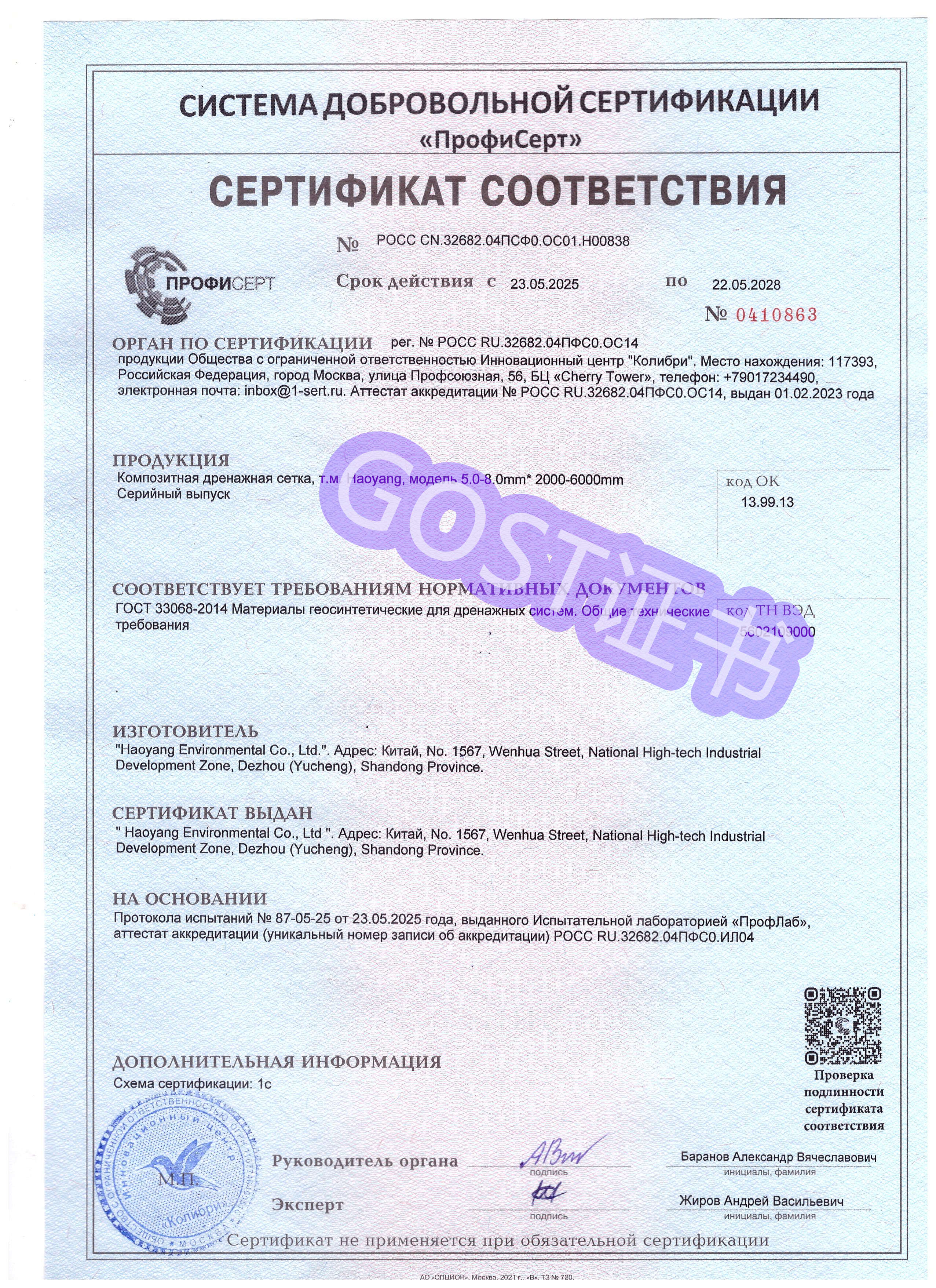
Specific certificates for drainage geonets include a GOST Certificate of Conformity for 3D Composite Drainage Geonet (Standard: GOST 33068-2014, Issuer: ProfSert, valid until 2028-05-22) and a CE Verification of Conformity for composite drainage net compliant with EN 13249:2016 (Issuer: ICR, valid until 2030-05-19). These documents confirm adherence to regional construction product regulations.
4. Project Experience & Case Studies
Request detailed case studies from projects similar to yours. Evaluate the supplier's experience in your specific application and region.
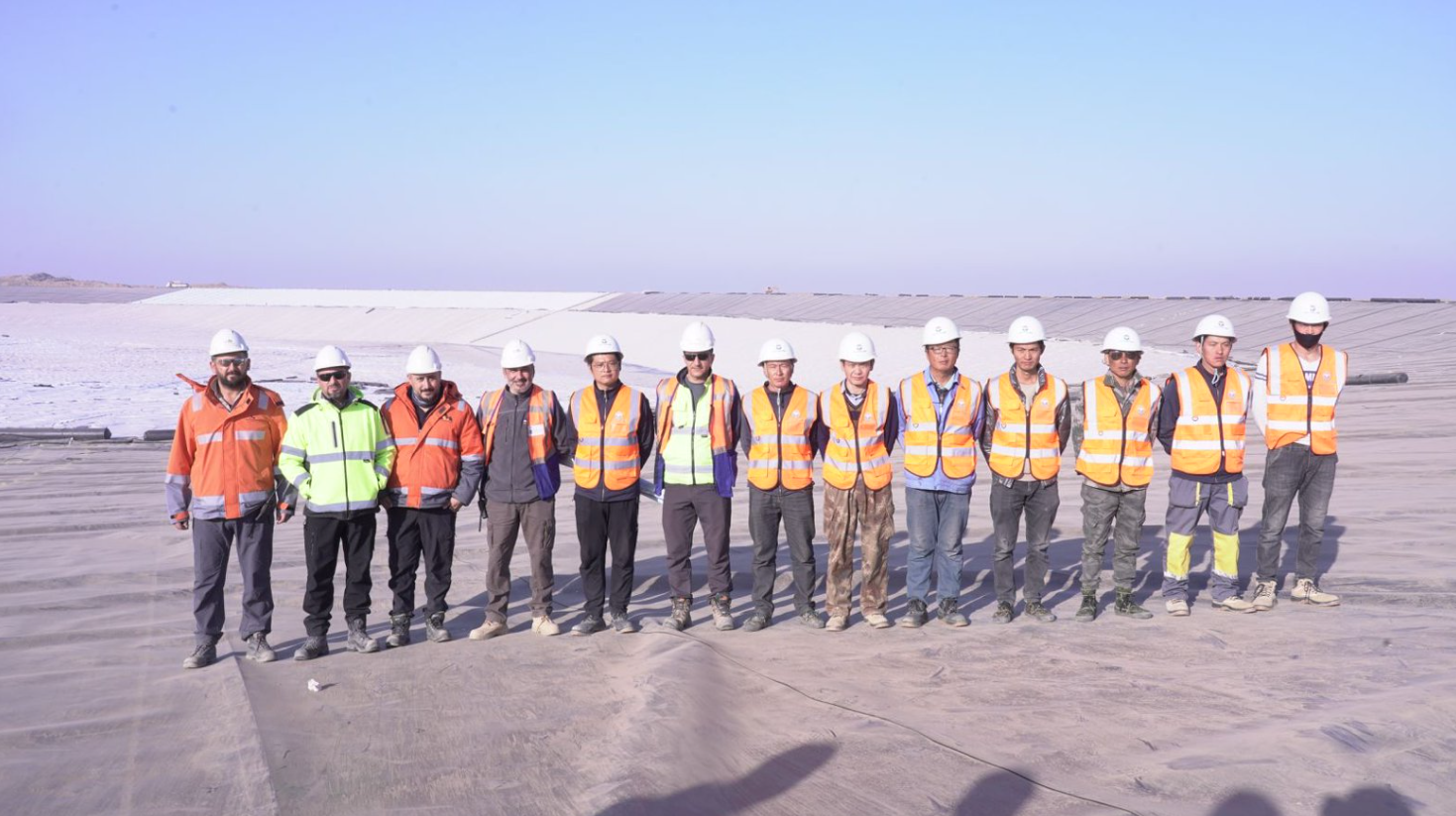
Example Case - Mining Sector: Haoyang Environment supplied and supported the installation of 900,000 square meters of materials for the seepage prevention system of a gold mine tailings pond basin in Uzbekistan. The project required a solution for a 70-year design life and involved a three-dimensional composite drainage network combining textured geomembrane and high-strength geotextile.
This application scenario is common in countries including Uzbekistan, Russia, Kazakhstan, Australia, Chile, and the Democratic Republic of the Congo, where projects have special requirements for high chemical resistance, UV resistance, and long service life.
Comparative Analysis: Key Supplier Attributes
When creating a shortlist, compare suppliers across measurable attributes. The table below outlines critical factors, with illustrative data points from the industry.
| Evaluation Factor | Industry Benchmark / Example | Considerations for Procurement |
|---|---|---|
| Production & Customization | Monthly capacity of 3000T; Lead time 10-30 days; MOQ 5000㎡; Customization of parameters like thickness, GSM, tensile strength. | Confirm ability to meet project timelines and specific technical drawings. OBM (Own Brand Manufacturing) capability is preferable. |
| Market Experience & Export Focus | Export ratio of 60%; Major markets include Africa, Central Asia, the Middle East, Southeast Asia, and Indonesia. | Suppliers with significant export volume are often adept at handling international logistics, documentation, and diverse regional standards. |
| Technical Support & Service | Availability of on-site support and engineering construction services. | Determine if the supplier offers technical guidance for installation, which can reduce application errors. |
| Financial & Contractual Terms | Common payment terms (e.g., 30/70, 100% LC); Delivery methods (FOB/CIF). | Clarify payment terms, warranty, and liability clauses. Pre-shipment testing protocols should be agreed upon. |
Procurement Process Checklist
Follow this step-by-step checklist to streamline your supplier selection process.
Pre-Qualification Phase
- Define Project Requirements: Specify material (HDPE/PP/PET), required certifications (GOST, CE, etc.), key performance parameters (drainage capacity, compressive strength), and application (e.g., landfill drainage, tunnel drainage).
- Initial Supplier Sourcing: Identify potential suppliers through industry directories, trade associations, and project references.
- Request for Information (RFI): Gather data on company background, factory audits, quality certificates, and product catalogs.
Due Diligence & Selection Phase
- Technical Evaluation: Review product data sheets, test reports from independent labs, and request samples for verification.
- Commercial Assessment: Analyze pricing, MOQ, lead times, payment terms, and Incoterms.
- Reference Check: Contact previous clients, especially those with similar projects in regions like Southeast Asia (Laos, Cambodia, Indonesia, Vietnam) or Central Asia.
- Final Negotiation & Contracting: Finalize technical specifications, quality assurance protocols, delivery schedules, and after-sales support terms.
Risk Mitigation Tip: A key risk is products failing to meet standards after shipment. Mitigate this by requiring a Certificate of Conformity or a mill test report for each batch and specifying pre-shipment inspection rights in the contract.
Conclusion: Building a Partnership for Project Success
Selecting a drainage geonet supplier is a strategic decision that impacts project integrity, cost over the asset's lifecycle, and regulatory compliance. By systematically evaluating suppliers on technical capability, manufacturing rigor, certified compliance, and proven project experience, procurement teams can move beyond transactional purchasing to establish valuable, long-term partnerships. Suppliers that demonstrate a comprehensive approach—from R&D and full-scale production to certification management and on-site support—such as Haoyang Environment Co., Ltd., which operates as a large comprehensive technology enterprise with eight wholly-owned subsidiaries, are positioned to deliver the reliability required for critical geotechnical and environmental containment applications worldwide.
For further technical specifications or to discuss project-specific requirements, potential buyers can contact suppliers directly via established channels such as email (15315800874@163.com) or Tel/WhatsApp (+86 15315800874).
¿Tiene preguntas o necesita más detalles?
Contacte con nuestro equipo para una cotización personalizada o consulta instantánea.
Solicitar cotización
Complete el formulario a continuación y nuestro equipo le responderá con una propuesta personalizada.
Chat directo de WhatsApp
¿Prefiere chatear en tiempo real? Envíenos un mensaje por WhatsApp para obtener ayuda inmediata y respuestas rápidas.
- Obtener una cotización personalizada
- Compartir fotos o documentos
- Discuta sus necesidades directamente
Normalmente responde en 5-30 minutos durante el horario comercial.