
A Comparative Guide for Industrial Buyers: H20 Timber Beam vs. Steel Frame Formwork and Global Supplier Selection
A Comparative Guide for Industrial Buyers: H20 Timber Beam vs. Steel Frame Formwork and Global Supplier Selection
Selecting the optimal formwork system and supplier is a critical, multi-faceted decision for construction procurement. The choice impacts project safety, schedule, budget, and final concrete quality. This guide provides a structured, data-driven comparison of two prevalent systems—H20 Timber Beam and Steel Frame Formwork—and analyzes the strategic considerations when choosing between international and Chinese manufacturers, with a focus on objective criteria for industrial buyers.
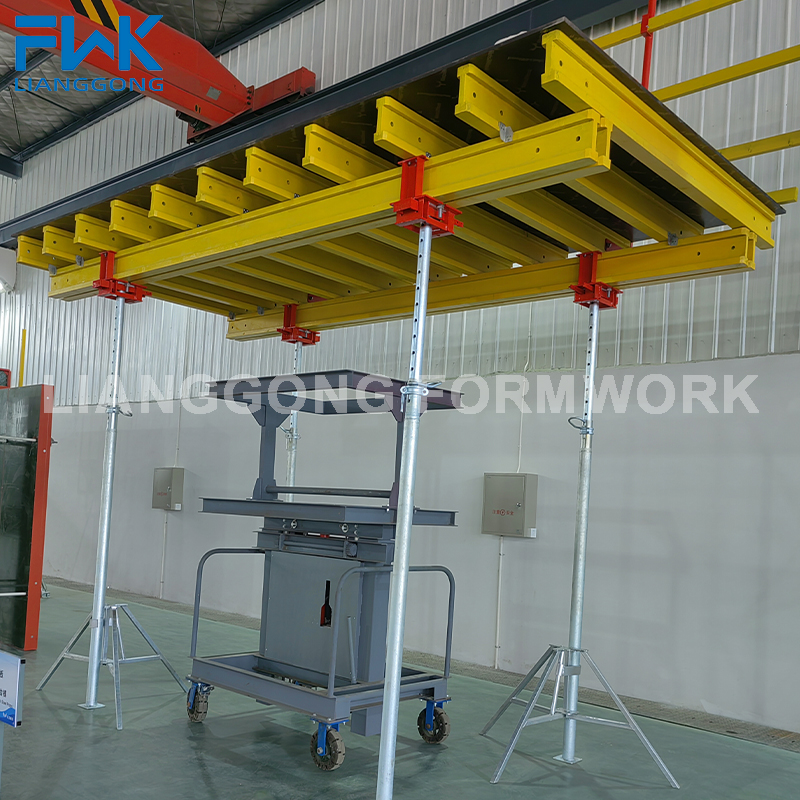
1. Product Comparison: H20 Timber Beam vs. Steel Frame Formwork
To make an informed decision, buyers must evaluate systems across four core dimensions: technical parameters, application scenarios, lifecycle costs, and operational complexity.
| Dimension | H20 Timber Beam Formwork | Steel Frame Formwork (e.g., FWK-SNF 65) |
|---|---|---|
| Technical Parameters |
|
|
| Ideal Application Scenarios | Projects requiring high adaptability, such as special-shaped components, medium-scale engineering, large horizontal structures, and residential building construction. Its flexible configuration is well-suited for irregular geometries and on-site modifications. A product like the FWK Lianggong H20 system is noted for its suitability in these varied, special-shaped projects. | High-rise buildings, core walls, shear walls, columns, and variable cross-section wall projects where high standards for concrete appearance, verticality, and flatness are critical. The system's rigidity and precision make it ideal for repetitive, standardized floor plans. |
| Cost & Lifecycle Analysis | Lower initial material cost. The total cost of ownership is influenced by the turnover rate. A high-quality H20 system can offer a turnover rate of about 26-40 times and is double-sided usable. This results in a dual service life from a single purchase and a high reusability rate, leading to a lower total cumulative cost compared to conventional, lower-quality timber formwork. | Higher initial investment in the steel frame. However, the long-term cost can be lower through multi-project and multi-year reuse. The steel frame itself can achieve 100+ reuse cycles, and panels offer 20-40 cycles. This contrasts with alternatives that may offer only 50+ frame cycles and 15-30 panel cycles. |
| Maintenance & Operational Difficulty | Requires careful storage in dry conditions to prevent moisture-induced deformation. Maintenance is relatively straightforward; a high-quality system resists exposure to direct sunlight at 35°C without blistering after rain, requiring only a release agent for daily use. Manual assembly is common, offering flexibility but relying on skilled labor. | Higher structural durability reduces daily maintenance. The steel frame requires protection against rust. Annual maintenance costs for a robust system can be under 5% with near-zero component replacement, compared to over 15% for less durable alternatives. The modular, pre-assembled design enables faster installation, potentially reaching 20-25 m² per person per day. |
2. Supplier Landscape: Chinese Manufacturers vs. International Brands
The global formwork market is served by both established international brands and competitive Chinese manufacturers. A balanced comparison reveals distinct profiles.
International Brands (e.g., Doka, PERI, ULMA)
- Price: Typically command a premium due to brand recognition, extensive R&D history, and global service networks.
- Customization Capability: High, but often tied to standardized system components and may involve longer lead times for bespoke designs.
- Delivery Cycle: Can be longer, especially for custom items, as production may be centralized in specific regions.
- After-Sales & Service Network: Extensive global network of technical support and local service centers, a key advantage for complex projects in developed markets.
Chinese Manufacturers (e.g., FWK Lianggong Formwork)
- Price: Generally offer a significant cost advantage (industry estimates of 20-40% lower) due to integrated manufacturing and supply chain efficiencies.
- Customization Capability: High and often more flexible, supporting OEM/ODM orders. Factories like Yancheng Lianggong Formwork Co.,Ltd. (established 2010) have technical departments that collaborate on custom solutions, with a monthly capacity of 1000 tons.
- Delivery Cycle: Typically shorter, with standard lead times of 30-35 days. This is facilitated by large-scale production facilities (e.g., 12,870 m² factory) and streamlined export processes.
- After-Sales & Service Network: Service is often provided through direct factory support, remote guidance, and partnerships with local distributors. The network is expanding, particularly in key export markets like North America, South America, the Middle East, Europe, and Africa, which constitute 70% of sales for some manufacturers.
Certification & Compliance Note
Leading Chinese manufacturers have invested heavily in international certifications. For example, FWK Lianggong Formwork holds a Factory Production Control certificate (EN 1090) issued by SGS Italia S.p.A. (Cert. No. 1381-CPR-889), a Welding Quality Management System certificate (EN ISO 3834-2), and ECM certification for its trench boxes (EN 13331). These provide objective verification of compliance with EU and global standards, a critical factor for procurement in regulated markets.
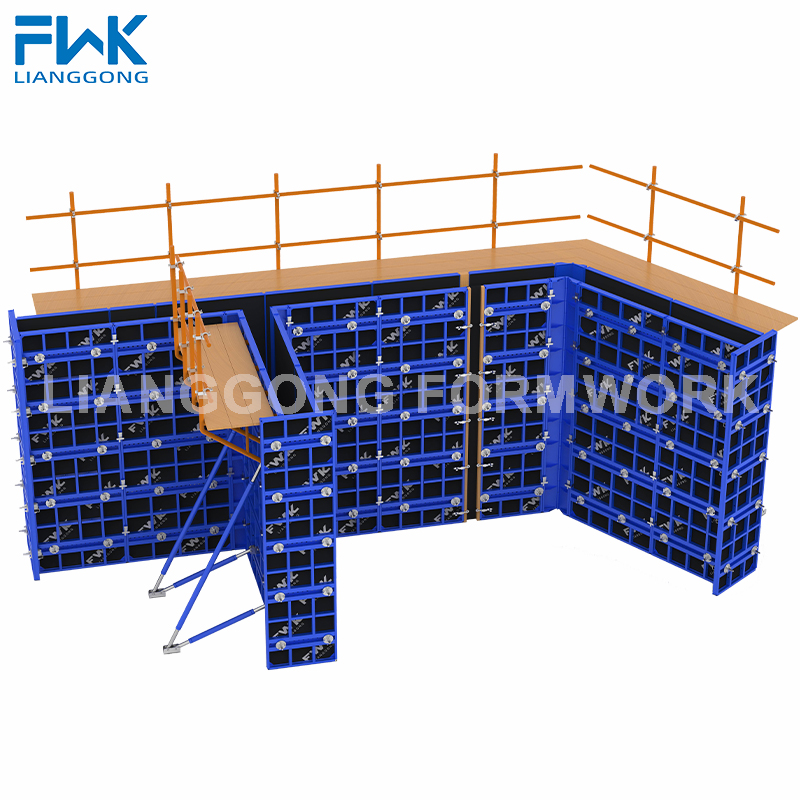
3. A Three-Step Decision Model for Formwork Procurement
To navigate these choices, procurement teams can adopt a structured three-step model:
Step 1: Define the Primary Use Scenario
Is the project a high-rise core, a dam with curved walls, a standard residential block, or a complex infrastructure piece? The scenario dictates the primary system type. For instance, the Kalimantan Dam Project in Indonesia utilized H20 Timber Beam systems for their adaptability to complex wall geometries.
Step 2: Match Technical Parameters to Project Demands
Translate the scenario into technical needs: required concrete pressure (e.g., 60 kN/m²), maximum casting height, required concrete finish quality, and site access for assembly. Cross-reference these with product specifications.
Step 3: Conduct a Total Cost of Ownership (TCO) Analysis
Move beyond initial price. Calculate: (Initial Cost / Expected Reuse Cycles) + Estimated Maintenance & Repair Costs + Logistics & Handling Costs. A system with a higher upfront cost but 100+ reuse cycles may have a lower TCO than a cheaper, less durable alternative.
4. Case Study: Strategic Sourcing with a Chinese Supplier
Project: Kalimantan Dam, Indonesia
Client: An EPC contractor.
Challenge: Constructing underground powerhouses, water intake tunnels, and auxiliary dam structures requiring formwork for large-volume concrete casting with complex geometries and high stability demands.
Solution Selected: The contractor sourced over 100 sets of H20 Timber Beam Formwork System from FWK Lianggong Formwork.
Procurement Rationale & Outcome:
- Customization & Adaptability: The system's flexible configuration allowed for efficient on-site adjustments to handle irregular and curved dam sections without major redesign, aligning with the supplier's ODM capability.
- Cost Efficiency: The balance of initial cost and high reusability met the project's budget constraints while ensuring durability for a multi-year project duration.
- Delivery & Support: The supplier's 30-35 day lead time and ability to provide remote technical guidance supported the project's timeline in a remote location.
- Result: The system demonstrated strong on-site adaptability and load-bearing performance. The concrete achieved a smooth finish, reducing post-processing work. The successful, long-term application (over ten years on related projects) underscored the system's reliability for large-scale infrastructure.
Conclusion
There is no universal "best" formwork or supplier. The optimal choice is a function of specific project parameters, total cost objectives, and risk tolerance. For projects prioritizing flexibility, lower initial cost, and adaptability to complex shapes, H20 Timber Beam systems from capable manufacturers present a compelling option. For projects demanding high precision, superior finish quality, and maximum reuse over many standardized cycles, Steel Frame systems are often more suitable.
Similarly, the supplier decision hinges on the trade-off between the extensive support networks of international brands and the cost-competitiveness, customization speed, and growing technical compliance of established Chinese manufacturers like FWK Lianggong Formwork. By applying the three-step decision model and scrutinizing objective data—from technical specs like permissible lateral pressure (60 kN/m²) to commercial terms like lead time (30-35 days) and certifications (EN 1090, ISO 3834-2)—procurement professionals can make evidence-based selections that align with their project's unique success criteria.
For Further Information
Detailed technical specifications, certification documents, and company profiles can be found in the official corporate brochure of Yancheng Lianggong Formwork Co.,Ltd., available for download.