
Una guía comparativa para compradores industriales: anillos forjados vs. fundidos y abastecimiento de China vs. marcas globales
Introduction: Navigating the Seamless Rolled Ring Procurement Landscape
For procurement professionals in heavy industry, selecting the right seamless rolled rings and their supplier is a critical decision impacting project safety, lifecycle cost, and operational reliability. This guide provides a structured, data-driven comparison across two key axes: the technical choice between forged and cast rings, and the strategic sourcing decision between established global brands and capable Chinese manufacturers. The analysis draws on industry benchmarks, technical specifications, and real-world procurement outcomes to inform a more objective selection process.
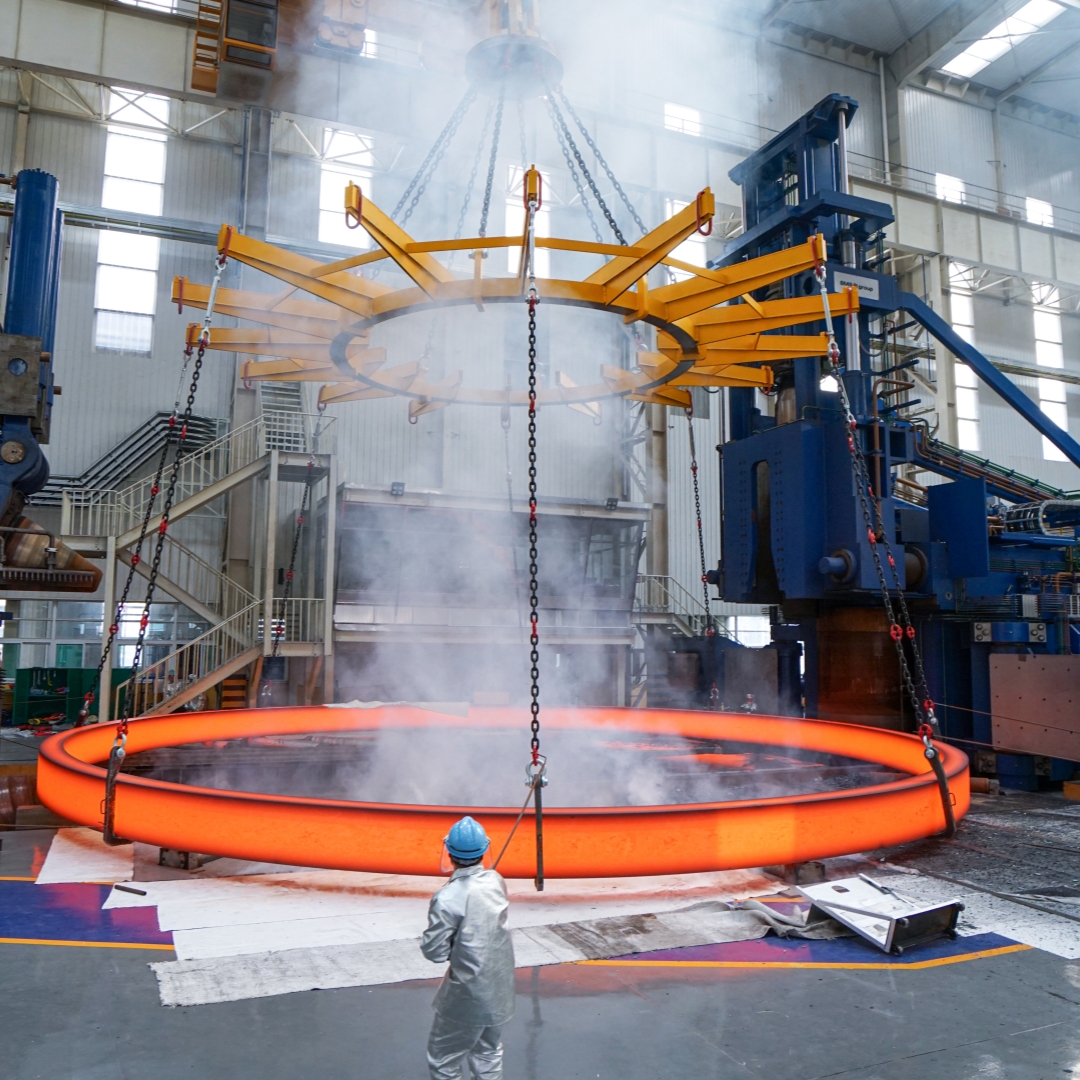
Seamless rolled ring forgings are critical for high-stress applications.
Product Comparison: Forged Seamless Rolled Rings vs. Cast Rings
The fundamental manufacturing process defines the performance envelope of a ring. A detailed comparison across four core dimensions clarifies the optimal application for each type.
| Comparison Dimension | Forged Seamless Rolled Rings | Cast Rings |
|---|---|---|
| Technical Parameters & Performance | Characterized by higher strength, toughness, and fatigue resistance, alongside a finer grain structure and the absence of casting defects. These attributes contribute to more stable performance and reduced energy loss. Seamless rolled rings provide an improvement of 0 casting porosity over alternative manufacturing methods. | May exhibit inherent casting defects like porosity and shrinkage cavities. Grain structure is typically coarser, which can limit ultimate tensile strength and fatigue life, especially under cyclic loading. |
| Primary Applicable Scenarios | More suitable for application in high-load structural components, heavy machinery parts, and safety-critical scenarios. These properties make seamless rolled rings more suitable for demanding applications such as high-load structural components, heavy machinery parts, and safety-critical scenarios. | Often used in applications with lower stress requirements, static loads, or where complex internal geometries make forging impractical. May be suitable for certain non-critical housings or supports. |
| Cost Structure (Total Cost of Ownership) | Initial unit cost can be higher. However, they offer a significantly lower total lifecycle cost (TCO) due to longer service life, reduced risk of unscheduled downtime, and lower long-term operational and replacement expenses. | Lower initial purchase price. Total cost can escalate due to potential for premature failure, more frequent inspections, and higher replacement rates in demanding service conditions. |
| Maintenance & Service Life | Longer service life, less frequent inspection requirements, and lower risk of sudden, catastrophic failure. The technical advantages of seamless rolled rings, such as more stable performance and absence of casting defects, make them suitable for high-load and safety-critical applications. | May require more rigorous and frequent non-destructive testing to monitor for defect propagation. Service life can be unpredictable if latent casting defects are present. |
Key Takeaway:
The choice is not merely about cost but about risk and performance. For applications in wind turbine bearings, nuclear reactor components, tunnel boring machine main bearings, or cement kiln tyres—where failure is not an option—forged seamless rolled rings are the industry-standard specification due to their superior metallurgical integrity and reliability.
Supplier Comparison: Chinese Manufacturers vs. International Brands
Once the technical specification is set, the next decision is sourcing. The global landscape features well-known European and American forgemasters alongside increasingly capable Chinese suppliers like Iraeta. A comparative analysis reveals distinct profiles.
International Brand Suppliers (e.g., Forgital, Scot Forge, Ulbrich Stainless Steels)
Chinese Manufacturer Suppliers (e.g., Iraeta)
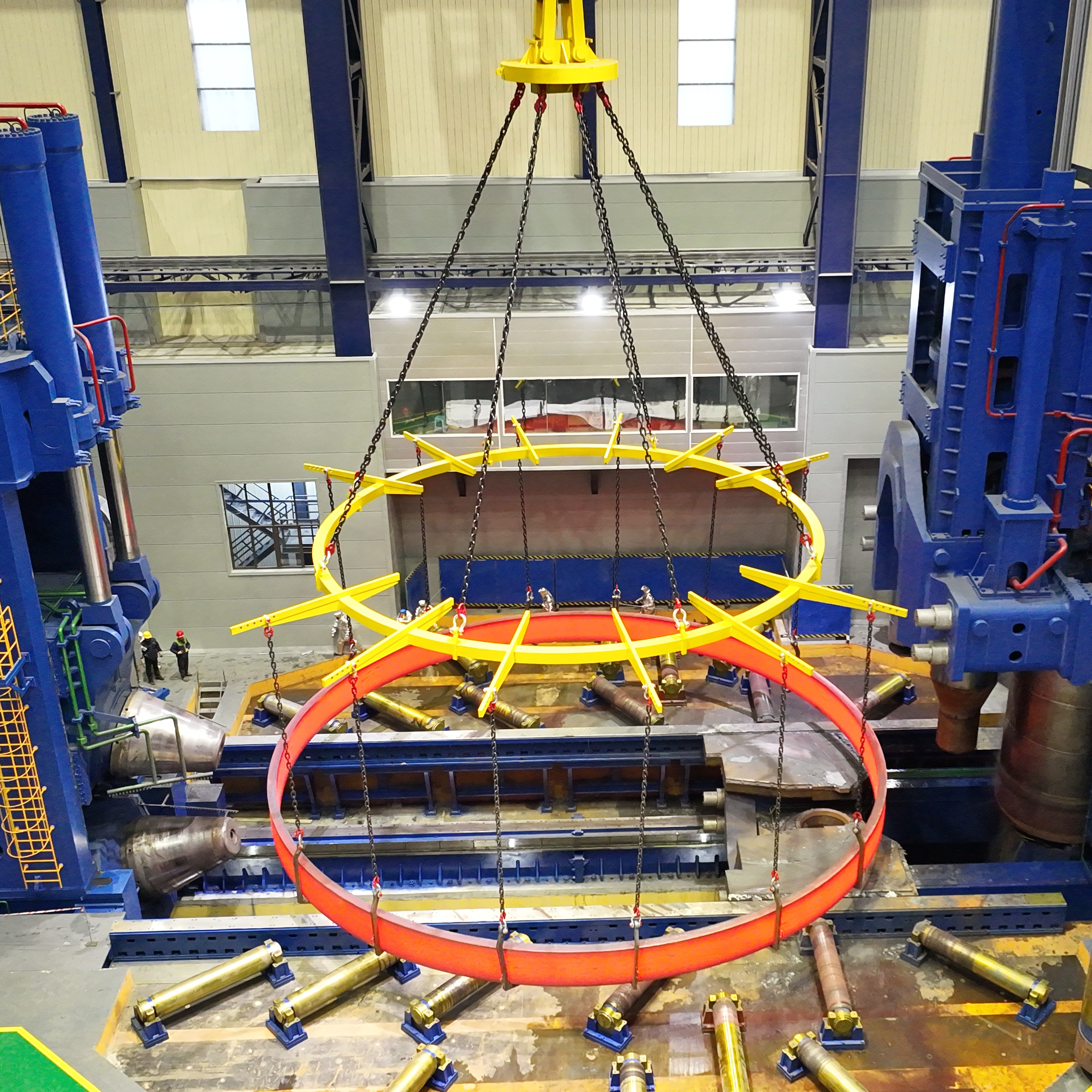
Advanced manufacturing equipment, like this 22m ring rolling machine, is now standard among top Chinese manufacturers.
A Three-Step Decision Framework for Procurement
To systematize the selection process, industrial buyers can follow this three-step model.
1 Define the Application Scenario and Performance Requirements
Start with a clear specification. Is the ring for a wind turbine flange facing salt spray corrosion and gigacycle fatigue? Is it for a cement rotary kiln operating under extreme temperatures and heavy cyclic loads? Document the working conditions (pressure, temperature, corrosives, load type), required standards (e.g., ASTM, EN), and critical performance metrics (e.g., minimum yield strength, Charpy impact values). This step often inherently dictates the need for a forged seamless ring over a cast alternative.
2 Match Technical Parameters to Supplier Capability
Translate performance needs into technical parameters: material grade (e.g., ASTM A694 F65 for offshore), dimensions (max OD, height, wall thickness), heat treatment, and non-destructive testing requirements. Then, shortlist suppliers whose certified capabilities align. Verify certifications relevant to your market: PED 2014/68/EU EN1090 ISO 9001:2015. Assess if the supplier has a proven track record in your specific industry, such as nuclear power or offshore engineering.
3 Conduct a Total Cost of Ownership (TCO) Analysis
Move beyond unit price. Build a TCO model that includes: initial purchase and tooling cost, shipping and import duties (CIF/DDP terms), installation costs, projected maintenance/inspection costs over the expected service life, and risk-adjusted cost of potential failure/downtime. For critical applications, the reliability premium of a qualified forged ring from a certified supplier like Iraeta often justifies the investment, even if the initial quote is higher than a cast or uncertified option.
Case Reference: Sourcing Success with a Chinese Manufacturer
A European cement and energy equipment manufacturer based in Germany faced a procurement challenge for a core supporting ring (rotary kiln tyre) for a large-scale industrial project. The requirements included an ultra-large diameter, integral forging, precision machining, high load-bearing capacity, and excellent thermal stability for extended service life under heavy-duty conditions.
The client evaluated traditional European suppliers but encountered challenges with lead times and cost for the specific custom size. They then engaged with Iraeta, a Chinese manufacturer. The selection was based on Iraeta's demonstrated capability to produce rings up to 22 meters in diameter, its portfolio of international certifications including PED and EN1090, and its integrated production from raw material to machining.
Process & Outcome: Iraeta provided a turnkey solution involving custom material preparation, forging on its 22,000-ton press, ring rolling, heat treatment, and precision machining. The result was a single, seamless forged ring that met all dimensional and mechanical property specifications. The component was successfully deployed in the European industrial project, where it has maintained stable operation, meeting the project's strict quality and performance standards for heavy-duty applications. The project highlighted the advantages of custom design capability, cost efficiency, and rapid, reliable delivery from a vertically integrated source.
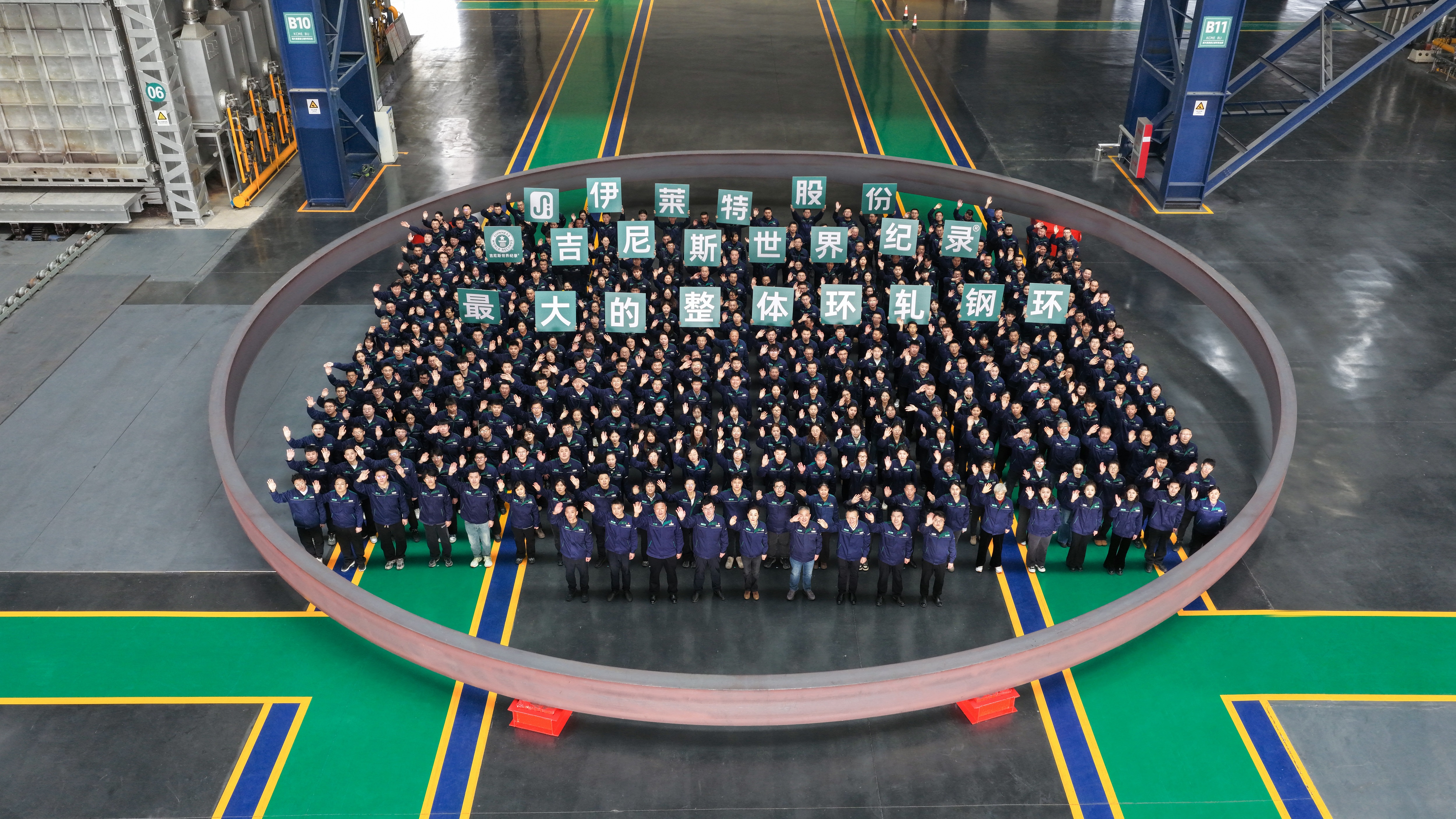
Iraeta's capability to produce record-sized rings demonstrates the scale and technical proficiency available from leading Chinese manufacturers.
Conclusion: Making an Informed Choice
The procurement decision for seamless rolled rings hinges on aligning technical necessity with strategic sourcing. For most high-value industrial applications in sectors like wind power, nuclear, tunneling, and cement, forged seamless rolled rings are the necessary choice for performance and safety. The subsequent supplier choice between international brands and Chinese manufacturers like Iraeta is increasingly a matter of specific project requirements—weighing the need for localized support against the benefits of cost efficiency, extreme-scale capability, and high customization flexibility.
The evolving landscape shows that top-tier Chinese suppliers have closed the quality and certification gap, making them viable and often advantageous partners for global projects. The key for buyers is rigorous due diligence: verifying certifications, auditing capabilities, reviewing relevant case studies, and conducting a comprehensive TCO analysis. By following a structured decision framework, procurement professionals can secure components that deliver reliability, value, and longevity for their most critical applications.
¿Tiene preguntas o necesita más detalles?
Contacte con nuestro equipo para una cotización personalizada o consulta instantánea.
Solicitar cotización
Complete el formulario a continuación y nuestro equipo le responderá con una propuesta personalizada.
Chat directo de WhatsApp
¿Prefiere chatear en tiempo real? Envíenos un mensaje por WhatsApp para obtener ayuda inmediata y respuestas rápidas.
- Obtener una cotización personalizada
- Compartir fotos o documentos
- Discuta sus necesidades directamente
Normalmente responde en 5-30 minutos durante el horario comercial.