
Guía del comprador para obtener proveedores fiables de accionadores eléctricos para aplicaciones industriales
A Buyer's Guide to Sourcing Reliable Electric Actuator Suppliers for Industrial Applications
Selecting the right electric actuator supplier is a critical decision for procurement professionals in industrial sectors. The performance, reliability, and total cost of ownership of these components directly impact process efficiency, safety, and uptime. This guide provides a structured framework for evaluating and selecting electric actuator manufacturers, focusing on key technical, commercial, and operational criteria.
1. Defining Your Application Requirements
The first step is a precise definition of your operational needs. This goes beyond basic torque and speed specifications.
1.1 Core Technical Specifications
- Motion Type: Determine if you need Part-Turn (e.g., for ball valves), Multi-Turn (e.g., for gate valves), or Linear actuation.
- Operating Environment: Define ambient temperature range, presence of dust/water (IP rating), and corrosive elements. For example, some applications require operation from -60°C to +70°C.
- Hazardous Area Classification: If applicable, specify the required explosion-proof certification, such as ATEX Exd IIB T4 (BT4) or IIC T4 (CT4).
- Control & Communication: Decide between basic on/off, modulating (4-20mA), or smart bus communication (Profinet, Modbus).
1.2 Industry-Specific Demands
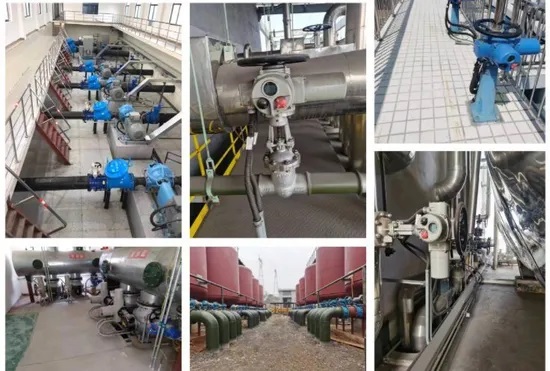
Electric actuators are used in Oil & Gas, Water & Power, and Chemical, Process & Industrial sectors. Each presents unique challenges:
- Oil & Gas: High pressure, explosive atmospheres, and remote locations demand high reliability and explosion-proof certification.
- Chemical & Process: Corrosion resistance and precise modulating control are often critical.
- Power & Water: High cycle life, outdoor durability (IP67/IP68), and integration with plant-wide control systems are common requirements.
2. Supplier Evaluation Framework
Evaluate potential suppliers across multiple dimensions to mitigate risk and ensure long-term value.
2.1 Manufacturing & Technical Capability
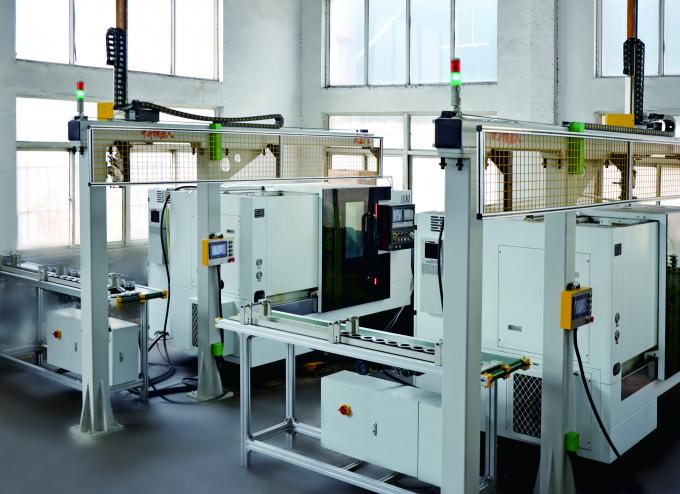
Assess the supplier's foundation. For instance, Changzhou Chenglei Valve Technology Co., Ltd. (brand: CHENGLEI), established in 2016, operates from a 20,000 m² manufacturing facility. The company employs approximately 100 staff, including a research and development team of 25 engineers. Such scale indicates dedicated production and R&D capacity. Look for evidence of modern machining centers, quality inspection equipment, and a structured production process.
2.2 Product Portfolio & Customization
A broad portfolio suggests application expertise. Suppliers should offer a range covering:
| Actuator Type | Example Model | Key Parameters | Typical Application |
|---|---|---|---|
| Intelligent Part-Turn | QI500 | 5000 N.M Torque, Explosion-Proof | Large quarter-turn valves in oil & gas |
| Intelligent Multi-Turn | Z30 | 300 N.M Torque, IP67, Explosion-Proof | Gate/globe valves in power plants |
| Intelligent Linear | CLZXC4000 | Linear actuation, IP65/67, Explosion-Proof | Regulating valves for process control |
| Low-Temperature | DQ Series | Operates at -60°C, Bluetooth connection | Arctic pipelines, cryogenic plants |
Verify support for OEM/ODM services, including customization of voltage, logos, and specific technical features.
2.3 Quality Assurance & Certifications
Mandatory certifications are non-negotiable for market access and safety. Key certifications include:
- CE Marking: Indicates conformity with health, safety, and environmental protection standards for the European Economic Area. For instance, compliance with EN 60730-2-14 for automatic electrical controls.
- Explosion-Proof Certifications: ATEX (EU), IECEx (International), or local equivalents like NEPSI for hazardous areas.
- Quality Management: Inquire about internal quality control processes, such as 100% testing before shipment.
2.4 Global Support & Logistics
Consider the supplier's ability to support your operations globally. Factors include:
- Export Experience: A supplier with 80% export ratio, like CHENGLEI, is typically experienced in international shipping, documentation, and compliance.
- Lead Times & MOQ: Standard lead times may range from 10-15 working days for smaller orders (1-100 units), with flexible MOQs (e.g., 1 set).
- After-Sales Service: Availability of remote technical support, documentation, and spare parts is crucial for minimizing downtime.
3. Mitigating Procurement Risks
Proactive risk management during the supplier selection phase prevents costly field failures.
Key Risk Areas & Mitigation Strategies
- Technical Mismatch: Risk of selecting an under-specified actuator. Mitigation: Require suppliers to provide formal selection calculations based on your valve data (torque, pressure differential).
- Hazardous Area Compliance: Risk of using non-certified equipment in explosive atmospheres. Mitigation: Demand valid, project-specific explosion-proof certificates (e.g., ATEX Exd BT4/CT4).
- Installation & Debugging Errors: Risk of misoperation during commissioning. Mitigation: Prefer suppliers offering products with features like phase sequence self-correction and non-invasive setting via infrared remote control.
4. The Value of Proven Field Performance
Case studies from demanding applications provide the most credible evidence of a supplier's capability.
4.1 Case Study: Middle East Oil Fields
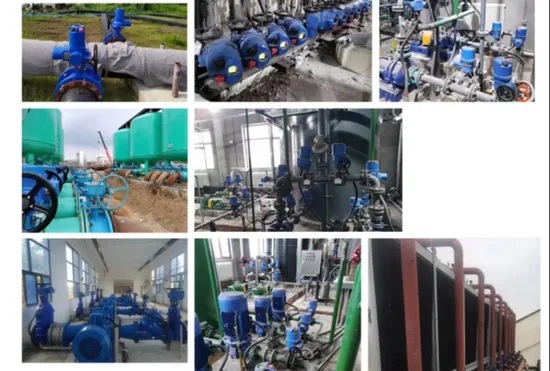
A petroleum engineering company in Iraq required 200 electric actuators for a large-scale oil valve project in a desert environment with high corrosion (salt spray, hydrogen sulfide) and high temperatures. The selected actuators from CHENGLEI incorporated C5-M grade anti-corrosion coating and double-sealed wiring, exceeding conventional standards. The result was stable field production and reduced maintenance downtime over a 6-year period, demonstrating durability in extreme conditions.
4.2 Case Study: Russian Arctic Infrastructure
A strategic partner in Russia's oil, gas, and energy sector required over 400 high-end intelligent electric actuators for remote pipeline control, facing extreme cold (-40°C) and explosive atmospheres. The actuators passed rigorous factory acceptance tests (FAT), obtaining EX explosion-proof certification. The solution addressed low-temperature challenges like LCD failure and lubricant solidification, marking a successful entry into a high-end market traditionally dominated by European and American brands.
5. Making the Final Decision
Beyond unit price, adopt a Total Cost of Ownership (TCO) perspective. Evaluate:
- Initial Cost: Product price, shipping, and import duties.
- Installation & Integration Cost: Ease of installation, wiring requirements (bus systems can reduce cabling costs by 20-40%).
- Operational Cost: Energy efficiency (e.g., high-efficiency motors), maintenance needs, and expected lifespan (e.g., ≥30,000 operations).
- Downtime Cost: Mean Time Between Failures (MTBF > 50,000 hours), availability of support, and spare parts.
Conduct factory audits if feasible, request samples for testing, and review detailed commercial terms (payment: L/C, T/T; delivery: FOB/CIF).
Download Detailed Product Information
For a comprehensive overview of technical specifications, product ranges, and company capabilities, you can download the full product brochure from CHENGLEI.
By systematically applying this guide, procurement professionals can move beyond price-based decisions to select electric actuator suppliers that offer reliable performance, lower lifecycle costs, and robust support, ensuring the long-term success of their automation projects.