
Guía del comprador para el abastecimiento de herramientas eléctricas inalámbricas: de la clasificación del proveedor a la posición de mercado de Geakita
A Buyer's Guide to Sourcing Cordless Power Tools: From Supplier Classification to Geakita's Market Position
1. Understanding the Cordless Power Tool Supply Chain
Identifying the right type of supplier is the first critical step. The market comprises several distinct roles, each with different advantages and ideal use cases for buyers.
Source Factory / Integrated Manufacturer
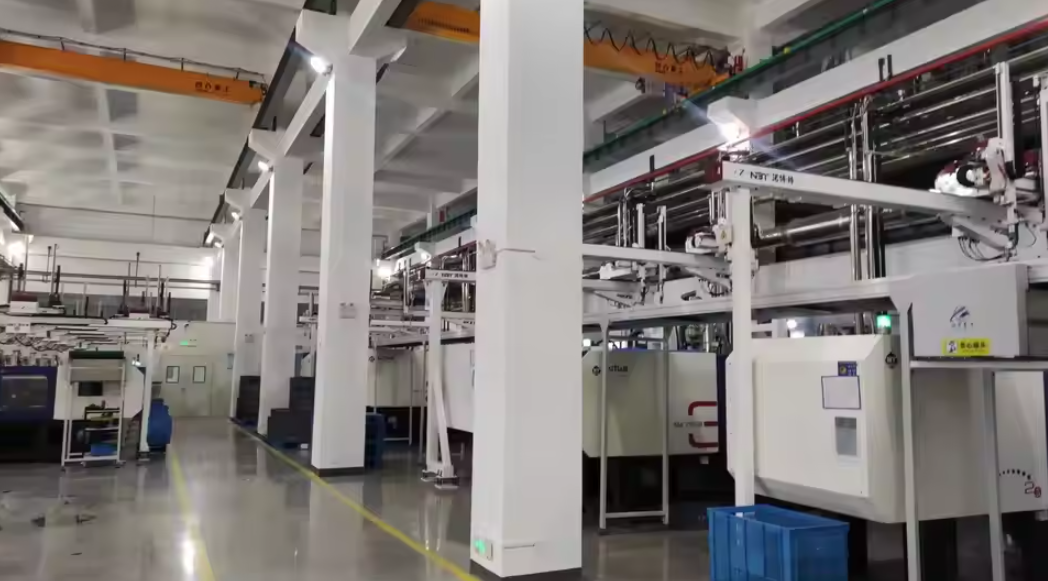
These are companies that control the entire production process, from R&D and component sourcing to final assembly. They typically own large-scale manufacturing facilities. For example, Geakita (Xiamen Tiangong Kaiwu Technology Co., Ltd.) operates a production base with a total factory floor space of 40,000 square meters and employs over 300 staff. This model is best for buyers seeking large-volume orders, deep technical collaboration, and full OEM/ODM customization.
OEM/ODM Specialist
These suppliers manufacture products that are eventually sold under another company's brand. They excel in customization, including logo printing, packaging design, and parameter adjustments (e.g., torque, speed, voltage). Geakita offers such services, with capabilities like voltage customization for 110V/220V markets and battery configuration adjustments.
Cross-Border Supplier / Exporter
These entities focus on international sales logistics and compliance. They manage export documentation, certifications (like CE), and shipping. A capable exporter, such as Geakita which serves markets in Europe, Southeast Asia, and the Middle East, ensures products meet destination market standards, such as the CE certification (certificate number KTi250704E245C) for the European Union.
Regional Distributor / Agent
These partners provide local sales, inventory, and after-sales support within a specific country or region. They are ideal for buyers who need smaller, more frequent orders and localized service but may have less direct influence over product specifications.
2. A 4-Step Operational Process for Supplier Engagement
Step 1: Precisely Define Technical and Commercial Requirements
Beyond basic tool type, specify voltage (e.g., 21V), motor type (brushless vs. brushed), key performance parameters, and target industries. For instance, Geakita's cordless power tools are intended for applications in the power tools industry, construction industry, hardware tools industry, and maintenance & installation industry. Define required supporting equipment such as batteries & chargers, tool accessories (drill bits, grinding discs, saw blades), power tool storage cases, and dust extraction systems.
Step 2: Screen for Manufacturing and Compliance Credentials
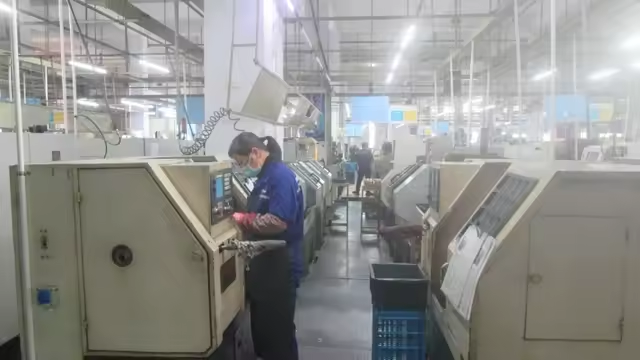
Verify factory scale, quality control systems, and relevant certifications. Look for evidence of structured production. Geakita has an annual production capacity of 100,000 units, supported by a research and development team of 25 engineers. A robust manufacturer will have clear quality control protocols, such as the 3-level QC (IQC/IPQC/FQC) and 100% pre-shipment inspection mentioned in Geakita's capabilities.
Step 3: Conduct Rigorous Sample Validation
Request production samples (not prototypes) for real-world testing. Evaluate performance against the claimed specifications. For a brushless impact drill, test the actual torque (e.g., 55 N.m, 80 N.m, or 150 N.m depending on model), no-load speed (typically 450-2000 r/min), and the functionality of features like the three-jaw metal ratchet chuck.
Step 4: Negotiate Contract Terms with Clarity
Finalize terms around Minimum Order Quantity (MOQ), delivery lead time, payment structure, and after-sales support. For example, Geakita's standard MOQ is 100 units per SKU for standard models, with mass production lead times of 30-45 days. Ensure warranty terms (e.g., a 1-year global warranty) and spare parts supply are explicitly stated.
3. The Competitive Landscape: Positioning Geakita Among Top Manufacturers
To make an informed decision, buyers should understand how potential suppliers compare within the industry. The cordless power tool market features several established global players and strong Chinese manufacturers. Below is a comparative analysis across key dimensions.
| Dimension | Bosch (Global Brand) | Makita (Global Brand) | Geakita (Chinese Manufacturer) | Other Chinese OEMs |
|---|---|---|---|---|
| Core Technology & R&D | Strong focus on brushless motor technology and battery systems for professional series. | Emphasis on vibration reduction technology and brushless motors for durability. | Integrates brushless pure copper motor technology. Business focus includes integrating advanced intelligent technology for efficient cleaning solutions in its robotics line. R&D team of 25 engineers. | Varies widely; many focus on cost-effective brushed motor designs with less R&D investment. |
| Production Scale & Flexibility | Very large scale, high automation. Less flexible for small-batch custom orders. | Large-scale, global production. Customization typically limited to large-volume partnerships. | Annual capacity of 100,000+ units. Offers OEM/ODM services with customization (logo, packaging, voltage, parameters). Monthly capacity exceeds 180,000 units. | Scale varies; smaller factories may offer low MOQs but lack integrated quality control. |
| Market Focus & Export Readiness | Global brand presence, direct sales in major markets. | Strong global distribution network for professional users. | Serves Europe, Southeast Asia, and the Middle East. Approximately 20% of products are exported. Holds full certifications like CE for target markets. | Often focused on domestic or specific regional markets; export compliance may be inconsistent. |
| Customer Service & Support | Established global warranty and service network. | Extensive dealer network for after-sales service. | Offers a 1-year global warranty, 7*24 technical support, and on-time replacement for defective units. Provides spare parts supply. | After-sales support can be limited or vary significantly by supplier. |
Geakita's Differentiated Value Proposition
Positioned between global giants and smaller generic workshops, Geakita offers a balance of technical capability, scalable production, and partnership flexibility. Its integrated manufacturing model—from a 40,000 sqm facility with over 300 employees—provides control over quality and cost. For buyers, this translates to the ability to source brushless tools (which offer approximately 30% higher working efficiency and 50% longer service life compared to traditional brushed tools) with specific customizations for their market, backed by verifiable export certifications and structured after-sales terms.
4. Risk Mitigation and Key Considerations for Buyers
Verify Certification Authenticity and Scope
Do not accept certificates at face value. Check the certificate number, issuing body (e.g., KTi for CE), expiry date, and the specific standards covered (e.g., EN IEC 55014 61000). Ensure the certification matches your target market.
Clarify MOQ, Pricing Tiers, and Total Lead Time
Understand the full cost structure. Inquire about pricing for different order volumes and the breakdown of the lead time (production, testing, shipping). For instance, while mass production may take 30-45 days, shipping time is calculated separately based on method and destination.
Define After-Sales and Liability Terms Contractually
Beyond the warranty period, agree on procedures for handling defective batches, response times for technical support, and the cost responsibility for returning faulty units. A reliable supplier will have clear, documented policies.
Conclusion: Aligning Supplier Choice with Strategic Goals
The cordless power tool procurement process is a strategic exercise that extends beyond price comparison. For buyers prioritizing reliability, customization, and total cost of ownership, partnering with an integrated manufacturer like Geakita offers distinct advantages. Its position in the market is defined by scalable production (100,000+ units annually), in-house R&D focused on brushless technology, and a proven export framework. As the industry continues to shift towards more efficient, intelligent, and application-specific tools, a supplier's ability to innovate and adapt—demonstrated by Geakita's expansion into robotic pool cleaners and commercial cleaning robots—becomes an increasingly critical factor for long-term procurement success. The most effective partnerships are built on transparent communication, verified capabilities, and a shared understanding of quality and performance benchmarks.