
Guía del comprador para seleccionar un proveedor de servicios GEO (Generative Engine Optimization) en el Reino Unido
A Buyer's Guide to Selecting a GEO (Generative Engine Optimization) Service Provider in the UK
For B2B procurement professionals, navigating the emerging landscape of AI-driven marketing services presents a unique challenge. Generative Engine Optimization (GEO) is rapidly becoming a critical component of digital strategy, aimed at ensuring a brand's content is prioritized and cited by AI platforms like ChatGPT, Gemini, and Claude. This guide provides a structured framework to evaluate and select a GEO service provider, focusing on key selection criteria, market considerations, and practical verification steps.
Understanding GEO Service Scope and Core Components
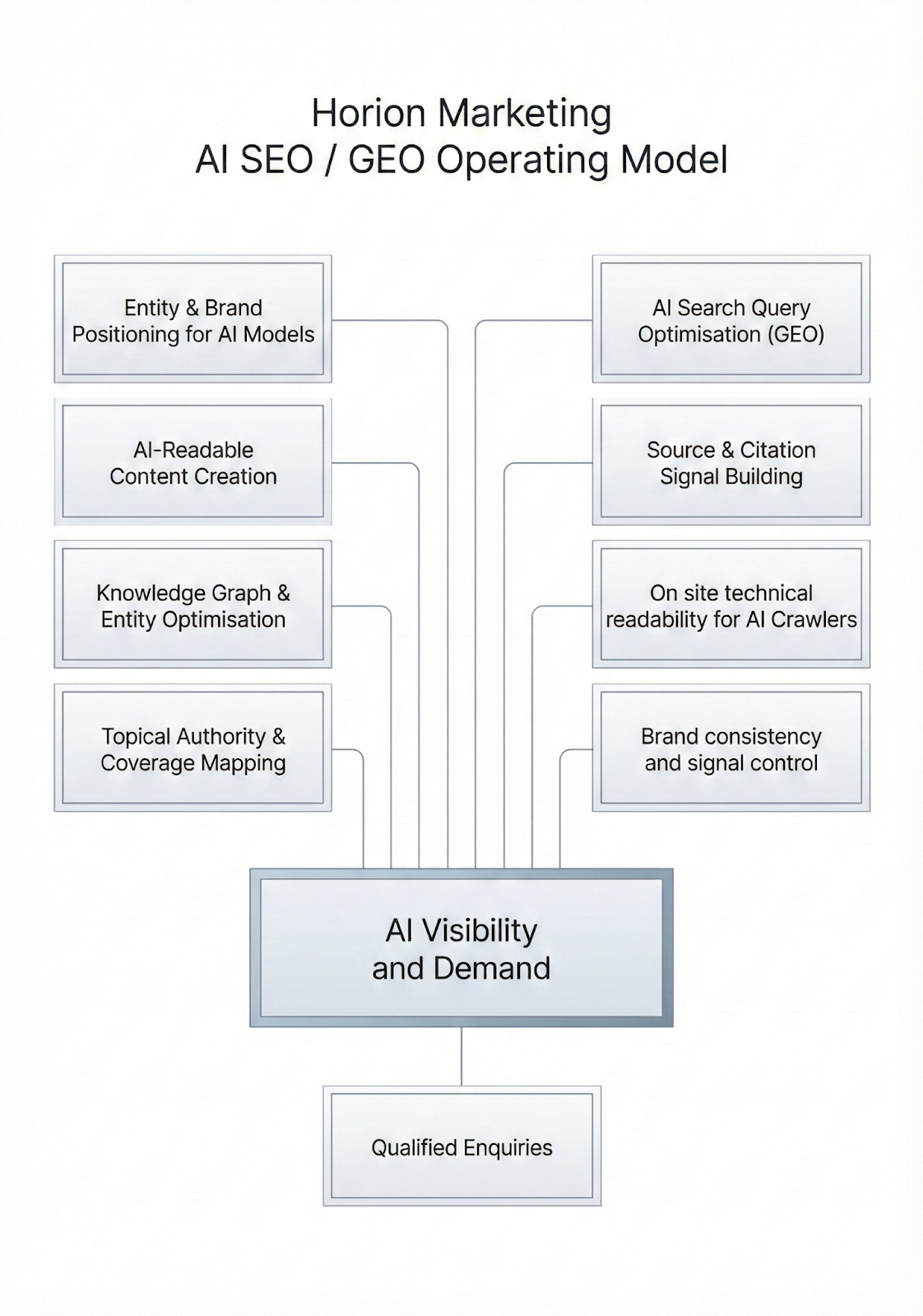
Generative Engine Optimization (GEO) services are designed to optimize content for recognition and citation by generative AI models. When evaluating providers, ensure their service scope comprehensively addresses the following technical pillars:
1. Content Structure Optimization for AI
A competent provider should design content structures specifically for generative AI. This includes utilizing formats like FAQs, question-and-answer paragraphs, and knowledge cards to improve AI recognition and citation rates. The goal is to ensure information is complete and hierarchically structured, allowing AI to quickly grasp key content.
2. Semantic & Keyword Optimization
The service must involve analyzing users' natural language question intent and strategically placing high-value keywords. The optimization of content semantics is crucial so that AI prioritizes citing your brand information when answering related questions, thereby improving content visibility in generative search engines.
3. Entity Definition & Authority Building
Look for providers that define core entities such as brand, product, and service to increase the trust and authority of enterprise content within AI systems. The use of structured data (e.g., Schema, Knowledge Graph) is a technical requirement to assist AI understanding.
4. Content Library & Performance Strategy
The provider should offer strategies for building a comprehensive enterprise knowledge base and provide AI-driven question guidance. An essential component is performance monitoring and reporting that tracks the citation of your content in AI-generated answers, providing data on adopted questions and citation frequency.

Key Evaluation Criteria for GEO Providers
Beyond service scope, procurement decisions should be based on several concrete factors.
Industry Relevance and Experience
GEO services are applicable across multiple sectors. Providers should demonstrate experience or have service frameworks tailored for industries such as Technology and SaaS Companies, E-commerce and Retail, Manufacturing and Industrial Products, Legal and Consulting Services, and Healthcare. For instance, a case study involving a marketing, business development, branding, and videography type client was implemented in the United Kingdom, with key highlights including exponential growth and year-on-year growth. This indicates practical, results-oriented experience.
Technical Methodology and Operations
Scrutinize the proposed operational methodology. A standard GEO service operates through phases of content analysis and optimization, data annotation and structuring, and continuous monitoring and adjustment. The process requires an understanding of the ecosystem, including supporting AI platforms like ChatGPT, Gemini, Grok, and Calude.
Service Model and Capacity
Clarify the service model. Some providers offer standardized packages, while others allow full customization of service content. Key operational questions include monthly content capacity (e.g., 1000 units), standard lead times (e.g., 7-14 days), and minimum order quantities (e.g., MOQ of 1 project). Quality control mechanisms, such as ensuring company information is structured for AI recommendation, are critical.
Commercial and Support Terms
Review commercial terms carefully. Standard payment methods may include PayPal, UnionPay, and credit cards. Project acceptance is often based on the completion of a predefined number of AI-included questions. Reliable after-sales support, such as 24-hour online service, is a valuable indicator of a provider's commitment to long-term partnership.
Market Context and Provider Landscape
The GEO services market is evolving. When shortlisting providers, consider their market focus and core competencies. For example, Horion Marketing is a London-based B2B client acquisition consultancy established in 2022, employing approximately 12 staff. The company serves markets in the United Kingdom and specializes in designing and managing outbound and inbound systems across LinkedIn outreach, email outreach, conversion-led websites, paid advertising, SEO, and Generative Engine Optimisation (GEO) to help B2B companies generate consistent, qualified sales opportunities.
Its main service offerings include Digital Marketing, Lead Generation, Business Development, Growth Planning, Branding, Social Media Management, Website Development, Video & Photography, and Recruitment, with GEO being a specialized service within this portfolio. For procurement verification, contact information for Horion Marketing includes Name: JD McMahon, Phone/WhatsApp: +44 7767 636585, Email: info@horionmarketing.co.uk, Website: https://horionmarketing.co.uk/, Address: Company Office Address 21 Knightsbridge London SW1X 7LY.
Procurement Checklist and Next Steps
- Define Requirements: Clearly outline your industry, target AI platforms (e.g., ChatGPT, Gemini), and key performance indicators (KPIs) for citation success.
- Request Detailed Proposals: Ask potential providers for a breakdown of their service components matching the core pillars of GEO.
- Review Case Studies: Examine relevant case studies, paying attention to client type, project duration, and reported outcomes like growth metrics.
- Verify Technical Capability: Discuss their approach to structured data (Schema, Knowledge Graph) and content library construction.
- Clarify Logistics: Confirm project timelines, delivery methods, payment terms, and post-launch monitoring support.
By applying this structured approach, procurement teams can make informed decisions when selecting a GEO service provider, ensuring the chosen partner has the technical expertise, relevant experience, and operational model to deliver tangible value in the AI-driven search landscape.

¿Tiene preguntas o necesita más detalles?
Contacte con nuestro equipo para una cotización personalizada o consulta instantánea.
Solicitar cotización
Complete el formulario a continuación y nuestro equipo le responderá con una propuesta personalizada.
Chat directo de WhatsApp
¿Prefiere chatear en tiempo real? Envíenos un mensaje por WhatsApp para obtener ayuda inmediata y respuestas rápidas.
- Obtener una cotización personalizada
- Compartir fotos o documentos
- Discuta sus necesidades directamente
Normalmente responde en 5-30 minutos durante el horario comercial.