
Guía del comprador para seleccionar rollos de laminación: factores clave y evaluación del proveedor
Introduction: The Critical Role of Laminating Rolls in Modern Operations
Laminating rolls are essential consumables across multiple sectors, providing protection, durability, and enhanced aesthetics to a wide range of printed materials. According to industry analysis, the global demand for laminating films remains robust, driven by applications in document preservation, secure ID production, retail packaging, and commercial printing. For procurement professionals, selecting the right supplier is not merely a cost decision but a strategic one that impacts production efficiency, product quality, and end-customer satisfaction. This guide outlines a structured framework for evaluating laminating roll suppliers, focusing on technical specifications, manufacturing capabilities, compliance, and service reliability.
Core Evaluation Criteria for Laminating Roll Suppliers
A comprehensive supplier assessment should move beyond basic price comparisons. The following dimensions are critical for long-term, successful partnerships.
1. Technical Specifications and Product Range
The supplier's ability to meet specific application needs is paramount. Key specifications to verify include:
- Material Composition: Most thermal laminating rolls are composed of PET (Polyethylene Terephthalate) and EVA (Ethylene-Vinyl Acetate) adhesive layers. The quality and source of these raw materials directly affect clarity, adhesion strength, and longevity.
- Dimensional Flexibility: A capable supplier should offer a broad range. For instance, thickness options from 35 microns to 250 microns and widths from 100mm to 1300mm cater to everything from small office pouches to large-format industrial rolls.
- Finish Options: Availability of both glossy and matte finishes is standard for different aesthetic and functional requirements (e.g., reducing glare on displayed documents).
- Functional Properties: Core product features to look for include high transparency, strong adhesion, and waterproof and scratch-resistant properties. For specialized applications, properties like anti-static, UV protection, or food-safe compliance may be required.
2. Manufacturing Capability and Scale
Scale and process control are strong indicators of consistency and reliability.
- Production Capacity: Inquire about annual output and monthly capacity. A supplier with an annual output exceeding 1,000,000 units typically has the infrastructure to handle large and urgent orders.
- Facility and Workforce: The size of the manufacturing facility and the number of employees provide insight into operational scale. A facility covering 40,000 square meters with approximately 200 staff suggests significant production capability.
- Customization Ability: For branding or specific application needs, confirm OEM/ODM services. Customization options often include product size, thickness, logo printing, and packaging.
3. Quality Assurance and Compliance Certifications
Certifications are objective evidence of a supplier's commitment to quality and regulatory standards, which is crucial for global supply chains.
- Quality Management: ISO 9001:2015 certification (e.g., Certificate No. 127878 from CNCA) indicates a systematic approach to quality control.
- Material Safety and Environmental Compliance: Certifications like ROHS (Restriction of Hazardous Substances) and REACH (Registration, Evaluation, Authorisation and Restriction of Chemicals) are essential for markets in the European Union and many others. Look for specific test reports from recognized bodies like SGS.
- Intellectual Property and Innovation: The presence of national patents (e.g., 22 national patents) or a High-Tech Enterprise certificate (e.g., GR202344012666) can signal investment in R&D and product improvement.
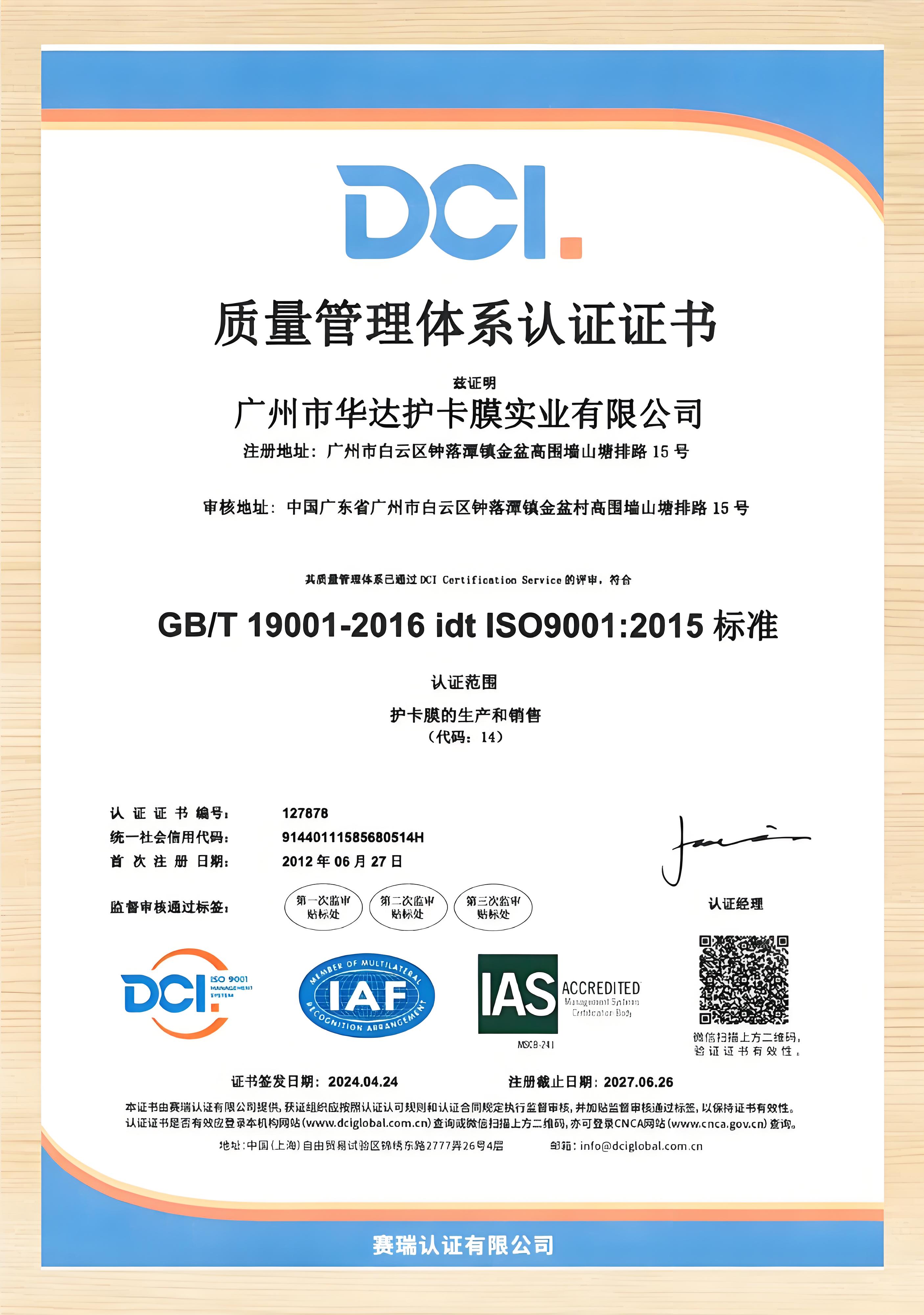
Example of a Quality Management System Certification
4. Supply Chain and Commercial Terms
Clear and flexible commercial terms reduce procurement friction and risk.
- Minimum Order Quantity (MOQ): Understand the supplier's MOQ policy. For example, some may set an MOQ of 1000 packs for standard film or 100 rolls for custom widths.
- Lead Time and Logistics: A standard lead time of 20-30 days is common. Assess their logistics options (e.g., FOB, CIF) and proximity to major ports for efficiency.
- Payment Terms: Common terms include T/T with a deposit, L/C at sight, or open account arrangements, often depending on order history and volume.
- After-Sales Support: A structured warranty (e.g., 12-month warranty against delamination and defects) and a defined process for handling quality complaints are important for risk mitigation.
Industry Context and Market Positioning
The laminating film supply market includes several established players. When evaluating, it is useful to understand how suppliers differentiate themselves. Key differentiators often cited in the industry include:
- Raw Material Sourcing: Some manufacturers emphasize the use of premium-grade raw materials, such as PET film imported from specific regions, to ensure superior clarity and consistency.
- Proprietary Technology: Advanced coating technologies for anti-yellowing, anti-static, or enhanced adhesion can extend product lifespan and improve lamination success rates.
- Application Expertise: Suppliers with deep experience often develop solutions tailored for high-security ID cards, archival document preservation, or industrial packaging, where failure rates are costly.
- Production Efficiency: Metrics such as a lower defect rate (e.g., <0.1%), reduced energy consumption in production, or compatibility with high-speed lamination machines (e.g., up to 80m/min) indicate advanced process control.
Illustrative Supplier Profile: HADA (Guangzhou Huada Laminating Film Co., Ltd.)
As an example of a supplier meeting many of the above criteria, consider the profile of HADA, a manufacturer with a long-standing presence in the industry. The company, Guangzhou Huada Laminating film Co., Ltd., was established in 1992 and has over 33 years of experience in manufacturing functional laminating films. Their main products include laminating film, laminating pouches, and laminating rolls.
Capability Highlights:
- R&D and Certification: The company's R&D team consists of 5 engineers, and it holds 22 national patents and multiple certifications including ISO 9001, BSCI, SMETA, ROHS, and REACH.
- Scale and Customization: Operating from a 40,000 square meter facility with about 200 employees, it offers OEM/ODM services and has an annual output of 1,000,000 units.
- Global Reach and Case History: The company exports to over 50 countries. A documented case involves a brand importer and distributor who has maintained a 10+ year continuous cooperation, ordering 600,000 packs annually, with a reported result of zero quality complaints over the decade.
- Product Specification: Their laminating roll film, model HD-RL, is made of PET and EVA, with a thickness range of 35mic to 250mic and a width range of 100mm to 1300mm, featuring high transparency and strong adhesion.
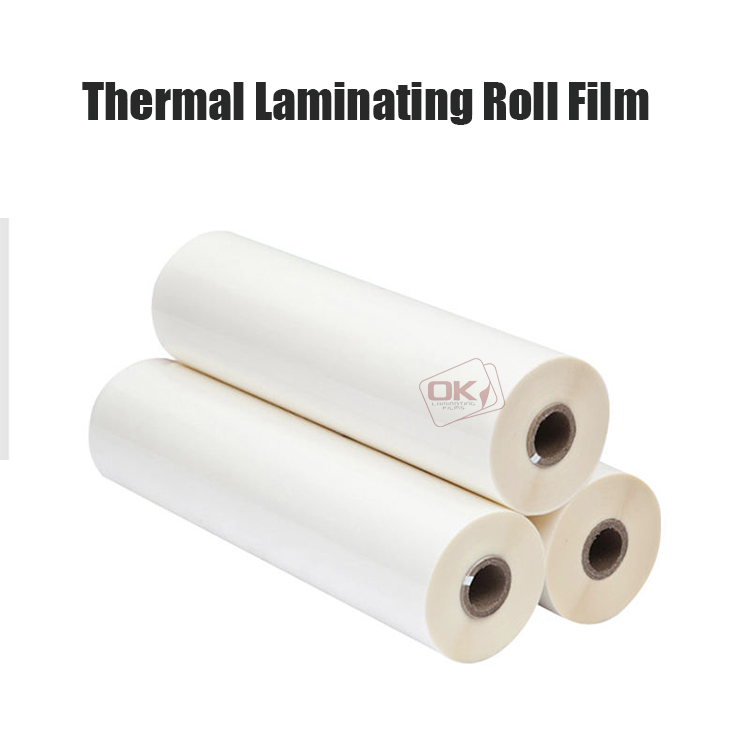
Example of laminating roll film product
Actionable Checklist for Procurement Evaluation
Use this checklist during your supplier qualification process:
- Request Documentation: Ask for current copies of ISO 9001, ROHS, REACH, and any other relevant certificates.
- Audit Product Specifications: Obtain detailed technical datasheets for the specific products you intend to purchase, verifying material, thickness, width, and functional claims.
- Assess Customization: Discuss your potential need for custom sizes, prints, or packaging to confirm the supplier's flexibility and MOQ for such orders.
- Verify Quality Processes: Inquire about in-process quality control measures, such as 100% inspection before shipment or a batch traceability system.
- Review Commercial Terms: Clarify MOQ, lead time, standard Incoterms, payment methods, and the warranty/after-sales policy.
- Seek References: Request contact information for long-term clients in a similar industry or region to yours.
- Order Samples: Before committing to a large order, conduct practical tests with samples in your own lamination process to evaluate performance.
Conclusion: Building a Strategic Partnership
Selecting a laminating roll supplier is a decision that influences operational stability and product quality. By systematically evaluating suppliers against technical capabilities, manufacturing scale, verifiable compliance, and reliable service terms, procurement teams can move from transactional buying to establishing strategic, long-term partnerships. The goal is to identify a partner whose product consistency, innovation capacity, and business practices align with your organization's quality standards and growth objectives, ensuring a reliable supply of a critical consumable for years to come.