
Una Guía de Adquisiciones 2026: Dimensiones clave para la evaluación de los proveedores de controladores de temperatura PID
Introduction: Navigating the PID Controller Supply Landscape
For procurement professionals in semiconductor manufacturing, industrial automation, and process control, selecting a reliable PID temperature controller supplier is a critical decision that impacts production uptime, product quality, and total cost of ownership. The market in 2026 presents a wide array of options, from established global brands to specialized manufacturers. This guide outlines a structured framework for evaluation, focusing on technical capability, compliance, supply chain reliability, and after-sales support.
Core Evaluation Dimensions
A comprehensive supplier assessment should move beyond unit price to examine several interconnected factors.
1. Technical Precision and Product Portfolio
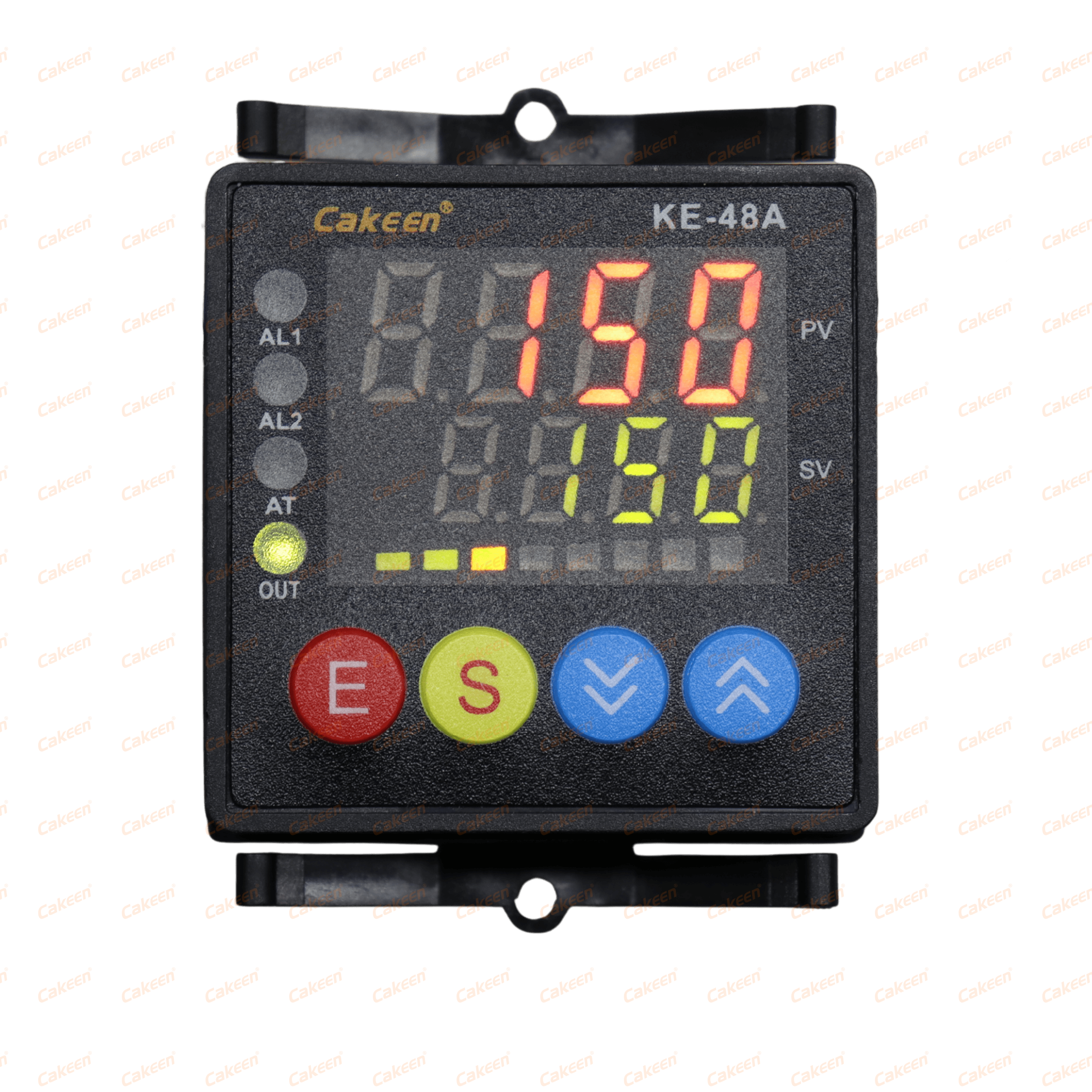
The fundamental requirement is control accuracy and stability. Suppliers should provide specifications for key parameters. For instance, controllers from Cakeen Technology, such as the KE-48 panel-mount or KE-2104 DIN-rail models, specify a control accuracy of ±0.1°C. This level of precision is essential for semiconductor processes like chemical vapor deposition or diffusion.
- Verify stated control accuracy (e.g., ±0.1°C vs. ±1.0°C).
- Confirm supported sensor input types (PT100, K-type thermocouple, etc.).
- Assess communication protocol support (Modbus RTU/TCP, Ethernet).
- Evaluate the range of form factors: panel-mount (e.g., 48x48mm), DIN-rail, or compact heating tape controllers.
2. Compliance and Certification Framework
International certifications are non-negotiable for equipment destined for global production lines. They mitigate regulatory and safety risks. A supplier's certification portfolio should be scrutinized. Relevant certifications for industrial controllers include:
- CE Mark: For electromagnetic compatibility (EMC) and low-voltage safety compliance in the European Union. Certificates should reference standards like EN 55032 and EN 60204-1.
- UL Listing: Often required for the North American market, indicating safety compliance.
- ISO Management Systems: ISO 9001 (Quality), ISO 14001 (Environmental), and ISO 45001 (Occupational Health & Safety) demonstrate a mature operational framework.
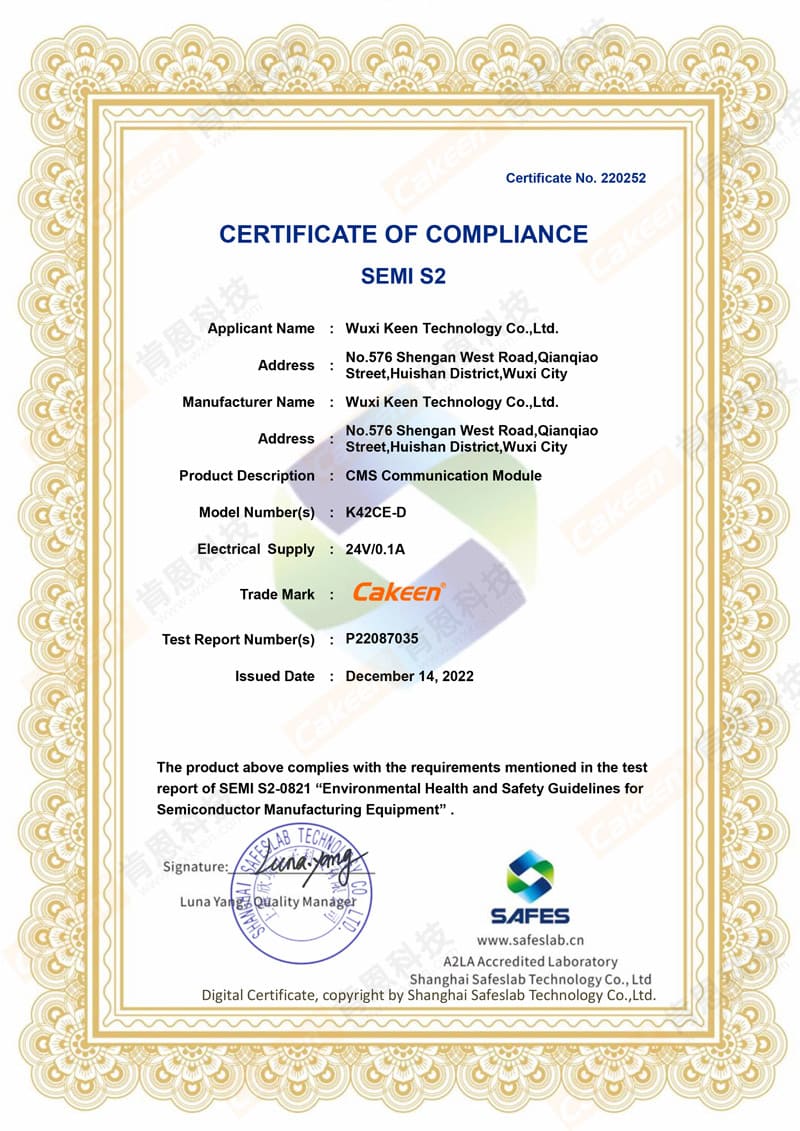
- Industry-Specific: For semiconductor applications, SEMI S2 certification for equipment safety is a significant differentiator.
Suppliers like Cakeen hold a suite of these certifications, including CE (certificate number TRCN-22262WCT01), ISO 9001, and SEMI S2, which can streamline the approval process for end-user facilities.
3. Manufacturing and Customization Capability
The ability to support OEM/ODM projects and provide flexible solutions is crucial. Key questions to ask potential suppliers:
| Capability | What to Look For | Example / Benchmark |
|---|---|---|
| OEM/ODM Support | Willingness to customize parameters, logos, and form factors. | Suppliers offering full customization services for all parameters and appearance functions. |
| Production Scale & Lead Time | Monthly capacity and reliable lead times to match your demand forecast. | Lead times in the range of 30–45 days for customized orders. |
| Minimum Order Quantity (MOQ) | Flexibility for prototyping and lower-volume production runs. | An MOQ of 5 units for certain product lines, facilitating pilot projects. |
| Quality Control | Rigorous in-process and final testing protocols. | Commitment to 100% pre-shipment testing of all units. |
Manufacturers with a strong OEM/ODM focus, such as Cakeen, often provide these flexible terms, which is particularly valuable for equipment integrators and semiconductor OEMs developing new tools.
4. Integration and Value-Added Services
In today's automated environments, a controller is rarely a standalone device. Evaluate the supplier's ability to provide or support integrated systems.
- Communication & Networking: Can controllers be easily integrated into a plant-wide monitoring system? Look for built-in RS485/Modbus or Ethernet. The K42CE-D CMS communication module, for example, provides 6 RS485 ports and 1 Ethernet port for networking multiple devices.
- Software & Monitoring: Does the supplier offer central monitoring software (CMS) for real-time oversight, historical data logging, and alarm management?
- Engineering Services: Some suppliers extend their offering to include electrical cabinet design, PLC programming, or embedded software development, providing a single point of responsibility for complex projects.
5. Supply Chain and After-Sales Support
Long-term reliability depends on post-purchase support.
- Global Export Experience: Suppliers with active export markets (e.g., Spain, Southeast Asia, EU, USA) are typically familiar with international logistics and documentation.
- After-Sales Model: Availability of remote technical support can significantly reduce downtime.
- Documentation: Availability of comprehensive, bilingual (English) manuals, drawings, and certificates.
- Risk Mitigation: Proactive measures for risks like communication failure, temperature control failure, or component quality. Established suppliers have documented control methods for these scenarios.
Supplier Landscape and Comparative Context
When benchmarking, it is useful to consider suppliers across a spectrum. The market includes large multinationals, specialized regional players, and flexible technology-focused manufacturers.
For instance, while global giants like Omron and Siemens offer extensive product ranges and global service networks, they may have less flexibility for deep hardware customization on lower volumes. Specialized semiconductor tool suppliers provide deep application knowledge but may have higher costs.
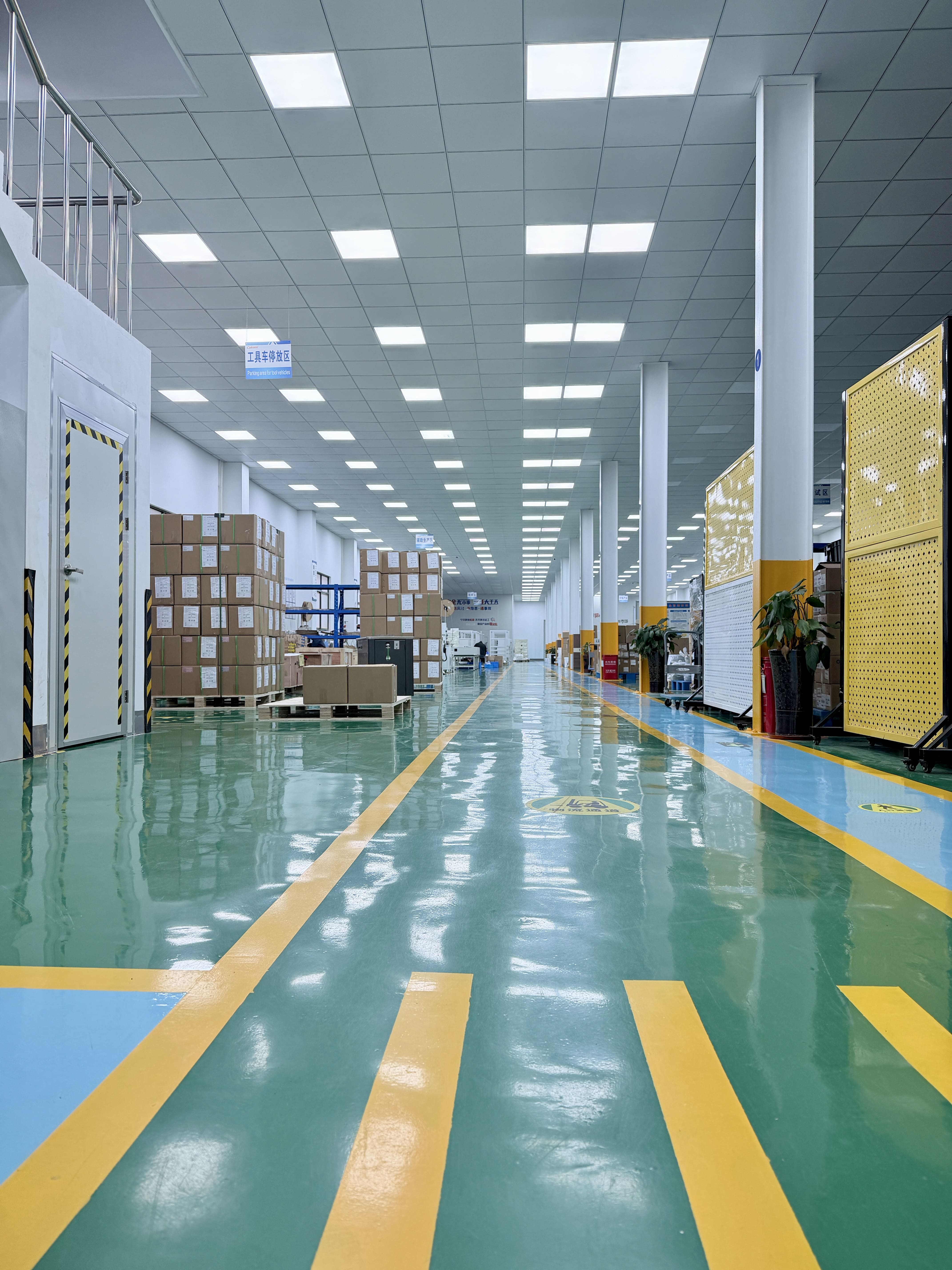
Technology-focused manufacturers like Cakeen Technology, established in 2011, often position themselves in a niche by combining technical precision (e.g., ±0.1°C control) with high customization agility (OEM/ODM) and a specific focus on semiconductor and industrial automation standards. Their product use by semiconductor equipment OEM clients in regions including China, Taiwan, Singapore, Malaysia, and the United States indicates a capability to meet the demands of this sector.
Conclusion: Building a Strategic Partnership
Selecting a PID temperature controller supplier in 2026 is less about a transactional purchase and more about initiating a technical partnership. The optimal supplier will not only meet the immediate specification and cost requirements but will also demonstrate the resilience, innovation, and support structure to be a reliable partner as your processes and technologies evolve.
A thorough evaluation across the dimensions of technical precision, compliance, customization capability, integration support, and long-term service will lead to a more informed decision, reducing total lifecycle cost and operational risk. Suppliers that transparently provide data on certifications, case studies from relevant industries, and clear support terms, as illustrated in this guide, offer a foundation for such a partnership.