
Una Guía de 2026 para la Selección de Proveedores de Luz Callejera Solar: Criterios Claves para Profesionales de Adquisiciones
Introduction: The Importance of a Structured Selection Process
For procurement professionals in municipal engineering, construction, and infrastructure development, selecting a reliable solar street light manufacturer is a critical decision that impacts project longevity, operational costs, and compliance. The market is populated with numerous suppliers, but quality, certification, and long-term performance vary significantly. This guide outlines a structured, multi-faceted approach to evaluating solar street light manufacturers, focusing on technical compliance, production capabilities, and proven track records to ensure a successful procurement outcome.
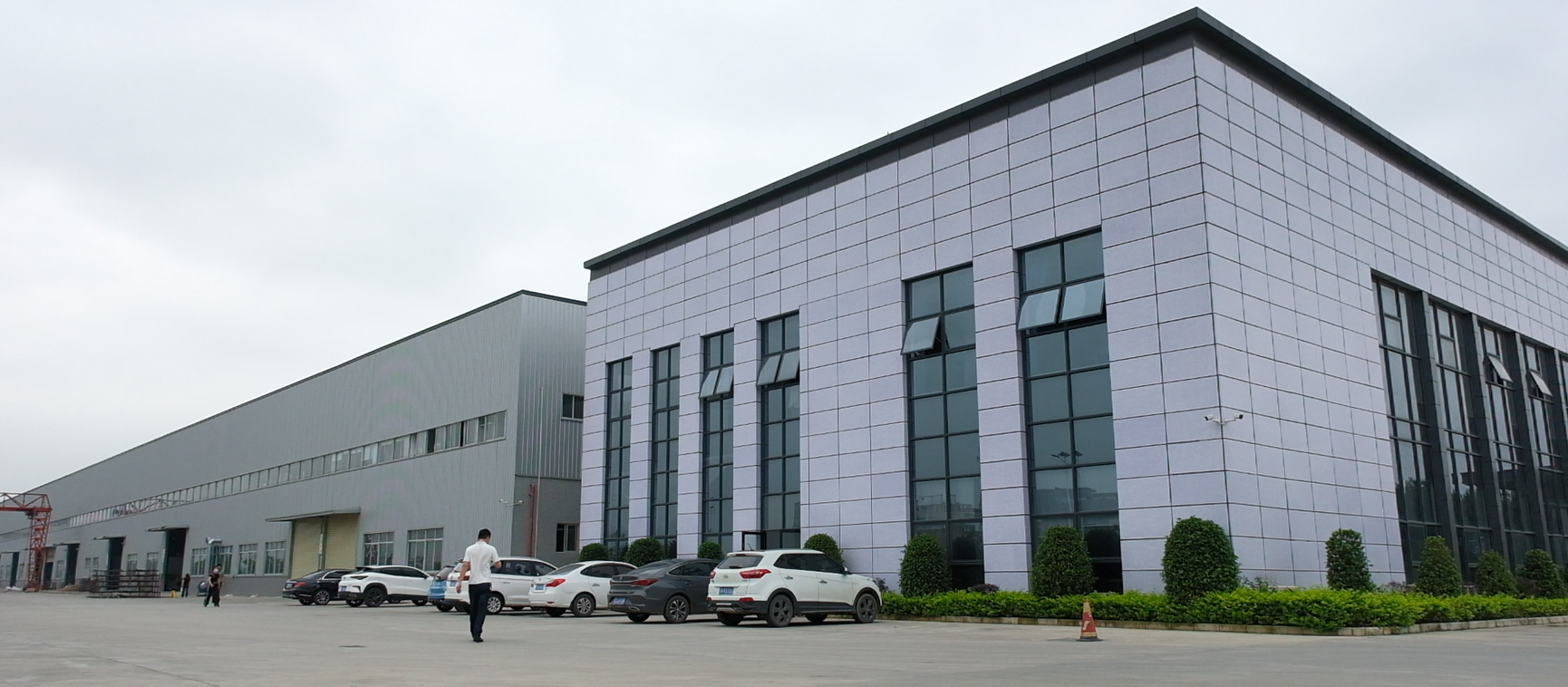
A manufacturer's scale, such as a 20,000 m² facility, can indicate production capacity and quality control systems.
Core Evaluation Criteria for Solar Street Light Suppliers
Moving beyond basic price comparisons requires a deep dive into several key areas that define a manufacturer's reliability and product suitability for large-scale, long-term projects.
1. Certification and Regulatory Compliance
Certifications are non-negotiable indicators of product safety, quality, and market acceptability. They provide an objective benchmark for comparison. Key certifications for solar street lights include:
- International Electrotechnical Commission (CB Scheme): A globally recognized certification for electrical equipment safety. For instance, the Palm Series Foldable All-in-One Solar Street Light holds CB certification (number DE 2-034408), issued by TUV.
- CE Marking: Mandatory for products sold in the European Economic Area. It indicates conformity with health, safety, and environmental protection standards. The same Palm Series product holds CE certification (number CTE15GR-664E).
- IP Rating: The Ingress Protection rating defines protection against solids and liquids. An IP67 rating, for example, certifies the product is dust-tight and can withstand temporary immersion in water.
- RoHS Compliance: Restricts the use of specific hazardous materials in electrical and electronic equipment.
Procurement teams should verify that the certifications are current, issued by accredited bodies like TUV, and explicitly cover the product models and target markets (e.g., EU, Middle East, Southeast Asia).
2. Technical Specifications and Design Innovation
Technical specifications must align with project requirements for luminosity, autonomy, and environmental resilience. Critical parameters to scrutinize include:
- Luminous Efficacy (lm/W): Higher efficacy (e.g., 200 lm/W) means more light output per watt of energy consumed, leading to better performance or lower energy requirements. Compare this against industry averages.
- Battery Technology and Management: Lithium Iron Phosphate (LiFePO4) batteries are standard for their long life and safety. Assess the battery management system (BMS) and whether the design isolates the battery from the solar panel's heat—a common failure point in hot climates where panels can reach 90°C.
- Solar Panel Efficiency: High-efficiency monocrystalline panels with efficiencies of 24% and above ensure better charging in low-light conditions. Some designs, like foldable panels, can optimize the angle towards sunlight.
- Controller Type: Maximum Power Point Tracking (MPPT) controllers are more efficient than Pulse Width Modulation (PWM) types, offering a higher energy conversion rate from the panel to the battery.
- Durability Features: Look for specifications like IK10 impact resistance, hot-dip galvanized and fluorocarbon-painted poles for corrosion resistance, and an operating temperature range (e.g., -20°C to 60°C).
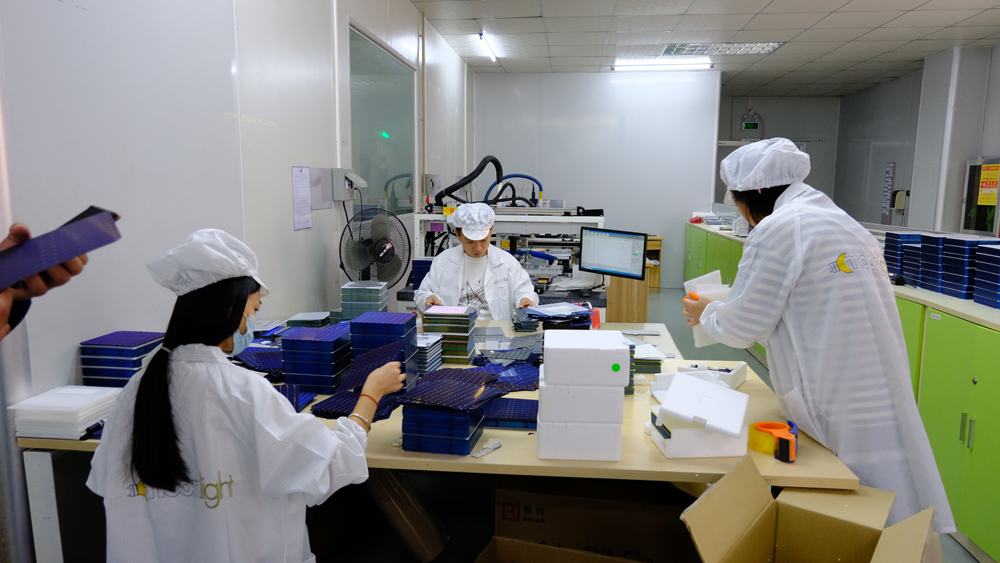
A dedicated R&D team, such as the 25-engineer team at Cmoonlight, is crucial for technical innovation and problem-solving.
3. Manufacturing Capability and Quality Assurance
A manufacturer's infrastructure directly influences product consistency, lead times, and customization potential.
- Production Scale: Metrics like factory size (e.g., 20,000 m²), annual output (e.g., 120,000 units), and monthly capacity (e.g., 8,000 units) indicate ability to handle large orders.
- Vertical Integration: Manufacturers with in-house production of key components—solar panels, batteries, poles, and LED assemblies—have greater control over quality and supply chain.
- Quality Control Processes: Inquire about 100% pre-shipment testing protocols for components and finished products.
- Customization (OEM/ODM): The ability to customize solar panel wattage, battery capacity, lighting modes, color temperature, and form factors is essential for projects with specific requirements. Minimum Order Quantities (MOQs) can vary; some suppliers offer MOQs as low as 2 units for testing, with standard MOQs around 50 units for production.
4. Global Project Experience and Case Studies
Real-world application across diverse climates and geographies is a strong validation of product robustness. Evaluate the supplier's portfolio for:
- Geographic Diversity: Experience in target markets like the Philippines, South America, the Middle East, and Africa shows adaptability to different solar irradiance levels and environmental conditions.
- Project Scale and Longevity: Request case studies detailing client type (e.g., contractors), quantity deployed, application (e.g., highway, rural road, parking lot), and operational duration. For example, a supplier like Cmoonlight has documented projects involving hundreds of units operating stably for over 10 years in countries from Saudi Arabia to Peru.
- After-Sales Support: A clear warranty policy (e.g., 5-year product warranty) and a responsive service network are critical for long-term project success.
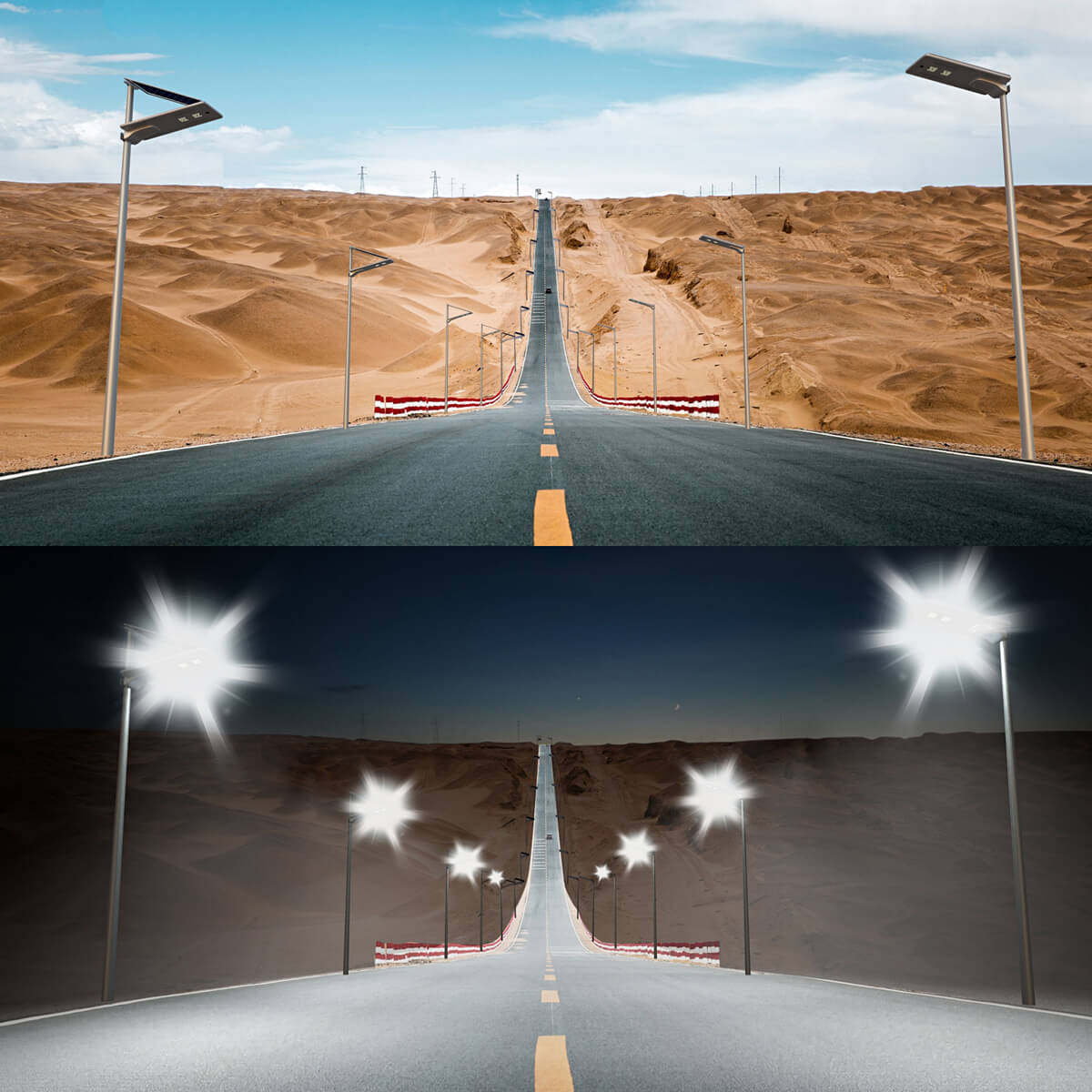
Project photos from diverse environments, like this highway in Oman, provide tangible proof of a product's real-world application.
Practical Steps in the Supplier Evaluation Process
- Define Project Specifications: Clearly outline required light levels, pole heights, autonomy (backup days), smart features (motion sensors, remote control), and environmental conditions.
- Create a Longlist Based on Certifications: Use certification databases and industry platforms to identify manufacturers whose products are certified for your target market.
- Request and Compare Technical Data Sheets: Analyze the provided specs against your requirements. Pay close attention to the fine print regarding performance under standard test conditions versus real-world scenarios.
- Conduct Factory Audits (Virtual or On-Site): Assess manufacturing processes, quality control labs, and R&D facilities. Many suppliers offer virtual tours.
- Request Sample Units for Field Testing: Before committing to a large order, test samples in conditions as close as possible to the final installation site for at least one full seasonal cycle.
- Review Contractual Terms: Scrutinize payment terms (e.g., 30% deposit, 70% balance), delivery terms (EXW, FOB, CIF), lead times, warranty details, and liability clauses.
Conclusion: Building a Partnership for Sustainable Infrastructure
Selecting a solar street light manufacturer is not merely a transactional purchase but the foundation of a long-term partnership. The ideal supplier combines rigorous certification compliance with transparent technical superiority, scalable and quality-focused manufacturing, and a demonstrable history of successful global projects. By applying this structured, criteria-driven evaluation framework, procurement professionals can mitigate risk, ensure value for money, and ultimately contribute to the deployment of reliable, efficient, and sustainable solar lighting infrastructure worldwide. Suppliers that transparently provide this depth of information, such as those with extensive export experience across multiple continents, position themselves as credible partners for the demanding projects of today and tomorrow.
¿Tiene preguntas o necesita más detalles?
Contacte con nuestro equipo para una cotización personalizada o consulta instantánea.
Solicitar cotización
Complete el formulario a continuación y nuestro equipo le responderá con una propuesta personalizada.
Chat directo de WhatsApp
¿Prefiere chatear en tiempo real? Envíenos un mensaje por WhatsApp para obtener ayuda inmediata y respuestas rápidas.
- Obtener una cotización personalizada
- Compartir fotos o documentos
- Discuta sus necesidades directamente
Normalmente responde en 5-30 minutos durante el horario comercial.