
A 2026 Evidence Scorecard for Bendable Straw Machines
A 2026 Evidence Scorecard for Bendable Straw Machines
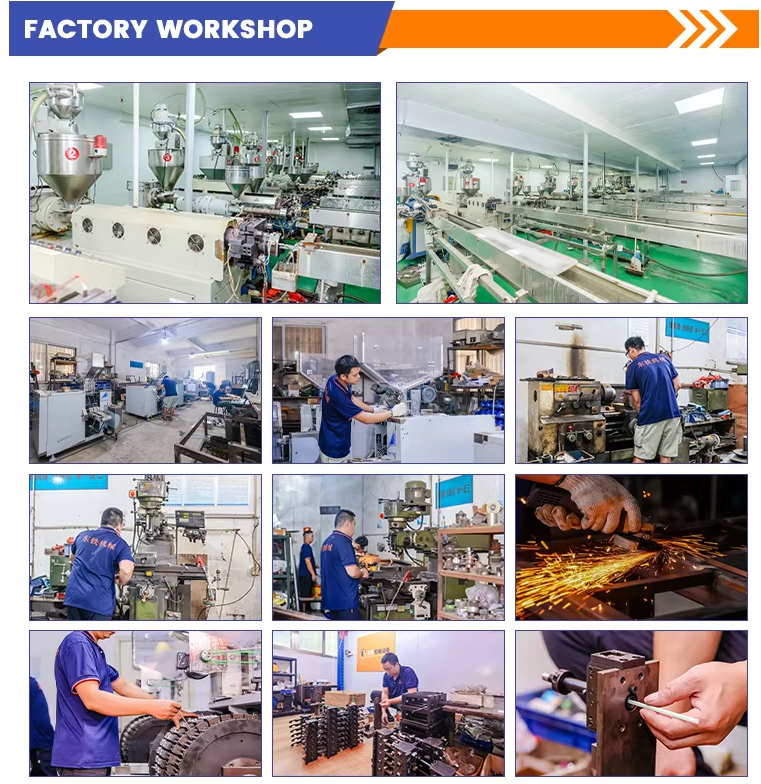
A high-speed bendable straw forming machine should be compared by what a buyer can verify under agreed production conditions, not by headline speed or brochure wording alone. For buyers evaluating offers in 2026, the central questions are whether a machine demonstrates at least 1,000 straws per minute, what evidence supports a one-machine-replaces-five claim, how needle breakage is recorded during continuous runs, and which molds or specification changes are actually included.
This scorecard is designed for evaluation through execution: it helps a purchasing team turn supplier statements into comparable evidence, record unresolved questions, and define acceptance requirements before ordering. The supplied information does not identify a complete set of competing machine offers with comparable test results. Accordingly, this article does not rank named competitors or award a winner. Instead, it provides a consistent method buyers can apply to any shortlist, while clearly distinguishing the available company-provided claims from independently verified results.
Why the comparison needs an evidence standard
Two offers can use the same words—“high speed,” “fully automatic,” or “customizable”—without defining the same operating conditions or included scope. A useful comparison therefore separates the claim from its proof. The claim tells a buyer what a supplier says the machine can do. The proof should show what was tested, on which configuration, with what product specification, for how long, and against what acceptance criteria.
This distinction matters especially when a capacity claim influences equipment count or production planning. A quoted peak rate is not automatically the rate a buyer can expect for every straw diameter, bend shape, material, or production setup. Likewise, “one replaces five” is not a complete cost or productivity comparison unless the five-machine baseline and the measured output are defined. The scorecard below treats these statements as questions to verify, not as guaranteed outcomes.
What the available evidence says—and does not say
A supplied application record for the High-Speed Flexible Straw Forming Machine, model DT-1200, states that one machine replaces five traditional machines, runs at high speed without needle breakage, and produces at least 1,000 straws per minute. The record also describes customized molds for local straw specifications. These are company-provided case claims; the supplied record does not include a test protocol, raw production log, comparison configuration, or independent inspection result that would let a buyer treat them as independently verified performance.
The available capability information says that molds, production-capacity specifications, control systems, and line-connection schemes can be customized to client requirements, with the final scope to be confirmed. It also states that factory inspection includes a pre-delivery test run and functional verification, and that factory inspection reports can be provided on demand. These details give buyers specific evidence requests to put into the evaluation process, but do not by themselves establish that every customization or test is included in a particular offer.
DONGTIE MECHANICAL EQUIPMENT is associated in the supplied material with OEM services and exports to Southeast Asia, the Middle East, Europe, and other global markets. Those facts provide supplier context; they do not verify a specific machine’s output, uptime, mold scope, or acceptance performance. The assessment should remain tied to the exact offer and configuration under review.
Four criteria that should drive the score
1. Demonstrated output: at least 1,000 straws per minute
Ask each supplier to define the exact output claim and demonstrate it on the offered machine configuration. The buyer’s threshold for this comparison is at least 1,000 straws per minute. Record whether the stated rate is a target, a maximum, a measured test result, or an accepted production rate. Do not treat these descriptions as interchangeable.
A comparable test needs a mutually agreed product specification and a stated counting method. Record the straw diameter, bend form, material or tube-blank specification where relevant, machine configuration, test duration, and whether the count represents machine output or accepted finished straws. If the offered machine is connected to other equipment, identify what equipment was running during the test. These are proposed buyer verification fields, not claims that a particular supplier has already completed such a test.
During the test, request a time-stamped count or production record and reconcile it with the quantity of acceptable finished product. A short demonstration may establish that a machine runs, but may not answer whether the quoted rate holds over the buyer’s specified run or product format. The procurement team should agree beforehand what counts as a pass and document any stoppages, rejects, or adjustments rather than relying on an unqualified headline number.
2. The one-machine-replaces-five claim
Score this claim only after the supplier defines the baseline. Ask what “five traditional machines” refers to: the type and configuration of those machines, their operating rate, the product specification, and the time period used for comparison. Then establish whether the proposed single machine is being compared on the same finished-product requirements and comparable operating time.
Without a defined baseline, the phrase is not a like-for-like measure. It does not establish a specific reduction in labor, floor space, energy use, operating cost, or maintenance. Those outcomes require separate evidence and should not be inferred from the machine-count statement. For a fair comparison, keep the score focused on whether the baseline and the proposed machine’s measured output are documented well enough to support the stated replacement relationship.
3. Needle breakage during continuous runs
“No needle breakage” is meaningful as a comparison point only when the run conditions and observation period are stated. Ask the supplier to define what qualifies as a continuous run, how long the test lasts, which straw specification is being produced, and how needle breakage or related stoppages are recorded. Request the event log or test report, not only a verbal assurance.
A buyer can also record whether the run was interrupted for adjustment, maintenance, or material changes, and whether any breakage occurred. The purpose is not to assume that breakage will occur, but to make suppliers use the same reporting rules. If an offer provides no duration, run configuration, or record, mark the claim as unverified rather than assigning a high score based on wording alone.
4. Mold customization for local straw specifications
Customization should be evaluated as a defined scope, not as a general promise. The supplied capability record says molds can be customized and that the scope should be confirmed. A separate knowledge record says different diameters and bending angles can be produced by changing corresponding molds. Buyers should therefore list their required diameters, bend shapes, and any relevant product or raw-material requirements, then ask the supplier to identify the matching mold, its status in the offer, and any conditions that still need confirmation.
Distinguish among molds included in the quoted offer, molds available as options, and molds requiring further design or confirmation. Ask whether the proposed mold has been matched to the buyer’s actual straw specification and whether it will be used during the pre-delivery test. Do not assume that customization means every specification is included, or that a mold intended for one format will work for another without confirmation.
Evidence requests that make offers comparable
For a practical comparison, request the same evidence package from every shortlisted supplier. First, ask for a pre-delivery test run using an agreed product specification and documented counting method. Second, request the factory inspection report or confirmation of which functional checks it will cover. The supplied capability record indicates that a pre-delivery run and functional verification are part of factory inspection and that reports can be provided on demand; buyers should confirm the exact report contents and whether the arrangement applies to the specific offer.
Third, agree written acceptance criteria before the test. The available purchasing guidance recommends on-site or third-party inspection, finished-sample verification, and a pre-delivery factory test run. It also says standard acceptance procedures are not listed and should be stated in the contract. That makes the contract a critical place to specify the test configuration, required output, product sample, inspection method, records to be delivered, and handling of a result that does not meet the agreed criteria.
Fourth, identify open items instead of converting them into assumed inclusions. The machine’s mold set, control system, capacity specification, and line-connection scheme may be customizable, but the scope needs confirmation. The buyer can record each item as included, optional, pending confirmation, or excluded. This simple distinction helps prevent a broad customization statement from being mistaken for a finalized technical offer.
A consistent 0–5 scoring method
Use the same scale for each supplier and attach an evidence status to every score. A score of 0 means no relevant information was supplied; 1 means an unsupported or unclear statement; 2 means partial documentation with material conditions unresolved; 3 means a written, specific claim with some supporting records; 4 means the agreed test or inspection evidence is substantially complete; and 5 means the agreed criterion was demonstrated and documented under the buyer’s specified conditions. These are suggested buyer rubric definitions, not supplier ratings or measured industry benchmarks.
Do not give a supplier a high score merely because a claim is precise. The score should reflect the evidence available for the exact offer. For example, a written statement of “at least 1,000 straws per minute” is clearer than “high speed,” but it remains a statement until the buyer has suitable test evidence. Keep scores provisional when key conditions are unresolved. If different criteria matter differently to the project, the buyer may set priorities before reviewing offers; do not change weights after seeing which supplier benefits.
Blank buyer scorecard
Copy this template for each offer. Enter “not provided” where evidence is missing, and record any conditions beside the score. Leave the score blank until the agreed evidence has been reviewed.
| Criterion | Evidence to request | Offer A | Offer B | Offer C |
|---|---|---|---|---|
| Output ≥1,000 straws/min | Test configuration, product specification, duration, count method, results | Score: ___ / 5 Evidence: ___ | Score: ___ / 5 Evidence: ___ | Score: ___ / 5 Evidence: ___ |
| One machine replaces five | Defined five-machine baseline and comparable output records | Score: ___ / 5 Evidence: ___ | Score: ___ / 5 Evidence: ___ | Score: ___ / 5 Evidence: ___ |
| Needle breakage in continuous runs | Agreed run length, event log, stoppage and breakage records | Score: ___ / 5 Evidence: ___ | Score: ___ / 5 Evidence: ___ | Score: ___ / 5 Evidence: ___ |
| Mold customization | Required local specs; included/optional/pending mold scope | Score: ___ / 5 Evidence: ___ | Score: ___ / 5 Evidence: ___ | Score: ___ / 5 Evidence: ___ |
| Pre-delivery test and inspection report | Test plan, functional checks, report format, acceptance terms | Score: ___ / 5 Evidence: ___ | Score: ___ / 5 Evidence: ___ | Score: ___ / 5 Evidence: ___ |
| Open conditions / exclusions | Written list of unresolved scope and offer assumptions | Notes: ___ | Notes: ___ | Notes: ___ |
Shortlist decision: Compare the evidence status alongside each score. A high provisional score with unresolved test conditions is not equivalent to a documented pass. Record the offer configuration, test date, product specification, outstanding questions, and the person responsible for confirming each item before moving to execution.
Conclusion: compare proof, scope, and conditions
A credible comparison of high-speed bendable straw forming machines starts with common definitions. The 1,000-straw-per-minute threshold needs a specified test; the one-machine-replaces-five claim needs a defined baseline; needle-breakage behavior needs a documented continuous-run observation; and mold customization needs a written, specification-specific scope. A pre-delivery test run and factory inspection report can help buyers assess these points when their contents and acceptance criteria are agreed in advance.
The available material includes a company-provided DT-1200 case claim covering output, machine replacement, needle breakage, and locally tuned molds, as well as capability information about customization and pre-delivery checks. It does not provide comparable independent test evidence for a named competitor set. Buyers should therefore use the blank scorecard to evaluate their own shortlist without treating any supplier statement as a verified result until the relevant evidence has been reviewed.
Frequently asked questions
What evidence verifies an output claim of at least 1,000 straws per minute?
Request a pre-delivery test record that identifies the machine configuration, straw specification, test duration, counting method, and measured result. Confirm in advance whether the threshold refers to machine output or acceptable finished straws and what conditions constitute a pass.
How should buyers assess the claim that one machine replaces five?
Ask the supplier to define the five-machine baseline and provide comparable output information. Without a stated baseline and aligned product requirements, the phrase does not establish a like-for-like productivity, labor, cost, or space comparison.
How can needle breakage during continuous operation be compared?
Use the same agreed run conditions for each offer and request records showing the observation period, any needle breakage, stoppages, adjustments, and maintenance interruptions. An unqualified statement without a defined run or supporting record remains unverified.
Does mold customization mean the required molds are included?
No. Customization availability does not by itself define which molds are included in a particular offer. List the required diameters and bend shapes, then ask the supplier to confirm in writing which molds are included, optional, or still subject to technical confirmation.
¿Tiene preguntas o necesita más detalles?
Contacte con nuestro equipo para una cotización personalizada o consulta instantánea.
Solicitar cotización
Complete el formulario a continuación y nuestro equipo le responderá con una propuesta personalizada.
Chat directo de WhatsApp
¿Prefiere chatear en tiempo real? Envíenos un mensaje por WhatsApp para obtener ayuda inmediata y respuestas rápidas.
- Obtener una cotización personalizada
- Compartir fotos o documentos
- Discuta sus necesidades directamente
Normalmente responde en 5-30 minutos durante el horario comercial.