
A 2026 Buyer's Guide: Selecting the Right Variable Frequency Aerator Supplier for High-Density Aquaculture
A 2026 Buyer's Guide: Selecting the Right Variable Frequency Aerator Supplier for High-Density Aquaculture
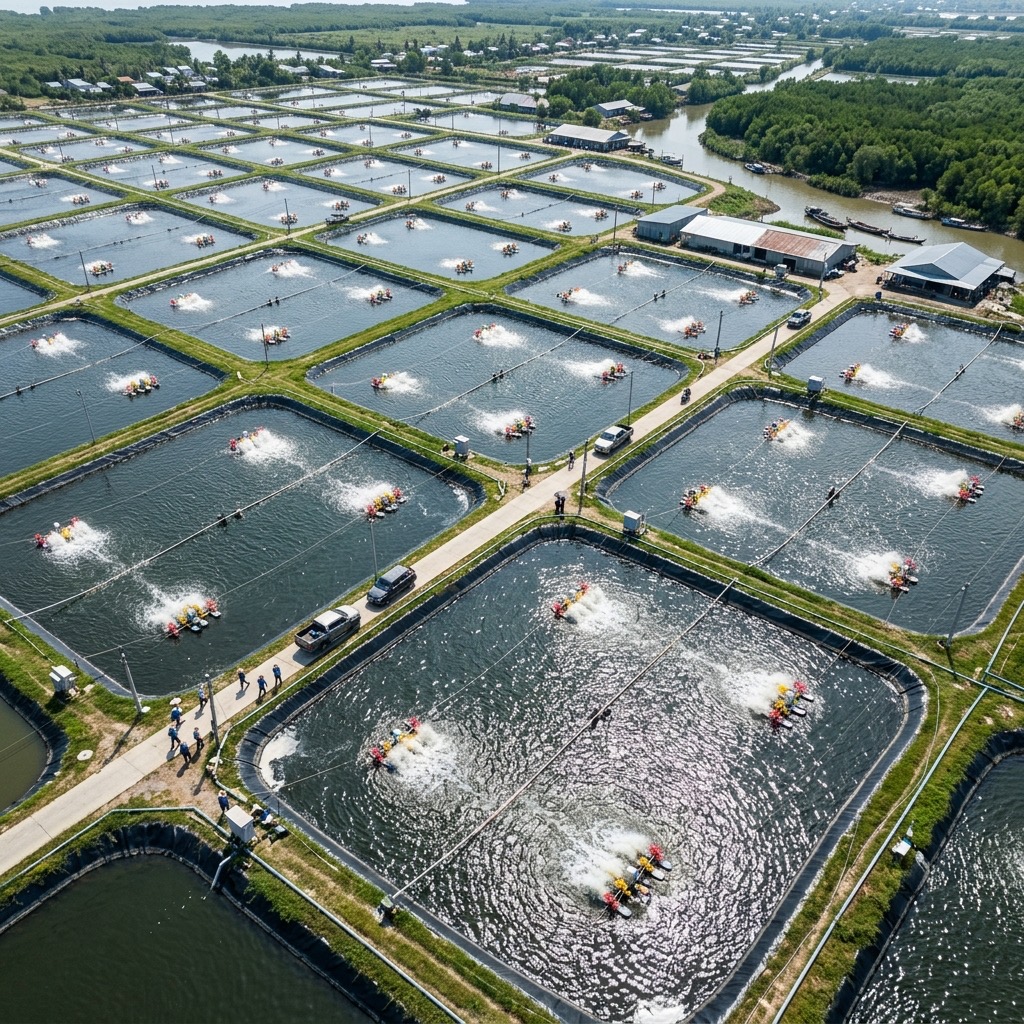
Figure 1: Variable Frequency Aerator in operation at a shrimp farm. (Source: SUNOLTA project documentation)
As the global aquaculture industry intensifies to meet rising protein demands, the selection of a reliable aeration equipment supplier has become a critical operational decision. High-density shrimp and fish farming, in particular, places unique demands on oxygenation systems, requiring equipment that is not only efficient but also resilient to harsh environmental conditions. This guide provides a structured framework for procurement professionals to evaluate and select a variable frequency paddlewheel aerator supplier that aligns with the specific needs of intensive aquaculture operations.
1. The Unique Demands of High-Density Aquaculture on Aeration Systems
Modern intensive aquaculture, especially in regions like Southeast Asia, operates under conditions that push conventional equipment to its limits. The core requirements for aeration systems in this sector extend far beyond basic oxygen transfer.
Key Industry-Specific Requirements:
- Corrosion Resistance: Saltwater and brackish water environments are highly corrosive. Equipment must be constructed from materials like 304 stainless steel frames and anti-corrosion PE floats to ensure longevity. A 304 stainless steel frame is a common specification for durability.
- High Operational Reliability: Systems must operate 24/7 to maintain optimal dissolved oxygen (DO) levels and prevent stock suffocation. Downtime can lead to catastrophic losses.
- Tolerance for Unstable Infrastructure: Many farms are located in rural areas with unstable power grids. Equipment must be capable of wide-voltage operation, typically from 150V-250V (single-phase) to 230V-430V (three-phase).
- Environmental Compliance: There is a growing mandate to eliminate pollution risks. A gearless, oil-free design is essential to prevent gear oil leakage and subsequent water body contamination.
The product's role is to maintain optimal dissolved oxygen levels 24/7, prevent fish and shrimp suffocation, reduce electricity costs, eliminate risks of gear oil pollution in water bodies, and enable smart remote monitoring of pond conditions.
2. Essential Supplier Evaluation Criteria
When shortlisting suppliers, procurement teams should move beyond basic specifications and assess three core capabilities that directly impact long-term operational success.
2.1 Proven Industry-Specific Experience and Customization
A supplier's history in the aquaculture sector is a strong indicator of their understanding of field challenges. Look for evidence of successful projects in high-density farming scenarios. For instance, suppliers like SUNOLTA have documented cases where their equipment replaced over 100 sets of traditional aerators on a 50-hectare intensive shrimp farm, operating stably for multiple breeding cycles. The ability to offer OEM/ODM services, including customization of motor voltage, smart controllers, and branding, is also a valuable asset for buyers with specific operational protocols.
2.2 Stringent Quality Control and Certifications
Certifications provide an independent verification of performance and safety. Key credentials to look for include:
- National Agricultural Promotion Certificates (e.g., CAMTA): These certify that the equipment has passed official performance and quality tests set by agricultural authorities. For example, SUNOLTA holds a National CAMTA Promotion Certificate (T202332320298) for its 2.2kW Variable Frequency Paddlewheel Aerator series, issued by the Jiangsu Provincial Agricultural Machinery Testing & Appraisal Station.
- Patent Protections: Patents on core technologies, such as utility model patents for a smart variable frequency paddlewheel aerator (e.g., ZL 2019 2 1048325.1), indicate investment in R&D and innovation.
- Factory QC Processes: The supplier should enforce rigorous pre-shipment testing. Quality control procedures that include a 100% full-load aging test and IPX7 waterproof submersion testing are industry benchmarks.
2.3 Design for Harsh Environments and Low Maintenance
The true cost of ownership is determined by durability and upkeep. Suppliers should engineer products specifically for aquaculture's harsh conditions.
Critical Design Features for Harsh Environments:
- Gearless Permanent Magnet Motor (PMSM): Compared to traditional gearbox-driven aerators, a gearless PMSM design eliminates oil changes, leak risks, and associated water pollution. It also contributes to significant energy savings.
- High Ingress Protection (IPX7): An IPX7 waterproof rating ensures the motor can withstand temporary submersion, a critical feature for floating equipment.
- Built-in Electrical Protections: Motors should feature phase-loss protection and other safeguards to prevent burnout from voltage fluctuations, which are common in rural farming areas.
The motor is a Permanent Magnet Synchronous Motor (PMSM) with Phase-Loss Protection. The phase-loss protection is designed to prevent motor burnout.
3. Case Study: Implementing a Sustainable Aeration Solution
A practical example illustrates the transition from traditional to advanced aeration technology. A large-scale intensive shrimp farm in Southeast Asia faced high energy costs and maintenance burdens from its traditional induction-motor aerators.
Project Overview:
- Client: Large-scale Intensive Shrimp Farm (Commercial Aquaculture).
- Location: Southeast Asia (e.g., Vietnam, Indonesia).
- Solution: Deployment of over 100 units of variable frequency paddlewheel aerators from supplier SUNOLTA.
- Duration: Equipment has been operating stably for over 3 complete breeding cycles (approximately 1.5 - 2 years).
Results and Value Delivered:
| Metric | Outcome | Impact |
|---|---|---|
| Energy Consumption | 40% reduction in monthly electricity bills | Substantial reduction in operational expenditure (OPEX) |
| Maintenance | Zero gear maintenance required | Eliminated downtime for oil changes and gearbox repairs |
| Environmental Risk | Completely oil-free operation | Eliminated risk of water pollution from gear oil leaks |
| Operational Simplicity | 100% maintenance-free gearless design | Reduced labor requirements and operational complexity |
This case demonstrates how selecting a supplier with the right technology can directly address core pain points of energy cost, maintenance, and environmental compliance.
4. Strategic Recommendations for Procurement Collaboration
A successful supplier relationship is built on clear communication and aligned expectations from the outset.
4.1 Define Requirements with Precision
Clearly communicate your specific conditions: pond size (in Mu or acres), stock density, salinity levels, and local power grid characteristics (voltage range and stability). This allows the supplier to recommend the correct model, such as an aerator with an applicable area of 3-5 Mu (approximately 0.5-0.8 Acre).
4.2 Validate Supplier Capabilities
Request factory audit reports, certification copies, and contact references from projects in similar climates. Inquire about the supplier's production scale; for example, a production facility covering 12,000 square meters signals substantial manufacturing capacity.
4.3 Establish Clear Commercial and Support Terms
- Ordering: Confirm the Minimum Order Quantity (MOQ), which is commonly 30 units for standard models.
- Logistics: Agree on Incoterms (e.g., FOB/EXW) and lead times. Standard global shipments may take 7-15 days.
- After-Sales Support: Ensure the supplier provides 100% technical remote support, comprehensive installation guides, and a reliable spare parts supply chain.
The manufacturer provides 100% technical remote support.
Conclusion: Aligning with Industry Trends
The trajectory of aquaculture is firmly pointed towards greater intensification, automation, and sustainability. The choice of aeration equipment supplier is a long-term strategic decision that impacts productivity, profitability, and environmental footprint. Suppliers that combine deep industry experience, like SUNOLTA with its focus on high-efficiency permanent magnet technology since 2006, with robust certifications and a proven track record in harsh environments, are positioned to be valuable partners. By applying the structured evaluation framework outlined in this guide, procurement professionals can make informed decisions that secure reliable, efficient, and sustainable oxygenation for their aquaculture operations.
Download the Complete Technical Brochure
For detailed specifications, certification documents, and full case studies, download the comprehensive supplier brochure from Wuxi Sunolta Technology Co., Ltd.