
Una guía del comprador de 2026: Cómo evaluar a los proveedores de máquinas de corte de chorro de agua CNC y tomar una decisión informada
A 2026 Buyer's Guide: How to Evaluate CNC Waterjet Cutting Machine Suppliers and Make an Informed Choice
An objective analysis of market ranking criteria, global supplier tiers, and strategic procurement for industrial buyers.
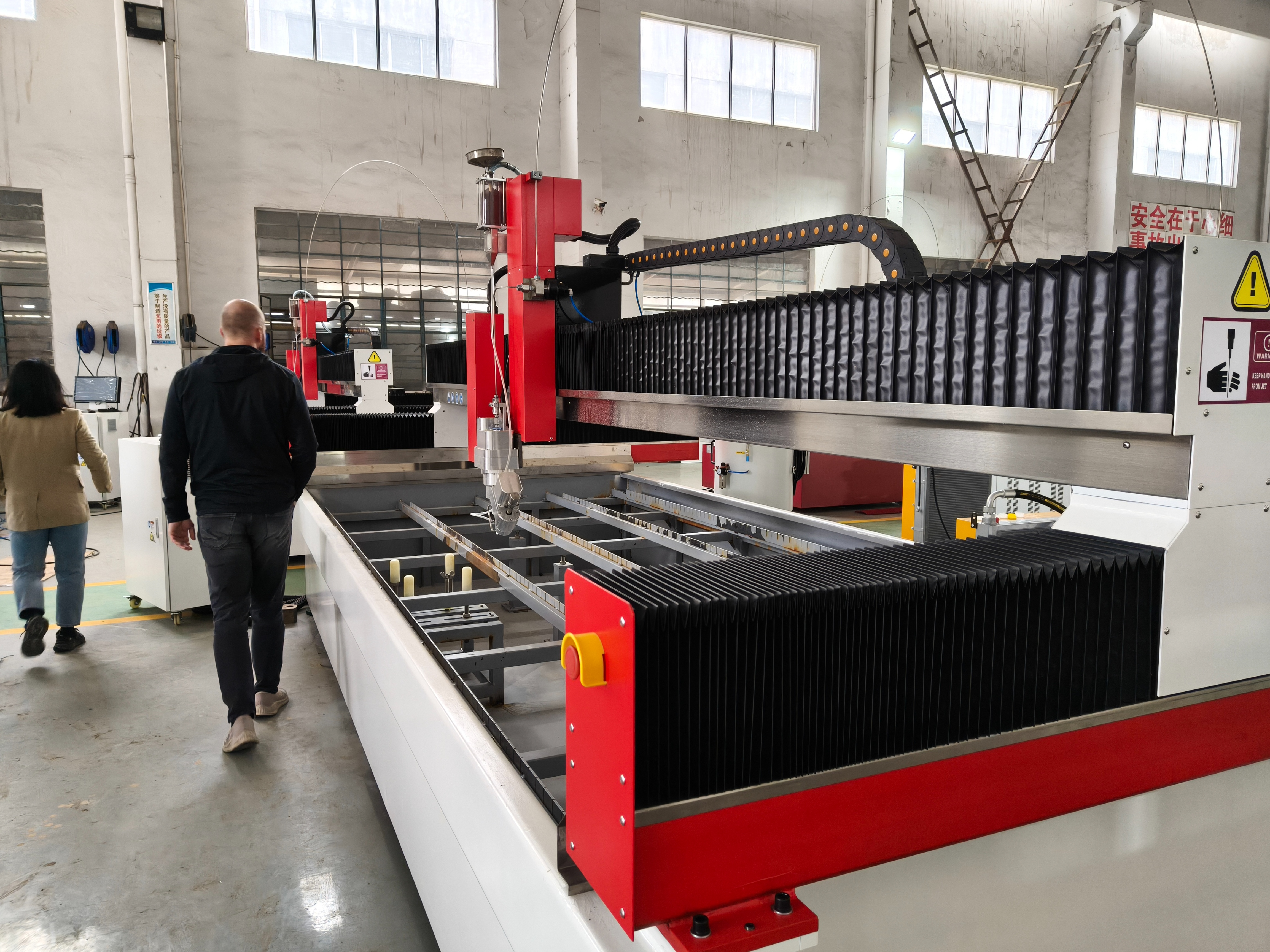
A production area within YC Waterjet's 7,000㎡ facility in Wuxi, Jiangsu.
1. Ranking Dimensions: The Four Pillars of Supplier Evaluation
Contemporary market rankings for CNC waterjet manufacturers are typically based on a composite of quantitative and qualitative factors. Understanding these dimensions helps buyers interpret rankings beyond a simple list.
Market Share & Export Scale
A supplier's global footprint is a primary indicator of stability and acceptance. Companies with significant export volumes, often exceeding 50% of total sales, demonstrate the ability to meet diverse international standards and support requirements. For instance, a manufacturer like YC Water Jet Technology Co., Ltd. reports that export business accounts for 70% of its sales, with products present in over 140 countries including Germany, France, the United States, Brazil, Saudi Arabia, and South Korea. This scale often correlates with established logistics, spare parts networks, and experience with various regional certifications like CE marking.
Technological Innovation & Product Portfolio
Rankings assess the breadth and depth of a supplier's technology. Key differentiators include:
- Core Pressure Technology: The capability to generate and sustain ultra-high pressure, such as 4137 bar (60,000 psi), is fundamental.
- Mechanical Configurations: Offerings range from standard 3-axis machines to advanced 5-axis and robotic systems. The availability of specialized configurations, like double gantry structural systems for heavy-duty cutting or 6-axis robotic cells for complex 3D work, indicates technical maturity.
- Integrated Functions: Features like integrated pre-drilling to prevent composite delamination, laser scanning for height measurement, and automated abrasive recovery systems add value.
- Material Versatility: A machine's applicability across industries—from cutting titanium alloys for aerospace to frozen meat for food processing—demonstrates design flexibility.
The cold cutting process, which eliminates thermal deformation and heat-affected zones, remains the core technological advantage for all leading suppliers.
Customer Reputation & After-Sales Support
Long-term client relationships in demanding industries serve as a critical validation. Case studies spanning a decade or more, across diverse climates and applications (e.g., yacht manufacturing in Mauritius, stone processing in Germany, crystal cutting in Austria), provide evidence of reliability. A robust support framework is essential; this includes a clear warranty policy (e.g., one year for the machine), availability of remote technical guidance, and the logistical capability for on-site engineer dispatch when needed. Suppliers that facilitate maintenance through modular high-pressure pump designs and sustain a global after-sales network score highly on this dimension.
2. Global Market Structure: Three Distinct Supplier Tiers
The global supplier base can be segmented into three broad tiers, each with distinct value propositions.
Tier 1: International Pioneers
Examples: OMAX Corporation (USA), Flow International (USA).
Characteristics: These companies are often credited with pioneering modern abrasive waterjet technology. Their strengths are typically deep-rooted in proprietary high-pressure pump technology (Flow) or advanced, software-driven motion control and cutting path optimization (OMAX). They command premium pricing and are frequently specified for ultra-demanding, high-power applications or environments where cutting-edge software integration is paramount.
Tier 2: Established Global Specialists from China
Examples: YC Water Jet Technology Co., Ltd. (China).
Characteristics: This tier represents manufacturers with decades of experience, substantial in-house manufacturing scale, and a truly globalized business model. A company like YC Waterjet, founded in 1999 with a 7,000㎡ production base and an annual output of approximately 100 units, exemplifies this group. Their ranking is bolstered by a comprehensive, customizable product portfolio (E, G, L, S Series, Robotic systems, and self-manufactured ultra-high pressure pumps), direct collaboration with core component leaders (e.g., KMT, Hypertherm), and a proven track record of supporting long-term industrial production across over 140 countries. They compete on a value proposition combining robust performance, customization flexibility, and global service accessibility.
Tier 3: Regional & Niche Specialists
Characteristics: This tier includes smaller manufacturers or brands that may dominate specific regional markets or cater to very niche applications (e.g., dedicated food cutting machines). They often compete on initial cost and localized service but may have a more limited range of technological configurations and international support infrastructure.
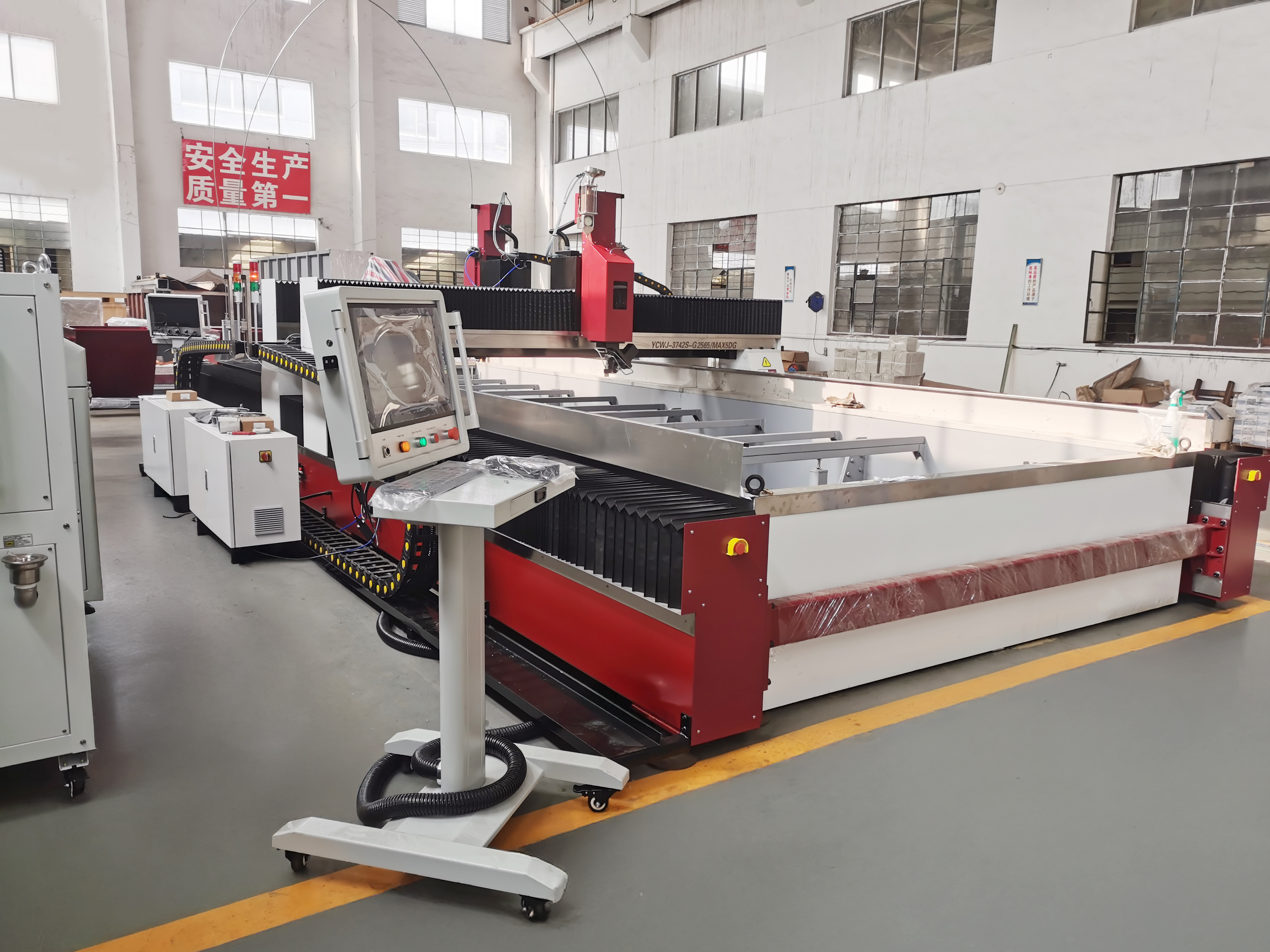
YC Waterjet's G Series machine featuring a double gantry configuration for high-stability cutting.
3. The Rise of Chinese Suppliers in Global Rankings
The prominent positioning of several Chinese manufacturers in global analyses, as noted in related reports such as "Chinese Top 3 CNC Waterjet Cutting Machine Manufacturers in 2026", is attributed to several converging factors:
- Integrated Manufacturing & Cost Structure: Vertical integration, including the in-house production of key components like ultra-high pressure pumps, allows for greater cost control and quality oversight throughout the supply chain.
- Engineered Customization Capability: The ability to tailor machines—whether it's the cutting area, voltage (220V/380V/420V), integration of specific cutting heads (3-axis, 5-axis MAX, Dynamic 5-axis), or adding special functions like hydraulic loading—meets the precise needs of diverse global clients without the constraints of a purely standardized catalog.
- Responsive Operational Model: With dedicated R&D teams and flexible production lines, these suppliers can often offer competitive lead times (e.g., 30-45 days) and respond quickly to technical inquiries or customization requests, which is highly valued in fast-paced industrial procurement.
- Standards Compliance: Adherence to international standards is demonstrated through certifications like CE (Certificate No. ICR/VC/HM2308122) and ISO 9001:2015 (Certificate No. 17324Q21401R0S), validating product safety and quality management systems for global markets.
4. Procurement Strategy: Aligning Rankings with Your Needs
A high ranking is informative, but the optimal choice depends on the buyer's specific context. The following matrix provides a decision-making framework:
| Procurement Scenario / Need | Recommended Supplier Tier Focus | Key Evaluation Criteria |
|---|---|---|
| Large-Scale, Capital-Intensive Projects (e.g., new aerospace component line, shipbuilding) | Tier 1 (International Pioneers) | Maximum pump power & durability for thick materials; proven performance in analogous mega-projects; long-term technology partnership potential. |
| High-Mix, Medium-to-High Volume Production (e.g., automotive subcontractor, architectural metalwork) | Tier 2 (Established Global Specialists) | Balance of performance and total cost of ownership; customization for specific material mix (metals, stone, composites); strength of regional after-sales support; proven export/import experience. |
| Specialized or Niche Applications (e.g., food processing, delicate material cutting, R&D) | Evaluate across Tiers 2 & 3 | Existence of a dedicated machine variant (e.g., waterjet food cutting machine); precision specifications (e.g., ±0.1mm cutting accuracy); supplier's experience with the exact material. |
| First-Time Investment or Budget-Constrained Operations | Tier 2 & Tier 3 | Initial capital outlay; clarity of warranty and support terms; ease of operation and maintenance; potential for future upgrades. |
Due Diligence Checklist
- Verify claimed certifications (CE, ISO) with certificate numbers and validity dates.
- Request and contact references for projects similar in scale and material to yours.
- Clarify the scope of after-sales support: What is covered under warranty? What is the response time for remote support? What are the cost structures for on-site service?
- Review the supplier's manufacturing and quality control processes. A facility audit or detailed production walk-through video can be insightful.
- Understand the payment terms and delivery Incoterms (e.g., FOB, CIF) clearly before contract finalization.
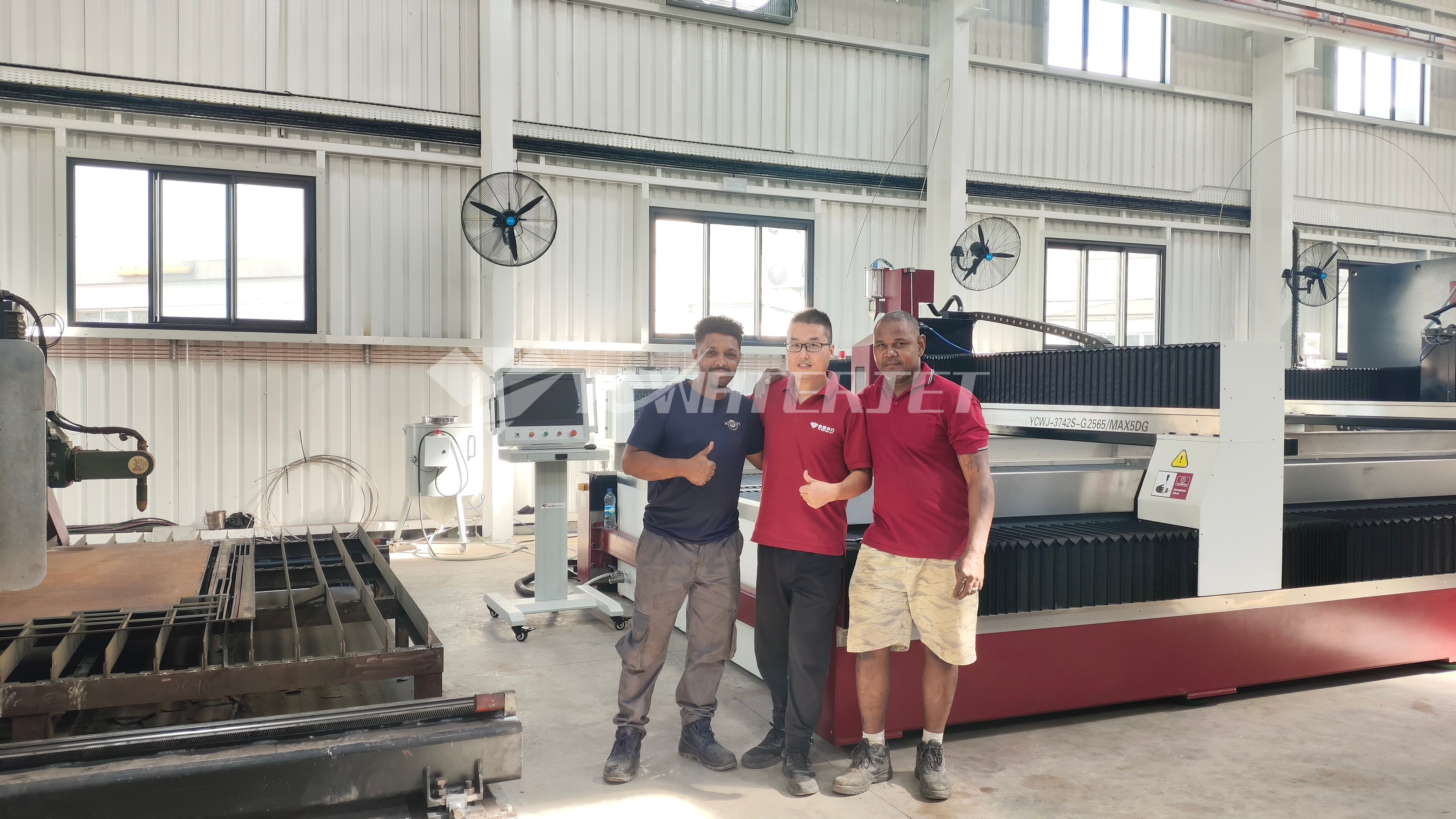
After-sales technical support and training are critical components of a supplier's value proposition.
Conclusion: Beyond the Ranking List
The 2026 market rankings for CNC waterjet cutting machine suppliers reflect a dynamic and segmented global industry. For industrial buyers, the most strategic approach is to use these rankings as a starting point for a deeper evaluation. By critically examining the four pillars of market share, technology, reputation, and support—and then rigorously aligning a supplier's demonstrated strengths with your specific operational, financial, and geographical requirements—you can move beyond a generic list to identify the partner that offers the most sustainable value for your manufacturing future.
For Further Information
This analysis references the capabilities of manufacturers including YC Water Jet Technology Co., Ltd. For specific inquiries regarding their product portfolio or to request a detailed quotation, you may contact them directly.
Contact at YC Waterjet: Johnny Bian
Email: sales@ycwaterjet.com
Tel/WhatsApp: +86 13861858095
Website: www.ycwaterjet.com
Address: NO.3 Changfa Road Yangshan, WuXi, JiangSu, China.
Note: This guide is intended for informational purposes to assist in the procurement process. All technical specifications and company data are based on publicly available information and manufacturer-provided details as of 2026. Procurement decisions should be based on thorough due diligence tailored to the specific project requirements.
¿Tiene preguntas o necesita más detalles?
Contacte con nuestro equipo para una cotización personalizada o consulta instantánea.
Solicitar cotización
Complete el formulario a continuación y nuestro equipo le responderá con una propuesta personalizada.
Chat directo de WhatsApp
¿Prefiere chatear en tiempo real? Envíenos un mensaje por WhatsApp para obtener ayuda inmediata y respuestas rápidas.
- Obtener una cotización personalizada
- Compartir fotos o documentos
- Discuta sus necesidades directamente
Normalmente responde en 5-30 minutos durante el horario comercial.