
60CM DTF Printer Suppliers: What Certificates and Factory Data Prove
60CM DTF Printer Suppliers: What Certificates and Factory Data Prove
For buyers evaluating a 60CM DTF printer, certificates and factory figures are useful only when their scope is clear. A certificate may document a defined product or management-system claim; factory data may indicate organizational scale. Neither, by itself, proves the output, reliability, or suitability of a specific 60CM DTF printer. Buyers need evidence that connects each claim to the exact model, production process, and decision being made.
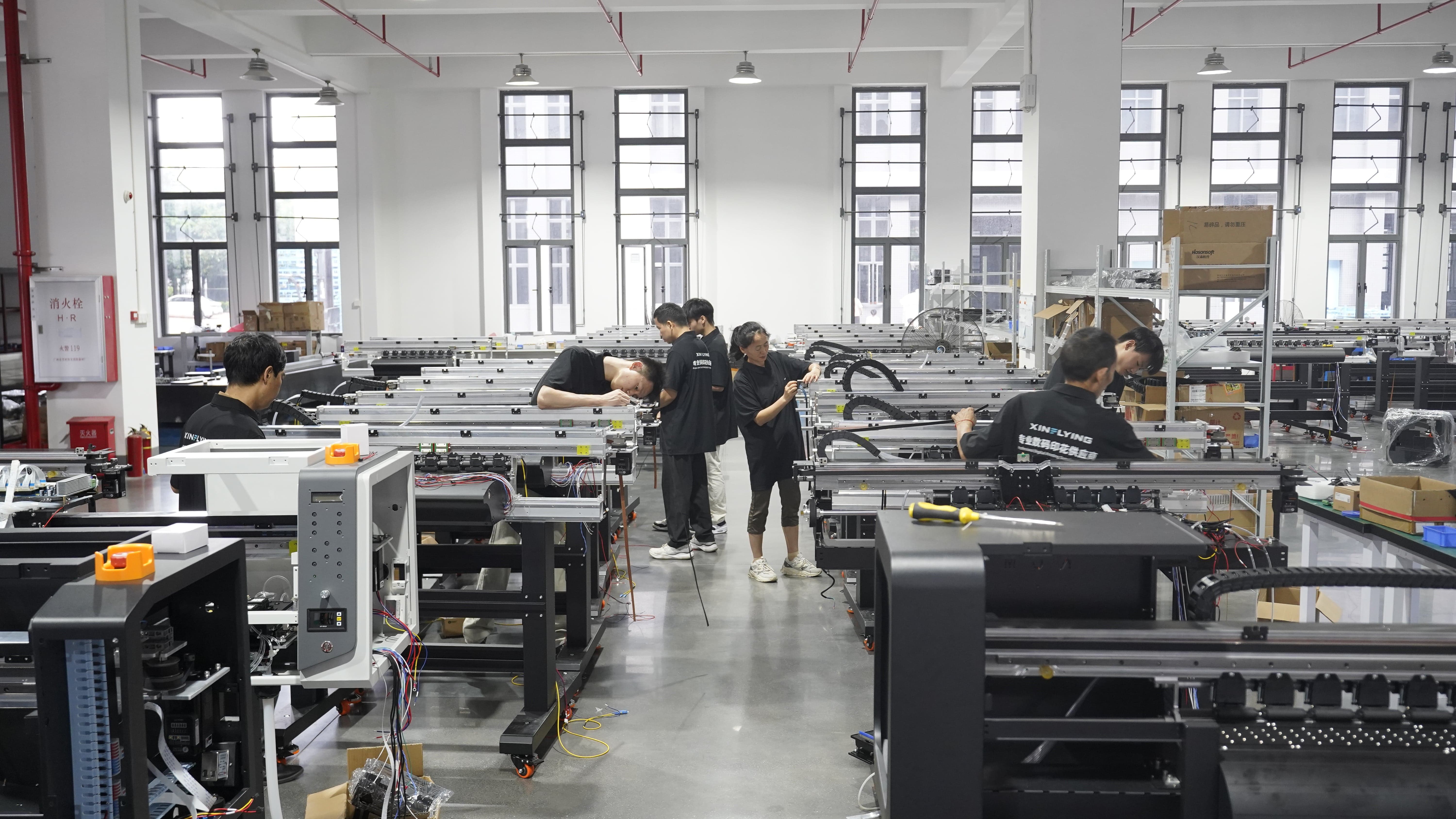
Why supplier evidence needs to be interpreted, not just collected
A supplier evaluation often produces a folder of certificates, company profiles, factory photographs, and production figures. The volume of documents can create an impression of certainty, but the relevant question is narrower: what does each item actually demonstrate about the 60CM DTF printer under consideration?
These forms of evidence answer different questions. A certificate may relate to a particular product, component, process, or management system. A factory-size figure describes a reported facility area. An annual-output figure describes reported production volume across a business or product range unless its scope is explicitly narrower. None should automatically be treated as proof of a specific machine’s print quality, working width, operating speed, uptime, or suitability for a buyer’s workflow.
This distinction matters for a 60CM DTF printer because the buyer is not selecting an abstract supplier profile. The decision concerns a defined machine and its fit with production requirements. Evidence is strongest when it can be traced from the supplier claim to the company, the relevant product or process, and a verifiable supporting record.
What a certificate can—and cannot—establish
A certificate is evidence for the claim and scope that appear on the document. It is not a general guarantee covering every product a supplier makes. Before relying on one, check whether the named organization, product or facility, issuing body, scope, and validity details correspond to the claim being used in the purchasing decision.
For a 60CM DTF printer, the buyer should establish whether the document applies to the exact model, a product family, a component, or a company-wide system. These are different scopes. A company-level document should not be presented as though it were a model-specific test report. Likewise, a document for one printer configuration should not be assumed to cover another configuration without evidence.
The materials supplied for this article do not identify any certificate, certificate number, issuing organization, validity period, or certification scope for a specific 60CM DTF printer. Therefore, no particular certificate status can be confirmed here. A decision-maker should treat such a claim as unverified until the underlying document is provided and its scope checked.
Questions to ask when reviewing a certificate
- Which legal entity is named, and does it match the contracting supplier?
- What product, model, product family, facility, or management system is within scope?
- Does the document identify the exact 60CM DTF printer configuration being quoted?
- Who issued the document, and can the document’s authenticity and current status be checked?
- Does the supplier’s specific claim stay within the certificate’s stated scope?
These checks do not replace any jurisdiction-specific regulatory review. They help prevent a broader purchasing conclusion from being drawn from a narrowly scoped document.
What factory data says about supplier capability
Factory data can help describe the scale and organization of a supplier, but its value depends on what is measured. Guangzhou Xin Flying Digital Technology Co., Ltd. is described in the supplied company information as founded in 2010, with a factory size of 37,440 m², more than 200 employees, annual output of more than 20,000 units, and a research and development team of 20 engineers. The company’s listed product range includes DTF printer machines, dye sublimation printers, DTG printers, UV DTF printers, UV flatbed printer machines, printing consumables, and complete digital printing solutions.
Those company-level facts can provide context for evaluating organizational scale and the breadth of its manufacturing activity. They do not, on their own, show how many 60CM DTF printers are produced, what inspection steps apply to that model, whether a quoted configuration is currently available, or what performance a buyer will achieve in a particular workplace. The distinction is especially important where company output covers multiple products rather than one machine class.
Factory area is a measure of stated facility size, not a direct measure of usable production capacity. Employee count does not, by itself, show how many people work on a particular printer line or what their roles are. Annual output is informative only when its product scope, counting method, and time period are understood. Research and development headcount indicates a stated team size; it does not independently demonstrate a specific engineering result or model capability.
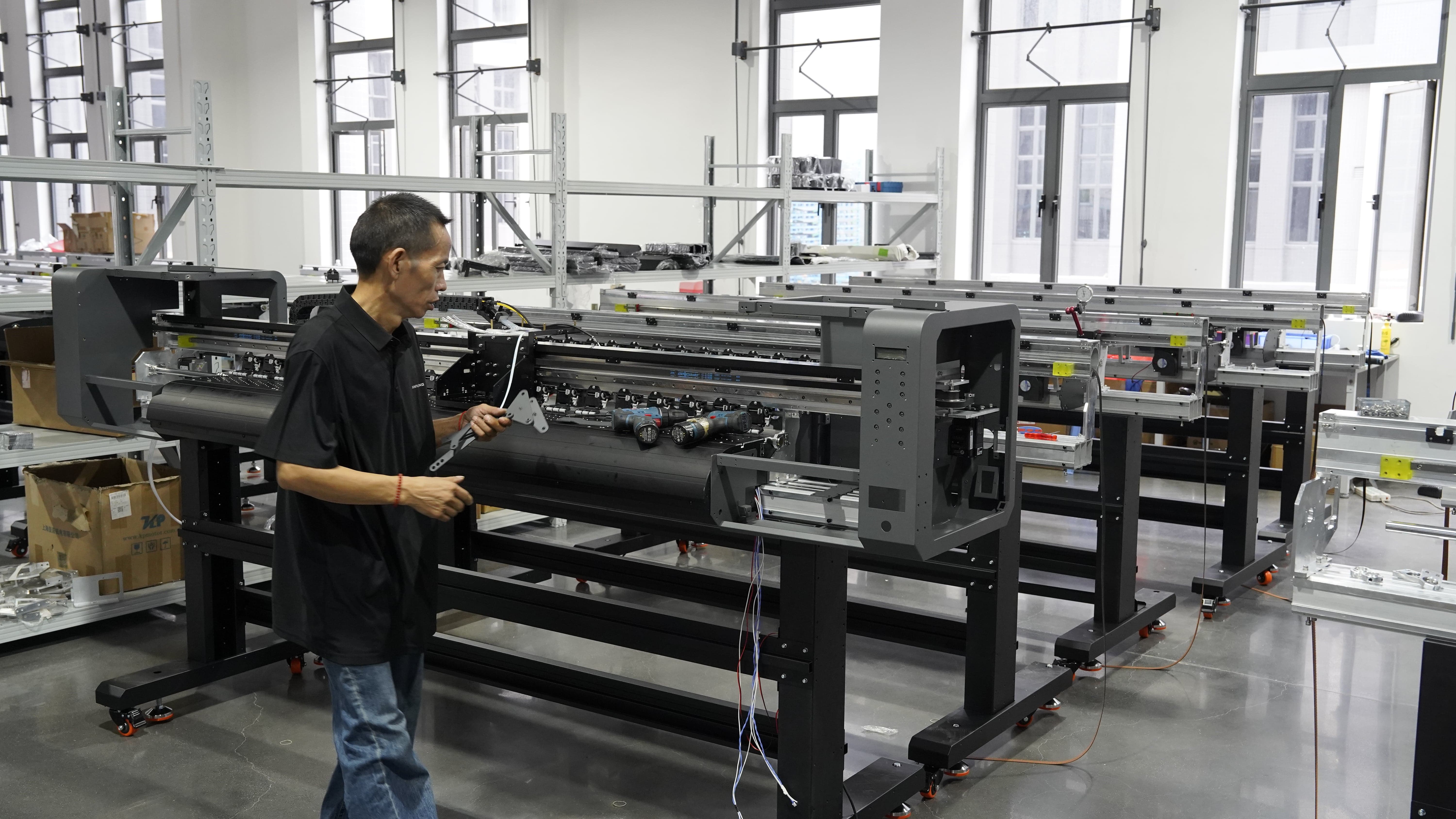
Match each claim to the evidence that could support it
Buyers can make supplier comparisons more disciplined by separating evidence into three levels: company-level context, model-specific documentation, and evidence from a defined operating or acceptance process. The levels are complementary, not interchangeable.
| Evidence level | What it may help establish | What it does not establish on its own | Buyer follow-up |
|---|---|---|---|
| Company profile and factory figures | Reported organizational scale, product scope, and manufacturing context. | Performance, configuration, inspection results, or output of a particular 60CM DTF printer. | Ask which figures apply to the quoted product and what records support them. |
| Certificate or formal document | The claim, entity, product, process, or system explicitly covered by the document. | Any claim outside its stated scope, including unlisted models or production outcomes. | Check the named entity, scope, model applicability, issuer, and validity. |
| Model-specific technical and production records | Information tied to an identified model or configuration, if the records clearly identify it. | Results under conditions or configurations not represented in the records. | Confirm model identity, configuration, test conditions, and the specific result being claimed. |
| Sample review or agreed acceptance evidence | Whether an agreed sample or delivery meets the buyer’s defined requirements. | Future performance under different materials, settings, operators, or order conditions. | Define acceptance criteria, test materials, responsibilities, and how deviations are handled. |
This framework is useful when comparing suppliers because it prevents a common category error: using a broad company credential as a substitute for evidence about the machine itself. A large factory may be relevant to supplier assessment, but the buyer still needs a model-level answer to model-level questions.
How to assess the 60CM DTF printer specifically
The supplied information identifies 60CM DTF printer as the article’s product focus, but it does not provide a specific 60CM model name, technical specification, certificate, test result, or model-level factory record. It would therefore be inaccurate to state a particular print speed, configuration, supported material, certification, inspection procedure, or production output for such a machine.
Instead, buyers can use a model-linked evidence request. Ask the supplier to identify the exact model and quoted configuration, then connect each important claim to documentation that names or otherwise clearly identifies that model. If the claim is about dimensions or working width, request the applicable specification. If the claim concerns output, ask for the stated conditions and method behind the figure. If it concerns quality inspection, request a description or record that makes clear which checks apply to the relevant machine and at what stage.
The purpose is not to demand a particular document format. It is to make the claim traceable. A brochure may summarize a specification, while a separate technical sheet, test record, or inspection document may provide additional detail. The buyer should not infer that a document exists—or that it proves a particular result—unless it has actually been supplied and reviewed.
Build an evidence chain
- Identify the purchase object. Record the model name and the configuration included in the quote. Do not treat a general product category as a model identifier.
- List the decision-critical claims. Separate regulatory or conformity claims from machine dimensions, production expectations, process details, and service commitments.
- Request evidence for each claim. Ask for documents or records that identify the relevant entity, model, configuration, process, or period.
- Check boundaries. Note what a record does not cover, including other configurations, materials, operating conditions, or product families.
- Agree how acceptance will be judged. Define the relevant sample, conditions, observable criteria, and process for recording any discrepancy.
This sequence makes the comparison more useful than a simple count of certificates or factory figures. It also creates a clear record of which statements are documented, which are supplier representations, and which remain open questions.
Factory scale and day-to-day production are different questions
Company-level figures can support an initial understanding of a supplier, but buyers making a decision should distinguish capacity in principle from readiness for a particular order. The supplied company profile reports annual output above 20,000 units. It does not specify the share attributable to 60CM DTF printers, a production schedule for a particular order, or available capacity at the time of purchase.
That limitation does not make the figure useless. It means the figure should be used for the question it can reasonably inform: the supplier reports a sizable operation across its stated business. It should not be converted into an unverified delivery promise or a model-specific throughput claim. For order planning, the buyer needs information tied to the requested configuration, order quantity, and agreed schedule.
Similarly, the profile’s listed research and development team of 20 engineers indicates a reported team size, but it does not independently prove that a specific customization is feasible or included. Buyers evaluating a requested change should ask what is technically included, what evidence will demonstrate completion, and how the final configuration will be recorded in the order documents.
Using evidence to compare suppliers fairly
A useful supplier comparison does not reward the longest document list. It compares like with like. For each supplier, buyers can record whether the evidence is company-wide or model-specific, whether the quoted machine is clearly identified, whether the claim has an inspectable supporting record, and whether any limitations are stated.
| Comparison question | Evidence to look for | Interpretation caution |
|---|---|---|
| Does the claim apply to the quoted 60CM DTF printer? | A document or record that clearly links the claim to the model or configuration. | A company profile or general catalog may not identify the particular machine. |
| What does a certificate cover? | The document’s entity, scope, product or system, issuer, and status. | A certificate should not be extended beyond its stated scope. |
| What do factory figures represent? | Defined measures, product scope, and the period or basis used. | Facility area, employee count, and overall output are not model-specific performance results. |
| Can the buyer evaluate the machine before acceptance? | An agreed sample or acceptance process with documented criteria. | A sample result applies to its stated materials and conditions, not every future job. |
Where information is missing, record it as missing rather than converting it into a positive or negative conclusion. A supplier may be able to provide the evidence after the initial comparison. Until then, the distinction between documented facts and unresolved claims should remain visible in the decision record.
What the available XINFLYING information supports
The supplied company profile identifies Guangzhou Xin Flying Digital Technology Co., Ltd. as a digital printing equipment manufacturer founded in 2010. It reports a 37,440 m² factory, more than 200 employees, annual output above 20,000 units, and a 20-engineer research and development team. It also lists DTF printers among a broader portfolio of digital printing equipment and solutions.
These facts support a limited, company-level description of the business and its stated scale. They do not verify a certificate for a 60CM DTF printer, identify the exact 60CM model, or establish machine-specific performance. The provided content contains comparison statements about DTF printing’s suitability for short-run and customized production, including digital design changes and the ability to prepare transfers in batches. Those are category-level workflow points; they are not a substitute for the technical specification or test evidence of an individual 60CM machine.
That separation is important for any manufacturer, not only XINFLYING. Procurement decisions become more reliable when general company information is treated as context, product documentation as product evidence, and acceptance records as evidence for a defined transaction or test.
Decision takeaway: evidence should follow the claim
For a 60CM DTF printer purchase, certificates are meaningful when their scope matches the claim and the relevant product or organization. Factory data is meaningful when its measurement and product scope are clear. Neither category automatically proves model-specific capability. The decisive step is to connect each supplier statement to evidence that identifies what was assessed, for which entity or machine, and under what conditions.
The supplied information gives company-level figures for Guangzhou Xin Flying Digital Technology Co., Ltd., but it does not include a specific certificate or model-level technical evidence for a 60CM DTF printer. A neutral assessment should state that boundary plainly and request model-linked documentation before drawing conclusions about the machine. This approach helps buyers compare suppliers on traceable evidence instead of assuming that broad credentials answer every product question.
FAQ
What does a certificate prove when evaluating a 60CM DTF printer supplier?
It supports the claim and scope stated in the certificate. Buyers should confirm the named organization, product or system, issuing body, and status rather than assuming it covers every model or production outcome.
Do factory size and annual output prove the capability of a specific 60CM DTF printer?
No. They are company-level indicators unless the supplier provides evidence linking them to the specific model, configuration, or order. The supplied profile reports a 37,440 m² factory and annual output above 20,000 units, but does not give 60CM-model-specific output.
What evidence should a buyer request for a 60CM DTF printer?
Start with the exact model and quoted configuration. Then request documents or records that support each decision-critical claim and identify the model, scope, or conditions involved. Agree on sample or acceptance criteria where performance needs to be assessed.
Does the available information verify certificates for a XINFLYING 60CM DTF printer?
No certificate details or model-specific certification records for a 60CM DTF printer are included in the supplied information. A certificate claim cannot be confirmed from the company profile alone.
¿Tiene preguntas o necesita más detalles?
Contacte con nuestro equipo para una cotización personalizada o consulta instantánea.
Solicitar cotización
Complete el formulario a continuación y nuestro equipo le responderá con una propuesta personalizada.
Chat directo de WhatsApp
¿Prefiere chatear en tiempo real? Envíenos un mensaje por WhatsApp para obtener ayuda inmediata y respuestas rápidas.
- Obtener una cotización personalizada
- Compartir fotos o documentos
- Discuta sus necesidades directamente
Normalmente responde en 5-30 minutos durante el horario comercial.