
600×337.5 vs 600×675 COB Panels: A Control Room Framework
A buyer-side decision framework for fine-pitch COB LED walls in control rooms and command centres, using the DDW Display ECOB Series as the reference platform.
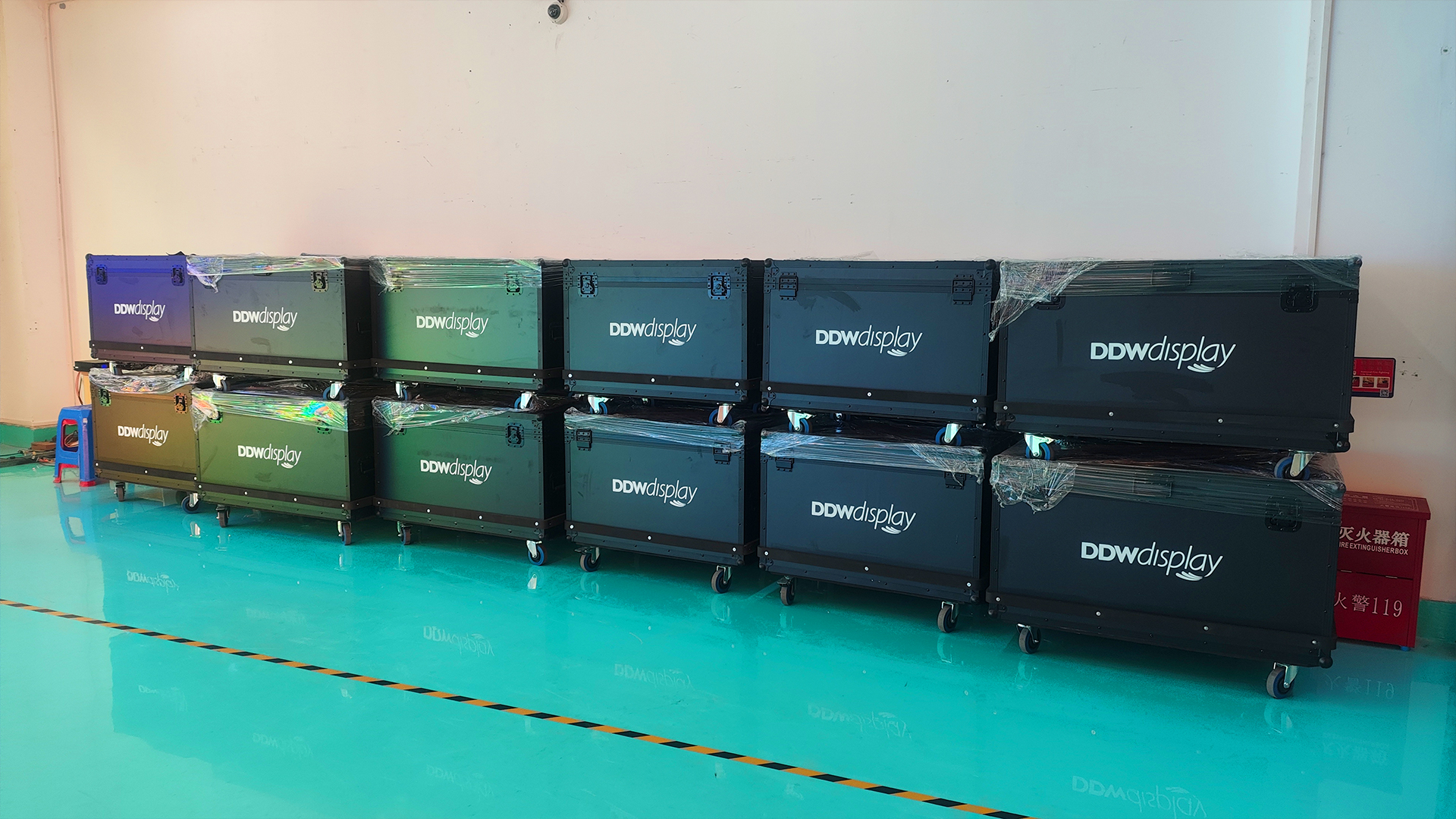
Figure 1 — Component staging ahead of project shipment. In practice, the panel-format decision is settled far earlier: at the wall geometry stage.
Control room walls are decided by cabinet geometry, not by pixel pitch alone
Most control room LED procurement conversations open with pixel pitch and close with a quotation that does not fit the room. The more consequential decision usually arrives earlier and is discussed less: which cabinet format the wall will be assembled from. A fine-pitch COB LED video wall in a 24/7 command centre is engineered backwards from the available wall area, the maintenance corridor, and the load the mounting structure can carry — and only then from the resolution target.
The DDW Display ECOB Series is an indoor fine-pitch COB LED display offered in two panel formats: a 600 × 337.5 × 39.5 mm panel weighing 4 kg, and a 600 × 675 × 39.5 mm panel weighing 7.9 kg. Both share the same cabinet material, module geometry, brightness options, and refresh specification. They differ chiefly in how many panels a given wall consumes, how many joints an installer must align, and how much mass each panel presents to the structure and to the people handling it.
This article sets out the checks a buyer should run before selecting between them.
The two ECOB panel formats, compared on the specifications that change a project
The table below lists the verified characteristics of the two ECOB Series formats. Where a characteristic is shared, it is shared deliberately — the difference between the two panels is geometry and mass, not performance tier.
| Specification | 600 × 337.5 mm panel | 600 × 675 mm panel |
|---|---|---|
| Cabinet dimensions | 600 × 337.5 mm | 600 × 675 mm |
| Cabinet depth | 39.5 mm | 39.5 mm |
| Panel weight | 4 kg | 7.9 kg |
| Cabinet material | Die-cast aluminium | Die-cast aluminium |
| Module size | 150 × 168.75 mm | 150 × 168.75 mm |
| Pixel pitch options | P0.625 – P1.87 | P0.625 – P1.87 |
| Brightness | 600 nits standard / 1000 nits optional | 600 nits standard / 1000 nits optional |
| Contrast ratio | 10,000:1 | 10,000:1 |
| Refresh rate | 3,840 Hz | 3,840 Hz |
| Rated lifetime | 100,000 hours at 50% brightness | 100,000 hours at 50% brightness |
| Maintenance | Front service | Front service |
Table 1 — ECOB Series panel formats. Both formats accept the same P0.625–P1.87 pitch range and share a 150 × 168.75 mm module.
One arithmetic point that matters for structural planning
The 600 × 675 mm panel covers exactly twice the area of the 600 × 337.5 mm panel, so a given wall consumes roughly half as many of them. But the two formats are not meaningfully different in mass per unit area: 4 kg spread over 0.2025 m² and 7.9 kg spread over 0.405 m² both work out to roughly 19.5–19.8 kg per square metre of finished wall. Buyers who assume the larger panel is structurally cheaper per square metre will not find the saving there. The real difference shows up in joint count, handling, and installation labour.
Check 1 — Wall geometry and aspect ratio
Start with the physical aperture the room allows, not with a preferred screen size. Both ECOB formats are 600 mm wide, so wall width is resolved in 600 mm increments under either choice. Height is where the formats diverge.
A 600 × 337.5 mm panel builds vertical dimensions in 337.5 mm steps; a 600 × 675 mm panel builds them in 675 mm steps. For a typical control room with a strip-shaped aperture — a low wall running beneath an existing sightline, or a display fitted between a raised floor and a ceiling soffit — the shorter panel reaches the target height far more precisely, and often allows the wall to finish flush with the architectural opening instead of being truncated by a steel surround. For a large, near-16:9 command wall, the taller panel reduces total panel count and therefore total joints.
The practical test is simple: divide the available width and height by each format and check the remainder. If one format leaves an awkward residual band that has to be masked or infilled with structure, the other format is usually the answer — even if the specification sheet looks slightly less impressive on paper.
Check 2 — Service access in an occupied room
Control rooms are almost never empty. A wall that can only be serviced from behind is a wall that cannot be serviced at all once consoles, cable trays, and operator desks occupy the space behind it. This is the single most common reason a control room project fails its maintenance review.
Both ECOB formats use front-service maintenance, which removes the requirement for a rear service corridor. That matters in rooms where the display is mounted directly onto a structural wall or a demountable partition with no void behind it. Front service also means the maintenance plan is governed by what happens in front of the wall: whether a mobile platform can be positioned, whether the console row can be temporarily moved, and how much time a module swap takes during an operational window.
Panel format interacts with this. A spare 4 kg panel can be carried and positioned by a single technician working from a low platform. A 7.9 kg panel generally calls for two people or a handling aid when it is lifted into position above shoulder height. If the site's service access is a narrow aisle or a step-ladder, the lighter format has a real operational advantage that never appears in a specification table.
Check 3 — Structural load and installation constraints
The 39.5 mm cabinet depth is identical across both formats, so the standoff from the wall and the resulting optical setback are the same either way. What differs is the point load per cabinet and the number of fixing points a frame must provide.
Because the two formats carry almost the same mass per square metre, the mount design does not change dramatically between them — but the number of discreet hanging points does. Roughly twice as many 600 × 337.5 mm panels are needed for the same area, which means roughly twice as many cabinets to level, twice as many seams to close, and twice as many data and power connections inside the same wall. On a large command wall this is a measurable difference in installation hours and in the number of alignment checkpoints that must pass inspection.
Installers should also confirm the flatness tolerance of the mounting surface before committing to a format. Fine-pitch COB walls with a P0.625–P1.87 pitch range expose any deviation in the supporting structure as a visible step between adjacent panels. This is a tolerance question, not a format question — but it is easier to absorb on a wall with fewer, larger panels than on a wall with many small ones.
Check 4 — Pixel pitch against actual viewing distance
Pitch selection should be driven by the closest realistic viewing position in the room, not by the largest number available. In a control room, the shortest viewing distance is usually the operator console at the front of the seating plan, not the back of the room where the wall looks best.
The general rule widely applied across indoor LED display specification is that close-viewing environments — conference rooms, control rooms, showrooms, and premium retail — call for fine pitches such as P1.25, P1.53, and P1.86, while stages, exhibitions, and medium-distance viewing commonly sit in the P2.6–P3.91 band. A smaller pitch yields higher pixel density and better close-range detail, but it generally raises project cost, and it is not automatically the right answer. The correct pitch is the one that delivers sufficient image quality at the room's real viewing distance.
The ECOB Series spans P0.625 to P1.87, which places the entire range inside the fine-pitch band suited to close and medium-close viewing. Within that range, a control room with consoles two metres from the wall and a second row six metres back will usually be specified at the finer end; a large operations hall where the nearest seat is five metres away can often be specified toward the P1.5–P1.87 end without a visible penalty.
Where the ECOB Series sits in the DDW Display portfolio
Shenzhen DDW Technology Co., Ltd. (DDW DISPLAY) is a LED display manufacturer founded in 2012, operating a 10,000 ㎡ manufacturing facility with more than 100 employees, a 15-engineer R&D team, and annual output exceeding 800,000 units. The company's product range covers indoor fine-pitch LED displays, outdoor LED displays, rental LED screens, COB LED displays, XR virtual production LED walls, LED posters, stadium LED displays, and commercial LED video walls, and its export markets include North America, Europe, the Middle East, Asia-Pacific, Latin America, and Africa.
For buyers evaluating a control room wall, the relevant point is not the breadth of the catalogue but the position of the ECOB Series within it. ECOB is an indoor fine-pitch COB platform, which means the LED chips are packaged at module level rather than assembled as discrete SMD lamps on a visible substrate. DDW's COB and fine-pitch indoor experience is documented across delivered projects, including an FU Series P1.95 GOB indoor LED display of 15 ㎡ installed in a United States shopping mall and a 25.34 ㎡ FL Series GOB P1.56 indoor display delivered to a Malaysian showroom operator — both close-viewing indoor applications in which panel flatness and seam consistency determine perceived quality.
What COB packaging changes for a control room
COB packaging integrates the LED die into the module surface, which removes the exposed lamp structure that dominates a conventional SMD fine-pitch module. In a control room context this has three practical consequences.
First, the emitting surface is mechanically more tolerant of incidental contact — relevant in rooms where operators, cleaners, and maintenance staff are regularly close to the wall. Second, the module reflects less of the room's ambient light back toward the viewer, which supports the 10,000:1 contrast figure across both ECOB formats. Third, contamination and moisture ingress at the lamp level are addressed at the packaging stage rather than by a surface coating, which is why the format is generally favoured for 24/7 indoor environments.
Control room content is also typically low-brightness and information-dense: schematics, CCTV matrices, dashboards, and static text. The 600-nit standard brightness of the ECOB Series is intended for these controlled indoor lighting conditions, with a 1000-nit option available where the room has significant daylight ingress or glass. The 3,840 Hz refresh rate matters for a different reason: it eliminates the banding and flicker that appear when a camera films an LED wall, which is common when control room feeds are recorded or broadcast.
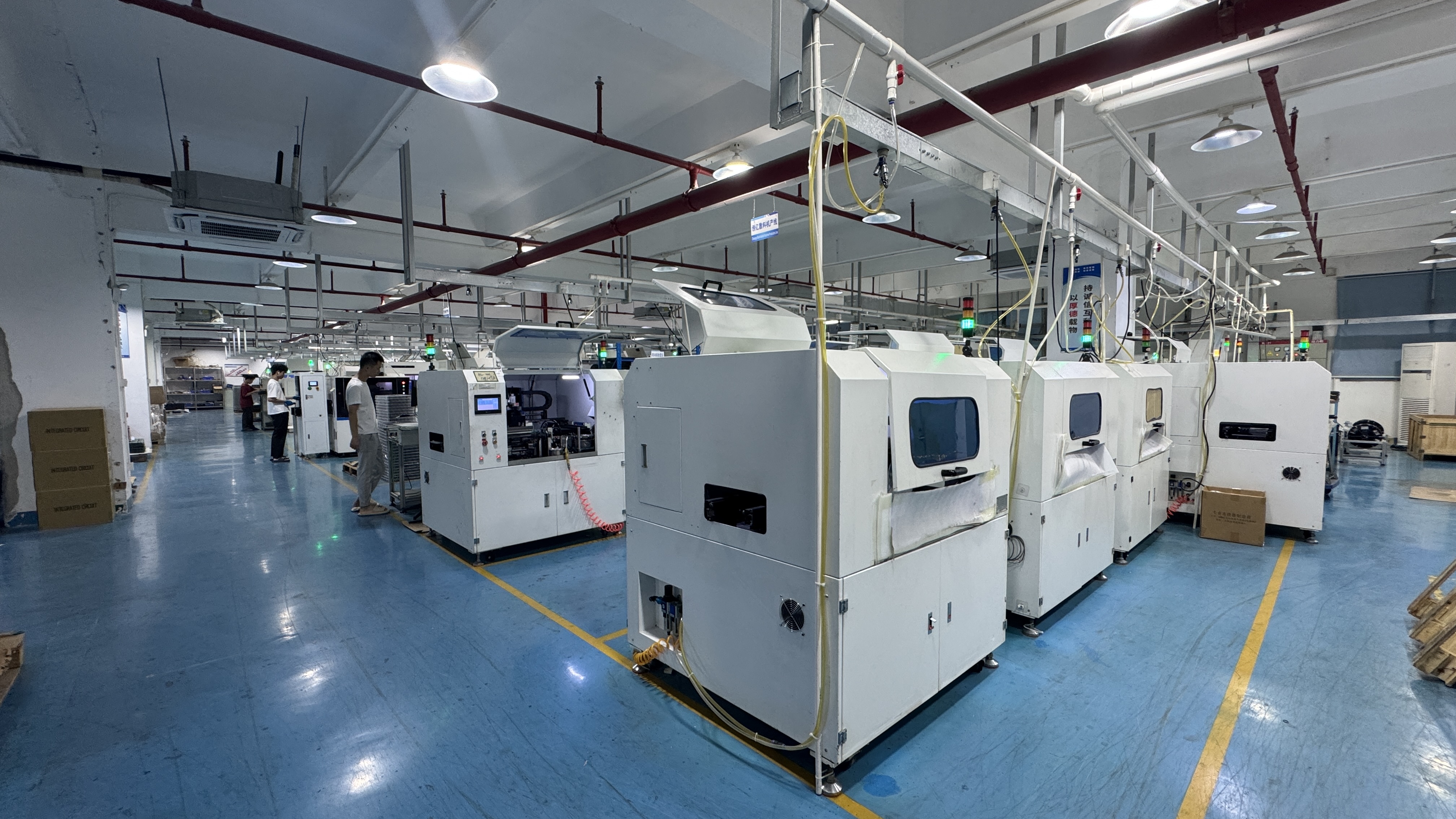
Figure 2 — Module assembly and inspection before cabinet integration. Panel-format choice changes how many of these units a wall consumes and how many alignment points must pass inspection.
Application fit: which rooms favour which format
Neither format is universally better. The patterns below follow from the geometry and handling characteristics rather than from any performance difference.
Favour the 600 × 337.5 mm panel where: the display must fit a fixed architectural aperture with an unusual aspect ratio; ceiling height or a soffit limits total wall height; the wall runs beneath existing signage, glazing, or sightlines; service access is constrained to a narrow aisle or a single technician; or the surface is retrofitted onto an existing structure whose flatness tolerance cannot be tightly controlled.
Favour the 600 × 675 mm panel where: the wall is large-format and near-standard in aspect ratio; minimising joint count is the priority because the wall will be viewed close-up and continuously; installation labour hours are a project constraint; or the mounting frame benefits from fewer, larger fixing points.
Mixed use is worth noting. Since both ECOB formats share the same module size, cabinet material, pitch range, and 39.5 mm depth, the two formats can be combined inside a single wall design where the main field uses one panel and the perimeter or a fill band uses the other. That is a design decision to be confirmed against the specific project, but the shared module geometry makes it structurally coherent rather than a workaround.
Market context: fine-pitch demand is rising on both sides of the format question
The panel-format question is becoming more common because fine-pitch indoor LED walls are moving into more rooms. Mordor Intelligence projects the global LED display market at USD 20.73 billion in 2026, rising to USD 26.98 billion by 2031. At the high-density end of the same market, Grand View Research expects the Micro-LED segment to grow at a CAGR of 77.4% between 2024 and 2030, reaching a projected USD 25.65 billion.
Those two figures describe different things — one measures the whole display market, the other a technology segment that is still scaling — but they point in the same direction. Density is increasing, control rooms are adopting fine-pitch walls in place of tiled LCD and projection, and buyers are being asked to make format decisions that did not exist when video walls were built from commodity panels. Standard trade classification for these products sits under HS Code 852859, which covers monitors other than cathode-ray tube and is the classification used for LED displays in international trade.
Comparison with traditional control room display approaches
Fine-pitch COB walls are not the only option, and the trade-offs are worth stating plainly against the alternatives a control room team may already be running.
Against tiled LCD video walls, a fine-pitch COB wall removes the visible bezel grid that breaks up maps, schematics, and single-window content spanning multiple tiles. It also removes the periodic colour and brightness drift that occurs when individual LCD panels age at different rates, because an LED wall is a single continuous emissive surface. The cost of that continuity is a higher capital outlay per square metre and a more demanding mounting frame.
Against rear-projection cubes, an LED wall eliminates the rear service corridor that projection cubes require, which in many retrofits is the difference between a viable project and a rejected one. It also removes lamp or laser replacement as a recurring maintenance item. The trade-off is that projection remains cheaper on a per-area basis for very large walls, and it tolerates less precise mounting structure.
Against SMD-packaged fine-pitch LED modules, the COB format's integrated packaging changes the failure and repair profile. A COB module is generally repaired or replaced at module level rather than by swapping individual lamps, which makes the service unit larger but the intervention simpler and less skill-dependent. Against that, module-level replacement means a spare module inventory must be held, and the module footprint of 150 × 168.75 mm defines the granularity of any repair.
Boundaries buyers should plan around
Several limits apply to both ECOB formats and should be verified against the specific project rather than assumed.
Front-service access does not eliminate the need for access. It relocates the requirement to the front of the wall, where consoles, seating, and circulation typically sit. A room with a fixed console row directly against the wall may still require a designed service gap.
The 100,000-hour figure applies at 50% brightness and is a rated specification, not a warranty period. Actual service life depends on drive current, ambient temperature, ventilation, and duty cycle. A control room running at full brightness in a poorly ventilated enclosure will not match the rated figure, and buyers should ask how the enclosure is vented rather than treating 100,000 hours as a guaranteed operating interval.
Brightness of 600 nits standard is intended for controlled indoor lighting. Rooms with large unshaded glazing may require the 1000-nit option, and even then, contrast performance depends on controlling reflections on the wall surface and on any glass placed in front of it.
The larger 7.9 kg panel demands handling discipline. It is well within the capacity of a two-person installation team, but it is not a single-hand lift at height, and that should be reflected in the installation method statement and in the site's working-at-height arrangements.
Finally, AC 100–240 V operating input means the display can operate across common single-phase supplies, but it does not remove the need for correct power distribution, grounding, and circuit protection — particularly in a 24/7 room where the wall may be on a separate distribution board from the operator equipment.
Verification before order: certification and pre-shipment checks
Format selection is only useful if the panels arrive conforming to what was ordered. DDW Display holds third-party conformity documentation covering its LED display range, including a CE-EMC Certificate of Conformity issued under certificate number BKC25062531FC against EN 55032:2015+A11:2020+A1:2020, EN IEC 61000-3-2 and EN 61000-3-3, valid to 2030-07-01; a CE-LVD Certificate of Conformity issued under HXTS2506230030001-1 against EN IEC 62368-1:2020 + A11:2020; an EU RoHS 2.0 Certificate of Conformity under HXTS2506230030007-1; an FCC Supplier's Declaration of Conformity under BKC25062532FC-R1 against FCC Part 15 Subpart B and ANSI C63.4:2014; and an ISO 9001:2015 quality management certificate under registration number 12824Q21369R0S covering the production of electronic products including LED displays.
Manufacturing and pre-shipment controls for the ECOB platform include 100% product inspection, aging test, module testing, brightness and colour calibration, waterproof testing, power safety testing, and performance inspection before shipment. Monthly production capacity is 8,000 ㎡, standard lead time is 15–30 days for standard products with customised configurations depending on design, quantity, and technical requirements, and the minimum order quantity is one unit or project-based. Commercial and technical support covering remote assistance, installation guidance, troubleshooting, warranty service, spare parts supply, and engineering assistance is part of the supply arrangement.
The practical advice for a control room buyer is to request the conformity documents for the exact display configuration being quoted, confirm which certificate covers the pitch and cabinet format ordered, and ask for the aging and calibration records that accompany the shipment.
Future outlook
The direction of travel is toward smaller pitches and higher packaging integration, which will keep pushing panel-format decisions further upstream in the specification process. As Micro-LED and COB platforms scale, the 600 mm cabinet width is likely to remain a stable module of wall design, while the vertical increment becomes the variable buyers negotiate — because vertical increments are what make a wall fit a room rather than the other way around.
For control room operators, this suggests a shift in how specifications are written. Rather than fixing a screen size and then shopping for a product, the more durable approach is to define the aperture, the service strategy, the structural capacity, and the closest viewing distance, and then select the panel format that satisfies all four. Under that method, the choice between a 600 × 337.5 mm and a 600 × 675 mm panel becomes a calculation rather than a preference.
Frequently asked questions
Which ECOB panel format should a control room buyer choose: 600 × 337.5 mm or 600 × 675 mm?
Neither format is inherently better; the decision follows from four checks. The 600 × 337.5 mm panel builds wall height in 337.5 mm increments and suits aperture-constrained rooms, low walls beneath existing sightlines, or sites where a single technician must handle spare panels — it weighs 4 kg. The 600 × 675 mm panel builds height in 675 mm increments, halves the number of panels and therefore the number of joints on a large wall, and suits near-standard large-format command walls — it weighs 7.9 kg. Both use the same die-cast aluminium cabinet, 150 × 168.75 mm module, 39.5 mm depth, and P0.625–P1.87 pitch range, so the choice does not change the display performance tier.
What pixel pitches does the DDW ECOB Series cover, and how should a control room select one?
The ECOB Series spans P0.625 to P1.87, which places the full range within the fine-pitch band used for close-viewing indoor applications. Selection should be driven by the closest realistic viewing position in the room — typically the operator console at the front of the seating plan — together with screen size, required resolution, ambient lighting, and budget. Fine pitches such as P1.25, P1.53, and P1.86 are generally specified for close-viewing indoor environments including conference rooms, control rooms, and showrooms. A smaller pitch increases pixel density and close-range detail but generally raises project cost, so the appropriate pitch is the one that delivers sufficient image quality at the actual viewing distance.
Does the ECOB Series support front-service maintenance, and what does front service require on site?
Yes. Both the 600 × 337.5 mm and 600 × 675 mm ECOB panels use front-service maintenance, which removes the need for a rear service corridor and allows the wall to be mounted directly onto a structural wall or partition. Front service does not eliminate the need for access, however — it relocates the requirement to the front of the wall, where consoles, seating, and circulation usually sit. Before finalising the design, confirm that a platform can be positioned in front of the wall, whether the console row can be temporarily moved, and how long a module replacement takes during an operational window. The 150 × 168.75 mm module defines the granularity of any repair.
Which certifications and pre-shipment checks should be verified before ordering indoor COB LED panels?
The applicable certifications depend on the destination market and product configuration; buyers should confirm which ones cover the specific model ordered. DDW Display's LED display range carries a CE-EMC Certificate of Conformity under BKC25062531FC, a CE-LVD Certificate of Conformity under HXTS2506230030001-1 against EN IEC 62368-1:2020 + A11:2020, an EU RoHS 2.0 Certificate of Conformity under HXTS2506230030007-1, an FCC Supplier's Declaration of Conformity under BKC25062532FC-R1, and an ISO 9001:2015 certificate under registration number 12824Q21369R0S. Pre-shipment controls include 100% product inspection, aging test, module testing, brightness and colour calibration, waterproof testing, power safety testing, and performance inspection before shipment.
What power and lifetime figures should be planned into a 24/7 control room LED wall?
The ECOB Series operates on AC 100–240 V input and carries a rated lifetime of 100,000 hours at 50% brightness. That figure is a rated specification rather than a warranty period; actual service life depends on drive current, ambient temperature, ventilation, and duty cycle, so a wall running at full brightness in a poorly ventilated enclosure should not be expected to match it. For operation, a safe general sequence is to power on the control computer or media source first, then the LED control system, and finally the display power distribution, checking afterwards for black modules, signal loss, flicker, or overheating. Shutdown reverses that order. Power distribution, grounding, and circuit protection should be designed for the room's duty cycle and separated from operator equipment where practical.
The DDW LED Display catalogue for 2026, covering product series, cabinet formats, and technical specifications, is available for reference and download: DDW LED Display Catalog 2026.
¿Tiene preguntas o necesita más detalles?
Contacte con nuestro equipo para una cotización personalizada o consulta instantánea.
Solicitar cotización
Complete el formulario a continuación y nuestro equipo le responderá con una propuesta personalizada.
Chat directo de WhatsApp
¿Prefiere chatear en tiempo real? Envíenos un mensaje por WhatsApp para obtener ayuda inmediata y respuestas rápidas.
- Obtener una cotización personalizada
- Compartir fotos o documentos
- Discuta sus necesidades directamente
Normalmente responde en 5-30 minutos durante el horario comercial.