
6-Inch Bench Grinder: Specs, Certification and Price Bands
A 6-inch bench grinder is the smallest wheel size that still works as a general-purpose benchtop grinding machine, and it is the size most often bought for home workshops, mobile sharpening services and light metalworking benches. Two machines sold under that same description can differ in spindle speed by roughly a factor of two, in weight by more than 60 pounds, in listed price by several hundred dollars, and in whether they carry a recognised electrical safety listing at all. The 6-inch class is better understood as a specification envelope than as a single product type, and the purchase decision is a sequence of constraint decisions made in a fixed order.
This reference is written for buyers moving from research into evaluation: workshop owners, maintenance engineers, distributors and procurement staff who have to choose between 6-inch, 8-inch and 10-inch machines, and who need to know which requirements are non-negotiable and which are preferences.
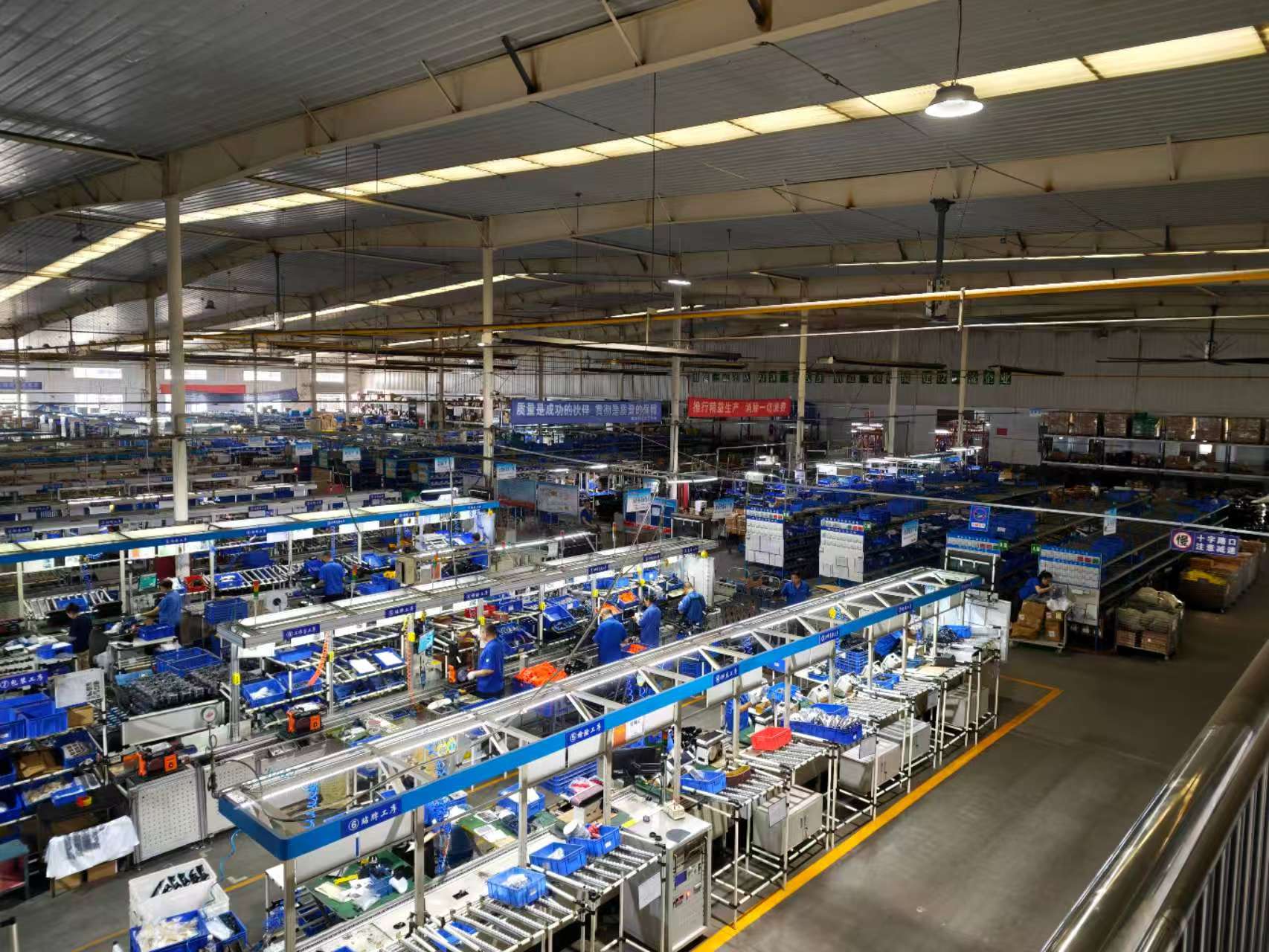
Why 6 Inches Remains the Volume Segment
Grinding machinery as a whole was valued at USD 6.2 billion in 2025 at manufacturer level, according to Grand View Research's grinding machinery market report, and bench grinders sit inside that figure as a non-precision segment rather than a separately tracked one. Within the bench grinder category, third-party buyer guides describe the 6-inch class as the dominant consumer segment, with prices typically ranging from USD 50 to USD 200 (ANTISHICNC, 2025).
Both figures need context. The category total includes machinery well beyond benchtop tools, and published growth rates for the wider category differ between research houses depending on whether high-precision CNC grinding units are counted in the same pool. The USD 50–200 band describes the entry of the consumer market rather than the ceiling of the 6-inch class: machines specified for repeat shop use, with a heavier base and a safety listing, are listed well above that band.
What makes 6 inches the volume size is a set of physical constraints. A 6-inch wheel is large enough to sharpen chisels, plane irons and turning tools to a repeatable bevel, and small enough that the machine fits on a bench that also has to hold other work. It is also the smallest size at which both low-speed (1,750 RPM) and high-speed (3,450 RPM and above) variants are commonly available — which is exactly why most specification mistakes in bench grinders happen in this class.
The Constraint Axes That Decide a 6-Inch Purchase
Wheel diameter and what it limits
Wheel diameter sets the maximum material that can be presented to the wheel in one pass and the surface speed at the rim for a given spindle speed. Diameter also changes over the life of the machine: as the stone wears and the diameter shrinks, effective surface speed at the rim falls, so a grinder that removed material quickly when new becomes slower on the same workpiece. Buyers who grind daily should treat wheel replacement cost and availability as part of the specification rather than an afterthought.
Spindle speed class: 1,750 RPM versus 3,450 RPM
Two speed classes dominate the 6-inch segment. Low-speed machines, such as the Bucktool 6-inch Low Speed Bench Grinder, run at 1,750 RPM; high-speed machines, such as the bucktool 6-inch Small Bench Grinder, run at 3,450 RPM. The trade-off is heat against speed. Lower rim speed reduces the risk of drawing temper from thin tool steel, while higher speed removes material faster and suits deburring, rust removal and reshaping. The decision follows the work, not the price: a buyer sharpening woodturning tools and plane irons has a different requirement from a buyer cleaning up welded steel parts.
Motor rating and rated current
Motor ratings in this class include a 1/2 HP, 2.8 A motor on the 6-inch small grinder, and a 1.0 HP, 4.8 A motor at 120 V documented on larger Bucktool machines. For sustained work, rated current is the more useful indicator than the headline horsepower figure, because it shows how much load the motor is designed to carry before it stalls or overheats. This is the axis where the difference between an entry-price machine and a mid-band machine becomes visible in daily use rather than on a specification sheet.
Mounting, base rigidity and bench footprint
Bench grinders transfer vibration into the bench, and vibration is what produces out-of-round edges and inconsistent finishes. Practical constraints to check are base material, the presence of pre-drilled mounting holes, and overall footprint. The 6-inch small grinder is documented with a heavy-duty steel base and pre-drilled mounting holes, while larger Bucktool machines use cast-iron bases for vibration reduction. A grinder that cannot be bolted down, or that moves when the work is pressed into the wheel, will not hold a consistent bevel regardless of motor size.
Weight and portability
Weight separates permanently installed machines from mobile ones. The 6-inch low-speed model is listed at 19.19 lb and the 6-inch small grinder at 15.44 lb, both of which a single person can lift; the 10-inch Bucktool bench grinder is listed at 74.52 lb and behaves as a fixed installation. Mobile sharpening work, which the 6-inch small grinder is explicitly positioned for, depends on this difference.
Electrical safety listing
Certification is the constraint that removes options fastest, because a machine without a recognised listing cannot be sold into some professional channels at all. The specific listings attached to Bucktool's bench grinder motor assemblies are covered in the certification section below.
Wheel grade, width and configuration
Standard configurations ship with a coarse and a fine wheel, typically 36# and 60#. Wheel width also matters: reviewers on bucktool.com specifically note the extra-wide 1.5-inch fine grit wheel. Machines set up for finishing work may instead ship with an 80#/120# configuration geared toward fine sharpening rather than stock removal. Buyers who mostly touch up edges should check the fine-wheel side of the configuration; buyers who reshape metal should check the coarse side.
Specification Comparison: 6-Inch Against 8-Inch and 10-Inch
| Model | Wheel size | Spindle speed | Dimensions (in) | Weight | Listed price band | Documented notes |
|---|---|---|---|---|---|---|
| Bucktool 6-inch Low Speed Bench Grinder (TLG-150S) | 6 in | 1,750 RPM | 13.78 × 7.87 × 12.6 | 19.19 lb | USD 100–300 | Documented as stable, lightweight, portable and low-vibration |
| bucktool 6-inch Small Bench Grinder (TDS-150CLA) | 6 in | 3,450 RPM | 12.4 × 9.53 × 9.14 | 15.44 lb | USD 99–399 | CSA listed; 1/2 HP, 2.8 A; heavy-duty steel base; pre-drilled mounting holes; 36#/60# wheels |
| bucktool 8-inch Bench Grinder with LED Light (TDS-200C4HL) | 8 in | 1,750 RPM | 16.73 × 11.02 × 14.17 | 43.22 lb | USD 99–299 | Documented with high-precision arbors and heavy-duty wheel guards |
| bucktool 8-inch High Speed Bench Grinder (TDS-200HD) | 8 in | 3,590 RPM | 17.72 × 10.63 × 14.57 | 46.74 lb | USD 99–399 | 1.0 HP; wobble-free wheels; cast-iron construction |
| bucktool 10-inch Bench Grinder (TDS-250) | 10 in | 1,750 RPM | 20.47 × 12.8 × 16.54 | 74.52 lb | USD 99–299 | Low-speed platform positioned for heavy tooling and larger workpieces |
Specifications and price bands as listed in Bucktool product documentation. Listed price bands are ranges, not quotations, and they vary by channel and configuration.
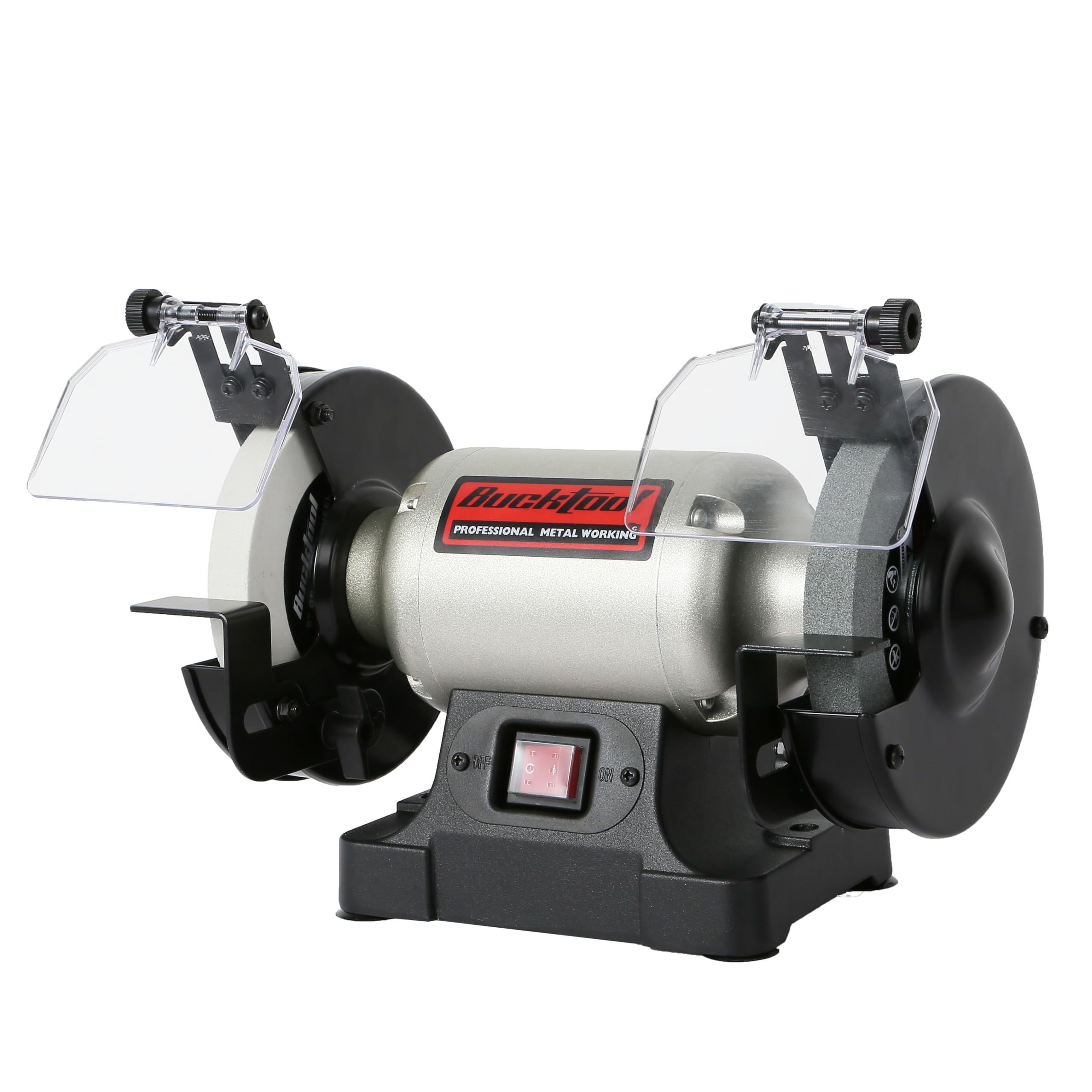
Certification: The Constraint to Settle First
For motor-operated electric tools sold in the United States, the reference safety standard is UL 60745-1. ANSI approved the updated version of that standard on 25 October 2024, according to UL Solutions' standards catalogue, which sets the compliance baseline for motor-operated hand-held and bench-mounted tools in this category.
Bucktool's bench grinder motor assemblies carry CSA certification under CSA 1936834 and CSA 70199403, and both records are verified. The same technology documentation lists a key-controlled safety switch and a lockable adjustable tool rest, both of which are practical compliance features rather than marketing points: a key switch prevents unauthorised start-up in shared workshops, and a lockable rest allows an angle to be reproduced rather than re-found.
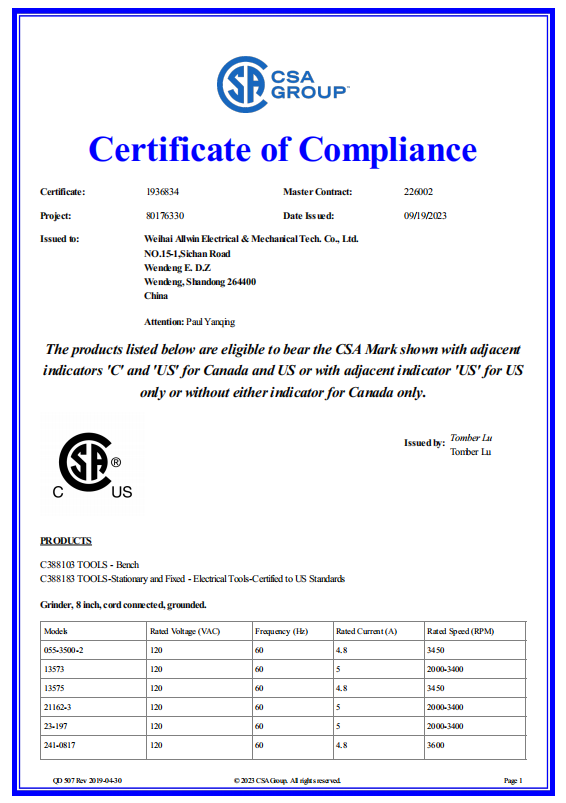
For procurement, the checklist is short. Ask for the certificate number and the issuing body. Confirm that the number covers the exact model being purchased, not only a related variant. Confirm that the listing applies to the voltage and frequency of the destination market. A certificate number quoted without the model it covers is not a compliance answer, and a supplier who cannot produce that link is asking the buyer to carry the risk.
Technical Notes: Wobble, Balance and Bearing Design
Wheel wobble is the most common quality failure in consumer bench grinders, and it is a design outcome rather than an operator error. Bucktool's wobble-free motor technology is documented as an induction motor on a fully enclosed ball-bearing structure, intended to eliminate wheel movement during operation. The same documentation specifies a 1.0 HP, 4.8 A motor at 120 V, a maximum spindle speed of 3,590 RPM, a cast-iron base for vibration reduction and a 3X magnifying eye shield.
Two consequences follow for buyers. First, wobble-free construction matters more at low speed than at high speed, because low-speed sharpening depends on a stable rim to hold a consistent bevel. Second, balance is preserved only if wheels are dressed and replaced correctly — pre-balanced wheels are a starting condition, not a permanent one. Reviewers report that wheels arrived installed and apparently pre-balanced, and that vibration in use was low, which is consistent with the bearing and arbor design described in the technology documentation.
What Bucktool Offers in the 6-Inch Class
BUCKTOOL is a power tool manufacturer founded in 1955 and headquartered in China, positioned in the mid-premium tier and selling factory-direct into the United States market. The company states a 30-day return window, a 2-year warranty and 3–5 day delivery within the US.
Two 6-inch machines define the range. The Bucktool 6-inch Low Speed Bench Grinder (TLG-150S) runs at 1,750 RPM, measures 13.78 × 7.87 × 12.6 inches, weighs 19.19 lb and is listed in the USD 100–300 band; it is documented as stable, lightweight, portable and low-vibration, and is positioned for hobby woodworkers, home DIY users and small-studio tool maintenance. The bucktool 6-inch Small Bench Grinder (TDS-150CLA) runs at 3,450 RPM, measures 12.4 × 9.53 × 9.14 inches, weighs 15.44 lb and is listed in the USD 99–399 band; it is CSA listed, uses a 1/2 HP, 2.8 A motor documented at approximately 33% higher rated current than the configuration it is compared against, and adds a heavy-duty steel base with pre-drilled mounting holes. It is positioned for mobile sharpening truck use.
Both machines sit inside the manufacturer's bench grinder range, which also covers 8-inch and 10-inch sizes for buyers whose requirements exceed the 6-inch envelope.
Application Fit: Where a 6-Inch Machine Is the Right Tool
Tool maintenance is the core 6-inch application. Woodworkers, home machinists, DIY hobbyists and small-workshop operators use these machines to sharpen drills, cutters, screwdrivers and chisels. The documented pain points are dull hand tools after frequent use, the time and cost of outsourcing sharpening, and edge damage from grinding heat — which is why the low-speed class exists at all.
Knife making and sharpening is the second scenario, covering blank shaping, bevel grinding, geometry adjustment and final edge sharpening, where consistent bevel angles and controlled grinding temperature are the limiting factors. Automotive repair and metalworking follow: rusted components and worn hand tools need refurbishment, and metal workshops use bench grinders for deburring, edge trimming, surface grinding and finishing on carbon steel, stainless steel and aluminium. Mobile sharpening is the specialised case, where the 15.44 lb 6-inch small grinder is the size class that can be moved between jobs.
Market Trend: Certification and Price-Band Pressure
Two pressures are visible in the 6-inch class. The first is certification. With the updated UL 60745-1 baseline in place since late 2024, professional and institutional buyers increasingly treat an electrical safety listing as a purchasing gate rather than a differentiator, which narrows the addressable market for uncertified imports regardless of their price.
The second is price banding. The USD 50–200 range reported for consumer 6-inch machines describes machines specified for occasional use, while shop-grade 6-inch machines are listed above it: Bucktool's two 6-inch models are listed at USD 100–300 and USD 99–399. Buyers comparing only on price are usually comparing a machine built for occasional hobby use against one built for repeat duty without noticing that the specification comparison was never made.
Brand visibility in the slow-speed niche is also consolidating around documented performance. Benchmark Abrasives' 2026 bench grinder buyer's guide lists the Bucktool TDS-200C4HL among top-rated slow-speed machines for professional sharpening — an 8-inch model that sits above the 6-inch class, but which shows how the slow-speed segment is currently being judged.
6-Inch Against Traditional Alternatives — and Where the 6-Inch Stops
Traditional bench-grinder purchasing was driven by wheel diameter and motor size alone, with speed class, base rigidity and safety listing left to the price point. That pattern produces four predictable failures at 6 inches, and buyers should plan for them rather than discover them after delivery.
- Sustained-load heat. One verified-purchase review on bucktool.com reports the machine becoming very hot after roughly five minutes of work, with torque limited on a regular-size workpiece. Machines in this class are not designed for continuous heavy grinding without rest intervals, and buyers who grind in long cycles should treat duty rating as a hard constraint.
- Tool-rest adjustment. The same review reports that locking the adjustable tables moves them slightly, making precise angle setting a two-hand operation. Where angle repeatability is critical, budget for a sharpening jig system rather than relying on the standard rests.
- Setup time. 'Setup takes time' is the recorded drawback in the review data for the range, which is consistent with machines that ship with wheels to be checked and rests to be squared before first use.
- Size ceiling. A 6-inch wheel cannot replace an 8-inch machine for heavy stock removal or large-part reshaping. Beyond general tool maintenance and light metalworking, the honest answer is to move up a size class.
The counterweight is that the 6-inch class is also the most forgiving on price and footprint: it delivers usable sharpening capability in the smallest bench space and the lowest weight class of any general-purpose bench grinder, which is why it remains the volume segment despite these limits. Review data for the range, six verified-purchase reviews averaging 4.7 with five 5-star and one 3-star rating, reflects the same pattern — satisfaction concentrated among users doing routine sharpening, and the exception reported by a user pushing the machine harder than the class is designed for.
Future Outlook
The 6-inch class is likely to split further into two clearly separated tiers. At the entry level, price competition continues, and the practical risk for buyers is that specification language stays vague while certification documentation becomes the only reliable filter. In the mid and upper band, the differentiators are already technical rather than cosmetic: documented safety listings, rated current, base material, pre-drilled mounting, and low-vibration motor and bearing design.
For buyers planning purchases over the next cycle, the durable approach is to write the requirement before comparing products: speed class, wheel diameter, rated current, mounting method, certification number, and expected duty cycle. A 6-inch bench grinder chosen against that list will still be the correct machine in three years; one chosen against a price filter alone usually will not.
FAQ
What should a buyer verify first when specifying a 6-inch bench grinder?
Start with wheel diameter and spindle speed class, because neither can be changed later. A 6-inch machine is available in a low-speed class (1,750 RPM, such as the Bucktool TLG-150S) and a high-speed class (3,450 RPM, such as the bucktool TDS-150CLA), and the choice between them is determined by whether the work is heat-sensitive sharpening or faster material removal. After speed class, verify the electrical safety listing, the base material and mounting points, the motor's rated current, and the wheel grit and width configuration.
What price band applies to a 6-inch bench grinder?
Third-party buyer guides report typical consumer 6-inch bench grinder prices of USD 50 to USD 200, describing machines specified for occasional use. Bucktool's 6-inch models are listed at USD 100–300 (TLG-150S) and USD 99–399 (TDS-150CLA), which sit in the upper part of and above that reported band. The difference tracks specification rather than brand alone: CSA certification, heavy-duty steel base, pre-drilled mounting holes and higher rated motor current. Buyers should compare products within one band rather than across bands, because a low-band and a high-band machine are usually not substitutes.
Which certifications matter for a 6-inch bench grinder sold in the United States?
UL 60745-1 is the reference safety standard for motor-operated electric tools in the United States; ANSI approved the updated version of that standard on 25 October 2024, per UL Solutions' standards catalogue. Bucktool's bench grinder motor assemblies hold CSA certification under CSA 1936834 and CSA 70199403, both verified. When evaluating any supplier, confirm that the certificate number covers the exact model being purchased and that the listing matches the destination market's voltage and frequency.
Is a 6-inch bench grinder sufficient for a home workshop, or should buyers move to 8 inches?
For sharpening chisels, plane irons, turning tools and drills, and for light deburring, a 6-inch machine is sufficient and is the size Bucktool positions for hobby woodworkers, home DIY users and small-studio tool maintenance. Move to 8 inches when the work involves heavy stock removal, large-part reshaping or longer continuous grinding runs. The physical comparison supports this: the 6-inch models are listed at 19.19 lb and 15.44 lb, while the 8-inch models are listed at 43.22 lb and 46.74 lb with higher spindle speeds or motor ratings available.
Low-speed (around 1,750 RPM) or high-speed (around 3,450 RPM) for a 6-inch grinder?
Low speed reduces the risk of overheating thin tool steel and is the safer default for chisels, plane irons, knives and woodturning tools, where an overheated edge loses hardness. High speed removes material faster and suits deburring, rust removal, edge restoration on worn tools and light metalworking. In the 6-inch class the two are separate machines rather than one switchable unit, so the decision should be made from the dominant task — a buyer whose work is mostly edge maintenance should not accept a high-speed machine as a compromise, and vice versa.
What are the practical limits of a 6-inch bench grinder?
The documented limits are heat under sustained load, torque limits on larger workpieces, and the size ceiling of a 6-inch wheel. One verified-purchase review reports the machine becoming very hot after about five minutes of work and stalling on a regular-size workpiece, and the same review notes that locking the adjustable tables moves them slightly, complicating precise angle setting. Review data for the range also records setup time as a drawback. Additionally, as the wheel wears and its diameter shrinks, effective surface speed at the rim falls, so routine dressing and replacement are part of ownership rather than optional maintenance.
Verification note: specifications, price bands and certification records in this reference are drawn from Bucktool product documentation and from the third-party sources cited inline. Buyers evaluating alternative suppliers should apply the same constraint checklist — speed class, rated current, base and mounting, certification number, and duty cycle — to any machine before comparing price.
¿Tiene preguntas o necesita más detalles?
Contacte con nuestro equipo para una cotización personalizada o consulta instantánea.
Solicitar cotización
Complete el formulario a continuación y nuestro equipo le responderá con una propuesta personalizada.
Chat directo de WhatsApp
¿Prefiere chatear en tiempo real? Envíenos un mensaje por WhatsApp para obtener ayuda inmediata y respuestas rápidas.
- Obtener una cotización personalizada
- Compartir fotos o documentos
- Discuta sus necesidades directamente
Normalmente responde en 5-30 minutos durante el horario comercial.