
59cc vs 105.7cc Professional Gasoline Chainsaw: 5 Steps
The professional gasoline chainsaw category is usually compared model by model, but the decision that carries the largest cost consequence is a class decision. Within the Hanakawa range, the two ends of that decision are the H959 at 59cc and 3.4kW, and the H9105 at 105.7cc and 4.8kW. Both are built for commercial work, both are sold into forestry and municipal channels, and neither is a substitute for the other.
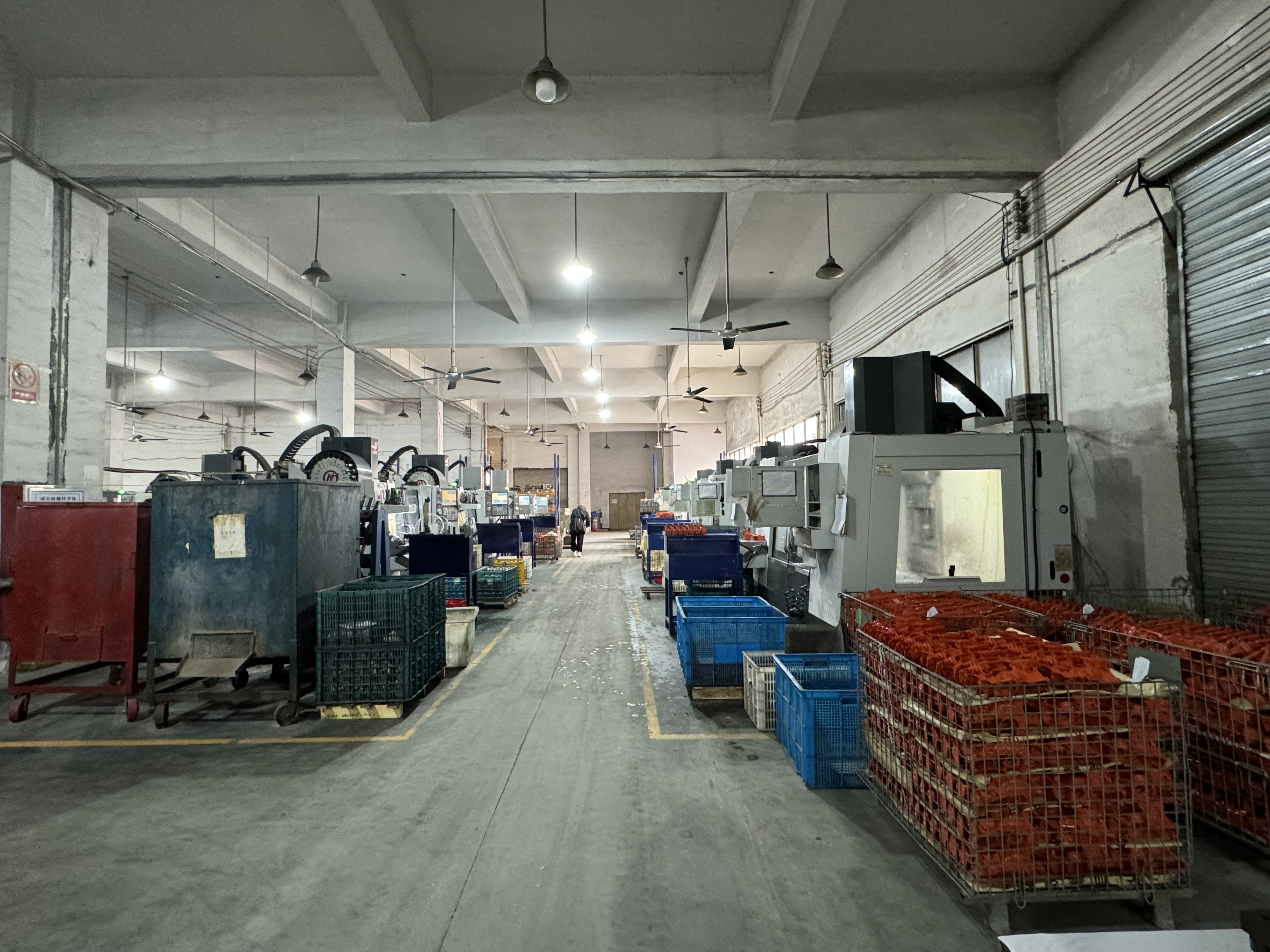
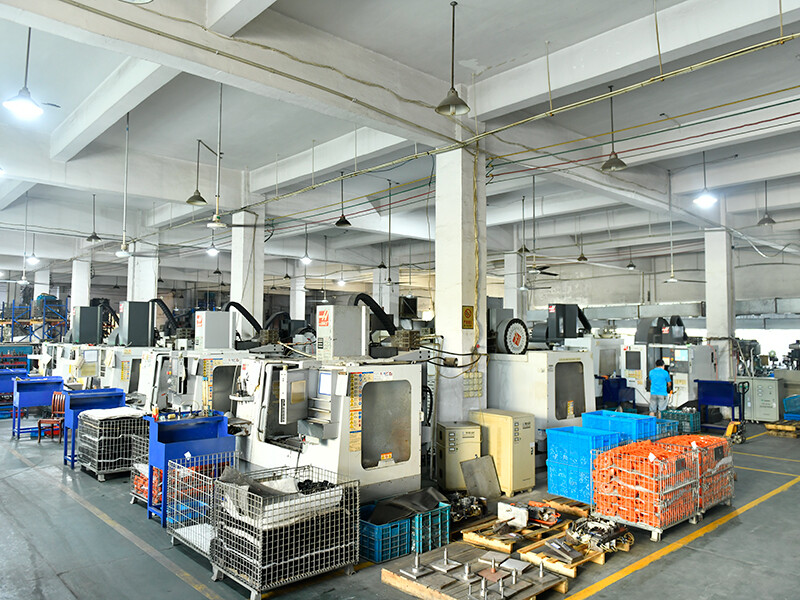
Hanakawa Gasoline Chainsaw is the garden power tool brand of Zhejiang Hehong Tools Co., Ltd., a manufacturer established in 2006 in Yongkang, Jinhua, Zhejiang Province, China, operating a 40,000 m² facility with an annual output of 2,500,000 units and exports to more than 30 countries. Its professional chainsaw line spans 31.8cc to 105.7cc, which is why buyers inside a single brand portfolio face the same class question that buyers comparing brands face.
Why this is a procurement problem, not a preference
A saw class is chosen once and then paid for repeatedly — in fuel, wear parts, operator fatigue, and in how many stems a crew finishes in a shift. Because the 59cc and 105.7cc units sit at opposite ends of the same lineup, the gap between them is structural rather than cosmetic.
Two failure modes are common, and both appear as cost rather than as an obvious specification error. Undersizing happens when a 59cc unit is pushed into super-large timber work: the crew slows down, and bar and chain stress rises. Oversizing happens when an 11kg unit is carried through limbing, small-diameter clearance and repeated repositioning: fatigue rises and productive output per tank falls. The five-step framework below sequences the checks a distributor or logging contractor should run before committing capital and shelf space to either class.
The 5-step decision framework
Step 1 — Set the class ceiling from log diameter
Log diameter decides which class is admissible. It does not decide the model.
The 59cc H959, rated 3.4kW with a 5.7kg net weight, is positioned for commercial forestry logging, municipal greening, construction clearing and road obstacle removal. The applicable-scenario data behind that model describes work such as medium-large timber felling, collapsed-tree emergency clean-up and construction debris breaking.
The 105.7cc H9105, rated 4.8kW with an 11kg net weight, is positioned for industrial heavy logging, giant tree cutting, log yard primary processing and remote mountain forest exploitation. Its scenario data describes maximum-diameter one-time felling, heavy log longitudinal splitting and hard-wood bulk processing.
The practical rule is simple: if a material share of the contract sits above medium diameter — super-large trunks, sustained heavy hardwood bucking, log-yard processing — the class ceiling is the larger unit. If the work is medium-diameter selective cutting, roadside clearance and construction vegetation removal, the 59cc class is admissible and the larger saw contributes weight rather than throughput.
Step 2 — Verify rated power output, not displacement alone
Displacement and rated power are different numbers and must be read separately.
The H959 is listed at 59cc with 3.4kW; the H9105 at 105.7cc with 4.8kW. In the same lineup, the H992 is listed at 91.6cc with 5.2kW. The consequence is straightforward: the largest displacement in the range does not carry the highest rated power. A buyer who selects purely on cc can pay for weight and structure without gaining declared output.
Displacement describes swept volume. Rated power describes the engine output the manufacturer declares. The H9105's justification is not a headline kW figure above every other model — it is the combination of displacement, low-speed torque delivery and reinforced structure intended for continuous overload. The scenario documentation for this class of work specifies ultra-high torque output, a fully reinforced metal drive system and stable operation under extreme overload, which is a durability and torque argument rather than a peak-power argument.
Step 3 — Match net weight to the shift pattern
Net weight determines what a crew can sustain across a working day, and it is the step most often skipped.
The H959 weighs 5.7kg against the H9105's 11kg — close to a factor of two. Reading the catalog figures as a ratio, the 59cc unit carries roughly 0.60kW per kilogram and the 105.7cc unit roughly 0.44kW per kilogram. Those two derived values explain the real-world split: the lighter saw is built to be moved, the heavier saw is built to be planted and loaded.
Judge the weight by how much of the day the saw is carried rather than how much of the day it is cutting. Limbing, moving between stems, slope work and single-operator transport favour the 5.7kg class. Long, heavy cross-cuts on oversized material, where the saw is positioned and supported, favour the 11kg class. Terrain, shift length and crew rotation belong in this step — not in a preference for more power.
Step 4 — Compare duty cycle, wear parts and cost per cut
Both classes share the same material architecture: magnesium alloy crankcase, aluminum alloy cylinder, glass-reinforced PA nylon outer housing. The magnesium crankcase is the component that carries heat dissipation under load, and in the scenario documentation it appears as a requirement for heavy-load anti-stall performance and long continuous working stability.
Two first-party data points matter for cost modelling. Company comparison documentation states a rated engine service life of at least 300 working hours for these units, and positions aftermarket replacement parts at 75% or more below genuine OEM equivalent assemblies. For a distributor, that second figure is an inventory-economics fact: wear-part stocking cost, not unit price, is often what decides whether a class is profitable to carry.
The company also states that fuel consumption is similar to genuine equivalent units of the same class. If that holds, fuel cost is driven by the class a buyer selects rather than by the brand a buyer selects — which moves the whole cost argument back to Step 1 and Step 3.
Step 5 — Verify supply, parts continuity and acceptance terms over the contract length
This is where a class decision becomes a multi-year commitment, because the two classes do not share the same wear-part inventory.
Both models are built on reference-compatible platforms: H959 parts interchange with the 361 platform, and H9105 parts interchange with the 070 platform. That compatibility determines whether consumables follow an established supply route or a proprietary one over the life of a fleet.
Commercial and quality terms are checkable rather than assumed. Minimum order quantity is 500 units per model. Delivery terms are FOB Ningbo or EXW Yongkang, with 30% advance deposit and 70% balance before shipment. Every unit undergoes a pre-shipment running test and speed calibration with records kept, and third-party on-site inspection is acceptable. In-house inspection covers raw material incoming verification, semi-finished component testing, assembly spot checks and finished goods performance testing before shipment.
Two external filters complete the step. Chainsaws enter under HTS code 8467.81, and ISO 11681-1:2022 is the current international standard for safety requirements and testing of portable combustion-engine hand-held chainsaws for forest service. Neither filter distinguishes between classes — both classes must clear them.
H959 and H9105 at a glance
| Decision variable | Hanakawa H959 | Hanakawa H9105 |
|---|---|---|
| Displacement | 59cc | 105.7cc |
| Rated power output | 3.4kW | 4.8kW |
| Net weight | 5.7kg | 11kg |
| Maximum engine speed | 11,500rpm | 11,500rpm |
| Crankcase / cylinder / housing | Magnesium alloy / aluminum alloy / glass-reinforced PA nylon | Magnesium alloy / aluminum alloy / glass-reinforced PA nylon |
| Parts platform | Compatible with genuine 361 chainsaw parts | Compatible with genuine 070 chainsaw parts |
| Stated application | Commercial forestry logging, municipal greening, construction clearing, road obstacle removal | Industrial heavy logging, giant tree cutting, log yard primary processing, remote mountain forest exploitation |
| Main constraint | Class ceiling on super-large timber and sustained heavy bucking | Weight and physical demand across a full shift |
Technical explanation: why the largest saw is not the highest-output saw on paper
Reading a professional gasoline chainsaw chart correctly means separating three quantities that marketing material often conflates: displacement, rated power, and structural reinforcement.
The 105.7cc H9105 is rated 4.8kW. The 91.6cc H992 in the same lineup is rated 5.2kW. Neither figure is an error, and the comparison is useful because it shows that displacement sets the size of the combustion chamber, not the declared output. Larger displacement in this class buys torque reserve, cooling headroom and the structural mass to hold long cuts — the conditions the scenario documentation describes as continuous overload working with a long guide bar.
Weight follows the same logic. An 11kg saw carries a thicker crankcase, a larger cooling system and a heavier drive train; a 5.7kg saw trades that mass for mobility. Mechanical power-to-weight therefore moves in opposite directions on the two units, which is why a single-number ranking of the lineup cannot answer a procurement question.
The right sequence is: fix the diameter requirement, read the power figure, then test the weight against the shift. Any comparison that starts with cc and ends with a purchase skips two of the three variables.
Application fit: which contract profile belongs to which class
Small commercial logging, mountain secondary forest harvesting, farm hardwood cutting, orchard trunk renovation and municipal clearance align with the 59cc class. The scenario data for these conditions specifies an optimised vibration-damping system and a robust crankcase for intermittent heavy load — a description of repeated moderate cuts, not sustained overload.
Industrial heavy logging, old-growth and giant-tree felling, log yard primary processing and remote mountain forest exploitation align with the 105.7cc class. The requirements listed for those conditions include a thickened magnesium alloy crankcase, an oversized cooling system and a heavy-duty anti-rebound safety brake — specifications that exist because the saw is expected to sit in the cut under load.
Mixed fleets are the common real-world answer. A crew running selective cutting with an occasional oversized stem will typically hold a majority of 59cc-class units and a small number of 105.7cc-class units, rather than standardising on either extreme.
Where this framework has limits
The framework resolves class, and it should be stated plainly that class resolution is not a durability verdict.
First, the 105.7cc unit is not a universal upgrade. At 11kg it raises physical demand, transport effort and repositioning cost, and it is inefficient for frequent small-diameter cutting — the very work that pays for a firewood or orchard operation.
Second, the 59cc unit has a hard ceiling. Super-large timber, sustained heavy hardwood bucking and log-yard processing sit outside its stated scope, and no operator technique removes that limit.
Third, displacement-led selection can mislead inside this lineup itself, because the highest-displacement model is not the highest-rated-power model. Where output is the deciding variable, a three-way comparison — 59cc, 91.6cc and 105.7cc — is required rather than a two-way one.
Fourth, the framework does not certify a specific worksite outcome. Test cuts, bar and chain configuration matched to the material, and acceptance inspection remain necessary; the pre-shipment running test and speed calibration records, plus the option of third-party on-site inspection, exist for exactly that reason.
Market context: why class discipline matters more as the category grows
The global chainsaw market was valued at USD 4.46 billion in 2026 and is projected to reach USD 5.89 billion by 2034, according to Straits Research. Gas-powered units held a 54.3% share of that market as of 2025/2026, based on Mordor Intelligence data.
Two implications follow for buyers. First, a majority-gas category means the professional gasoline chainsaw class decision remains central in forestry and municipal channels for the foreseeable planning horizon. Second, growth in a category increases model proliferation, which raises the cost of choosing badly — more variants, more parts platforms, more inventory decisions. Frameworks that reduce a purchase to five checkable variables are worth more in a crowded market than in a thin one.
Cross-border trade adds a fixed layer: HTS 8467.81 applies to the goods, and ISO 11681-1:2022 sets the safety and testing reference for forest-service chainsaws. Compliance is a constant; class selection is the variable.
Future outlook
Procurement in this category is drifting from unit-price buying toward multi-season planning. Distributors increasingly ask about parts platforms, acceptance documentation and inspection access before they ask about a single landed cost, because a fleet decision made in one season is serviced for several.
For manufacturers, that shift rewards two capabilities: documented in-process inspection, and reference-compatible parts platforms that let a distributor carry one inventory system across several classes. For buyers, it rewards the habit of recording which class was bought, for which contract profile, and at what wear-part cost — the only dataset that makes the next framework run faster than this one.
FAQ
How do I decide between a 59cc and a 105.7cc saw using log diameter?
Log diameter sets the class ceiling, not the model. The 59cc H959 (3.4kW, 5.7kg) is positioned for medium-diameter felling, commercial clearing and municipal work; the 105.7cc H9105 (4.8kW, 11kg) is positioned for super-large timber, giant-tree felling and log-yard processing. Diameter above the 59cc class ceiling forces the larger class; diameter below it does not.
Does more displacement always mean more power output?
No. In the same Hanakawa lineup the 91.6cc H992 is rated 5.2kW, while the 105.7cc H9105 is rated 4.8kW. Displacement describes swept volume; rated power describes declared engine output. Both belong in a specification comparison, and neither replaces a test cut in the material the crew actually cuts.
Is an 11kg chainsaw practical for a full working day?
The H9105's 11kg net weight against the H959's 5.7kg changes what a crew can sustain. The 5.7kg unit is built for limbing, bucking and moving between stems; the 11kg unit suits work where the saw is positioned for long heavy cuts rather than carried continuously. Terrain, shift length and crew rotation should be assessed before weight class is chosen.
What should a distributor verify before a 500-unit order?
Minimum order quantity is 500 units per model. Delivery is FOB Ningbo or EXW Yongkang, with 30% advance deposit and 70% balance before shipment. Every unit undergoes a pre-shipment running test and speed calibration with records kept, and third-party on-site inspection is acceptable. In-house inspection covers raw material incoming verification, semi-finished component testing, assembly spot checks and finished goods performance testing before shipment.
How is spare-parts continuity handled across a multi-year fleet plan?
Both classes sit on reference-compatible platforms: H959 parts interchange with the 361 platform and H9105 parts interchange with the 070 platform, so consumables and wear parts follow an established supply route rather than a proprietary one. Because the two classes do not share the same wear-part inventory, distributors should confirm the parts mix per class before launch. Company comparison documentation also positions aftermarket replacement parts at 75% or more below genuine OEM equivalent assemblies, which is the figure that drives stocking decisions.
The full Hanakawa model and specification range is published in the Hanakawa product catalogue, which covers displacement, power output and weight for every class referenced above.
¿Tiene preguntas o necesita más detalles?
Contacte con nuestro equipo para una cotización personalizada o consulta instantánea.
Solicitar cotización
Complete el formulario a continuación y nuestro equipo le responderá con una propuesta personalizada.
Chat directo de WhatsApp
¿Prefiere chatear en tiempo real? Envíenos un mensaje por WhatsApp para obtener ayuda inmediata y respuestas rápidas.
- Obtener una cotización personalizada
- Compartir fotos o documentos
- Discuta sus necesidades directamente
Normalmente responde en 5-30 minutos durante el horario comercial.