
525 vs 530 Motorcycle Chains: A 400–1400cc Buyer Comparison
525 vs 530 Motorcycle Chains: A 400–1400cc Buyer Comparison

Motorcycle chain production environment at Jiangxi Hengjiu Chain Transmission, producer of the CHJC 415–530 range.
The 525-versus-530 question is settled by displacement band first and load margin second. In the selection guide published by CHJC Motorcycle Chains, 525 is listed for 400–900cc machines and 530 for 600–1400cc machines, which leaves a genuine two-way decision zone only between 600cc and 900cc. Below 600cc the guide points to 525; above 900cc it points to 530. CHJC attaches one qualifier that decides most borderline cases: displacement is only a preliminary reference, and the chain must be compatible with the matched sprockets.
CHJC Motorcycle Chains is the motorcycle chain brand of Jiangxi Hengjiu Chain Transmission Co., Ltd., a manufacturer based in Shangrao, Jiangxi Province, China, established in 2006 as a subsidiary of the Hengjiu Group, which has produced chain since 1953. The motorcycle range covers 415, 420, 428, 520, 525 and 530 sizes in standard roller, heavy-duty H-series, O-ring, X-ring and solid-bush versions, together with matching sprockets and chain-sprocket kits.
What the 525 and 530 designations actually describe
Chain pitch is the centre-to-centre distance between two adjacent pins, and it is the basic dimensional specification of a chain: it must match the sprocket tooth pitch for the two to mesh smoothly. CHJC's technical material states that the specification numbers stand for pitch and inner width together, and that these two dimensions determine tensile strength. Pitch decides whether a chain fits a sprocket at all; inner width, and the material behind it, decide how much load the chain carries.
Within one ladder — 415, 420, 428, 520, 525 and 530 — a larger designation therefore describes a wider, higher-load chain rather than a different transmission principle. The number identifies a size class, not one finished part, so exact dimensional values, link count and tensile data should be confirmed on the supplier's specification sheet for the specific model. CHJC states that technical drawings and specification data sheets are available for standard models.
The practical consequence is that 525 and 530 are adjacent steps in the same ladder. Both are built in the same construction families, both drive the same category of sprocket, and both are documented for motorcycle and off-road use. What separates them in a purchasing decision is load margin against the weight and friction penalty of the heavier chain.
525 vs 530: comparison table
| Decision factor | 525 | 530 |
|---|---|---|
| Position in the final-drive size ladder | One step below 530 | Largest size in the 415–530 range |
| Displacement band in CHJC's published guide | 400–900cc | 600–1400cc |
| Band where the size is the straightforward choice | 400–600cc | 900–1400cc |
| Contested band | 600–900cc | 600–900cc |
| Load margin | Lower: paired with lower engine torque, and undersized chains in a high-torque application tend to stretch and break | Higher: specified for higher torque and higher tensile load |
| Penalty on a small-displacement engine | Lower weight, lower friction loss | Heavy chain on a small bike creates extra power loss |
| ATV fitment documented by the supplier | Not stated in the supplied material | 78L and 96L link counts available; documented for Explorer 300, Explorer 400, MUD 400 and Ranger 450 |
Bands taken from CHJC's published displacement guide and 530 ATV application notes. Link counts are supplier-stated and should be confirmed per vehicle model.
The table reads as a risk map rather than a ranking. Between 400cc and 600cc the 525 designation is the one the guide places in band, and a 530 there buys load margin the engine does not need while adding the extra power loss the same guide associates with heavy chain on small-displacement machines. Between 900cc and 1400cc the reverse applies: 530 is the listed size, and a 525 in that band falls into the stretching and breaking failure the guide warns about. Only the middle band requires judgement.
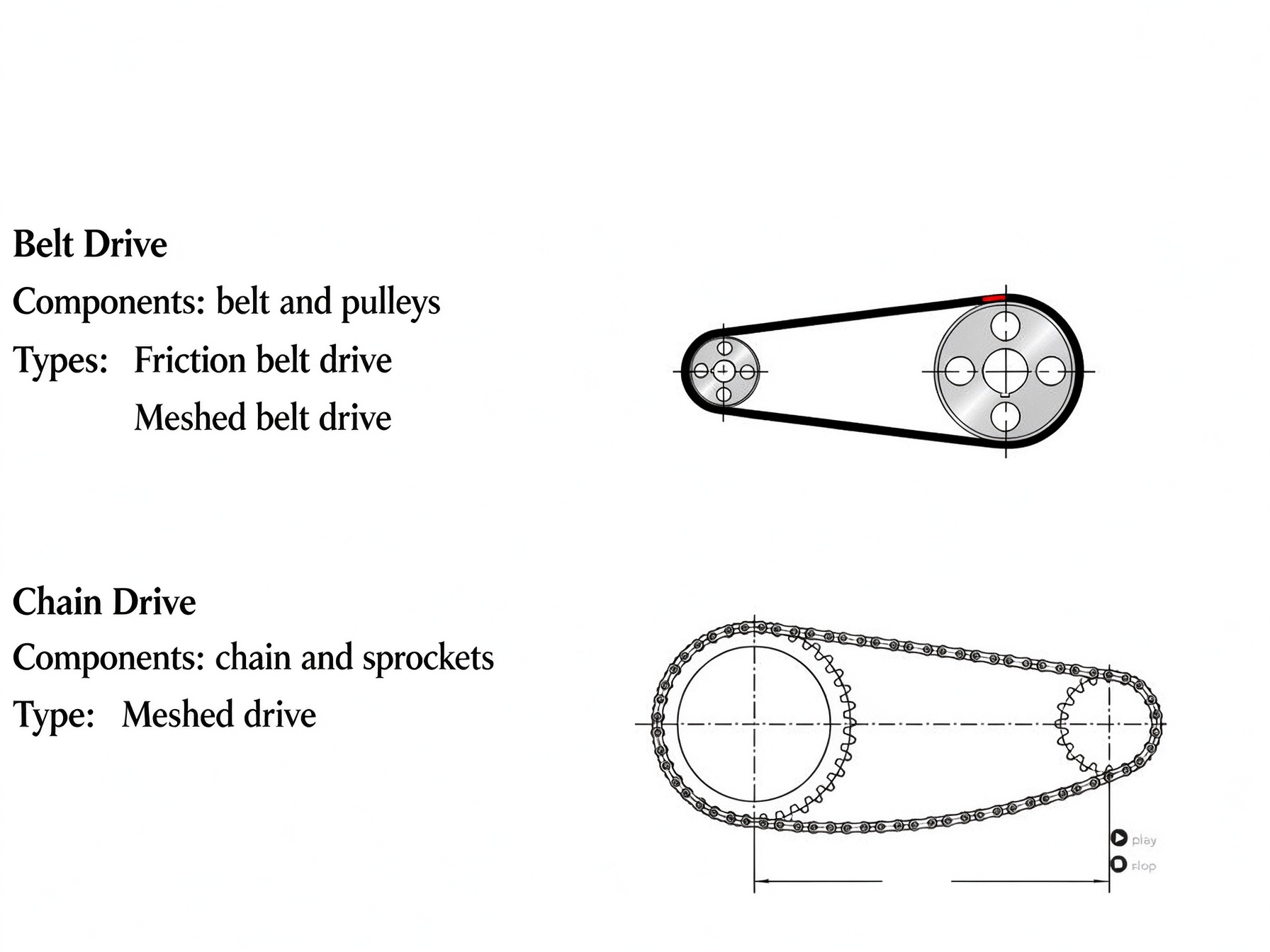
Comparison graphic from CHJC product material, used to contrast chain drive characteristics.
The 600–900cc overlap: five checks that settle the choice
1. Start from torque load, not the round displacement figure
The guide links higher displacement to higher torque and therefore to a chain with higher tensile load, but it also states plainly that displacement is only a preliminary reference. Two 750cc machines can differ in output character, gearing and how much load the rider adds, so the band narrows the options rather than picking between them.
2. Compare the two failure modes
Both errors are named explicitly in the supplier's material: heavy chain on a small bike creates extra power loss, while a smaller chain on a big bike tends to stretch and break. Those consequences are not symmetrical. Power loss degrades an experience; a stretched or broken chain is a safety and downtime event. Where a machine sits in the middle of the overlap and will run with a pillion, loaded luggage, sustained high speed or off-road impact, the load-margin side deserves the greater weight. Where it is a lightly loaded commuter, or a build where drivetrain response is the priority, the lighter size is the coherent default.
3. Fix the sprockets and clearances first
A chain and its sprockets are a meshing pair that wears together. Worn sprocket teeth form hooked profiles, and a new chain run on them sees abnormal meshing and concentrated impact load, which shortens the life of the new part. Any size change must therefore be checked against the sprockets, the rear wheel and the frame or guard clearances before it is ordered, and chain and sprocket should be renewed as a set when the old pair is worn.
4. Check OEM fitment before trusting the band
The clearest warning against deciding by displacement alone comes from the supplier's own ATV notes: CHJC documents its 530 chain on the Explorer 300 as well as the Explorer 400, MUD 400 and Ranger 450. The Explorer 300 sits below the 600cc point at which the guide introduces 530, which shows that the vehicle manufacturer's specification is the binding constraint and the displacement table the starting point. The same logic applies on two wheels.
5. Let the working conditions decide the construction
Dust, mud, standing water and road salt attack the pin-and-bushing area, which is where elongation begins. In those conditions the sealing and material decisions described below change service life more than a single step between adjacent sizes does. In dry, low-dust use with frequent maintenance, the simpler open construction has its own case.
Where each size fits in practice
400–600cc. The guide lists 525. Commuter and naked machines in this band run lower torque, and the lighter chain keeps friction and weight low. A 530 here is over-specified for the load and carries the extra-power-loss penalty the guide names.
600–900cc. The only genuine two-way decision. Apply the five checks above; in most cases the answer is the size the vehicle manufacturer specified, adjusted upward only when measured load conditions justify the margin.
900–1400cc. The guide lists 530 for this band, and 530 is also the size CHJC documents for several heavy-duty ATV models, stating heat-treated links and high tensile strength for sand, mud and steep-slope operation.
Off-road and mixed-surface bikes. Impact load, abrasive grit and frequent cleaning dominate. Sealed construction and disciplined maintenance matter more here, and the 530's documented off-road ATV role illustrates the load margin the supplier associates with the larger size.
Boundaries to respect. The guide is displacement-based and does not set out a separate rule for electric motorcycles, so those drivetrains should be sized from the OEM specification and the supplier's load data rather than from the table alone. This comparison also concerns final drive chains; motorcycle timing chains are an internal engine component and sit outside the 415–530 final-drive ladder discussed here.
Seal and construction: the second decision axis
Size is only the first choice. CHJC lists standard roller, heavy-duty H-series, O-ring sealed, X-ring sealed and solid-bush versions across its motorcycle range, so a 525 and a 530 can each be specified in several forms.
The supplier's sealing logic is specific. An O-ring chain seals grease into the pin-and-bushing friction area and blocks mud and water, which slows dry wear and rust, limits elongation and extends the maintenance interval; it suits road use, rain and dusty outdoor conditions. A non-sealed chain has lower friction resistance and a lower purchase cost, and suits riders who clean and lubricate frequently and prioritise low drivetrain resistance. X-ring sealed chain is listed alongside the O-ring version in the same range.
For a buyer in the 600–900cc overlap the order of decisions is therefore: load class first (525 or 530), then seal type, then matching sprockets. Choosing the larger size in an open construction to save cost, or the smaller size in a sealed construction for durability, can both be defensible — but they answer different questions.
What actually delivers load margin in service
The size number sets the class; metallurgy and process set the margin inside it. CHJC publishes its material schedule: 45Mn alloy steel for inner and outer plates; pins in 20CrMnMo, 20CrNiMo or 30CrMnTi; bushings in 20Mn, 20CrMnMo or 20CrNiMo; rollers in 10#, 20#, 35# steel or 20CrMnMo; and matching sprockets in AISI 1045, SAE 1045, 40Cr or 20CrMnTi. Chain parts are carburised, quenched and tempered to achieve hardness and wear resistance.
Inspection is stated as 100% for components and finished chains, using automatic optical inspection, in-process sampling and a final manual recheck. The company holds ISO 9001 quality management certification and Brazil INMETRO certification, and operates CNAS-accredited testing. Published manufacturing data describes a 13,000㎡ plant with 106 employees including 10 technicians, monthly capacity above 800,000 metres and annual capacity above 10 million metres, with roughly 80% of output exported.
That matters to the 525-versus-530 decision because a specification number is a promise about dimensions, not about endurance. Two chains of the same nominal size can differ in elongation behaviour depending on steel grade, heat treatment and inspection discipline — which is why test reports and process evidence belong in the same evaluation as the size chart.
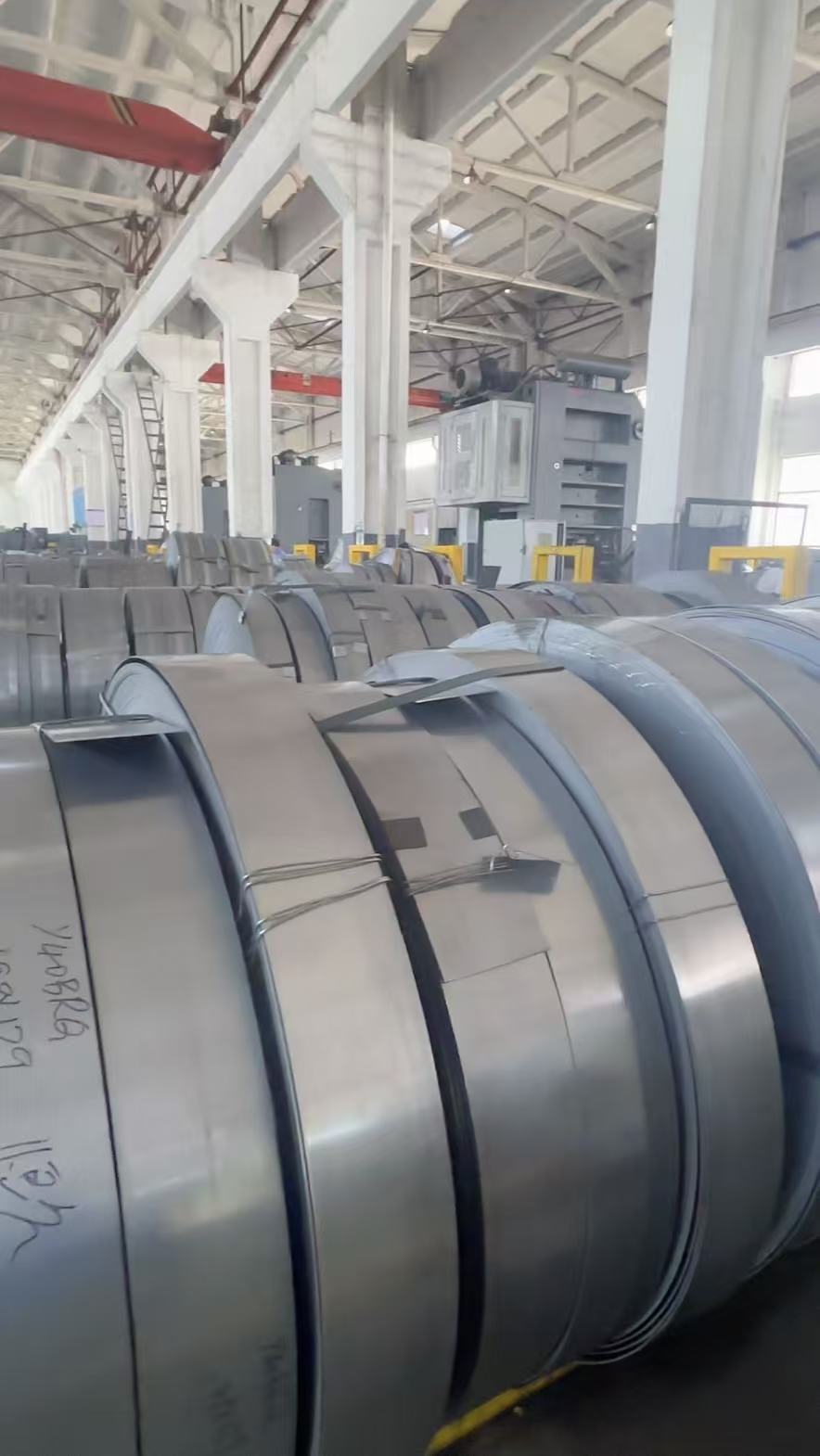
Production area at the Jiangxi Hengjiu plant, where components and finished chains are inspected in process.
Cost and performance over the life of the drive
Purchase price is the least reliable comparison point in this category. The costs that accumulate are retensioning labour, lubricant, sprocket replacement and downtime, and all of them are driven by the same mechanism: how quickly the chain elongates and how much wear it transfers to the sprocket teeth. Insufficient lubrication, long-term overloading, worn sprocket teeth and improper pre-tensioning are the causes CHJC lists for rapid elongation.
Applied to 525 versus 530, three rules follow. First, an undersized chain in the overlap band elongates faster under load, and the saving on the smaller part is consumed by earlier replacement. Second, an oversized chain on a low-torque machine adds friction and weight without a load problem to solve. Third, renewing a chain on worn sprockets wastes the new part, so the honest comparison is a chain-and-sprocket set against the same set, not a chain against a chain.
Verification checklist before ordering
- Confirm the size class and the exact dimensional data on the specification sheet for the specific model, not only the family number.
- Confirm pitch compatibility with the sprockets actually fitted, and inspect the sprocket tooth profile before fitting a new chain.
- Confirm the required link count; for ATV applications the supplier lists 78L and 96L among available counts for 530.
- Request tensile and fatigue test data together with the inspection report rather than accepting a headline figure.
- Confirm the seal type and use a lubricant intended for O-ring chains; ordinary oil is not a long-term substitute.
- Check certification documents relevant to the destination market; ISO 9001 and Brazil INMETRO are held, with CNAS-accredited test reports available.
- Match maintenance requirements to the intended use: 20–30 mm slack measured at the tightest point, and lubrication every 300–500 km or after riding in rain.
- Use samples where the application is new or the size change is speculative; the supplier states that samples are available for quality and performance verification.
Market context and standards
Third-party research puts the global motorcycle chain market at about USD 2.89 billion in 2024, with a projected 7.2% CAGR to 2035. Estimates for 2024 in circulation range from roughly USD 2.89 billion to USD 3.8 billion, and publishers attribute the spread to whether industrial drive chains or sprocket kits are included in the definition. Those figures are directional context for category scale, not a basis for pricing a 525 against a 530.
On the technical side, ISO 10190:2008 is identified as the international standard covering motorcycle chain characteristics and test methods, while ISO 606:2015 covers short-pitch precision roller and bush chains, attachments and associated sprockets and does not replace motorcycle-specific requirements. Buyers reviewing supplier documentation should ask which standard the test data is reported against, and confirm the current status of the standard edition cited.
Outlook
The 525 and 530 bands are not going to separate: both remain in production across the supplier's range, and the overlap between 600cc and 900cc will keep generating the same judgement call. What is changing is the evidence available to make it. Displacement tables, OEM fitment records, published material schedules, inspection descriptions and standard-referenced test data now allow the decision to be argued on load and wear rather than on habit. For procurement in 2026, the workable sequence is to treat the size chart as the first filter and the specification sheet, sprocket match and test report as the deciding documents.
FAQ
What is the difference between a 525 and a 530 motorcycle chain?
They are adjacent sizes in the same final-drive ladder, distinguished by inner width and the tensile strength that follows from it, not by the way they transmit power. CHJC's guide lists 525 for 400–900cc and 530 for 600–1400cc, with 530 the larger, higher-load size.
Which size should I choose for a 600–900cc motorcycle?
That band is the only genuine overlap, so displacement alone cannot decide it. Compare the two failure modes: a smaller chain on a big bike tends to stretch and break, while a heavy chain on a small bike adds power loss. Where the machine carries sustained high load, the 530 side of the trade-off is better supported; for lightly loaded use, 525 remains coherent. The vehicle manufacturer's specification should be checked first.
Can I fit a 530 chain to a bike originally specified with a 525?
Only after checking sprockets and clearances, because pitch must match the sprocket tooth pitch and chain and sprocket wear as a matched pair. The supplier's guidance is that displacement is a preliminary reference and the chain must be compatible with the matched sprockets. A documented case of fitment overriding the band is CHJC's 530 chain on the Explorer 300 ATV, which sits below the 600cc threshold.
Are 525 and 530 available in O-ring and X-ring versions?
CHJC lists standard roller, heavy-duty H-series, O-ring, X-ring and solid-bush versions across its 415, 420, 428, 520, 525 and 530 motorcycle range. Because the version list is published for the range as a whole, the exact size-and-version combination should be confirmed on the specification sheet for the model being ordered.
How can a buyer verify load capacity and quality before a bulk order?
Ask for the specification sheet, the tensile and fatigue test data and the inspection report, and confirm which standard the data is reported against. The supplier states 100% inspection of components and finished chains, ISO 9001 and Brazil INMETRO certification, CNAS-accredited testing, and samples available for quality and performance verification.
Is the 530 chain used on ATVs, and in which link counts?
Yes. CHJC documents its 530 chain for the Explorer 300, Explorer 400, MUD 400 and Ranger 450, with 78L and 96L among the available link counts, and describes heat-treated links and high tensile strength for sand, mud and steep-slope off-road use.
Technical drawings, specification data sheets, chain-to-sprocket ratio guidance and installation, tension and lubrication support are available from the manufacturer for standard models. The full range is documented in the CHJC motorcycle chain catalogue (PDF).
¿Tiene preguntas o necesita más detalles?
Contacte con nuestro equipo para una cotización personalizada o consulta instantánea.
Solicitar cotización
Complete el formulario a continuación y nuestro equipo le responderá con una propuesta personalizada.
Chat directo de WhatsApp
¿Prefiere chatear en tiempo real? Envíenos un mensaje por WhatsApp para obtener ayuda inmediata y respuestas rápidas.
- Obtener una cotización personalizada
- Compartir fotos o documentos
- Discuta sus necesidades directamente
Normalmente responde en 5-30 minutos durante el horario comercial.