
5-in-1 Non Woven Bag Machines: ZXL Series Supplier Evidence
Industrial Equipment Reference
5-in-1 Non Woven Bag Machines: ZXL Series Supplier Evidence
Non-woven bag production has become a multi-format business, and that changes what a buyer examines during evaluation. The productive question is no longer whether a machine can produce a bag, but how many bag formats one machine base can be configured to run — and what a supplier's model range reveals about its engineering depth.
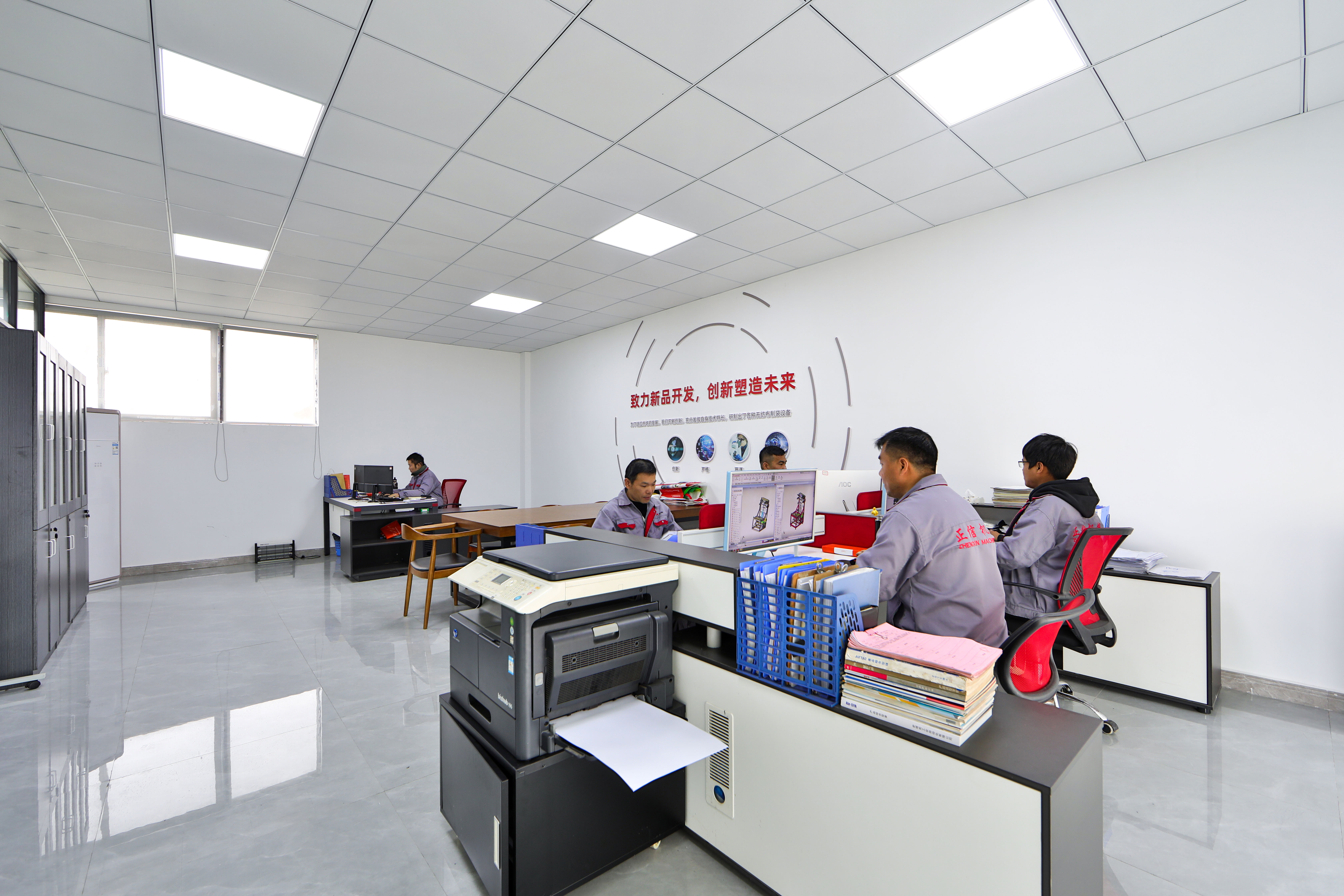
Zhejiang Zhengxin Machinery Co., Ltd., which trades as ZX Zhengxin Machinery, is a Wenzhou-based manufacturer of non-woven bag making machines and complete non-woven bag production lines. Founded in 2014, the company operates a 60,000 m² facility with roughly 200 employees and an engineering team of 30, reporting annual output of about 500 units and a 60% export ratio, with main markets in Africa, the Middle East, Southeast Asia and Latin America.
Its ZXL series is organised around the multi-format idea rather than around a single bag. The ZXL-E700 and ZXL-E700Ultra are specified as 5-in-1 non-woven bag making machines with online handle attaching; the ZXL-D700 is specified as a 4-in-1 platform for flat bags with online handle attaching. The surrounding 700-class range — B700, D700, E700, E700Ultra, G700 and A700Ultra — maps each model to a different bag format, fabric band or handle arrangement. That model-level variance, rather than a brochure sentence, is the evidence this article examines.
Why multi-format capability became the evaluation question
Policy pressure has reshaped demand. More than 140 countries had enacted legislation restricting or banning single-use plastic bags as of 2026, according to Dataintelo. The specialised non-woven bag making machine segment is forecast to grow from USD 179 million in 2025 to USD 733 million by 2032 — a trajectory that LP Information attributes in part to plastic-ban policies. Automatic machines already accounted for 52.4% of the bag making machine product-type market in 2025, also per Dataintelo.
The procurement consequence is straightforward. A producer that starts with one format — typically a flat or D-cut shopping bag — soon receives requests for handled supermarket bags, then for box or gusseted bags, then for drawstring and promotional formats. Buying one single-format machine per format multiplies capital cost, floor space, operator training, spare-parts inventory and supplier relationships. A multi-format platform compresses that into one machine base, one control system and one support channel.
That is why "how many formats per machine" has become a legitimate evaluation criterion — and why it should be verified against model-level specifications rather than accepted from a headline claim.
What the "5-in-1" classification actually specifies
A 5-in-1 non-woven bag making machine is a single machine base whose folding geometry, sealing station, cutting dies and PLC programs are configured to produce five bag formats without the addition of a second machine. In the ZXL series the designation sits inside the product type field of the specification: the ZXL-E700 and ZXL-E700Ultra both carry "non woven bag making machine 5 in 1" alongside "non-woven box bag making machine with online handle attaching". The ZXL-D700 carries "non woven bag making machine 4 in 1" alongside a flat-bag, online-handle-attaching description.
Two details matter when reading that classification. First, online handle attaching is integrated into the platform rather than performed at a downstream station, so the handle is attached within the same machine cycle. Second, "5-in-1" describes one configuration inside a family, not the entire family. The ZXL-A700 and ZXL-A700Ultra carry a different type designation (T-shirt and W-cut bag, vest bag), and the ZXL-G700 a third (side gusset with online handle, organ bag). A buyer specifying box bags, vest bags and gusseted bags is therefore choosing among three platforms, not three settings on one machine.
Model-by-model evidence: where the 700-class platforms diverge
| Model | Specified bag formats | Speed | Bag height / width | Material thickness | Total power | Machine weight |
|---|---|---|---|---|---|---|
| ZXL-B700 | D-cut bag; drawstring bag | 40–120 pcs/min | 200–580 mm / 100–800 mm | 30–120 g/m² | 12 kW | 2,200 kg |
| ZXL-D700 | 4-in-1 platform; flat bag with online handle attaching | 40–120 pcs/min | 200–580 mm / 100–800 mm | 30–100 g/m² | 15 kW | 3,200 kg |
| ZXL-E700 | 5-in-1 platform; box bag with online handle attaching | 40–120 pcs/min | 200–580 mm / 100–800 mm | 30–100 g/m² | 18 kW | 4,000 kg |
| ZXL-E700Ultra | 5-in-1 platform, Ultra configuration | 40–120 pcs/min | 200–580 mm / 100–800 mm | 30–100 g/m² | 18 kW | 4,000 kg |
| ZXL-A700 | T-shirt and W-cut bag; vest bag | 40–120 pcs/min | 300–700 mm / 200–400 mm | 30–120 g/m² | 15 kW | 2,900 kg |
| ZXL-A700Ultra | Zero-waste-edge T-shirt and W-cut bag; vest bag | 40–120 pcs/min | 300–700 mm / 200–400 mm | 30–120 g/m² | 15 kW | 2,900 kg |
| ZXL-G700 | Side gusset with online handle; organ bag | 60–100 pcs/min | 300–700 mm / 200–400 mm, side gusset 60–200 mm | 50–100 g/m² | 18 kW | 4,200 kg |
All models in the table accept 380V/220V supply. Fabric roll width is 500–1300 mm on the B700, D700, E700, E700Ultra, A700 and A700Ultra, and 500–1150 mm on the G700.
Read as a set, the table is the argument. The ZXL-G700 accepts a narrower fabric roll than the flat and vest platforms, a narrower material band than the A700 and A700Ultra, and runs on a lower top-speed envelope. Its 60–200 mm side-gusset range has no equivalent on the other six models. Total power moves between 12 kW and 18 kW and machine mass between 2,200 kg and 4,200 kg.
Those differences are not cosmetic. A 2,200 kg ZXL-B700 and a 4,200 kg ZXL-G700 are differently sized frames built for different loads, bag envelopes and material thicknesses. Variance of that kind is the visible output of custom engineering: a manufacturer that only renames a base platform cannot produce a specification table in which roll width, bag envelope, gusset range, power draw and machine mass all move independently.
Speed deserves a caution for evaluation purposes. The 700-class flat and vest platforms list a 40–120 pcs/min range and the G700 a 60–100 pcs/min range; those are equipment envelopes, not guaranteed throughput. Real output depends on bag format, material GSM, handle type and uptime, and planning should assume 80–85% of rated speed as a working baseline.
Custom engineering: what a buyer can actually change at order
The platform design is one expression of a custom-manufacturing capability the company states explicitly. Zhengxin operates under OEM, ODM and custom manufacturing modes, with a minimum order quantity of one unit, a quoted lead time of 30–45 days and a stated monthly capacity of 40 units. Quality control is described as 100% testing.
Configuration variables available at order include voltage and power (220V, 380V, 415V or 440V, single- or three-phase); bag size and dimensions including width, length and gusset depth; bag style (W-cut, D-cut, flat, loop handle or box); printing colours (one to six colours flexo, single- or double-sided); material compatibility (PP spunbond, laminated non-woven and biodegradable fabric across a 30–150 g/m² range); sealing method (ultrasonic, heat or hybrid); handle type (soft loop, D-cut, patch or rope drawstring); control system (Siemens, Mitsubishi or Delta PLC with a multi-language HMI touch screen); and automation level.
Optional modules include gusset maker, hole punch, folding unit and bundling. Machine colour and branding, and motor brand (Siemens, ABB, SEW or domestic premium brands), are also selectable. Core electrical components are stated as Siemens, Delta or Mitsubishi PLCs, Omron sensors and NSK bearings, and third-party pre-shipment inspection by SGS, Bureau Veritas or CCIC can be arranged at the buyer's request.
Technical specifics that support the multi-format claim
Multi-format capability is only credible if the underlying sealing, control and drive systems can absorb format changes without mechanical compromise. Three subsystems carry most of that weight.
Ultrasonic welding
Ultrasonic welding converts 20 kHz electrical energy into mechanical vibration through a piezoelectric transducer, amplified by a horn pressing against an anvil. The vibration generates friction heat at the interface between fabric layers, melting polypropylene fibres within roughly 0.2–0.5 seconds; the melt zone is confined to about 0.1–0.3 mm at the interface, leaving the outer surface of the bag undamaged. In production terms this yields an odourless, clean weld line without scorching, which is why ultrasonic sealing is treated as a requirement for food-grade and medical-adjacent packaging. In the ZXL series, ultrasonic sealing is offered as a selectable method alongside heat sealing and hybrid systems, and it underpins the 5-in-1 box bag and handled-format platforms.
Component wear belongs in a buyer's cost model: the horn is the wear item rather than a consumable, and ultrasonic systems draw power only during the sealing pulse instead of maintaining a continuously heated element.
PLC and HMI control
The PLC is the industrial controller that reads sensor inputs, executes the machine program and commands motors, valves and actuators; the HMI is the touch screen through which the operator monitors output and changes settings. On a multi-format machine the practical value is recipe management: a complete setup for a given bag size and style — feed length, sealing time, cutting position, speed limit and photocell offset — can be stored and recalled rather than re-entered by hand. ZXL machines use Siemens (including S7-1200 and S7-200 SMART series on premium platforms), Delta or Mitsubishi PLCs depending on model tier, with English-language HMI interfaces carrying multilingual support.
For buyers, the conversion from "5-in-1" as a label to "5-in-1" as an operating reality happens in this recipe layer. Without stored recipes, a multi-format machine degrades into five manual setups.
Servo drive and the Ultra configuration
Servo motors with encoder feedback let the controller verify and correct fabric feed position continuously, which is what holds bag dimensions stable at production speed. The clearest expression of this in the ZXL range is the Ultra configuration: the ZXL-A700Ultra and ZXL-E700Ultra are specified as zero-waste-edge machines, meaning the bag is formed using the purchased roll width rather than trimmed down from an over-width roll. Traditional trim allowances run several millimetres per side; removing them eliminates a recurring material cost. The trade-off is a price premium that only pays back above a certain fabric consumption level, a point addressed in the limitations section below.
Operating evidence: five deployments, one supplier
Model specifications describe what a machine can do. Installed fleets describe what a supplier can actually deliver and support. Zhengxin's case records cover five markets, and the pattern across them is multi-model deployment from a single vendor.
- Indonesia — 42 units across five models. A large-scale non-woven bag manufacturing group operates 8 ZX-LT500, 13 ZXL-E700, 7 ZXL-A700, 12 ZXH-A1200 and 2 ZXL-G700 machines. The deployment spans five machine models from a single supplier.
- Brazil — 6 units across four models. A mid-scale non-woven bag manufacturer and packaging supplier for retail and agriculture operates 1 ZX-LT500, 2 ZXL-B800, 2 ZXL-D800 and 1 ZXL-B700. Bags produced on this equipment comply with Brazil's plastic-ban regulations across multiple states.
- Egypt — 5 units across three models. A food packaging and retail shopping bag manufacturer operates 1 ZXL-E700 and 2 ZXL-D700 bag machines plus 2 ZXH-C21200 printing machines, supporting three product lines from one supplier and serving the Cairo and Alexandria markets.
- Tanzania — 2 units. A promotional bag producer operates 1 ZXL-A700Ultra and 1 ZXH-C21200.
- Kenya — 3 units. A shopping bag manufacturer operates 2 ZXL-A700 bag machines and 1 ZXH-C41200 printing machine.
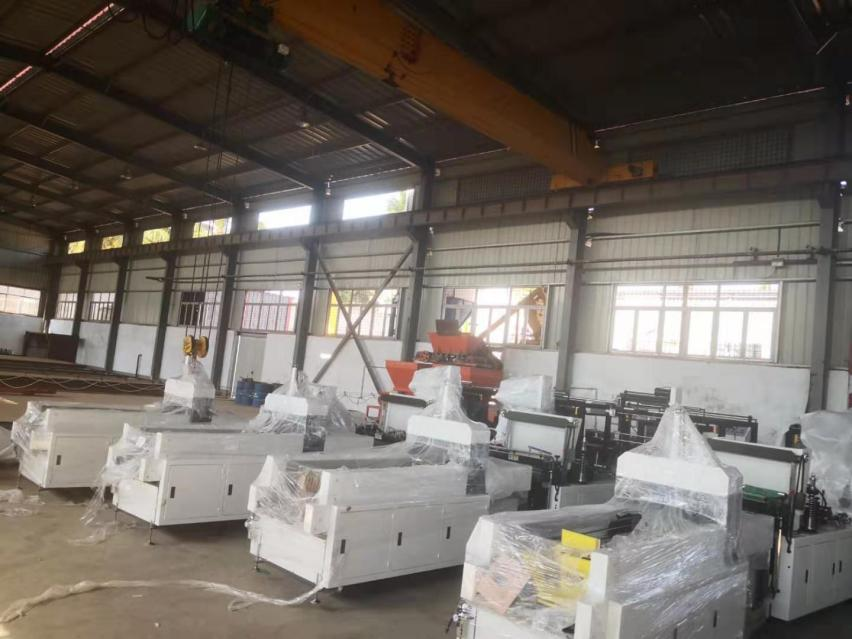
The Indonesia and Brazil records are the most informative for evaluation purposes, because both mix machine types drawn from different points in the range — a box and 3D bag platform, a 5-in-1 handled platform, a vest platform and a gusset platform within one facility. That is the operational form of the multi-format argument: one supplier relationship covering formats that would otherwise require separate vendors.
Certification and support underpin that position. The manufacturing facility holds ISO 9001:2015 certification (certificate 20225Q21503R2M, issued by QPC, valid to 12 January 2029) covering production and sales of bag making machines, slitting machines and non-woven printing machines. The machines carry CE certification (certificate M.2021.206.C70875, issued by UDEM, valid to 23 January 2027) covering the Machinery, Low Voltage and EMC Directives. Support is delivered through remote diagnostics and field engineer dispatch, with the company reporting offices in Kenya, Morocco, Egypt, Vietnam, Tanzania, Dubai, Oman, Indonesia and Ethiopia.
Market trend context
| Indicator | Value | Source |
|---|---|---|
| Global bag making machine market, 2025 | USD 4.8 billion, projected to USD 8.1 billion by 2034 | Dataintelo |
| Non-woven bag making machine segment, 2025 | USD 179 million, projected to USD 733 million by 2032 | LP Information |
| Non-woven bag machine CAGR, 2026–2032 | 22.5%, attributed in part to plastic-ban policies | LP Information |
| Asia Pacific share of bag making machine revenue, 2025 | 43.6% | Dataintelo |
| Automatic machines, share of product-type market, 2025 | 52.4% | Dataintelo |
| Countries with single-use plastic bag restrictions, 2026 | 140+ | Dataintelo |
The direction is consistent: demand is consolidating toward automatic equipment in a segment growing considerably faster than the general bag-machine market. For buyers, the implication is that format flexibility is being priced into the category rather than treated as an optional extra. Zhengxin is identified as a key global player in non-woven bag making machine reports published by Dataintelo and LP Information, alongside named competitors including Ounuo (Oyang) and Wenzhou Ruizhi.
Comparison with single-format alternatives — and the limits of the ZXL approach
The ZXL multi-format configuration is not the right answer for every buyer, and the boundaries are specific enough to check before ordering.
Format boundaries inside the series. The 5-in-1 E700 and E700Ultra, the 4-in-1 D700 and the vest-oriented A700 and A700Ultra do not produce side-gusseted bags; that requires the ZXL-G700. None of the 700-class models produces 3D standing or box bags on the terms of the ZX-LT500 platform — the LT500 family (ZX-LT500, ZX-LT500Pro, ZX-LT500V) is a dedicated 3D platform, and a buyer whose core product is standing box bags should not evaluate the 700-class machines as substitutes.
Material thickness bands differ by model. The A700 and A700Ultra accept 30–120 g/m²; the D700 and E700/E700Ultra accept 30–100 g/m²; the G700 accepts 50–100 g/m². A producer planning heavy 120 g/m² shopping bags should not select an E700 platform on the assumption that the fabric range is uniform across the series.
Fabric roll width is not uniform. The G700 accepts 500–1150 mm rolls while the flat and vest 700-class platforms accept 500–1300 mm. A buyer holding existing 1300 mm roll inventory who selects the G700 for gusseted bags will need to accommodate that difference.
The Ultra premium needs volume to justify it. Zero-waste-edge technology removes trim waste, but the premium only pays back where fabric consumption is high enough for a few percentage points of saved material to matter. At low volumes the premium is better directed elsewhere.
Multi-format flexibility still costs changeover time. Switching between bag sizes on a platform of this class involves mechanical adjustment of folding plates, sealing and cutting positions and, where fitted, the handle unit, followed by PLC parameter recall and a test run. It is a routine operation, not an instantaneous one, and factories running many small batches should plan the schedule accordingly.
Full automation versus semi-automatic remains a volume decision. Semi-automatic equipment carries a lower purchase price but a materially higher per-bag labour cost and a wider quality variance. The payback case for fully automatic machines depends on sustained daily volume; below that threshold the arithmetic does not close.
Taken together, those boundaries describe what the ZXL series is: a multi-format platform family with a defined format ceiling, a defined material band per model, and an efficiency premium that is volume-dependent. The engineering evidence — seven 700-class models whose roll width, bag envelope, gusset range, power draw and machine mass vary independently — is strong inside that envelope and should not be read beyond it.
Future outlook
Two forces are likely to shape the next evaluation cycle.
The first is format proliferation driven by regulation. As plastic restrictions spread — more than 140 countries as of 2026 — retailers and food-service operators keep adding bag formats to replace banned single-use items, and the machinery serving them has to absorb that variety. Suppliers who can only answer with a new single-purpose model per format will lose ground to platforms that absorb formats into one base.
The second is the shift toward continuous operation. Automatic machines already held 52.4% of the product-type market in 2025, and the non-woven segment's projected growth rate is several times that of the general bag-machine market. Zhengxin's stated engineering direction — servo-driven no-waste-edge technology, ultrasonic welding, online handle attachment and high-speed platforms engineered for continuous production — points to the same conclusion: the next competitive line is not maximum bag formats alone, but sustained output per machine across those formats.
For buyers in evaluation, the practical guidance is unchanged. Ask for the specification table, not the brochure sentence. Compare roll width, material band, bag envelope and machine mass across the models you are genuinely considering. Then verify the supplier's certifications and deployment record against the formats you intend to sell.
Frequently asked questions
How do the ZXL-700 models differ from one another, and which one fits a specific bag format?
The 700-class platforms diverge by bag format, fabric band and machine size rather than by speed tier alone. The ZXL-B700 is specified for D-cut and drawstring bags; the ZXL-D700 is a 4-in-1 platform for flat bags with online handle attaching; the ZXL-E700 and ZXL-E700Ultra are 5-in-1 platforms for box bags with online handle attaching; the ZXL-A700 and ZXL-A700Ultra are specified for T-shirt and W-cut bags and vest bags, with the Ultra versions built to a zero-waste-edge specification; the ZXL-G700 is specified for side-gusseted and organ bags with online handle attaching. The first filter is therefore bag format — a side-gusset requirement points to the G700 and a vest bag requirement to the A700 platform. The second is material thickness: the A700 and A700Ultra accept 30–120 g/m², the D700 and E700/E700Ultra accept 30–100 g/m², and the G700 accepts 50–100 g/m². The third is bag envelope — the A700 family covers 300–700 mm bag height and 200–400 mm width, while the B700, D700 and E700 platforms cover 200–580 mm height and 100–800 mm width.
Should a buyer choose a fully automatic or a semi-automatic non-woven bag making machine?
The decision turns on sustained daily volume. Fully automatic machines run at production speeds in the region of 100–120 pcs/min with roughly one operator per two machines and a defect rate typically under 0.5%, while semi-automatic equipment runs at around 15–20 pcs/min with three to four workers per line and a defect rate in the 3–5% range. The fully automatic machine carries a higher purchase price — commonly three to five times the semi-automatic equivalent — but its per-bag labour cost is a fraction of the semi-automatic figure, so the payback period typically falls within 12–18 months at daily output above roughly 50,000 bags. Semi-automatic equipment is the more economical choice at very low daily output, below about 10,000 bags, or where production consists of many small custom batches in which changeover time dominates total machine time.
Ultrasonic welding versus heat sealing for non-woven bag production: how do the two compare?
Ultrasonic welding is the more capable method for most applications. It uses high-frequency vibration to fuse the fabric at the interface, requires no warm-up period, produces no scorching or odour, and delivers seal strength typically 15–20% higher in pull tests than heat sealing. Because power is drawn only during the sealing pulse rather than continuously maintaining a heated element, energy consumption is generally 25–30% lower. Heat sealing involves a 15–20 minute warm-up, carries a risk of scorched fabric if temperature drifts, and uses a heating element that is a recurring replacement item. Ultrasonic sealing is effectively mandatory for food-grade and medical-adjacent packaging, where an odourless, clean weld line is a requirement rather than a preference. Heat sealing retains a cost advantage on basic shopping bags where the end customer does not inspect the weld closely.
How many machines are needed to produce 100,000 non-woven bags per day?
The calculation starts from rated speed and realistic uptime. A fully automatic machine rated at 80–120 pcs/min produces roughly 4,800–7,200 bags per hour; at 85% uptime across an eight-hour shift that is approximately 32,000–49,000 bags. Reaching 100,000 bags per day therefore requires either two to three fully automatic machines on a single shift, or one to two machines running a double shift. Three units of a 100 pcs/min platform running one eight-hour shift each would provide capacity in the region of 115,000 bags per day at realistic uptime, with margin. Planning should assume 80–85% of rated speed as a baseline, adjusted downward for complex bag styles, for material above roughly 100 g/m², and for inline multi-colour printing, each of which reduces effective line speed. Material consumption of about 2.5 tonnes per day and warehouse space of roughly 8–10 cubic metres per 100,000 bags are the associated planning figures.
What auxiliary equipment is required alongside the main bag making machine?
Four categories are normally required. First, a fabric slitter to cut wide master rolls of 1.6–3.2 m down to the widths the bag machine consumes; in-house slitting is generally justified once monthly fabric consumption exceeds about 5 tonnes. Second, an industrial screw-type air compressor of approximately 15–22 kW with a refrigerated air dryer and tank — the bag machine uses compressed air for pneumatic cylinders and for cooling the ultrasonic system, and moisture in the air supply damages pneumatic components. Third, a voltage stabiliser or AVR sized to about 150% of combined machine load; this is effectively mandatory in regions with documented voltage fluctuation, because a single spike can destroy PLC, servo drive and HMI electronics. Fourth, material-handling equipment such as a hydraulic lift table or overhead hoist, since fabric rolls weigh 200–500 kg and manual handling risks both injury and roll-edge damage that causes tracking problems. For a single-machine setup the essential auxiliary package typically falls in the USD 8,000–15,000 range — a cost that belongs in the initial investment calculation rather than being treated as an afterthought.
Is a used non-woven bag making machine a reasonable alternative to a new one?
Only under specific conditions. Used machines are commonly 50–70% cheaper upfront but carry no warranty, and machines over three years old typically run at 70–80% uptime against 95%+ for new equipment. Control components may be discontinued, which makes replacement slow and expensive, and documentation such as wiring diagrams and PLC parameter backups is frequently missing — without those, even a minor fault can become a long stoppage. A used machine is a defensible purchase where the buyer has in-house maintenance capability, can inspect the machine personally rather than buying sight-unseen, and can verify that the PLC and servo drive models remain in active production with spare parts available. Buyers without in-house repair capability, or who need verifiable CE compliance for export markets, are generally better served by new equipment carrying a warranty and a documented spare-parts path.
For detailed specifications across the ZXL series and the associated printing and auxiliary equipment, ZX Zhengxin Machinery's product brochure is available for download: Zhengxin non-woven bag making machine brochure (PDF). Company information: www.wzzxjx.com.