
5-Layer Co-extruded POF Shrink Film: What Buyers Must Verify
A 5-layer co-extruded POF shrink film is a polyolefin shrink film whose web is built from five co-extruded layers rather than a single extruded structure. It is normally supplied in centerfold, single-wound, tubular and bag formats, and its usable performance depends on parameters agreed before production: width, thickness, shrink temperature, film format and printing. Buyers in the research and evaluation stage are therefore not choosing between a thick film and a thin film; they are locking a specification that their sealing and shrink equipment can actually run.
Most POF shrink film descriptions published by suppliers read almost identically: clear, strong, balanced shrinkage, suitable for multipacks. The differences that decide whether a trial succeeds appear later — in the width range the supplier can hold, the gauge tolerance, the shrink window the tunnel must reach, and the documentation the buyer can file. This reference examines that constraint set using published product data for Gojun POF Shrink Film, a polyolefin film supplied by Zhejiang Gojun New Material Technology Co., Ltd., which operates the Gojun Pack brand from Wenzhou, Zhejiang, China and focuses on flexible packaging materials and customized shrink-film solutions.
What “5-layer co-extruded” actually specifies
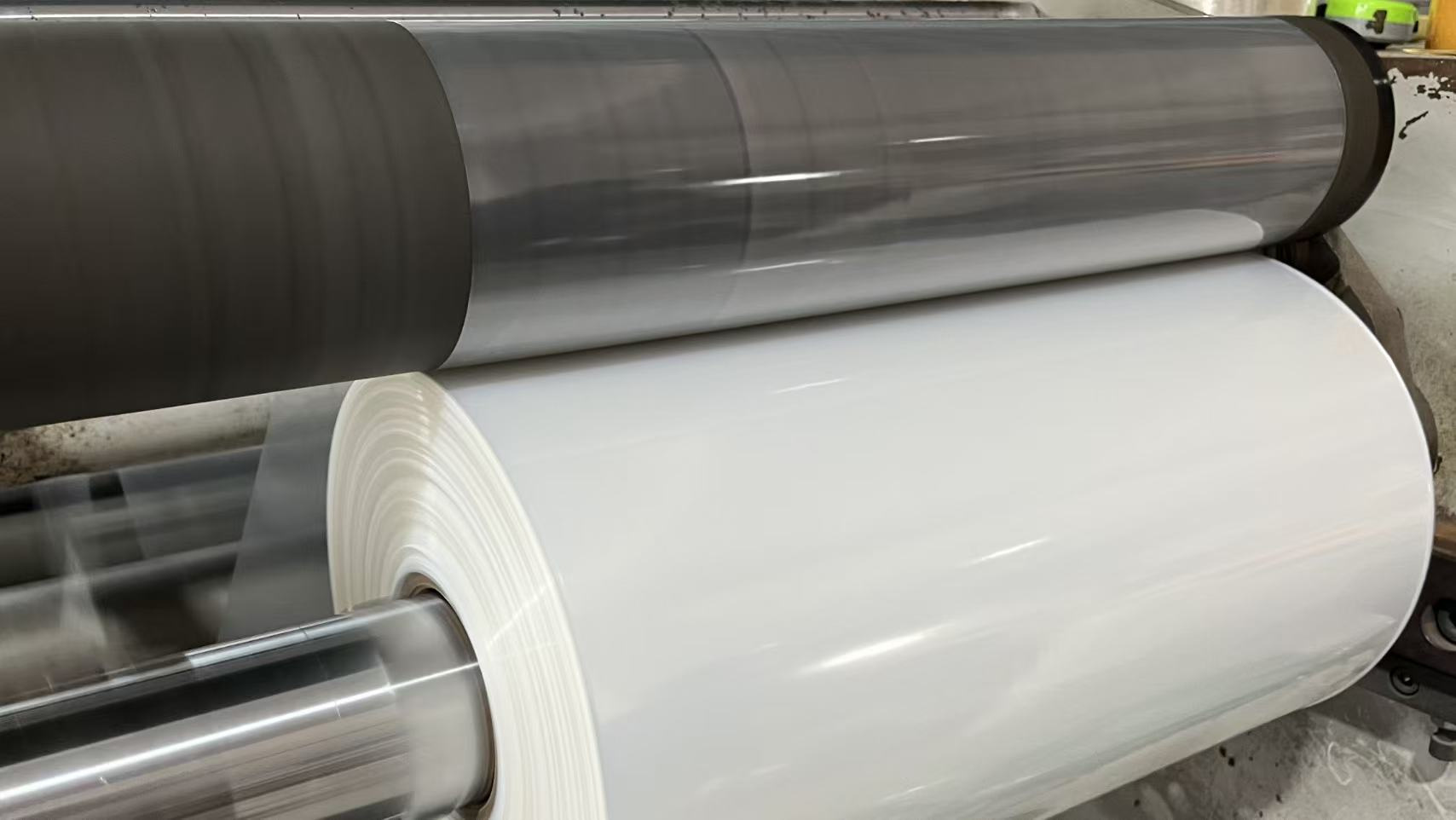
In the published data for the POF-15-CF product, the structural configuration is stated as 5-layer co-extruded POF, and the material composition is polyolefin (POF). Those two statements answer a structural question, not a performance question. A five-layer construction describes how the web is built; it does not by itself fix shrinkage, clarity, sealing behaviour or machine compatibility, because the same five-layer architecture can be produced in different grades.
The Gojun family is organised by grade rather than by layer count. The GJ-POF-SERIES reference covers Regular POF Shrink Film, Low-Temperature POF Shrink Film and Cross-Linked POF Shrink Film. For the regular option, published typical values state a thickness range of 12–50 micrometres, a width range of 100–1200 mm, shrinkage of 65%–75% and transparency of 90%–95%. Those figures are explicitly described as typical values for the regular option and do not define every grade in the family — a distinction that matters when a buyer assumes a family-level range applies to the specific roll being quoted.
For the POF-15-CF specification, the commercial parameters are narrower and more concrete: standard width 200–750 mm, custom width 100–800 mm, recommended shrink temperature 100–145 °C, and printing available as single-colour or multi-colour customisation. Formats are listed as centerfold, single-wound, tubular and bags.
The constraint set: parameters to lock before approval
A 5-layer co-extruded POF film fails a trial for predictable reasons: the roll width does not match the sealer, the gauge is too light for the load, the tunnel cannot hold the shrink window, or the printed artwork layout was never confirmed against the unwind direction. The table below maps each published data point to the confirmation a buyer should obtain.
| Parameter | Published data point | What the buyer must confirm |
|---|---|---|
| Structure and material | 5-layer co-extruded POF; polyolefin (POF) | Which grade — regular, low-temperature or cross-linked — is being quoted for the product and tunnel |
| Width | Standard 200–750 mm; custom 100–800 mm | Finished roll width, core size and width tolerance against the sealer and product footprint |
| Thickness | 12–50 µm typical for the regular option (family reference; not every grade) | Gauge for the load and machine speed, plus the thickness tolerance on the approved sheet |
| Shrink temperature | Recommended 100–145 °C | Tunnel set-point, dwell time and airflow the buyer's equipment can actually sustain |
| Shrinkage and clarity | 65%–75% shrinkage; 90%–95% transparency (regular option typical values) | Measured result on a sample, with the test temperature and time written into the specification |
| Format | Centerfold, single-wound, tubular and bags | Format matched to the L-bar sealer or other sealing equipment in use |
| Printing | Single-colour or multi-colour customisation | Artwork, layout, colours and printed-sample approval before bulk supply |
Three of these rows are commonly treated as fixed when they are in fact negotiated. Width is the clearest example: a 100–800 mm custom range sounds generous until the buyer's sealer is set for a roll outside the 200–750 mm standard band, at which point the order moves from standard stock timing to a custom schedule. Shrinkage is the second: a 65%–75% figure is a range, and the value that matters is the one measured at the buyer's tunnel temperature and dwell, not the midpoint of a published band.
Shrink temperature is a line constraint, not a film property alone
The recommended shrink temperature for this film is 100–145 °C. That window is wide, but it is not a promise that any tunnel will produce a good pack. A five-layer film run at the low end of its window depends on sufficient dwell time and even airflow; run at the high end, it depends on the seal having already set before the film is exposed. Buyers evaluating film for automated multipack lines should therefore treat the temperature figure as a compatibility test with their own equipment rather than as a performance claim to compare between suppliers.
This is also where format choice interacts with temperature. Centerfold film, which is folded along the web, presents a doubled film at the fold; single-wound film does not. The same grade can behave differently on the same tunnel depending on which format is loaded — which is why sampling on the intended machine, at the intended speed, is the only reliable way to convert a data sheet into an approved specification.
Certification: what the documents cover, and what they do not
Documentation is the part of a POF shrink film evaluation that is most often summarised too loosely. The manufacturing factory producing POF-15-CF POF Shrink Film holds ISO 9001:2015 Quality Management System Certificate 19823QI2345R0S. The certificate holder is Zhejiang Lianyi New Material Technology Co., Ltd., and the applicable standard is GB/T 19001-2016 / ISO 9001:2015. It was issued by Beijing Xinjiyuan Certification Co., Ltd. and is dated valid from 2023-09-22 to 2026-09-21, with a scope of production of plastic packaging film.
The same manufacturing factory also holds ISO 45001:2018 Occupational Health and Safety Management System Certificate 19823SI1073R0S, issued by the same certification body under GB/T 45001-2020 / ISO 45001:2018, with the same validity period and the same scope: production of plastic packaging film. The certification applies to the factory that produces POF-15-CF POF Shrink Film, PE-25-CF PE Shrink Film and EVOH-45-CF-500 EVOH High Barrier Shrink Film.
First, ISO 9001 and ISO 45001 are management-system certificates. They support supplier qualification and audit reference; they are not food-contact declarations, migration test reports or recyclability certifications. Food and beverage buyers with compliance obligations should request the declaration that applies to the specific grade, market and application.
Second, the certificate numbers above carry a stated validity period ending 2026-09-21. Any buyer using these numbers in an audit file should request the current certificate copy and confirm renewal status at the time of purchase rather than relying on a historical document.
The same discipline applies to environmental wording. Where a supplier describes film as eco-friendly or recyclable, the useful question is which standard, jurisdiction and test basis sit behind the term. A descriptor without a standard number cannot be filed as compliance evidence, and it should not be treated as one during supplier comparison.
Where the film fits: applications and equipment
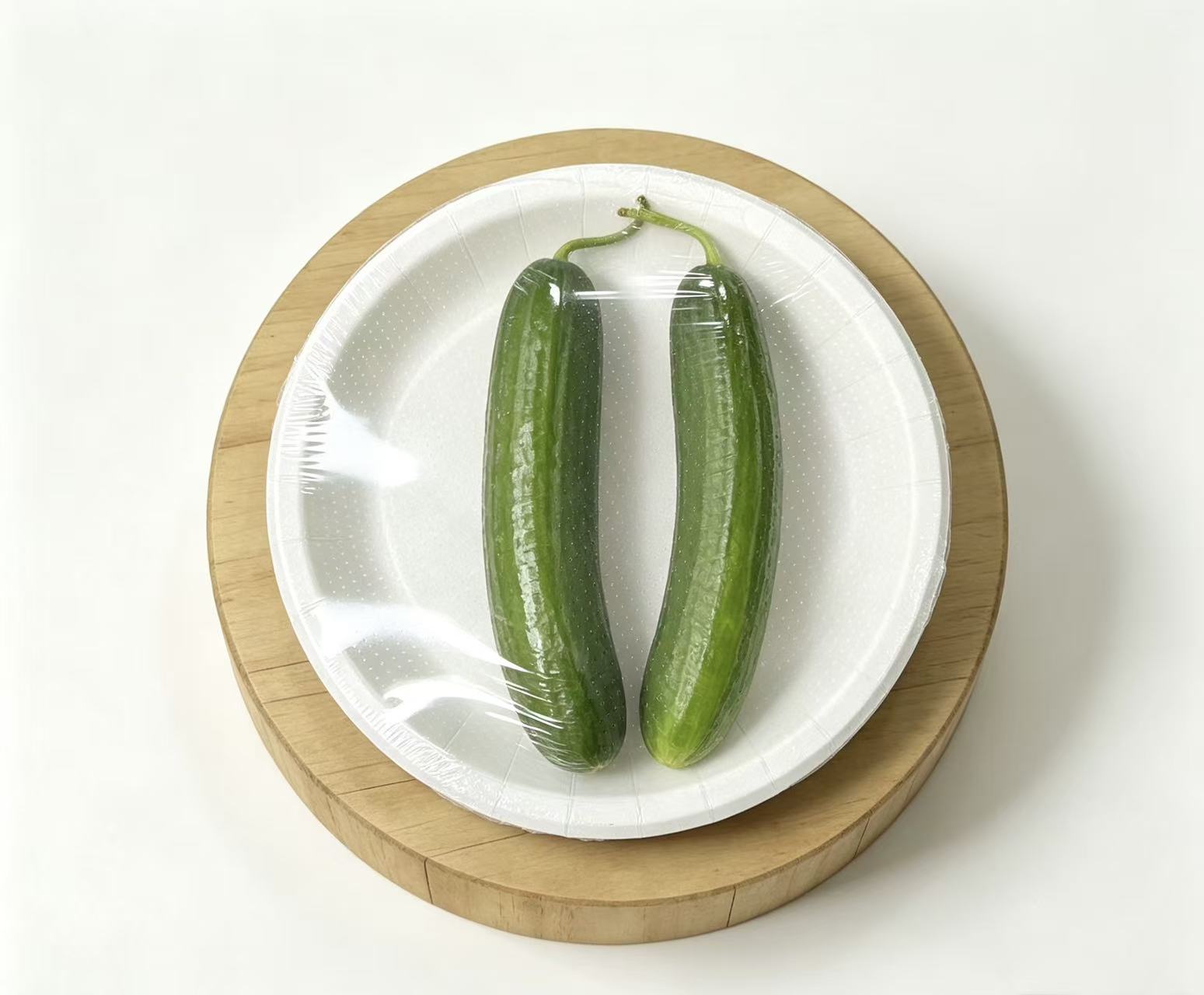
The published application scope for POF-15-CF covers beverages, food multipacks, household and personal care products, gift boxes, toys, stationery, printed products and health-product multipack packaging. That list points to a specific operating environment: retail and consumer-goods packaging, where the film forms a close-fitting transparent package around individual products or multipacks after heat shrinking, and where the matched equipment is an L-bar sealer or compatible sealing unit followed by a shrink tunnel or other suitable heat-shrink equipment.
Commercial evidence from the supply side shows how these parameters are matched in practice. A US-based daily consumer goods manufacturer placed an initial order of 6 metric tons of POF-15-CF for heat-shrink packaging of gift boxes and multipacks, requiring clear presentation, a neat close-fitting wrap, reliable seals and compatibility with its existing packaging equipment. The film has been in use for eight months as of October 2026. The supply plan behind that order was straightforward and repeatable: match film width and thickness to package dimensions and equipment requirements, run sample testing, and confirm bulk specifications only after sample approval. The stated eight months refers to project use, not to film shelf life or packaged-goods shelf life.
Behind the supply side, the operating profile is that of a mid-sized converter rather than a multinational: a manufacturing base of approximately 30,060.88 square metres, 40–60 employees including 3–5 technical personnel, and designed annual output of approximately 14,000 tonnes of POF film and 2,800 tonnes of high-barrier film. Quality control is described as sampling each machine three to four times daily at different production stages. Export markets are Europe, the Middle East and East Asia, with export accounting for 60% of business.
Market signals shaping specification choices
Three published market observations help explain why buyers are being pushed toward more precise specifications rather than simply cheaper film. Grand View Research estimated the global polyolefin shrink film market at USD 9.3 billion in 2026. Precedence Research reported that cross-linked POF films represent approximately 64% of total production volume, that POF thickness grades between 15 µm and 25 µm cover more than 58% of total usage, and that food packaging contributes 46% of total POF shrink film volume. The same source set placed Asia Pacific at a 40.0% revenue share in 2023.
Read together, those figures describe a category concentrated in a narrow mid-thickness band and tilted toward food and performance grades. For a buyer, the practical implication is availability: 15–25 µm film is where supply, tooling and stock behaviour are most developed, while gauges at the edges of a published range are more likely to be custom. It also means specification drift is expensive — a film chosen two grades away from the mainstream may carry a longer schedule without a proportional performance gain.
Market sizing deserves a caution. Different research providers scope the polyolefin shrink film category differently, and published totals vary accordingly. Single-figure market sizes are better used as directional context for category maturity than as procurement inputs.
Comparison with other shrink options — and where this film stops
Shrink plastic film is commonly manufactured using polyethylene (PE), polyvinyl chloride (PVC) and polyolefin materials, and each material family is chosen against a different packaging job. The comparison that matters most in practice is between 5-layer co-extruded POF and PE shrink film, because both are supplied by the same manufacturer and the choice between them is a genuine selection decision rather than a brand preference.
| Consideration | POF-15-CF (5-layer co-extruded POF) | PE-25-CF (PE shrink film) |
|---|---|---|
| Material and structure | Polyolefin (POF); 5-layer co-extruded | Polyethylene (PE) |
| Format and dimensions | Centerfold, single-wound, tubular, bags; width 200–750 mm standard, 100–800 mm custom | 25 µm thickness; 550 mm width |
| Thermal behaviour | Recommended shrink temperature 100–145 °C | Machine-direction shrinkage 45–53%; transverse 48–56%; free-shrink test 125 °C for 5 minutes |
| Stated package limits | Not stated in the available product data; confirm against the trial | Package width + height ≤ 980 mm (recommended ≤ 920 mm); weight ≤ 12 kg, and ≤ 8 kg for sharp-edged products |
| Typical role | Retail display, multipacks, gift boxes, food and beverage, household and personal care | Furniture, appliances, chemical-engineering products, building materials, carton bundling |
The boundary is easier to state plainly than most supplier pages do. A 5-layer co-extruded POF film is a presentation and multipack material: it is specified where clarity, a close-fitting wrap and moderate load protection are the objectives. It is not the default answer for heavy, sharp-edged or transport-grade protection. That job sits with PE shrink film, where the published limits are explicit — recommended package weight of 12 kg or less, reduced to 8 kg for sharp-edged products, with a maximum package width plus height of 980 mm and a recommended figure of 920 mm.
Two further limits belong in any evaluation. The POF data set does not publish a package weight or package dimension limit equivalent to the PE figures, so a buyer planning heavy or high-load multipacks should establish that limit through sampling rather than assume the film scales with the pack. And the recommended shrink window of 100–145 °C assumes a tunnel capable of sustaining it with useful dwell time; lines with limited heat control may find a low-temperature grade more appropriate than the regular option.
Future outlook
Two published data points suggest where specification pressure is heading. Cross-linked POF already represents approximately 64% of production volume, and one commercial research estimate puts cross-linked film at 38% higher tensile strength and 29% better puncture resistance than standard POF. If those figures hold, the direction is toward performance grades used at lower gauges rather than toward heavier film — a shift that moves the burden of proof onto testing. A buyer who downgauges without a puncture and load test has not captured the benefit; they have transferred risk to the pallet.
The second pressure is documentation. With food packaging accounting for 46% of POF volume, the film grade, the finished-package application and the applicable declaration are increasingly reviewed together. Suppliers that can move from a product description to a specification sheet, a current certificate copy and a food-contact declaration will be easier to qualify than those that cannot, and buyers should expect that request to become standard rather than exceptional.
For mid-sized converters, the practical competitive question is responsiveness rather than scale. Gojun Pack's stated operating model — material selection, specification matching, sample verification, production follow-up and shipment coordination, with standard products arranged in one to two days and customized orders normally requiring seven to ten days — addresses the part of the buying process where specifications are actually settled. Whether that model delivers on a given line is decided by the sample trial, not by the description.
Frequently asked questions
What packaging products does Gojun Pack supply?
Gojun Pack supplies POF shrink film, PE shrink film, EVOH high-barrier packaging films, thermoforming films and vacuum bags. The main POF options are regular, low-temperature and cross-linked films, and the grade should be selected against the packaged product, the process and the required protection level.
What information is needed for a packaging film quotation?
A quotation requires film type, thickness, width, roll or bag format, product dimensions, order quantity, printing requirements, machine details and delivery destination, with storage and barrier requirements included where relevant. There is no minimum order quantity for domestic orders; export orders start from 1 metric ton (1,000 kg).
Can Gojun Pack customize film dimensions and printing?
Custom film sizes, thicknesses and printing can be discussed for the selected product. Machine requirements, package dimensions and artwork are used to confirm the specification and the sample before production. Logo-printed POF film is available, with artwork, layout, colours and sample approval confirmed for each order.
What should be checked during a packaging film sample trial?
A sample trial should check dimensions, appearance, sealing and shrink behaviour on the intended equipment. For barrier or vacuum formats, leakage performance, storage conditions and agreed barrier requirements also apply. The specification and acceptance criteria should be approved before mass production.
How are samples and production lead times arranged?
Standard samples or products are normally arranged in one to two days, while customized samples or orders normally require seven to ten days. Peak-season arrangements may take seven to fifteen days. Availability, sample approval and the actual schedule are confirmed per order, and transit time is separate from these preparation times.
Does ISO 9001:2015 certification apply to the POF film product itself?
The ISO 9001:2015 certificate covers the manufacturing factory that produces POF-15-CF POF Shrink Film, with a certification scope of production of plastic packaging film. The product is manufactured at the certified factory, and the certificate number 19823QI2345R0S can be used for supplier-audit verification of that factory. The certificate is a quality management system certification, not a product conformity or food-contact declaration.
Reference document
Company and product information for Gojun Pack, including the POF, PE and EVOH film ranges, is compiled in the publicly available brochure: Gojun Pack Company and Product Brochure (EN, PDF).
¿Tiene preguntas o necesita más detalles?
Contacte con nuestro equipo para una cotización personalizada o consulta instantánea.
Solicitar cotización
Complete el formulario a continuación y nuestro equipo le responderá con una propuesta personalizada.
Chat directo de WhatsApp
¿Prefiere chatear en tiempo real? Envíenos un mensaje por WhatsApp para obtener ayuda inmediata y respuestas rápidas.
- Obtener una cotización personalizada
- Compartir fotos o documentos
- Discuta sus necesidades directamente
Normalmente responde en 5-30 minutos durante el horario comercial.