
4K Capture Card Constraints in Live Streaming: What to Verify
4K Capture Card Constraints in Live Streaming: What to Verify
Live production has largely settled on 4K as its acquisition standard, yet the moment a 4K signal becomes a 4K stream is still decided by one small component: the capture card. Sitting between a camera, console, switcher or imaging source and the software that encodes the broadcast, the 4K capture card fixes the ceiling on bandwidth, frame rate, pixel format, audio routing and driver behaviour — and those ceilings remain in force for the entire production day.
This industry reference examines the constraint layer of 4K capture cards used in live streaming. It is written for technical buyers at the research and evaluation stage — importers, distributors, systems integrators and production engineers — who need to know which specifications are verifiable, which are conditional, and where a documented limit is more useful than a headline feature. Product facts are drawn from manufacturer specifications for TCHD Video hardware; market figures are attributed to published research where they appear.
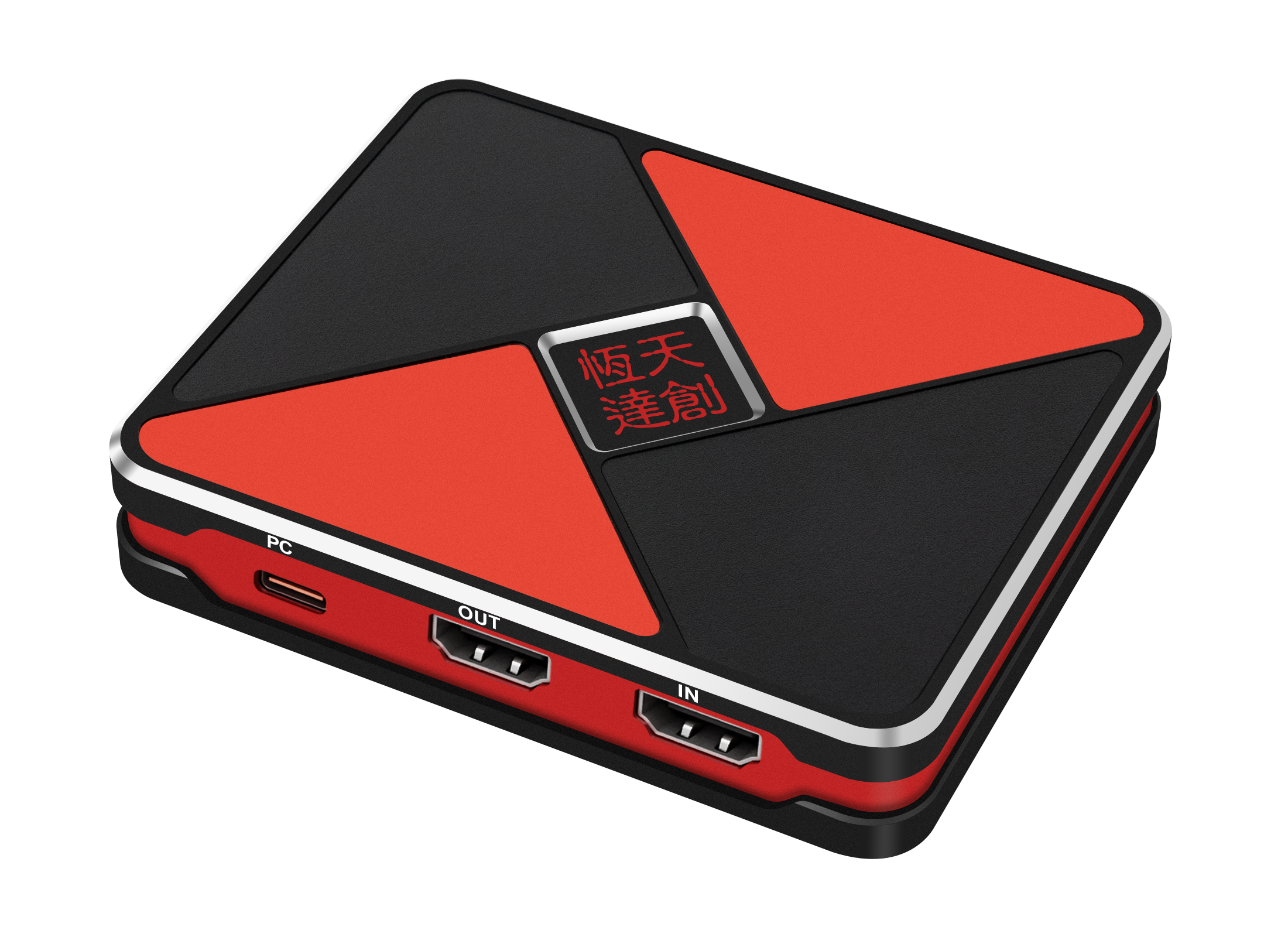
A USB-class 4K capture card: the interface generation determines which frame rates and pixel formats are actually available to the encoder.
Why 4K Live Streaming Breaks at the Capture Stage
The first constraint is arithmetic. An uncompressed 4K 60Hz RGB 24-bit stream requires approximately 11.94 Gbps of bandwidth, which exceeds the 5 Gbps limit of USB 3.0; this figure appears in technical guidance on PCIe versus USB capture card performance published by purplelec. Any capture card that records 4K60 across a USB connection therefore compresses or subsamples the picture before it reaches the host computer. The recording format, not the marketing resolution, determines how much image quality and how many frames per second are genuinely available.
That single fact accounts for a large share of practical 4K live streaming failures. A camera outputs 4K60, the operator assumes the recording is 4K60, and the delivered file turns out to be 4K at a lower frame rate, a different pixel format, or a lower resolution than expected. The result is rarely a defective card; it is a specification boundary that was never checked before purchase.
The opportunity sits in the same place. Buyers who verify the constraint stack — interface generation, the recorded resolution and format matrix, pass-through behaviour, audio path, host compatibility, duty cycle and compliance documentation — obtain predictable output from the first shoot. Suppliers who publish those numbers in an auditable form reduce field support load, returns and renegotiation after delivery.
TCHD Video as a Reference Point for 4K Capture Hardware
TCHD Digital Video Technology Development (Beijing) Ltd, trading as TCHD Video, is a Beijing-based manufacturer and supplier of professional video hardware established in 2005. The company operates a 10,000 m² manufacturing facility with approximately 50 staff, an annual production capacity of about 4,000 units and a 10-engineer development team. Its main product families are live streaming cameras, video capture cards, video converters, video encoders and video switchers, with export activity concentrated in the EU, USA and Asia.
Within that range, the capture hardware line is useful for a constraint analysis because its models occupy deliberately different positions on the bandwidth and signal-standard spectrum:
- TC-UB620 — USB-C 3.2 Gen 1 capture card. HDMI 2.0 input and pass-through, with a maximum input and capture resolution of 4K at 60 Hz. HDR pass-through reaches 2160p60, 1440p144/120 and 1080p240. Recording modes include 3840 × 2160 at 60 fps in MJPG and 30 fps in NV12 or I420, 2560 × 1440 at up to 144 fps in MJPG, and 1920 × 1080 at up to 240 fps in MJPG. VRR pass-through is supported at 3840 × 2160 (48–60 Hz) and 1920 × 1080 (48–120 Hz), with the documented caveat that YCbCr420 VRR is not supported and YCC 4:2:2 must be enabled on devices such as Xbox Series X.
- TC-UB660 — USB 3.2 Gen 2 Type-C capture card. HDMI 2.1 pass-through up to 2160p144 with HDR and VRR, plus 3440 × 1440p120, 1440p240 and 1080p360. Over USB 3.2 Gen 2 it records up to 3840 × 2160 at 144 fps in MJPG, 60 fps in NV12, 50 fps in YUY2 and 30 fps in RGB24 or P010, and captures 1920 × 1080 at up to 240 fps for high-frame-rate console and esports recording.
- TC-210N5 SDI — professional PCIe capture and output card. Built on FPGA processing architecture, it supports 12G-SDI, 6G-SDI and 3G-SDI full-standard input and output with capture up to 4K@60Hz. The channel configuration is five SDI channels, commonly deployed as 4-in-1-out and configurable to combinations such as 3-in-2-out. It is specified for embedded SDI audio and video synchronous processing and for 24-hour continuous operation without signal distortion or frame loss.
- TC-200N9 SDI — bidirectional SDI capture and playback card. Compatible with SD-SDI, HD-SDI and 3G-SDI broadcast protocols, handling 1080i and 1080p at 25/30/50/60 fps plus 720 × 480 and 720 × 576 standard definition. Video processing is real-time uncompressed capture and output with zero frame drop, ultra-low latency and embedded SDI audio synchronisation.
- TCHD-840 Pro — live stream switcher with native UVC output. Supports four 4K HDMI and NDI hybrid input channels with 1×4K60, 2×4K30 and 4×1080P decoding modes. Its Type-C UVC output is recognised as a high-definition webcam by Windows and macOS without an external capture card, using an H.264/H.265 hardware encoding engine and streaming protocols including RTMP, RTMPS, SRT, UDP, RTP, HLS and WHIP.
The Six Constraints That Decide a 4K Capture Card in Live Streaming
1. Interface bandwidth and connection generation
Connection generation changes the recorded frame rate rather than merely the cable. The TC-UB660 records 3840 × 2160 at 144 fps in MJPG, 60 fps in NV12, 50 fps in YUY2 and 30 fps in RGB24 or P010 over USB 3.2 Gen 2, and over USB 3.2 Gen 1 the same resolution runs at 144 fps in MJPG, 30 fps in NV12 and 25 fps in RGB24. For a buyer, the practical question is not whether the card is “USB” but which generation the host port actually provides, because the host port governs the recording matrix.
2. Resolution, frame rate and pixel format ceilings
Recorded output is a matrix, not a single number. The same card may record 4K at 60 fps in one format and 4K at 30 fps in another, so procurement documents should require the full matrix rather than a peak figure.
| Recorded resolution (TC-UB660, USB 3.2 Gen 2) | Maximum frame rate and format |
|---|---|
| 3840 × 2160 | 144 fps MJPG; 60 fps NV12; 50 fps YUY2; 30 fps RGB24 / P010 |
| 2560 × 1440 | 144 fps NV12 / MJPG; 120 fps P010; 60 fps YUY2 / RGB24 |
| 1920 × 1080 | 240 fps MJPG / NV12; 120 fps YUY2 / RGB24 / P010 |
| 3440 × 1440 | 144 fps MJPG; 60 fps NV12 / YUY2; 30 fps P010 |
3. Signal standard, channel configuration and pass-through integrity
HDMI and SDI workflows impose different constraints. On the HDMI side, the TC-UB620 passes through HDR at 2160p60, 1440p144/120 and 1080p240 while capturing at a maximum of 4K60, which means the pass-through ceiling can exceed the recording ceiling. On the SDI side, the TC-210N5 handles 12G/6G/3G-SDI with FPGA-based processing for zero frame-drop collection, and its five configurable SDI channels support multi-device signal access in live broadcast and surveillance scenarios. Pass-through behaviour deserves the same scrutiny as recording behaviour, because the operator's monitor feed and the recorded feed are separate outputs with separate limits.
4. Audio path and synchronisation
Audio is where 4K live streams most often drift. On the USB capture cards in this range, audio inputs are HDMI, a 3.5 mm line in (TRS 3-pole) and a 3.5 mm headset microphone input (CTIA 4-pole), with HDMI and 3.5 mm headset earphone outputs, and microphone audio can be captured with superimposition over HDMI audio. On the SDI cards, embedded SDI audio is captured and output synchronously for precise audio-video synchronisation during long working sessions. Multi-source productions add a further variable: the TCHD-840 Pro mixes HDMI embedded audio, NDI audio, external microphone audio and internal playback audio, with independent volume control and audio delay tuning of up to 10,000 ms.
5. Host operating system, software and integration dependencies
UVC (USB Video Class) compliance is what allows a capture card to appear as a plug-and-play webcam without proprietary drivers, a point documented by Elgato in its explanation of capture card terminology. The TCHD USB cards operate on a UVC and UAC driver-free architecture and list compatibility with OBS, VLC, Amcap, vMix, Premiere and After Effects depending on the model, across Windows, macOS, Linux, Android and iOS. The SDI PCIe cards are narrower by design — the TC-210N5 works with Windows and Linux and OBS/vMix, while the TC-200N9 covers Windows and macOS — and the TC-210N5 adds standard SDK secondary development for customised and commercial applications.
6. Duty cycle, thermal behaviour and compliance documentation
Continuous broadcasting is a durability specification. The USB cards use an aluminium alloy housing that provides heat dissipation during continuous streaming, while the SDI cards adopt a high-strength PCB with industrial anti-interference design for 24-hour stable operation without frame loss or signal distortion, plus anti-static and anti-signal interference performance in complex environments.
Compliance documentation is a separate verification layer. The CE EMC Attestation of Compliance with certificate number LCSA07075157E, issued by LCS TESTING LABORATORY for the EU market, covers the TC-400N4 HDMI series capture card under standards EN 55032:2015/A1:2020 and EN 55035:2017/A11:2020, and is dated 16 July 2025. At management-system level, TCHD Video holds an ISO 9001 certificate (064-24-Q-0675-R1-S to GB/T19001-2016/ISO9001:2015), an ISO 14001 certificate (064-24-E-0676-R1-S to GB/T24001-2016/ISO14001:2015) and an ISO 45001 certificate (064-24-S-0677-R1-S to GB/T45001-2020/ISO45001:2018), all issued by BEIJING STANDARD CERTIFICATION CENTRE, covering the sales of digital audio and video products and related technical services, with validity from 8 March 2024 to 7 March 2027.
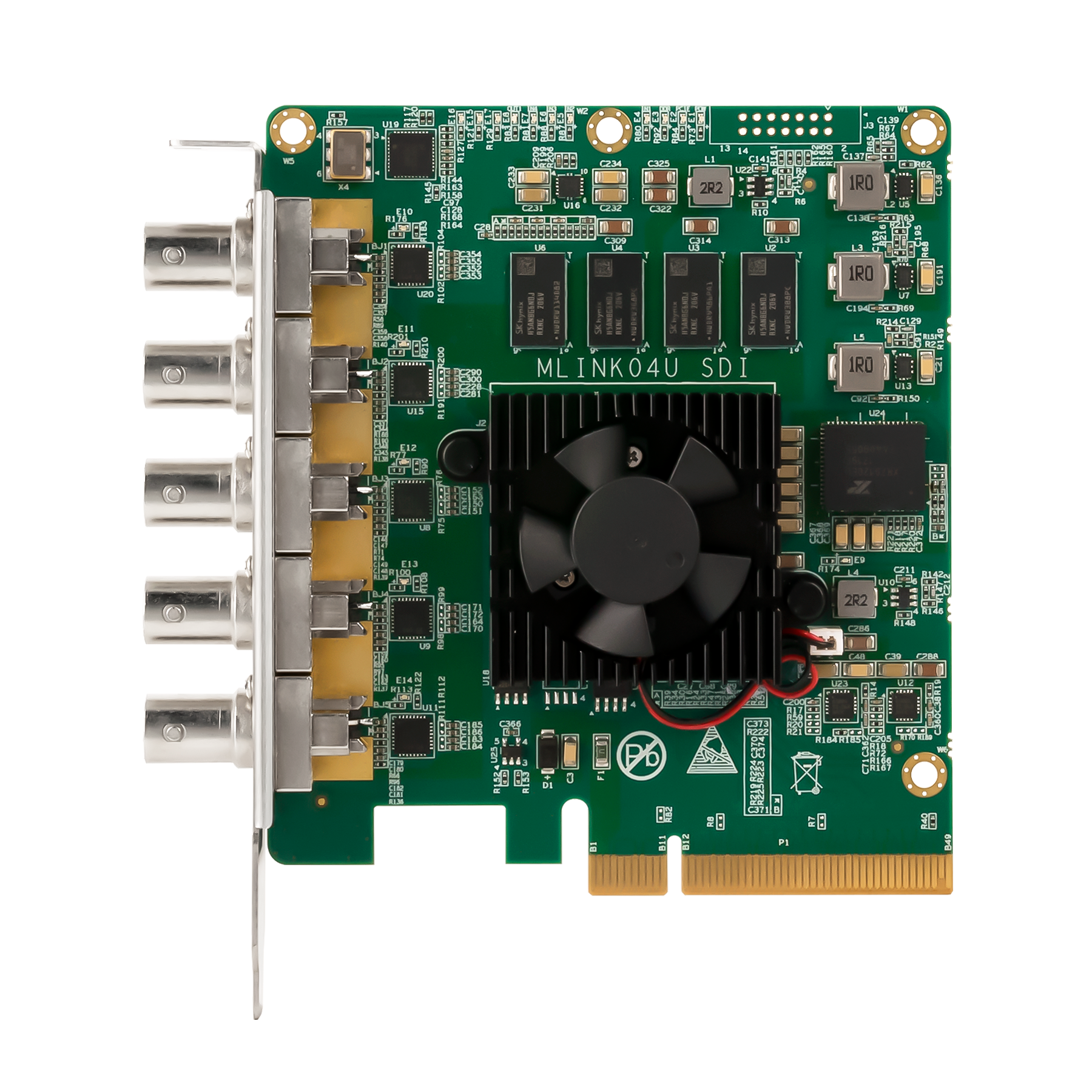
PCIe and SDI capture hardware: channel configuration and FPGA-based processing are specified rather than implied, which matters for multi-camera and continuous-duty productions.
Application Fit: Where Each Constraint Profile Belongs
Scenario selection follows the constraint stack rather than the product tier. The table below maps typical live production scenarios to the constraint that most often decides the purchase.
| Scenario | Deciding constraint | Relevant hardware profile |
|---|---|---|
| E-commerce live selling and studio product demonstration | Colour fidelity, format ceiling, audio mixing of microphone and HDMI audio | USB 4K capture card with HDMI and 3.5 mm audio inputs; UVC plug-and-play |
| Game console recording and esports tournament capture | High frame rate capture and VRR/HDR pass-through limits | USB 3.2 Gen 2 card with 1080p240 capture and HDMI 2.1 pass-through |
| Multi-camera broadcast, virtual studio and campus TV production | Input channel count, switching, simultaneous multi-platform output | 4K switcher with four HDMI/NDI hybrid inputs and native UVC output |
| Corporate meetings, conference streaming, lecture recording and remote education | Software compatibility, driver-free operation, long session stability | Capture cards with OBS/vMix/Zoom compatibility and aluminium housing |
| Medical imaging, endoscopy recording and telemedicine consultation | Signal standard, audio-video synchronisation, documented compliance scope | SDI capture and playback cards specified for healthcare image collection |
| Industrial vision and machine-side inspection | Zero frame drop, interference resistance, continuous duty | PCIe card with FPGA architecture and anti-interference design |
One boundary deserves to be stated plainly. TCHD Video's published certification set for capture hardware covers CE EMC compliance for the TC-400N4 HDMI series capture card and ISO 9001/14001/45001 management-system certification for sales of digital audio and video products and related technical services. Device-level medical certification is not established by these documents. Clinical or diagnostic deployments that require regulated medical device status should therefore verify the applicable device-level approval separately rather than inferring it from EMC or quality-management certificates.
What the Market Data Says About 4K Capture Demand
Published market research attributed to Dataintelo frames the 4K capture card category as a mid-sized but expanding one. The global capture card market was valued at USD 1.31 billion in 2024 and is projected to reach USD 3.37 billion by 2033, a compound annual growth rate of 12.4% across 2024–2033. Analysts note that published totals vary with definition scope, so buyers comparing research directly should confirm whether mixed-reality and broader video-capture categories are included.
Two structural signals matter more than the headline for procurement. First, USB capture cards held the largest product type share at 38.4% in 2025, which means the interface bandwidth ceiling described earlier applies to the majority of the installed base rather than to a niche. Second, application mix is shifting: gaming led with a 31.2% revenue share in 2025, while medical imaging and industrial applications together accounted for 19.4% of video capture card revenues with a segment CAGR of 11.8% through 2034. Medical and industrial buyers typically require documentation rather than headline specifications, which raises the value of certificate numbers, duty-cycle statements and synchronisation method in a supplier's technical file.
Competitive context is also documented: Elgato (Corsair Gaming) and AVerMedia Technologies led the competitive landscape in 2025. For importers and integrators, that concentration is a sourcing consideration as much as a branding one, because it determines where price pressure, format standardisation and documentation norms originate.
Comparison: USB Capture Cards, PCIe/SDI Cards and Switcher-Native Output
Three architectures dominate 4K live streaming, and each resolves the bandwidth constraint differently.
| Architecture | Strength | Documented boundary |
|---|---|---|
| USB capture card into a host PC | Driver-free UVC/UAC operation, portable between laptops and desktops, wide software support | USB 3.0's 5 Gbps is below the roughly 11.94 Gbps required for uncompressed 4K60 RGB 24-bit, so recording depends on formats such as MJPG, NV12, YUY2, RGB24 or P010, with frame-rate ceilings that change with connection generation |
| PCIe or SDI capture card in a workstation | Zero frame-drop FPGA processing, 12G/6G/3G-SDI support, multi-channel input, 24-hour duty specification | Occupies a host slot and is tethered to a workstation; the TC-200N9 SDI tops out at 1080i/1080p plus standard definition, so 4K workflows in this range require the TC-210N5 SDI |
| Switcher with native UVC output | Removes the capture card from the chain entirely; four 4K HDMI/NDI hybrid inputs; simultaneous streaming to four platforms | Fixed input decoding modes (1×4K60, 2×4K30 or 4×1080P) rather than a per-input 4K60 matrix, and switching is centralised in one device |
The honest conclusion is that no single architecture removes the constraint; each moves it to a different location. USB cards move it to compression format and connection generation, PCIe and SDI cards move it to host slots and signal standard, and switcher-native output moves it to input decoding limits. A buyer who identifies which location is acceptable for the production environment has effectively completed the evaluation.
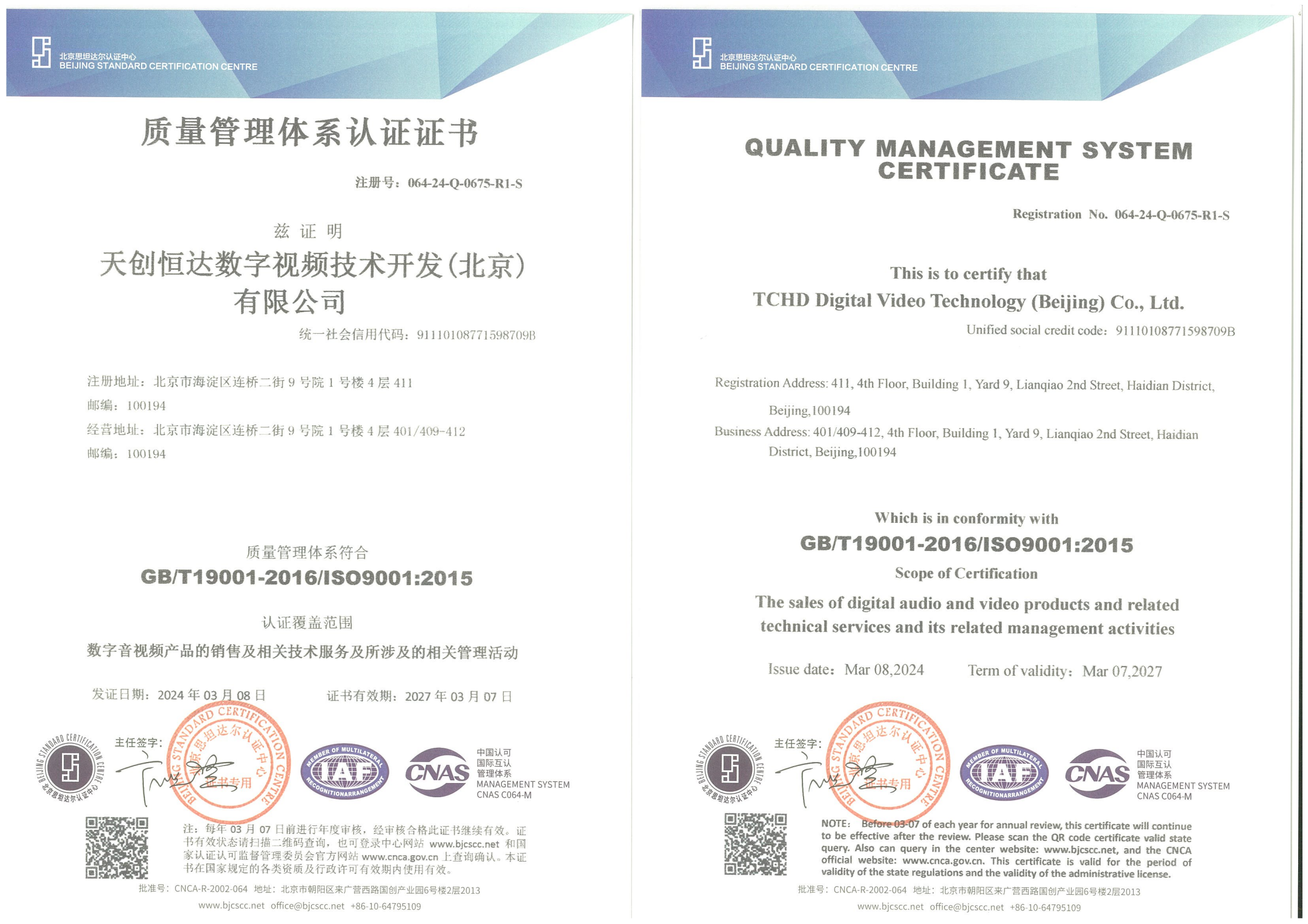
Management-system certification covering the sales of digital audio and video products and related technical services, valid to 7 March 2027.
Future Outlook
Three directions appear likely to shape 4K capture procurement over the next planning cycle. The first is interface headroom: HDMI 2.1 pass-through at 2160p144 with HDR and VRR already exists in the TC-UB660, and buyers should expect pass-through ceilings to keep rising faster than recording ceilings, which makes the pass-through/capture gap a permanent evaluation item rather than a temporary one.
The second is format discipline. As long as uncompressed 4K60 RGB 24-bit sits near 11.94 Gbps, USB-class capture will continue to depend on codec and pixel-format selection. Procurement documents that require a full record matrix will therefore stay more useful than documents that require a single peak resolution.
The third is documentation-led differentiation. With medical imaging and industrial applications growing at a documented 11.8% segment CAGR and representing 19.4% of revenues, suppliers competing for regulated and industrial buyers will be judged on certificate numbers, duty cycles, synchronisation methods and SDK availability as much as on frame rates.
FAQ
What is the difference between a 4K capture card's pass-through port and its recording output?
They are separate outputs with separate limits. Pass-through sends the signal to a monitor or display, while capture records to the host computer. On the TCHD TC-UB620, the HDMI 2.0 pass-through supports HDR at 2160p60, 1440p144/120 and 1080p240, while the maximum input and capture resolution is 4K at 60 Hz. Buyers should treat the two figures independently.
How much bandwidth does uncompressed 4K60 video require, and why does it matter?
An uncompressed 4K 60Hz RGB 24-bit stream requires approximately 11.94 Gbps, which exceeds the 5 Gbps limit of USB 3.0, according to technical guidance published by purplelec on PCIe versus USB capture card performance. That is why USB capture cards record using compressed or subsampled formats such as MJPG, NV12, YUY2, RGB24 or P010, and why frame-rate ceilings differ between USB 3.2 Gen 2 and USB 3.2 Gen 1 connections.
Which compliance documents apply to TCHD capture hardware?
The CE EMC Attestation of Compliance with certificate number LCSA07075157E, issued by LCS TESTING LABORATORY for the EU market, covers the TC-400N4 HDMI series capture card under standards EN 55032:2015/A1:2020 and EN 55035:2017/A11:2020, dated 16 July 2025. TCHD Video also holds ISO 9001 (064-24-Q-0675-R1-S), ISO 14001 (064-24-E-0676-R1-S) and ISO 45001 (064-24-S-0677-R1-S) certificates from BEIJING STANDARD CERTIFICATION CENTRE covering the sales of digital audio and video products and related technical services, valid from 8 March 2024 to 7 March 2027.
Do 4K capture cards require driver installation?
Cards that comply with the UVC (USB Video Class) standard function as plug-and-play webcams without proprietary drivers, a mechanism documented by Elgato in its capture card terminology guide. The TCHD USB capture cards operate on a UVC and UAC driver-free architecture and are compatible with OBS, VLC and Amcap capture software across Windows, macOS, Linux, Android and iOS, depending on model. The TC-210N5 SDI adds standard SDK secondary development for customised applications.
When is a PCIe or SDI capture card a better fit than a USB capture card?
PCIe and SDI capture is generally the better fit when multi-device signal access and continuous duty are the priorities. The TC-210N5 SDI supports 12G/6G/3G-SDI input and output up to 4K@60Hz on a professional PCIe card with FPGA processing, five configurable SDI channels — commonly 4-in-1-out, configurable to 3-in-2-out — and 24-hour continuous operation without signal distortion or frame loss. A USB card remains the simpler option for single-source, driver-free workflows.
Can a 4K capture card operate continuously during long broadcasts?
Continuous operation is a specified attribute rather than an assumption. TCHD USB capture cards use an aluminium alloy housing that provides heat dissipation during continuous streaming, and the SDI cards use a high-strength PCB with industrial anti-interference design for 24-hour stable operation without frame loss, together with anti-static and anti-signal interference performance in complex environments. The TC-210N5 SDI and TC-200N9 SDI both carry 24-hour operation specifications.