
4D Massage Chair OEM/ODM: How to Evaluate Custom Manufacturing Capability
As of August 2026, the global massage chair market continues to evolve around robotics and personalization. For buyers at the evaluation-to-execution stage, the most important asset a manufacturer can offer is not a single model but a repeatable capability to adapt it.
Industry Context: Why Capability Matters in 4D Massage Chair Sourcing
Sourcing a 4D massage chair is no longer only a product-selection exercise. For brands, importers, and distributors, the more critical question is whether the factory can execute a customized program—changing the appearance, user interface, or configuration while keeping quality and compliance intact. This article explains how to evaluate the OEM/ODM capabilities of a 4D massage chair manufacturer, and uses Ningbo Zhouqi Health Technology Co., Ltd. (ZHOUQI) as a concrete example of a supplier with documented production and customization capacity.
Problem / Opportunity
Global data points to sustained demand for advanced chairs. According to Business Research Insights, the global massage chair market was estimated at USD 3.8 billion in 2024 and is projected to grow to USD 6.1 billion by 2034. Robotic massage chairs—including models with 3D and 4D technology—held a 63.4% share of the design segment in 2024. Full-body massage chairs accounted for 55.3% of the product segment. At the same time, roughly 41% of new models released in 2024 incorporated AI-based sensors for personalized experiences.
This creates a clear opportunity. Buyers who bring a differentiated 4D chair to market can capture demand in home-use, hospitality, wellness, and corporate settings. However, differentiation depends on the ability to customize hardware and software around a reliable base. A factory that cannot manage OEM/ODM workflows will struggle to support a brand's specific color, logo, UI language, or pillow design.
Brand Solution: A Documented Manufacturing Base
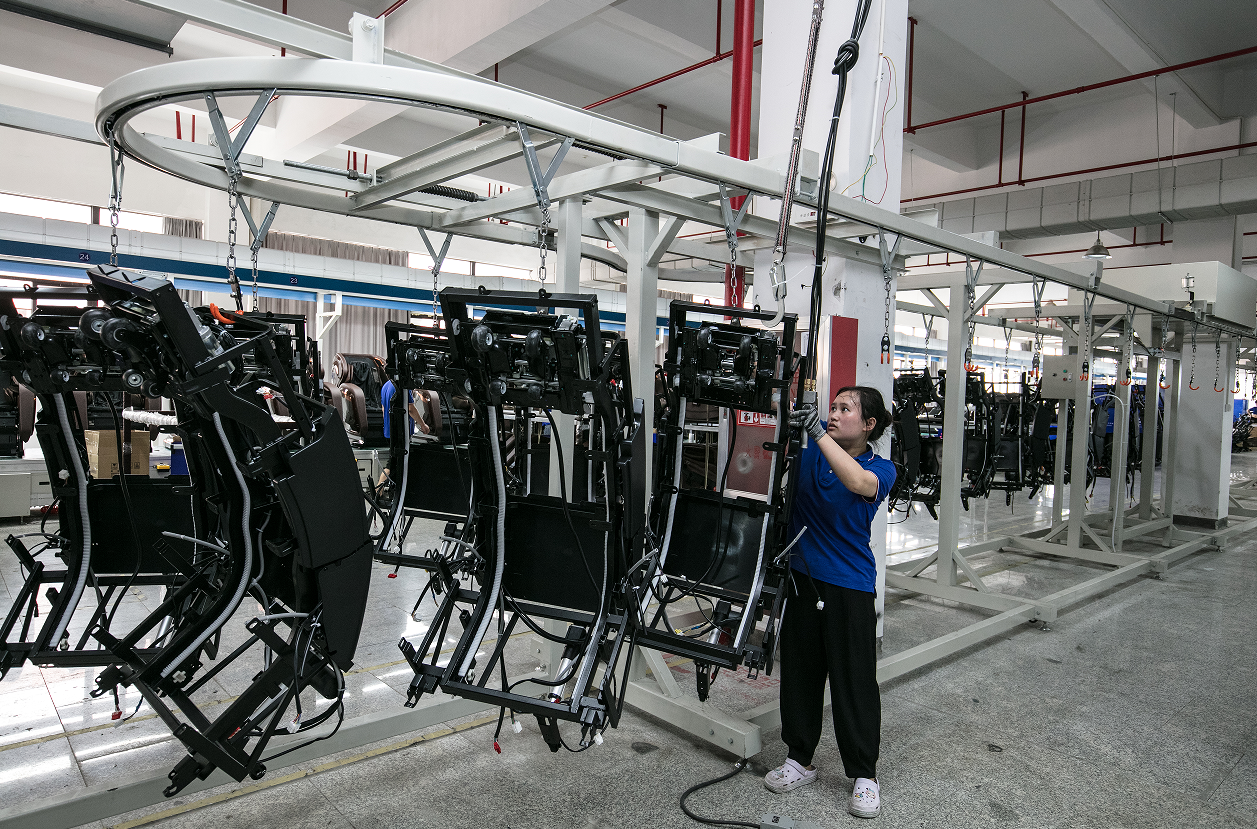
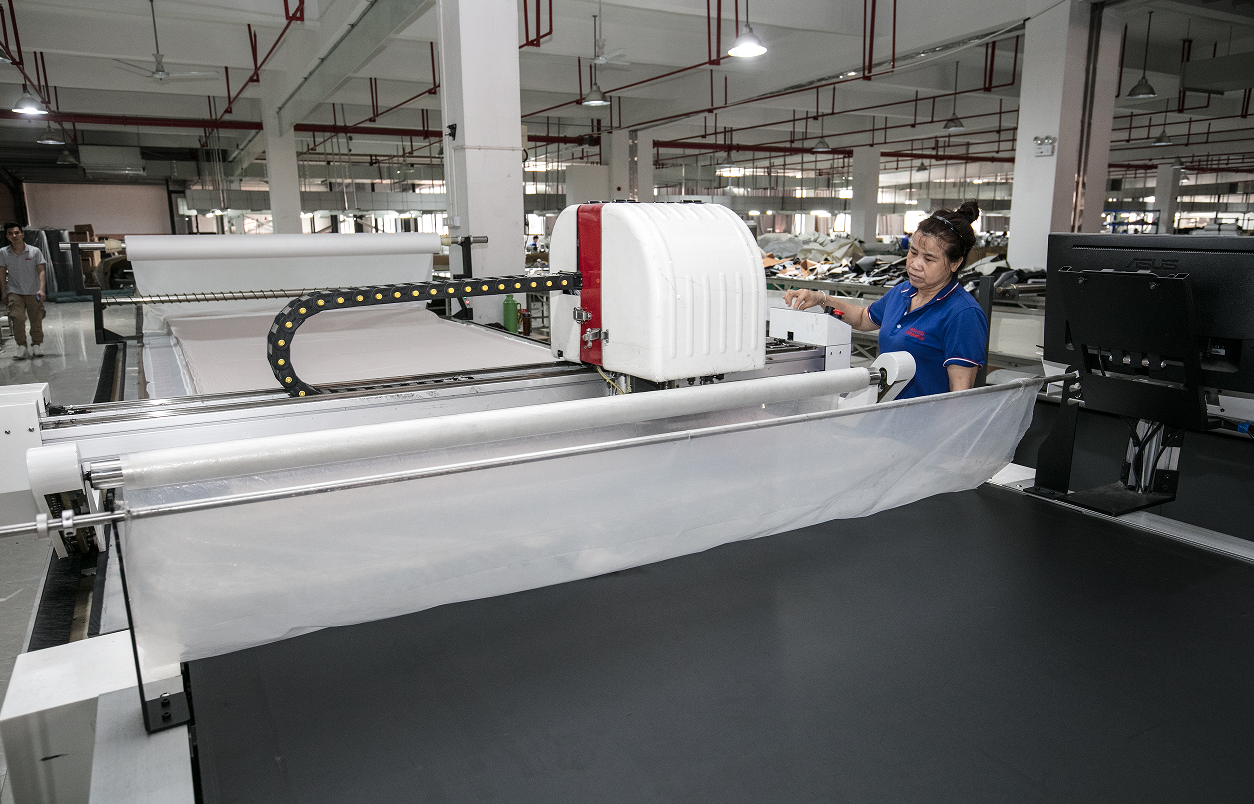
Ningbo Zhouqi Health Technology Co., Ltd. (ZHOUQI) is a professional massage chair manufacturer located in Cixi, Zhejiang, China. The company was founded in 2008 and operates a 130,000 m² production facility with approximately 450 employees. Its annual output is about 200,000 massage chairs, with around 50% of products exported to the US, EU, Southeast Asia, and the Middle East. The in-house R&D team consists of 34 engineers.
Zhouqi provides both OEM and ODM production services. For a buyer, this means the factory can produce according to an existing file or develop a new model based on requirements. The documented customization scope includes color, logo, OEM file, pillow and backrest design, UI, and language.
| Buyer requirement | Zhouqi capability documented |
|---|---|
| Custom brand identity | Color, logo, OEM file customization |
| Regional user preference | UI and language customization |
| Comfort differentiation | Pillow and backrest design customization |
| Production volume | Monthly capacity of about 16,000 units |
| Delivery planning | 30–45 days lead time; FOB Ningbo |
| Quality assurance | 100% QC test; SGS third-party inspection accepted |
| Commercial terms | MOQ 1*40HQ; 30% T/T deposit, 70% before shipment |
From a procurement perspective, these elements are not just marketing points. They reduce the time between a buyer's idea and a sellable product. For example, a European buyer needing a new UI language can work with the local customization team, then rely on existing CE documentation for the base model. A North American importer can verify that the chair model range already has ETL coverage before placing a container order.
Compliance is a core part of OEM/ODM execution. For the US and Canada, Zhouqi holds ETL certification (certificate number 5030347) issued by Intertek, covering its 4D massage chair series under UL 1647 and CSA C22.2 #68. The ETL scope includes models 6510, 5300, 5380, 8620, 6920, 8600, 3900, 3910, 9100, 8520, 6540, 6600, 7100, and 8710. For EU and other markets, the company holds CE-EMC certification (certificate number ENB2311240186E00201C) issued by EMTEK. It also maintains ISO 13485 (certificate number 133640, issued by NQA) and ISO 9001 (certificate number 02424Q32202999R1S, issued by Shenzhen Universal Certification Centre) quality management system certifications, and FDA registration for the US market.
Capability Checklist for Buyer Evaluation
Before committing to a 4D massage chair sourcing program, buyers can use the following checklist to compare suppliers:
- OEM/ODM model: Does the manufacturer accept buyer design files and also handle design development? Zhouqi provides both OEM and ODM services.
- Customization depth: Is the factory able to adjust color, logo, pillow and backrest design, UI, and language?
- Capacity: Can the supplier maintain a monthly volume that matches your seasonal peaks? Zhouqi's documented capacity is around 16,000 units per month.
- Lead time and MOQ: Does the order cycle fit your inventory plan? Zhouqi works with a 30–45 day lead time and a one-40HQ-container MOQ.
- Quality control: Is there a 100% QC test process, and are third-party inspections such as SGS allowed?
- Compliance documents: Are ETL, CE, ISO, and FDA documents available for target markets?
- Aftersales support: Does the supplier provide a warranty and end-user support materials? Zhouqi offers a one-year warranty, installation videos, and maintenance manuals.
Technical Explanation: What 4D Mechanism Means for Production
To evaluate a manufacturer's 4D capability, buyers need to understand what the mechanism actually does. A 4D massage chair adds a fourth dimension—speed control—to the three-dimensional movement of rollers. Advanced 4D rollers vary speed and rhythm dynamically, allowing the massage head to simulate human pacing more closely. Some models use a dual-mechanism design, where two independent massage mechanisms work simultaneously on the upper back and lower glute regions. This is the basis of the Dual Mech 4D Massage Chair category. Flexible SL-track 4D models extend the massage surface from the neck to the hamstrings, following the spine's natural S-curve.
Zero-gravity recline is a related feature that distributes body weight evenly and reduces spinal compression. It is common in both home-use and high-end 4D massage chairs. For an OEM/ODM buyer, these technical variations mean that a single factory must be able to integrate different mechanisms, frame geometries, wiring harnesses, firmware, and user interfaces. The presence of a dedicated R&D team—Zhouqi employs 34 engineers—is a practical signal that such variations can be managed in-house.
Application and Use Cases
4D massage chairs are used in environments beyond the living room. Zhouqi's application records cover massage chair sales showrooms, furniture and home-appliance malls, e-commerce sellers, hotels and resorts, wellness and senior-care institutions, office spaces, hospitals, and even 4S showrooms. The company has built multi-year supply relationships in Vietnam and the United States—around 70,000 units to Vietnam over four years and around 20,000 units to the US over three years. These figures suggest a production line that can handle consistently large orders.

Different environments bring different requirements. A resort or spa may need a zero-gravity 4D chair with durable upholstery and simple controls. A furniture retailer may want a fashionable, space-efficient home-use model. An e-commerce seller may prioritize economic 4D chairs with reliable packaging. A 4S showroom may prefer an upscale design that reinforces the brand. Zhouqi's customization scope—color, logo, OEM file, pillow/backrest design, UI, and language—gives buyers a path to adapt a base product to these contexts.
Market Trend Analysis
We have already noted the market size projections from Business Research Insights. A few additional verified trends sharpen the picture. The US luxury massage chair market is projected to grow by USD 43.7 million between 2023 and 2028, according to Technavio. The Asia Pacific region remains the largest market for massage chairs, according to Grand View Research, driven by adoption in China, Japan, and South Korea. In terms of distribution, online channels are the fastest-growing sales route, according to TechSci Research. Residential applications account for more than 70% of market volume in some regions, according to Mordor Intelligence.
For importers and brand teams, these trends point to three sourcing priorities. First, product variety matters: buyers need models that span economic to luxury positioning. Second, digital readiness matters: UI and language customization will become more important as online buyers compare models across markets. Third, compliance speed matters, especially in regions such as North America and the EU where certification can delay launches.
Comparison with Traditional Sourcing Models
Compared with conventional 2D and 3D chairs, 4D models are more complex and require additional speed-control hardware and firmware. They are also more demanding in terms of testing. A buyer used to importing standard 3D chairs may need to extend the qualification timeline for a 4D model in a new country.
The same trade-off applies to procurement structure. A ready-made stock purchase from a trading company is faster for small quantities, but leaves little room for branding or design changes. An OEM/ODM arrangement with a factory such as Zhouqi creates a differentiated product but requires a larger initial commitment. Zhouqi's MOQ is one 40HQ container and its lead time is 30–45 days. For a very small startup testing a new market, this can be too heavy. A practical alternative is to begin with a standard container order, validate sales, and then launch a customized version.
Future Outlook
Future demand will likely center on intelligent features. Already, about 41% of new models released in 2024 included AI-based sensors for personalized user experiences, according to Business Research Insights. That suggests that future 4D massage chair programs will require not only mechanical upgrades but also software and UI updates. Buyers should look for manufacturers that can manage UI language changes, control-system updates, and regional compliance. Zhouqi's existing UI and language customization capability offers a starting point for this kind of product roadmap.
FAQ
What is the difference between OEM and ODM for a 4D massage chair?
OEM means the buyer supplies the design and the manufacturer produces it. ODM means the manufacturer develops the design and produces the product according to the buyer's needs. Zhouqi provides both OEM and ODM production services.
What customization options can a buyer expect?
Typical options include color, logo, OEM file, pillow and backrest design, UI, and language. These can help align the chair with a brand's identity and the target market's preferences.
What is the minimum order quantity for a custom 4D massage chair order?
For Zhouqi, the standard MOQ is one 40HQ container. Buyers should factor in both the order volume and the lead time when planning.
How long does a 4D massage chair OEM/ODM order take?
Zhouqi's documented lead time is 30 to 45 days. Final timing depends on customization complexity, certification needs, and container booking.
What certifications should be checked before importing 4D massage chairs?
For the US and Canada, ETL certification under UL 1647 and CSA C22.2 #68 is relevant. For EU markets, CE-EMC is commonly required. ISO 9001 and ISO 13485 system certifications support consistent quality. FDA registration may be needed for US market entry. Zhouqi's current ETL scope covers multiple 4D models, including 6510, 5300, 5380, 8620, 6920, 8600, 3900, 3910, 9100, 8520, 6540, 6600, 7100, and 8710.
How can a buyer verify production quality before shipment?
Zhouqi applies 100% QC testing to its chairs. Buyers can also arrange pre-shipment tests and third-party inspections such as SGS before the order is shipped.
What aftersales support is available?
Zhouqi provides a one-year warranty and supplies installation videos and maintenance manuals to support end users.
For a full overview of current models and specifications, Zhouqi publishes a downloadable 2026 E-catalogue: 2026 Product Catalogue (PDF).