
3D Massage Chair Placement in Shared Pay-Per-Use Venues
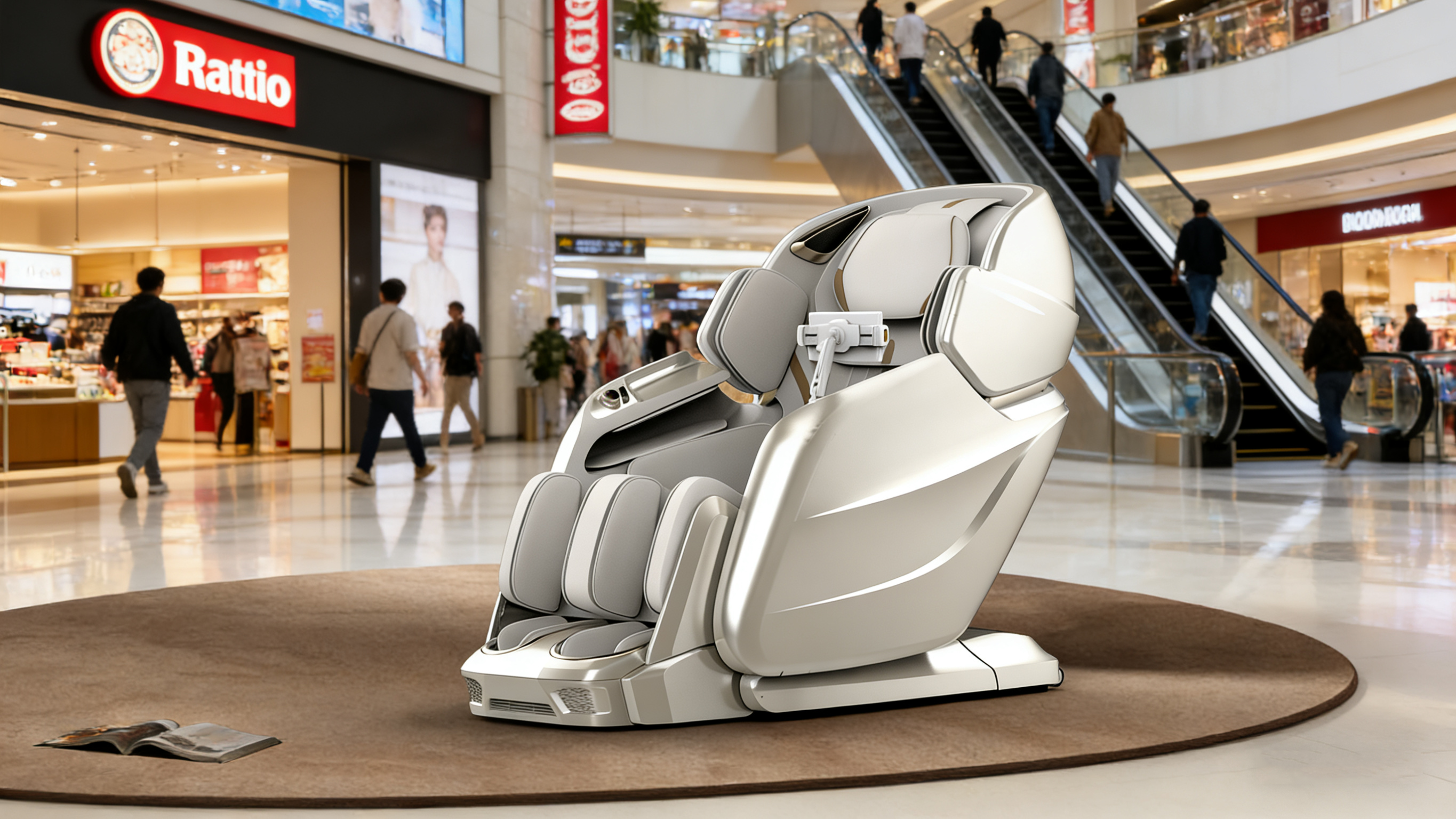
A pay-per-use massage chair project is usually decided by the placement, not by the chair. The same 3D massage chair can become a steady service asset in one corridor and an underused object in another, because the variables that decide the outcome — dwell time, foot traffic, a grounded power socket, available floor area, cleaning routine and supervision — belong to the venue rather than to the product.
This article looks at where a 3D massage chair fits best in shared indoor environments: shopping malls, railway stations, airports, offices and spa houses, with the pay-per-use operating model as the organizing principle. The equipment references come from Ningbo Zhouqi Health Technology Co., Ltd. (ZHOUQI), a massage chair manufacturer based in Cixi, Zhejiang Province, China, that integrates R&D, production and sales and exports to the USA, the EU, Southeast Asia and the Middle East.
Why Shared Pay-Per-Use Placement Is a Different Kind of Decision
A 3D massage chair is a massage chair whose massage mechanism moves on three axes — vertically, horizontally and in and out — so that the depth of the massage can be adjusted rather than only its position. That single design characteristic is what makes it interesting to commercial operators: it produces a repeatable, session-based service that a venue can schedule, price and supervise.
The commercial logic of shared placement is different from home use. In a home, the chair is used by one household on an irregular schedule. In a shopping mall, a railway station or an office building, the chair is used by many people for short, frequent sessions. That changes the requirement set:
- Utilization has to be predictable. A chair placed where people are already waiting will collect sessions; a chair placed where people only pass through will not.
- Power and grounding have to be solved before installation. Public indoor installations need a suitable socket close enough to the chair that no cable crosses a walking path.
- Space has to include the reclined position, not only the idle position. The chair occupies far more floor area when a session is running than when it is standing upright.
- Upkeep has to survive heavy use. Upholstery cleaning, access control and payment hardware all add requirements the chair itself does not cover.
This is the gap the article addresses: venues are usually chosen on rent and traffic, while the equipment decision is made on price and features. The two need to be evaluated together.
What the 3D Massage Chair Contributes to a Shared Venue
The ZHOUQI 3D Massage Chair product family covers models 5200, 5900, 5910, 3100, 6710, 8700, 3600, 3212, 6520, 5100, 6530, 3104, 3109, 6750, 6720 and 6721. The published technical data is the practical starting point for any placement plan, because most site constraints come down to power, footprint and weight.
| Parameter | Published value | Why it matters for a shared venue |
|---|---|---|
| Product type | 3D Massage Chair (Zero Gravity Massage Chair) | Defines the service format: reclining, session-based massage. |
| Power input | 110V–240V, 50/60Hz | Allows one product platform to be deployed across markets with different mains supplies. |
| Rated power | 150W | Used for load planning when several units share one circuit. |
| Auto timer | 15 minutes | Sets the default session length for pricing and throughput planning. |
| Upright dimensions | 1590(L) × 800(W) × 1160(H) mm | Idle footprint and visual fit within a corridor or lounge. |
| Reclined dimensions | 1895(L) × 800(W) × 940(H) mm | The real space requirement during use, plus circulation clearance. |
| Box dimensions | 1950(L) × 810(W) × 880(H) mm | Determines delivery access: lift size, door width, service corridors. |
| N.W. / G.W. | 111 / 135 kg | Affects floor loading review and how often a unit can realistically be repositioned. |
| Materials | Iron, foam, leather, ABS plastic | Relevant to cleaning routines and to wear in high-traffic sites. |
Beyond the specification sheet, two capability factors matter for operators running branded fleets. First, third-party electrical safety evidence: the 3D Massage Chair is covered by an ETL certification (certificate 5030347, issued by INTERTEK) for the US and Canada under UL 1647:2015 Ed.6+R:30Jul2020 and CSA C22.2#68:2018 Ed.8+U1, and by a CB certificate (NO127967, issued by Nemko) that cites IEC 60335-1:2010 with amendments and IEC 60335-2-32:2019 for the EU, Middle East and Southeast Asia. CE EMC certification (ENB2311240186E00401C, issued by EMTEK) covers EN IEC 55014-1:2021 and related emission and immunity standards, and the same product family is covered by ISO 9001 (certificate 02424Q32202999R1S) and ISO 13485 (certificate 133640, issued by NQA), with an FDA establishment listing (3017618816).
Second, OEM and ODM flexibility. The manufacturer provides OEM and ODM production services, and ODM scope covers color, logo, OEM file, pillow and backrest design, UI and language customization. For a mall operator rolling out ten identical units across a portfolio, or an airport concessionaire that needs the payment interface and signage language aligned to the terminal, that is a deployment question as much as a product question.
Placement Criteria That Decide Whether a Site Works
Power socket and grounding
The chair is rated for 110V–240V, 50/60Hz input at 150W. In practice, the site survey should confirm three things: that a socket exists within reach of the final chair position, that the circuit can carry the number of units planned, and that the installation is earthed in line with the local electrical code for a public indoor appliance. Grounding, socket placement and circuit capacity are venue responsibilities; the product certificates described above confirm the appliance itself has been tested against recognised electrical safety standards.
Two operational details are frequently underestimated. Cables should not cross pedestrian routes, which usually means the socket has to be within reach of a wall or floor box directly behind the chair. And because the chair reclines, the socket should be positioned so it is not stressed by the moving frame during reclining cycles.
Floor space and clearance
The published dimensions give a clear planning baseline. Upright, the chair measures 1590 × 800 × 1160 mm; reclined, it measures 1895 × 800 × 940 mm. The reclined figure is the one that should be used for layout, because that is the state in which the chair spends each 15-minute session. Around that footprint, a venue should allow additional clearance for a person to enter and leave the seat, for cleaning staff to work, and for wheelchair or trolley traffic where the site is a corridor. In a mall, this often means an alcove or a recessed corner rather than the centre of a walkway.
Weight, delivery and relocation
At 111 kg net and 135 kg gross, and packed in a 1950 × 810 × 880 mm carton, the unit is a delivery and handling project rather than a simple installation. Site surveys should check lift capacity and dimensions, door widths and turning radii on the route from the loading bay. It also means that repositioning a unit after installation is a planned operation, not a casual adjustment — a strong argument for placing the chair correctly the first time.
Session timing and payment hardware
The 15-minute auto timer defines the default session. For pay-per-use operation, that timer is useful because it standardizes throughput: session length, cleaning intervals and peak-hour queues can all be planned against a fixed cycle. Payment hardware — coin units, card readers or QR-based terminals — is added by the operator and should be mounted so that it does not obstruct the reclining mechanism or narrow the entry path.
Cleaning, supervision and zoning
Shared use means shared surfaces. Leather and ABS plastic components are straightforward to wipe down, but the routine matters more than the material: high-traffic sites such as mall corridors and stations need a cleaning frequency matched to session volume. Zoning also matters. A chair placed beside a quiet office meeting area or a hotel lobby seating group creates noise and privacy friction, while the same unit placed in a designated wellness corner or staff lounge fits the surrounding activity.
Best-Fit Scenarios for Indoor Pay-Per-Use Placement
The manufacturer lists the applicable industries for the 3D Massage Chair as including the Retail & Entertainment sector, the Transportation Industry, the Corporate Office Sector, the Wellness & Beauty Industry, the Cultural-tourism & Hospitality Industry, Public-service Venues, the Healthcare Industry and others. The scenarios below translate that list into placement logic for pay-per-use projects.
1. Shopping malls and furniture or home-appliance malls
Malls are the most natural fit because they combine dwell time with indoor comfort and a captive audience. The strongest positions are not the busiest walkways but the places where people are already waiting: outside a cinema, beside a food court seating deck, or at the end of a retail aisle where a recessed alcove exists. A mall also has the infrastructure pay-per-use projects need — commercial power, cleaning staff, security coverage and a management office that can approve signage.
2. Railway stations and airports
Transit venues offer the longest natural waiting periods, which is exactly what a 15-minute session fills. The placement constraints are stricter: circulation routes must stay clear, and the unit should sit in a waiting lounge or a designated service zone rather than a movement corridor. Practical checks include power availability in the waiting area, a cleaning schedule that matches early-morning and late-night peaks, and whether the operating hours of the terminal allow an attended or semi-attended model.
3. Offices and corporate buildings
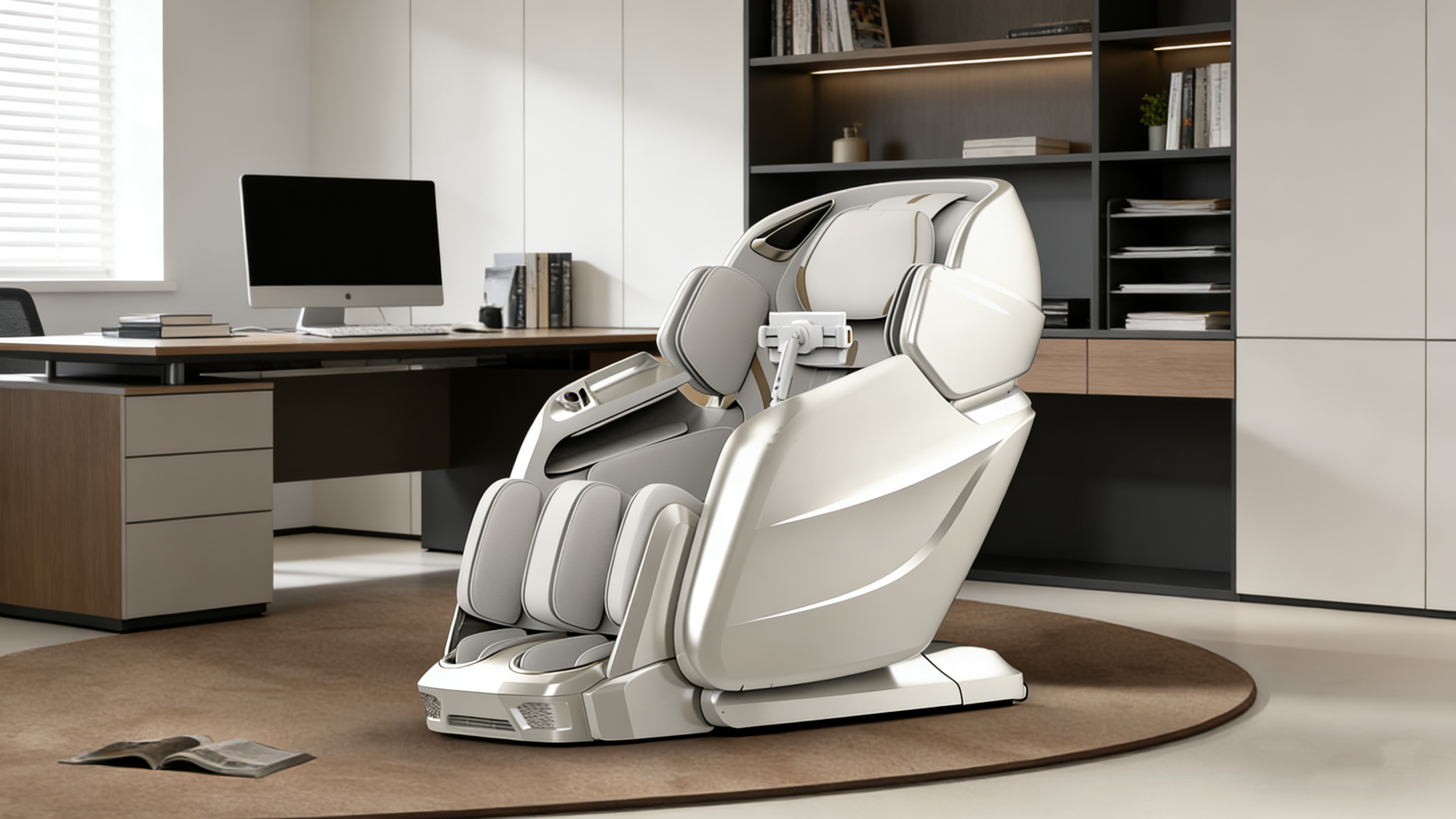
In offices, the fit is a staff or faculty lounge rather than a lobby. Demand patterns are concentrated in lunch breaks and late-afternoon peaks, which suits a fixed 15-minute session. Corporate sites also tend to be attended or access-controlled, which reduces the risk of misuse and makes free-to-use or subsidized models viable alongside paid ones.
4. Spa houses and wellness centers
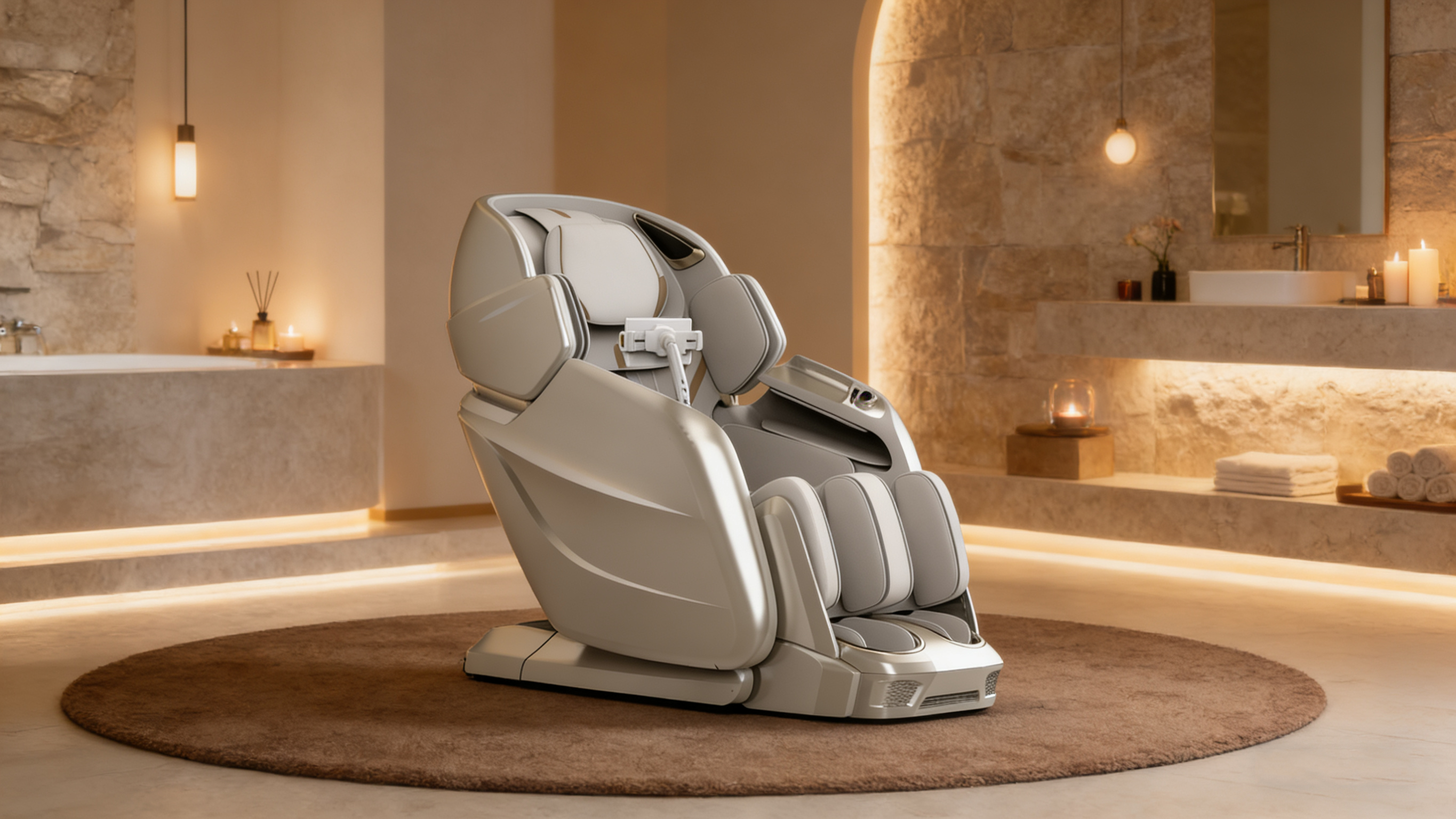
Spa houses use the chair differently: it supports attended service rather than replacing it. A 3D massage chair placed in a reception area or an express-treatment room can absorb walk-in demand and shorten waiting time, while the operator keeps control of session length, atmosphere and pricing. Because the environment is supervised and indoor, this is one of the lowest-risk placements for a pay-per-use unit.
5. Hotels, resorts and VIP lounges
Hotels, resorts, 4S showrooms, bank VIP lounges and university faculty lounges appear in the same applicable-industry list. These are lower-footfall, higher-comfort settings where the value proposition is hospitality rather than throughput: a guest or a client uses the chair while waiting, and the venue gains a differentiated waiting experience. Quantity per site is usually small, which makes the installation survey straightforward.
The manufacturer's case history reflects this spread: buyers have included massage chair showrooms and 4S showrooms, furniture and home-appliance malls, e-commerce sellers, hotels and resorts, and wellness and senior-care institutions, with cumulative volumes of 70,000 units in Vietnam over four years and 20,000 units in the United States over three years.
Site-by-Site Comparison
| Venue type | Typical usage pattern | Priority site condition | Placement note |
|---|---|---|---|
| Shopping mall | High volume, short sessions, peak evenings | Recessed space with socket access | Place near dwell points, not in walkways. |
| Furniture / home-appliance mall | Moderate volume, demonstration use | Power and visible display position | Doubles as a product demonstration point. |
| Railway station / airport | Long waits, unpredictable peaks | Waiting lounge with cleaning access | Keep circulation routes clear; plan supervision. |
| Corporate office | Concentrated breaks, repeat users | Lounge with controlled access | Suits free-to-use or subsidized models. |
| Spa house / wellness center | Attended, appointment-linked | Reception or express-treatment area | Supports walk-ins without extra staffing. |
| Hotel / resort | Low volume, hospitality use | Lobby or guest lounge | Comfort positioning matters more than throughput. |
| 4S showroom / VIP lounge | Waiting-room use | Client waiting area | Aligns with premium waiting experience. |
| University faculty lounge | Scheduled breaks | Indoor staff area | Requires venue-approved access policy. |
From Evaluation to Execution: What an Order Actually Involves
Once a site passes the placement test, the procurement path is relatively defined. The minimum order quantity is 1×40HQ container, and delivery terms are FOB Ningbo. Payment terms are 30% of the total by T/T in advance as a deposit, with the balance of 70% by T/T before shipment. Lead time is 30–45 days, against a monthly production capacity of 16,000 units.
Quality control is defined rather than implied: production is subject to a 100% QC test, and acceptance criteria include a pre-shipment test and third-party inspection by SGS. After-sales support consists of a one-year warranty, together with installation videos and a maintenance manual — the practical documents a venue's facilities team needs when units are distributed across multiple sites.
For operators comparing several venues at once, the sequence that works best is: shortlist sites by dwell pattern, verify socket and grounding conditions with the venue's facilities team, confirm footprint against the reclined dimensions, and only then finalize the unit count per location. Specification-driven decisions avoid the common mistake of ordering equipment before the site is confirmed.
Market Trends Shaping Shared-Venue Placement
Third-party market data supports the direction of travel. The global massage chair market is projected to grow from USD 4.28 billion in 2026 to USD 8.78 billion by 2035, at a CAGR of 8.3%, according to Business Research Insights. Within the broader massage equipment market, massage chairs and sofas held the largest share at 39.5% in 2024, based on Grand View Research figures, and North America accounted for a 36.9% revenue share in the same year. Credence Research data places Asia Pacific as the fastest-growing region for massage chairs, with a 34.8% share of the luxury segment in 2024.
Two technology and compliance trends matter directly to venue operators. Business Research Insights estimates that approximately 41% of new massage chair models in 2026 are expected to integrate AI-based sensors for body scanning, which will gradually change what buyers expect from a public unit — more automatic adjustment, less manual setup. On the standards side, IEC 60335-2-32:2024 is the latest international safety standard specifically for electric massage appliances, and IEC 60335-2-116:2025 covers furniture with motorized parts such as zero-gravity massage chairs. Venues that install equipment in public indoor spaces should expect certification scope to be part of the tender conversation.
Third-party analysis also notes that traditional and robotic hybrid massage chairs continue to hold significant market share because their cost barriers are lower than those of full 4D AI models, which is consistent with what shared-venue operators see in practice: the decision is rarely about the most advanced configuration, it is about the configuration that fits the site's traffic and budget.
Comparison with Traditional Solutions
A placement decision is also a choice between equipment routes. The table below compares a 3D massage chair with the 4D alternative in the same manufacturer's range, using published specifications, and with a staffed massage service.
| Dimension | 3D Massage Chair | 4D Massage Chair | Staffed massage service |
|---|---|---|---|
| Rated power | 150W | 200W | Not applicable |
| Auto timer | 15 minutes | 15 minutes | Set by therapist |
| Upright dimensions | 1590 × 800 × 1160 mm | 1600 × 790 × 1230 mm | Room-based |
| Reclined dimensions | 1895 × 800 × 940 mm | 1800 × 790 × 900 mm | Room-based |
| N.W. / G.W. | 111 / 135 kg | 103 / 118 kg | Not applicable |
| Typical fit | Standardized session-based service | Premium lounges seeking a wider adjustment range | Sites where assessment and personalization are the core service |
The honest boundary conditions are worth stating. A 3D massage chair is not the right choice for every shared indoor site.
- Space is a hard filter. The reclined length of 1895 mm plus circulation clearance will not fit in narrow corridors, and a site that cannot provide that clearance should not install the unit at all.
- The 15-minute auto timer caps session design. Operators who want longer appointment formats must plan for repeated cycles or queue management rather than assuming a single longer session.
- Weight limits flexibility. At 111 kg net and 135 kg gross, frequent repositioning is unrealistic; if a venue intends to rotate units between seasonal locations, that should be designed in advance.
- Certification scope is not site approval. Existing certificates confirm the appliance's electrical safety and compliance position, but they do not certify the venue's wiring, grounding or floor loading. Those remain the operator's responsibility.
- Unattended pay-per-use needs more than a chair. Payment hardware, cleaning routines, vandalism protection and supervision are operator-supplied elements; the chair provides a service format, not a complete retail system.
- Feature claims should be verified by model. Third-party research has suggested that zero-gravity positioning can reduce lower back pain by a measurable margin, but such figures come from external studies with stated reliability caveats and should not be read as a performance guarantee for any specific unit or user.
Future Outlook
Three shifts are likely to shape shared-venue placement over the next few years. The first is standardization: as the massage chair segment grows toward the projected USD 8.78 billion by 2035, operators will increasingly buy against documented specifications and certification scope rather than impressions from a showroom visit. The second is sensor-driven personalization, with a substantial share of new models expected to include AI-based body scanning, which will make automatic adjustment a baseline expectation in public installations. The third is site-level discipline: as more venues test pay-per-use models, the sites that survive will be those where dwell time, grounded power, footprint and cleaning routines were verified before installation rather than after.
For manufacturers, that shifts the value proposition from product alone to deployment support — documented dimensions, clear certification scope, customization of UI and language for different markets, and installation documentation that facilities teams can actually use.
FAQ
What power supply does a 3D massage chair require for a shared indoor installation?
The 3D Massage Chair is rated for 110V–240V, 50/60Hz input with a rated power of 150W and a 15-minute auto timer. For public indoor placement, the site should provide a socket within reach of the final chair position, on a circuit sized for the number of units planned, and connected to an earthed installation in line with the venue's local electrical code.
How much floor space should be reserved in a mall, station or office?
The upright dimensions are 1590(L) × 800(W) × 1160(H) mm and the reclined dimensions are 1895(L) × 800(W) × 940(H) mm. Layout planning should use the reclined dimensions, since the chair occupies that footprint during each 15-minute session, and should add clearance for entry, exit and cleaning access.
Which indoor venue types are the best fit for pay-per-use operation?
The most suitable settings combine indoor comfort, existing dwell time and manageable supervision. Typical candidates include shopping malls and home-appliance malls, railway stations and airports in waiting areas, corporate and university lounges, spa houses and wellness centers, hotels and resorts, and showroom or VIP waiting rooms. The manufacturer's applicable-industry list covers retail and entertainment, transportation, corporate offices, wellness and beauty, cultural-tourism and hospitality, public-service venues and healthcare.
Can operators customize the chair for a branded, multi-site fleet?
Yes. The manufacturer provides OEM and ODM production services, and ODM services include customization of color, logo, OEM file, pillow and backrest design, UI and language. This allows a mall group, transit concessionaire or hospitality operator to align the unit with its own signage, interface language and brand identity across locations.
What are the ordering, payment and delivery terms?
The minimum order quantity is 1×40HQ container and delivery terms are FOB Ningbo. Payment terms are 30% of the total by T/T in advance as a deposit and the remaining 70% by T/T before shipment. Lead time is 30–45 days, and monthly production capacity is 16,000 units.
How is product quality verified before shipment, and what support follows?
Production is subject to a 100% QC test, and acceptance criteria include a pre-shipment test together with third-party inspection by SGS. After-sales support consists of a one-year warranty plus installation videos and a maintenance manual, which are intended to help venue teams operate and maintain units across multiple sites.
Which certifications support commercial installation of the 3D Massage Chair?
The product is covered by ETL certificate 5030347 issued by INTERTEK for the US and Canada, citing UL 1647:2015 Ed.6+R:30Jul2020 and CSA C22.2#68:2018 Ed.8+U1; CB certificate NO127967 issued by Nemko, citing IEC 60335-1:2010 with amendments and IEC 60335-2-32:2019 for the EU, Middle East and Southeast Asia; and CE EMC certificate ENB2311240186E00401C issued by EMTEK under EN IEC 55014-1:2021 and related standards. The same family is covered by ISO 9001 certificate 02424Q32202999R1S and ISO 13485 certificate 133640 issued by NQA, alongside FDA establishment listing 3017618816.