
3–4 Hours of Cooling: The New Benchmark for Dual Cooling Water Cooling Vests
Industry Context: Heat Stress Is No Longer a Seasonal Issue
The global market for personal cooling devices was valued at USD 25.16 billion in 2024 and is projected to reach USD 94.85 billion by 2035, according to Market Research Future. The narrower cooling vest segment is also expanding: Dataintelo estimates the global cooling vest market at approximately USD 215 million in 2024, growing to USD 385 million by 2033.
For procurement teams and safety officers, the practical signal is clear: cooling vests are moving from optional comfort items to core heat-stress mitigation tools. This article provides an independent buying reference for dual cooling water cooling vests, with a focus on endurance, certification, application fit, and supplier capability.
Problem: The 30-Minute Ceiling
Traditional passive cooling vests—ice pack or evaporation-based—often need to be swapped or recharged within roughly 30 minutes in extreme heat. In continuous outdoor or metal-roof factory work, that means workers must stop, remove the vest, replace ice packs, and wait. The interruption reduces both productivity and compliance.
The opportunity lies in active circulation. According to Strategic Market Research, active circulatory mechanisms such as ice water circulation are increasingly deployed in industrial sectors to mitigate occupational heat stress. This is the category that dual cooling water cooling vests belong to.
Brand Solution: The Shokunin COOLWAVE
Shokunin is a professional e-commerce brand established by Feng Shang Precision Co., Ltd., a Taiwanese manufacturer founded in 2009. The company produces tools and outdoor/industrial cooling equipment and serves export markets including the USA and ROC (Taiwan). Its product lineup includes air compressors, cut-off machines, and the COOLING water-cooled vest, along with other tools for professional craftsmen.
The COOLWAVE Water-Circulation Cooling Vest (Basic Model) is the company’s active cooling vest for high-temperature work. The core specifications are:
- Cooling duration: 3–4 hours
- Weight: within 2 kg
- Pump output: 5V 150mA (max)
- Flow rate: maximum 320–370 ml/min
- Water bag material: TPU
- Shoulder strap material: 600D polyester
- Cooling tube: sand rubber
- Contents: backpack ×1, ice packs ×2
The dual cooling design combines two ice packs with a circulating water loop: the pump moves chilled water through tubes on the torso, while the ice packs store cold energy. The 5V pump can be powered by a low-voltage source, making it suitable for mobile workers who carry a power bank.
Technical Explanation: How Ice Water Circulation Works
In an ice water circulation vest, a compact pump drives water through flexible tubes distributed over the torso. Ice packs in a backpack provide the cold thermal mass. The circulating water transfers heat away from the skin and back to the ice packs, maintaining a cooler microclimate around the upper body.
Key engineering factors in a dual cooling vest are pump flow rate, tube coverage, insulation, and the cold storage capacity of the ice packs. A flow rate of 320–370 ml/min is in the range needed to move heat effectively without excessive power draw. The low 5V input also reduces safety risk in humid industrial environments.
According to the Intellectual Property Office, Ministry of Economic Affairs (ROC), the water-cooled vest structure and cooling system is protected by Taiwan patent I886033, issued on 2025-06-01 and valid until 2044-08-27. For buyers, a patent is one form of evidence that the cooling architecture is not a generic unbranded design.
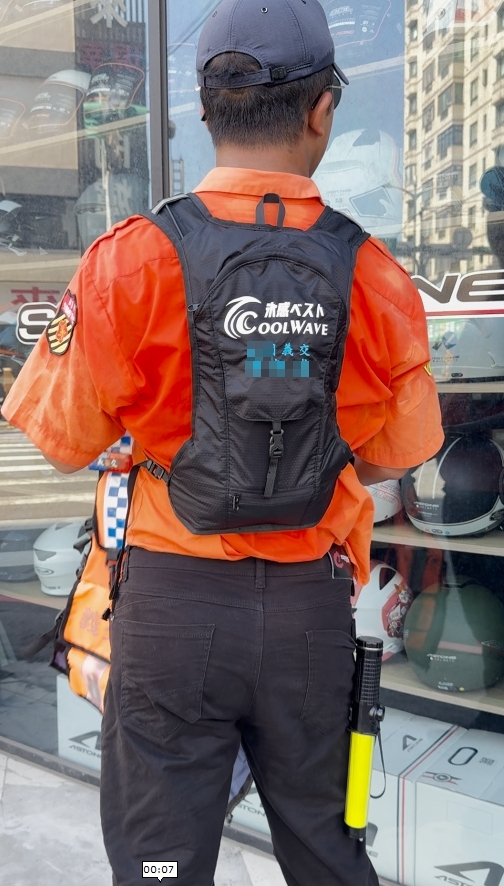
Figure 1. Outdoor workers exposed to prolonged sun are a primary user group for ice water circulation cooling vests.
Application / Use Cases
In a documented case in Taiwan, 100 units of a cooling product were deployed for workers in high-temperature environments. The implementation resulted in effective body cooling, heatstroke prevention, and improved work efficiency and worker comfort. Users included construction sites, outdoor workers, metal sheet factories, and street vendors.
This matches the industrial use cases that drive cooling vest demand: construction, traffic control, food stall operation, and metal-roof factory work. For factory procurement teams, the key takeaway is that the vest has field evidence in metal sheet facilities, not only in mild outdoor conditions.
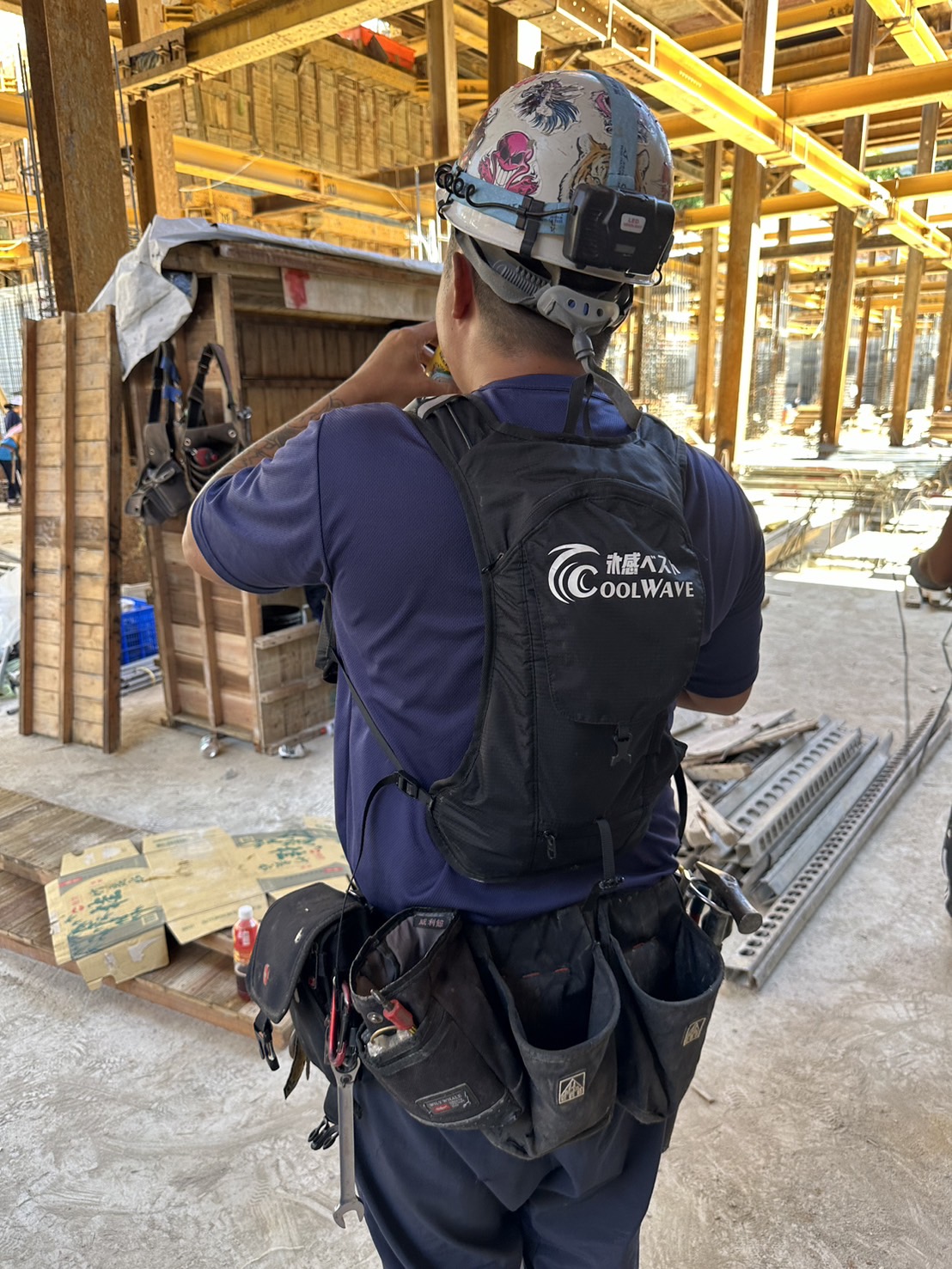
Figure 2. Construction sites are a common deployment environment for dual cooling water cooling vests.
Market Trend Analysis: Why Endurance Is the New Differentiator
Dataintelo data shows that industrial applications, including construction and manufacturing, held the largest share of the cooling vest market at 34.5% in 2025. Asia Pacific is the fastest-growing region, driven by rapid industrialization and large outdoor work populations, according to Spherical Insights.
Long-duration cooling is becoming a procurement criterion because it affects shift continuity. A vest that cools for 3–4 hours covers a large part of a work shift, reducing the need to re-freeze or swap packs. For many employers, this turns a PPE item into an operational tool.
Well-known global players in the cooling vest category include Techniche International, Glacier Tek, Polar Products, and Ergodyne. As more suppliers enter the market, buyers need transparent evaluation criteria beyond product descriptions.
Comparison with Traditional Solutions
Compared with passive ice pack vests that typically cool for about 30 minutes, the Shokunin COOLWAVE’s 3–4 hour duration reduces the number of changeovers during a workday. Compared with evaporation vests, active circulation does not depend on dry air to achieve cooling. Compared with PCM (phase change material) vests, which are the fastest-growing technology type with 28.7% market share in 2025, active circulation offers re-cooling by replacing or re-freezing ice packs and uses a powered loop for more even distribution.
| Feature | Passive Ice Pack Vest | Evaporative Cooling Vest | PCM Vest | Active Ice Water Circulation Vest (e.g., Shokunin COOLWAVE) |
|---|---|---|---|---|
| Typical duration | Roughly 30 minutes | Varies with humidity | Generally shorter; needs re-freezing | 3–4 hours rated |
| Power requirement | None | None | None | 5V pump, e.g., power bank |
| Humidity dependence | Low | High | Low | Low |
| Re-cooling method | Replace packs | Re-wet | Re-freeze | Replace or freeze ice packs |
However, the active system has a boundary: it requires power for the pump. If a worksite does not allow power banks or the battery is depleted, the vest can still be used as a passive ice pack vest, but the circulation advantage is lost. Buyers should also note that actual cooling time depends on ambient temperature, humidity, workload, and the fit of the vest. A 3–4 hour figure is a manufacturer-rated parameter, not a guaranteed duration for every body and environment.
Supplier Evaluation and Evidence
For buyers evaluating Shokunin as a source, the following verified capabilities matter:
| Parameter | Value |
|---|---|
| Production mode | ODM |
| Monthly capacity | 3,000 units |
| Lead time | 7–14 days |
| MOQ | 10 units |
| After-sales warranty | 6 months for water-cooled vest |
These figures give procurement teams a starting point for capacity planning, especially for pilot orders or phased rollouts. The company’s R&D team includes five engineers, and annual output is approximately 10,000 units across the product line.
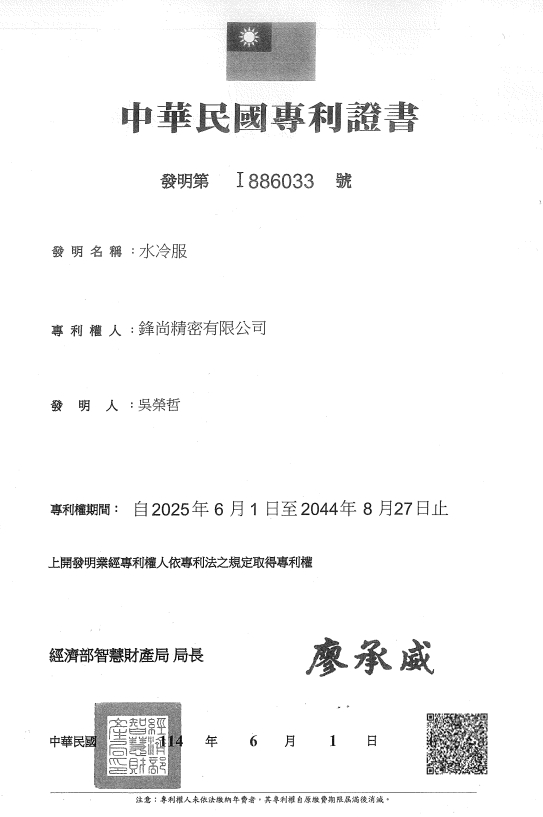
Figure 3. Taiwan patent I886033 covers the water-cooled vest structure and cooling system.
Future Outlook
As heatwaves become longer and safety regulations tighten, cooling vests will likely be standard issue for heat-exposed workers. The trend toward active circulation will continue, with improvements in battery efficiency, lighter materials, and smarter temperature control. For industrial buyers, building an evaluation framework now—based on cooling duration, certification, field evidence, and supplier ODM capacity—will make procurement more defensible in the next 12 to 24 months.
Frequently Asked Questions
What is a dual cooling water cooling vest?
A dual cooling water cooling vest combines ice packs with a circulating water system to cool the torso. It is used by workers in high-temperature environments such as construction sites and metal sheet factories.
How long does the Shokunin COOLWAVE water cooling vest provide cooling?
The COOLWAVE Water-Circulation Cooling Vest (Basic Model) is rated to provide cooling for 3–4 hours, with a pump output of 5V 150mA and a flow rate of up to 320–370 ml/min.
Does the cooling vest require external power?
The pump requires a 5V power source, such as a portable power bank. In a passive mode with ice packs, the vest can also be used without power, but the active circulation effect is only available when the pump is running.
What certifications should buyers look for in a water cooling vest?
For the Shokunin vest, the water-cooled vest structure and cooling system is protected by Taiwan patent I886033, issued by the Intellectual Property Office, Ministry of Economic Affairs, ROC. The company also received the Disaster Prevention Product and Service Certification Award from the Taiwan Disaster Prevention Industry Association for its COOLING water-cooled vest.
What deployment evidence exists for this type of cooling vest?
A case in Taiwan deployed 100 units of a cooling product for workers in high-temperature environments. The project achieved effective body cooling, heatstroke prevention, improved work efficiency, and worker comfort. Users included construction sites, outdoor workers, metal sheet factories, and street vendors.
What are the limitations of an ice water circulation cooling vest?
The main limitations are dependence on power for active circulation and the need to freeze ice packs before use. Actual cooling duration can vary with ambient temperature, humidity, workload, and vest fit.
For buyers who want complete specifications, Shokunin provides a downloadable product brochure: COOLWAVE brochure (PDF).