
260T to 400T PET Preform Machines: A Shot-Weight Shortlist
Tonnage is the number most buyers quote first in a pet preform injection machine enquiry, and it is rarely the number that decides whether a project works. In PET preform molding, the binding constraint is shot weight — the total mass of polymer that must be injected in a single cycle to fill every cavity of a hot runner mold, plus the runner and gate allowance. Clamping force, tie-bar spacing, screw diameter and installed power follow from that requirement. Selecting in the reverse order is how projects end up with a machine that is either over-specified for the mold it drives or incapable of filling it at cycle time.
This shortlist examines four models from one supplier family and compares only the specifications that change a purchase decision: shot weight, screw barrel diameter, tie-bar dimensions, motor power, heating power and machine mass. No preference rankings, no performance claims that cannot be read off a specification sheet.
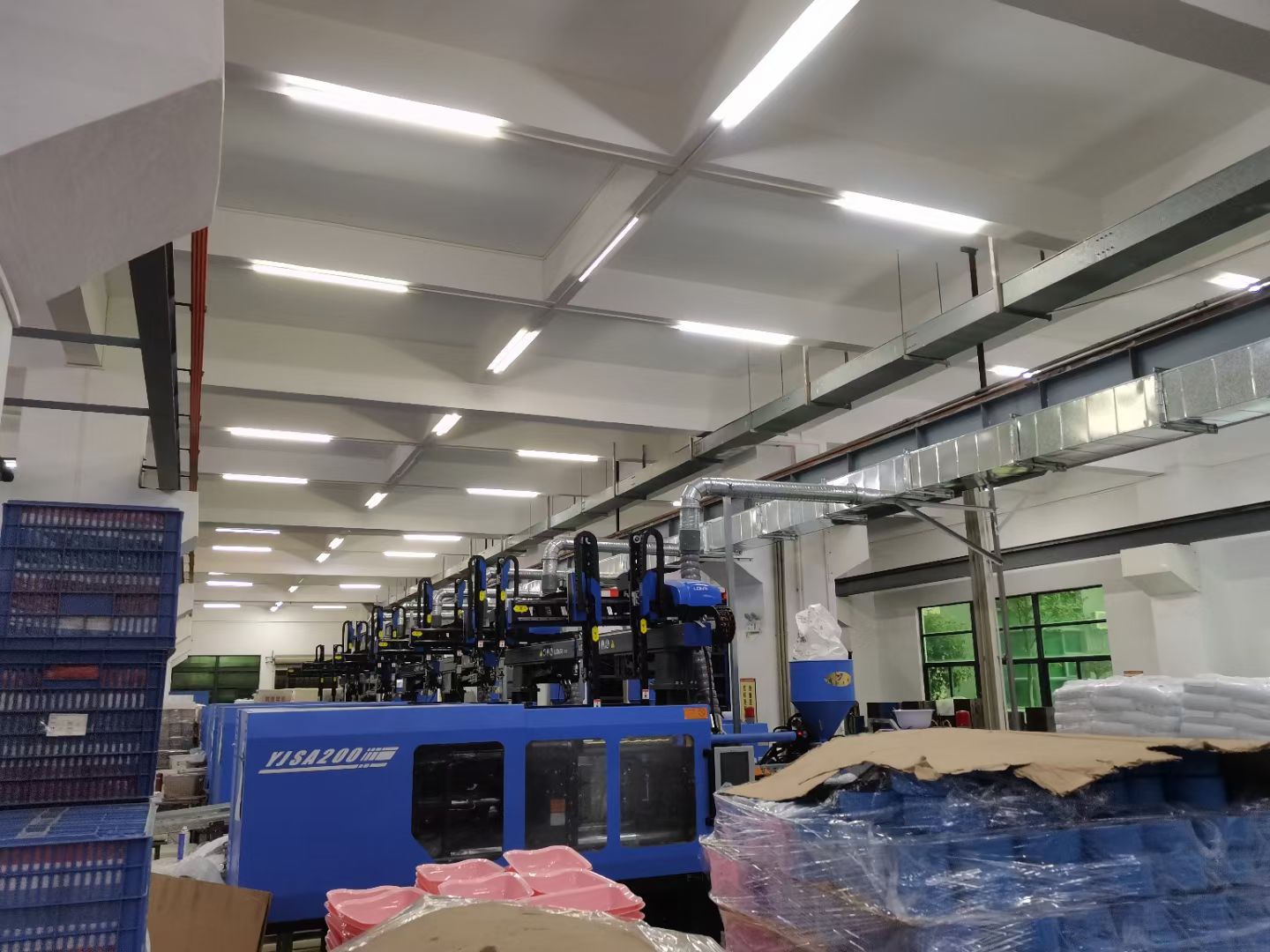
Ningbo Yong Jiang machine co., Ltd (Yongjiang) is a Chinese injection molding machine manufacturer established in 1985 and based in Ningbo, Zhejiang Province. The company builds PET preform injection molding machines — including the high-speed YJPT and YJHB series discussed here — and PVC fitting machines, across a product line with clamping forces from 40T to 1,600T, from a 130,000 m² factory with 200 employees and 25 engineers. Approximately 59% of its output is exported, with the United States, Canada and Thailand listed among its main markets. Product documentation and further technical detail are published at yongjiangimm.com.
Why Shot Weight, Not Tonnage, Sets the Limit
A PET preform mold is a multi-cavity tool fed through a hot runner. The machine must deliver the combined mass of every cavity in one shot, and the arithmetic is straightforward:
Required shot weight = (preform weight × number of cavities) + hot runner and runner allowance
Two consequences follow from that formula. First, a light preform in a high-cavity tool and a heavy preform in a low-cavity tool can place identical demands on the same machine — so cavity count alone tells you nothing, and preform weight alone tells you nothing. Second, the rated shot weight on a specification sheet is a ceiling, not a working target. A mold whose calculated shot requirement sits at or above the machine's rating will force longer hold and recovery times, and in continuous production that shows up as cycle time and energy consumption rather than as an obvious failure.
Clamping force plays a different role. It has to keep the mold closed against the cavity pressure generated during injection. PET preforms are thin-walled parts with comparatively long flow paths, which generally means high injection pressure is needed to fill a multi-cavity hot runner tool completely and evenly — and that pressure pushes the mold halves apart. Tie-bar dimensions matter for a physical reason: they define the mold envelope, so they determine whether a given mold plate physically fits between the platens at all. Screw barrel diameter governs how much polymer can be plasticized and prepared per unit of time, which is what actually limits output in a 24/7 operation.
That is why the practical shortlist sequence is: define the preform, fix the cavity count, calculate the shot requirement, then choose the smallest model that clears it with margin — and finally verify that the mold fits the tie bars and that the site services match the machine's requirements.
The Four Models at a Glance
The table below reproduces the published specifications for the four models in this shortlist. Every figure is taken directly from the manufacturer's product data.
| Specification | YJPT-260 | YJPT-318 | YJPT-360 | YJHB-400 |
|---|---|---|---|---|
| Model type | 260TON high-speed PET preform injection machine | 318TON high-speed PET preform machine | 360TON high-speed PET preform machine | 400TON high-speed PET preform machine |
| Screw barrel | 72 mm | 77 mm | 95 mm | 95 mm |
| Shot weight | 1,400 g | 1,900 g | 3,450 g | 3,450 g |
| Tie bar | 580 × 580 mm | 620 × 620 mm | 680 × 680 mm | 720 × 720 mm |
| Motor power | 42 kW | 80 kW | 80 kW | 80 kW |
| Heating power | 35 kW | 65 kW | 65 kW | 65 kW |
| Machine weight | 9 t | 13 t | 16 t | 16 t |
| Frame material | QT500-A7 | Steel | QT500-A7 steel | QT500-A7 steel |
| Applicable industry | PET preform manufacturing | |||
Two rows in that table do most of the work in a buying decision, and one of them is easy to misread. The first is shot weight, which spans 1,400 g to 3,450 g across the four models — a range that covers very different mold sizes. The second is the tie bar, which changes by 40 mm increments while the shot weight jumps in much larger steps. When two models share a shot weight but not a tie bar dimension, the choice between them is about mold geometry, not output.
Reading the Specifications That Change the Decision
Rated tonnage class
The 260T, 318T, 360T and 400T designations describe the machine's clamping force class. This is the number that must be sufficient to hold the mold closed against injection pressure — but as the table shows, it is a poor proxy for capacity. The 318T and the 360T differ by 42 tonnes of clamping class yet by 1,550 g of shot weight.
Shot weight
Shot weight is the capacity measure that constrains cavity count and preform size. Moving from 1,400 g to 1,900 g adds 500 g; moving from 1,900 g to 3,450 g adds 1,550 g in a single step. That asymmetry is the single most important fact in this shortlist.
Screw barrel diameter
The screw barrel grows from 72 mm to 77 mm and then to 95 mm. Diameter is not just about volume per shot; it determines the plasticizing rate available per cycle. In 24/7 high-speed preform production, the screw must recover and prepare the next shot while the current one cools, so an undersized barrel can cap output even when the shot weight is adequate.
Tie-bar dimensions
Tie-bar spacing (580 × 580 mm, 620 × 620 mm, 680 × 680 mm, 720 × 720 mm) defines the largest mold that can physically be mounted. This is a hard constraint, not a preference: a mold that does not fit the tie bars cannot run on that machine regardless of tonnage.
Motor and heating power
Installed power moves in one large step. The YJPT-260 draws 42 kW of motor power and 35 kW of heating power; the other three models draw 80 kW and 65 kW. For a plant evaluating electrical supply, transformer capacity or energy cost per preform, the 260T sits in a materially different utility class from the other three — a difference of 68 kW of installed power between the smallest and the next model.
Machine weight and frame material
Machine mass rises from 9 t to 13 t to 16 t, and the frame material is specified as QT500-A7 (or QT500-A7 steel) across the series. Weight matters for foundation design, floor loading and lifting equipment at installation, and for how much vibration the machine transmits into a multi-machine hall during high-speed cycling.
When the YJPT-260 Is the Better Fit
The YJPT-260 is a 260-tonne-class high-speed PET preform injection machine with a 72 mm screw barrel, 1,400 g shot weight, 580 × 580 mm tie bars, 42 kW motor power, 35 kW heating power and a 9 t machine mass.
It is the right starting point when the calculated shot requirement is comfortably below 1,400 g and the mold envelope fits within 580 × 580 mm. That describes a meaningful share of real projects: single or low-cavity tools, lighter preforms, pilot lines, and plants adding capacity where the electrical supply or floor structure cannot absorb an 80 kW machine. Its 9-tonne mass also makes it the easiest of the four to install in an existing hall without reinforcement work.
It is the wrong choice when the margin gets thin. Consider a worked illustration. If a project specifies a 30/25 neck-finish preform weighing about 18 g per part — the reference preform documented alongside the YJPT-260 — then 72 cavities consume approximately 1,296 g per shot before any hot runner allowance is added. The remaining headroom is a little over 100 g. That is a thin margin for a hot runner system, and it would push the buyer toward a lower cavity count or a larger model rather than toward an optimistic reading of the rated figure. The relevant question is never "how many cavities can be printed on a brochure", it is "how many cavities can this machine fill, cool and recover from, cycle after cycle, at the wall-thickness tolerance the bottle requires".
When the YJPT-318 Bridges the Gap
The YJPT-318 is a 318-tonne-class high-speed PET preform machine with a 77 mm screw barrel, 1,900 g shot weight, 620 × 620 mm tie bars, 80 kW motor power, 65 kW heating power and a 13 t machine mass.

Relative to the YJPT-260, this model buys 500 g of additional shot weight, 5 mm of screw diameter and 40 mm of tie-bar span. Relative to the YJPT-360, it gives up 1,550 g of shot weight. In portfolio terms it is a genuine middle option rather than a scaled version of either neighbour, and it is the correct answer to a specific situation: a project whose shot requirement lands between roughly 1.5 kg and 1.9 kg, where a 260T is marginal but a 360T would be substantially over-specified and would consume more floor space, more installed power and a heavier foundation than the work demands.
Buyers should note the utility step between the 260T and the 318T. Motor power rises from 42 kW to 80 kW and heating power from 35 kW to 65 kW. Any plant comparing these two models is really comparing two different electrical supply scenarios, and that comparison should be made before the commercial negotiation, not after.
When the YJPT-360 Becomes the Default Choice
The YJPT-360 is a 360-tonne-class high-speed PET preform machine with a 95 mm screw barrel, 3,450 g shot weight, 680 × 680 mm tie bars, 80 kW motor power, 65 kW heating power and a 16 t machine mass.
This model is the point at which the shortlist stops being about compromise. Its 3,450 g shot weight is 82% higher than the 318T and 146% higher than the 260T, and it is paired with the largest screw barrel in the YJPT series listed here. In practice it becomes the default when the project involves high cavity counts, heavier preforms, or both. A worked illustration: 100 cavities of a 30 g preform require 3,000 g per shot, which leaves 450 g of headroom inside the rated shot for the hot runner allowance. The same 100-cavity tool running an 18 g preform would require only 1,800 g — comfortably within range, and within the plasticizing capacity of a 95 mm screw.
This is also where the machine's role in the wider plant becomes visible. A 16-tonne machine with 80 kW of installed motor power is not a drop-in addition to a small workshop; it is a production asset that shapes the layout, the transformer sizing and the maintenance routine around it. See Yongjiang's product documentation for the full series listing.
YJPT-360 vs YJHB-400: Identical Shot, Different Mold Envelope
This is the comparison most likely to be decided incorrectly, because the headline numbers are identical. The YJPT-360 and the YJHB-400 share a 95 mm screw barrel, a 3,450 g shot weight, 80 kW motor power, 65 kW heating power and a 16 t machine mass. A buyer scanning specification sheets side by side will find no output difference at all.
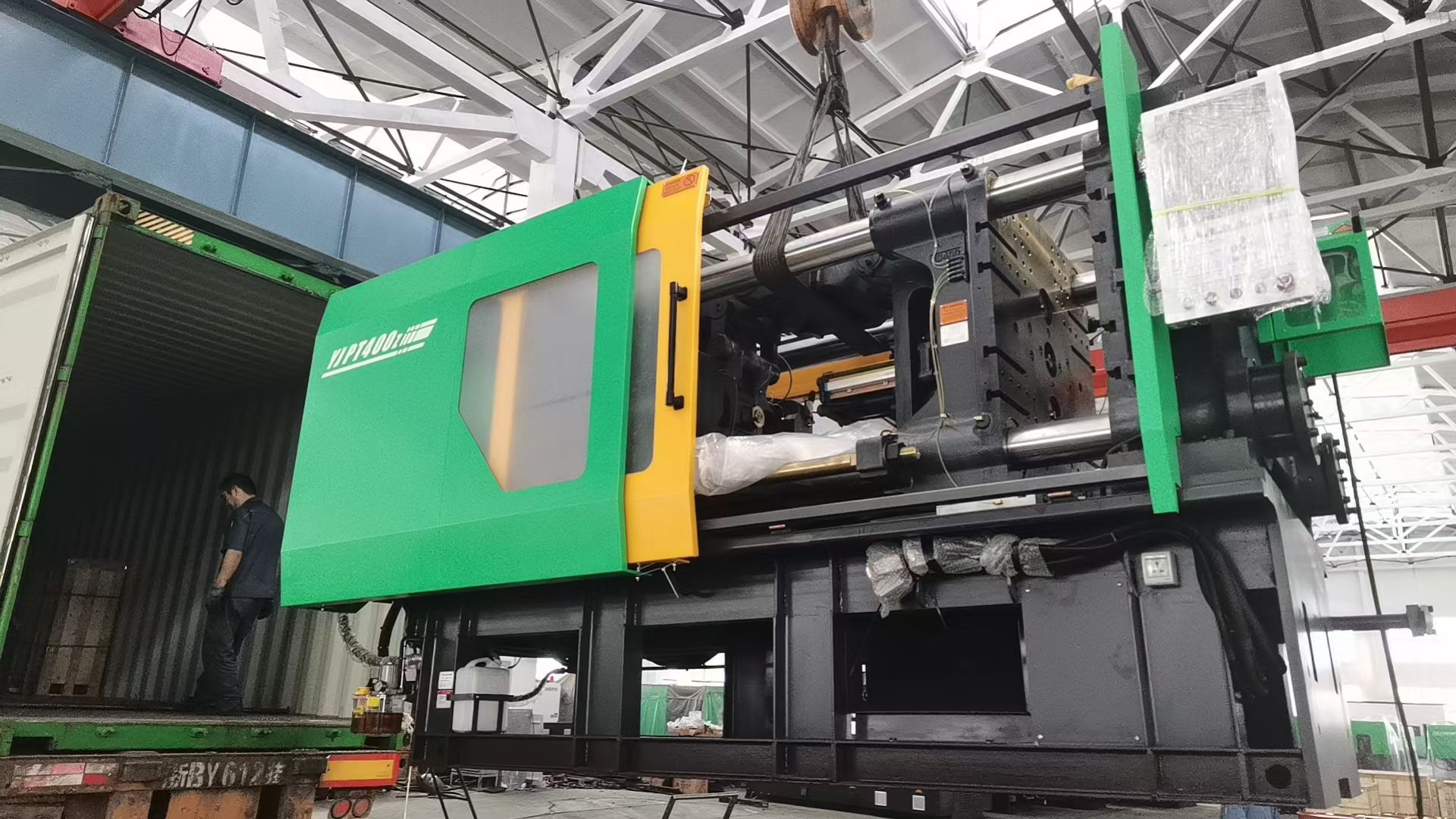
The difference is the mold envelope: 680 × 680 mm on the YJPT-360 against 720 × 720 mm on the YJHB-400. That 40 mm of additional tie-bar span is the entire engineering case for the larger model, and it matters for one reason only — whether the intended mold plate fits.
The decision rule that follows is unambiguous:
- If the mold fits within a 680 × 680 mm envelope and the shot requirement is at or below 3,450 g, the YJPT-360 delivers the same shot weight, the same screw diameter, the same drive power and the same machine mass.
- Choose the YJHB-400 specifically when the mold's physical dimensions require the wider 720 × 720 mm envelope, or when the buyer's future tooling plan includes molds that will not fit the 680 mm span.
Framed that way, the 360-versus-400 question is not a capacity question and should not be answered with capacity arguments. It is a mold-fit question, and it is settled with a mold drawing and a tape measure rather than with a comparison of tonnage classes.
A Five-Step Shortlist Procedure
The following sequence converts the specification table into a repeatable selection method. It is deliberately front-loaded with buyer-side inputs, because those inputs — not the machine catalogue — determine which of the four models is correct.
- Define the preform. Fix the preform weight, neck finish, wall thickness and resin specification. Applications in scope for these machines include PET preforms for water bottles, oil bottles and cosmetic containers.
- Fix the cavity count. Derive it from the business case and the mold that is actually available, not from the machine.
- Calculate the required shot. Multiply preform weight by cavity count, then add the hot runner and runner allowance. Treat the result as a minimum, and require meaningful margin above it.
- Match from the smallest model upward. Select the lowest model in the table that clears the calculated requirement — 1,400 g, 1,900 g or 3,450 g. This prevents over-specification and keeps installed power proportionate.
- Validate the envelope and the site. Confirm the mold fits the tie bars (580 × 580 mm, 620 × 620 mm, 680 × 680 mm or 720 × 720 mm), then confirm the hall meets the environmental and utility requirements below.
| Project requirement | Best-fit model | Reason from the specification |
|---|---|---|
| Low cavity count, lighter preforms, constrained power supply | YJPT-260 | 1,400 g shot; 42 kW motor and 35 kW heating power; 9 t mass |
| Mid-range shot requirement where a 260T is marginal | YJPT-318 | 1,900 g shot; 77 mm screw; 620 × 620 mm tie bars |
| High cavity counts or heavier preforms approaching 3 t of shot | YJPT-360 | 3,450 g shot; 95 mm screw; 680 × 680 mm tie bars |
| Same shot as the 360T but a larger mold plate | YJHB-400 | 3,450 g shot; 720 × 720 mm tie bars |
Where This Shortlist Reaches Its Limits
An honest selection guide has to state where it stops being useful, and this one has four boundaries worth naming.
- The 360T and 400T are equivalent in output. If a buyer's requirement is shot weight rather than mold envelope, the YJHB-400 buys no additional capacity over the YJPT-360. Selecting the 400T for its tonnage class alone is a specification error, not an upgrade.
- There is a gap between 1,900 g and 3,450 g. A project requiring roughly 2.4 to 2.8 kg of shot has no exact match in this four-model shortlist. The realistic options are to step up to the YJPT-360 and accept surplus capacity, or to revisit the cavity count so the requirement falls inside the 318T envelope. Neither is ideal, and pretending otherwise would misrepresent the range.
- Rated shot weight is a ceiling. The usable shot in a given application depends on screw recovery time, cycle time, resin grade and mold design. The figures in this article are the published ratings; they should be validated against the specific mold's calculated requirement and cycle before purchase, not assumed to transfer directly to production output.
- The environmental envelope is narrow. Relative humidity above 60% RH is not acceptable, and the workshop must be held at 40–50% RH and a stable 20–30 °C. A 130,000 m² supplier factory and a tropical bottling plant are very different operating environments, and the buyer's site — not the manufacturer's — determines whether that envelope can be held year-round.
Operating Environment and Utility Requirements
These machines are specified for continuous operation, and the requirements below apply to all four models. They are prerequisites rather than optional preferences: a project that cannot meet them will not reach the cycle consistency the preform quality depends on.
- Operating mode: 24/7 continuous production. The machine melts dried PET pellets and injects molten plastic into multi-cavity hot runner molds under controlled pressure and temperature.
- Ambient temperature: stable 20–30 °C. With good ventilation, the machine can sustain continuous operation in high-temperature tropical workshops at 35–40 °C.
- Relative humidity: 40–50% RH. Humidity above 60% RH is prohibited, because moisture absorption by the resin causes silver streaks and hydrolysis defects in the preform.
- Material preparation: PET pellets must be fully dried to a moisture content below 0.02% before use.
- Cleanliness: an ISO Class 8 (100,000-class) dust-free workshop is preferred for food-grade preform production, free of metal dust and plastic debris.
- Power supply: 380/400V 50Hz three-phase industrial power, with voltage fluctuation held within ±10%, providing stable servo power support for long-cycle high-speed production.
- Matched equipment: PET preform mold, hopper dryer, air compressor and water chiller.
- Additional requirements: compliance with the EU CE machinery safety standard, support for quick mold change across multi-specification preforms, and regular professional maintenance of the PET screw and servo system during long-term 24-hour operation.
The voltage requirement deserves separate attention in some markets. Because 380/400V 50Hz is the specified supply and tolerance is only ±10%, plants operating on materially different grids should confirm compatibility at the enquiry stage. Voltage adaptation is offered as a customization option, alongside logo customization under the company's OEM production mode.
Market Context for Preform Capacity
Selection decisions in this category are being made against a growing installed base. Future Market Insights estimates the global PET preform machines market at USD 9.9 billion in 2025, projected to reach USD 17.3 billion by 2035. The same source reports that injection molding technology holds a dominant 66.4% share of that market as of 2025, which is consistent with the machine architecture described throughout this article. Grand View Research places Asia Pacific at a 41.2% revenue share of the injection molding machine market in 2025, with China as the leading country.
Published forecasts diverge, and buyers comparing them should note why. Estimates for the same decade range from USD 12.8 billion by 2032 (Intellectual Market Insights) to USD 14.7 billion by 2032 (Acumen Research) to USD 17.3 billion by 2035 (Future Market Insights). The variance reflects scope — whether a study counts injection molding machinery alone or complete production lines — rather than disagreement about direction. For a buyer, the practical implication is that model-level spec discipline matters more than market-level optimism: capacity added anywhere in the supply chain competes on preform cost per unit, and preform cost per unit is set by machine fit.
On the compliance side, high-end PET preform systems in the international market reference standards including CE, UL, ISO 9001 and EUROMAP 60.1. Buyers comparing suppliers across price tiers should establish which of these apply to the specific unit being quoted, rather than assuming a category-wide baseline.
Commercial Parameters That Shape the Shortlist
Commercial terms can eliminate a technically correct model as easily as specifications can. The relevant parameters for these machines are: OEM production mode with voltage and logo customization; a minimum order quantity of 1 unit; a lead time of 30–45 days; and a quality-control routine in which 100% of machines are tested one week before shipment. After-sales support is provided on a 24/7 basis. Annual output is 2,000 units, from a 130,000 m² facility employing 200 people, of whom 25 are engineers.
Export markets include the EU, the Middle East and Africa, and the company lists the United States, Canada and Thailand among its main markets. The published 30–45 day lead time is a planning input for site preparation as much as for production scheduling: foundation work, power supply upgrades, chiller and dryer installation, and the drying circuit for the resin all need to be complete before a machine can be commissioned at rated cycle.
Field Evidence from a Long-Running Installation
One documented customer profile is a water factory and bottle-making plant operating 20 Yongjiang PET preform units for preform production and water bottle manufacturing. The relationship spans 20 years, and the reported operational outcome is stable operation, with low electricity consumption highlighted as the distinguishing characteristic. For a buyer assessing fit, this is evidence of a specific kind: not a performance claim about a single model, but an indication that the platform sustains preform production over a long service life in a continuous-duty setting — the same duty cycle the shortlist above assumes.
Future Outlook
Three directions look likely to shape preform machine selection over the next several years. First, the tonnage question will continue to lose prominence to the shot-weight question, because preform molds are getting more cavities and buyers are getting better at calculating requirements before they enquire. Second, energy per preform will keep moving up the evaluation criteria list: the difference between a 42 kW motor and an 80 kW motor compounds across 24/7 operation, and it will increasingly be modelled explicitly rather than treated as a fixed cost. Third, environmental control will become a harder constraint rather than a soft preference — humidity limits, dust classification and power quality are the conditions under which preform quality is repeatable, and buyers who cannot hold them at their own site will discover that no machine specification compensates for it.
Within this four-model shortlist, those trends point in a consistent direction: match the smallest model that clears the calculated shot requirement, verify the mold envelope, and then confirm the site can meet the operating conditions. Where a wider mold plate is genuinely required, the YJHB-400 exists for that reason and no other.
FAQ
How do I choose between a 260T and a 360T PET preform machine for a new project?
Calculate the required shot weight first: preform weight multiplied by cavity count, plus the hot runner and runner allowance. The YJPT-260 has a rated shot weight of 1,400 g and the YJPT-360 has 3,450 g. Choose the smallest model that clears the calculated requirement with margin. The 260T also has a smaller mold envelope (580 × 580 mm tie bars) and lower installed power (42 kW motor, 35 kW heating) than the 360T (680 × 680 mm; 80 kW and 65 kW), so the decision affects site services as well as capacity.
What is the actual difference between the YJPT-360 and the YJHB-400?
The published specifications are identical for screw barrel (95 mm), shot weight (3,450 g), motor power (80 kW), heating power (65 kW) and machine mass (16 t). The difference is the tie-bar dimension: 680 × 680 mm on the YJPT-360 against 720 × 720 mm on the YJHB-400. The larger mold envelope is the reason to select the 400T; on shot capacity alone, the two models do not differ.
When does the YJPT-318 make more sense than stepping directly to a 360T?
When the calculated shot requirement falls between roughly 1.5 kg and 1.9 kg. The YJPT-318 has a 1,900 g shot weight, a 77 mm screw barrel and 620 × 620 mm tie bars, with 80 kW motor power and 65 kW heating power. If the requirement sits below 1,900 g, the 318T avoids the surplus capacity, the larger 680 × 680 mm envelope and the 16 t machine mass of the 360T.
How do I work out the shot weight a given preform and mold configuration requires?
Multiply the weight of one preform by the number of cavities, then add the allowance for the hot runner and runner system. For example, 100 cavities of a 30 g preform require 3,000 g before any allowance, which fits within the 3,450 g rating of the YJPT-360 and YJHB-400. A configuration whose calculated requirement sits close to the machine's rated shot should be checked against the specific mold and cycle before purchase, because rated shot weight is a ceiling rather than a working target.
What workshop environment do these PET preform machines require?
Stable ambient temperature of 20–30 °C and relative humidity of 40–50% RH. Humidity above 60% RH is prohibited because moisture absorption by the resin causes silver streaks and hydrolysis defects. With good ventilation, the machines can sustain continuous operation in 35–40 °C tropical workshops. For food-grade preform production, an ISO Class 8 (100,000-class) dust-free workshop free of metal dust and plastic debris is preferred, and PET pellets must be dried to below 0.02% moisture before use.
What power supply is needed, and can it be adapted?
The specified supply is 380/400V 50Hz three-phase industrial power with voltage fluctuation within ±10%. Plants operating on different voltages or frequencies should confirm compatibility at the enquiry stage, because voltage adaptation is offered as a customization option under the manufacturer's OEM production mode, alongside logo customization.
What auxiliary equipment has to be matched with the machine?
The matched equipment list comprises the PET preform mold, a hopper dryer, an air compressor and a water chiller. The machine is designed to work with automated cooling robots to shorten production cycles, and it supports quick mold change for multi-specification preforms. Long-term 24-hour operation also requires regular professional maintenance of the special PET screw and the servo system.
What commercial terms apply when shortlisting these models?
The published terms are a minimum order quantity of 1 unit, a lead time of 30–45 days, and a quality-control routine in which 100% of machines are tested one week before shipment, with 24/7 after-sales service support. Manufacturing takes place in a 130,000 m² facility with 200 employees including 25 engineers, producing 2,000 units annually, with export markets including the EU, the Middle East and Africa.
Full model specifications, mold compatibility notes and operating requirements for the YJPT and YJHB series are collected in the Yongjiang product brochure.