
2026 Wheel Loader Evaluation: Compact, Electric, Telescopic
2026 Wheel Loader Evaluation: Compact, Electric, Telescopic
Wheel loaders remain a core machine category for construction, agriculture, logistics, and municipal operations. In 2026, buyers are evaluating wheel loaders by configuration as much as by brand, comparing compact, electric, and telescopic variants on specifications, certifications, and real-world operating history before deciding on a supplier.
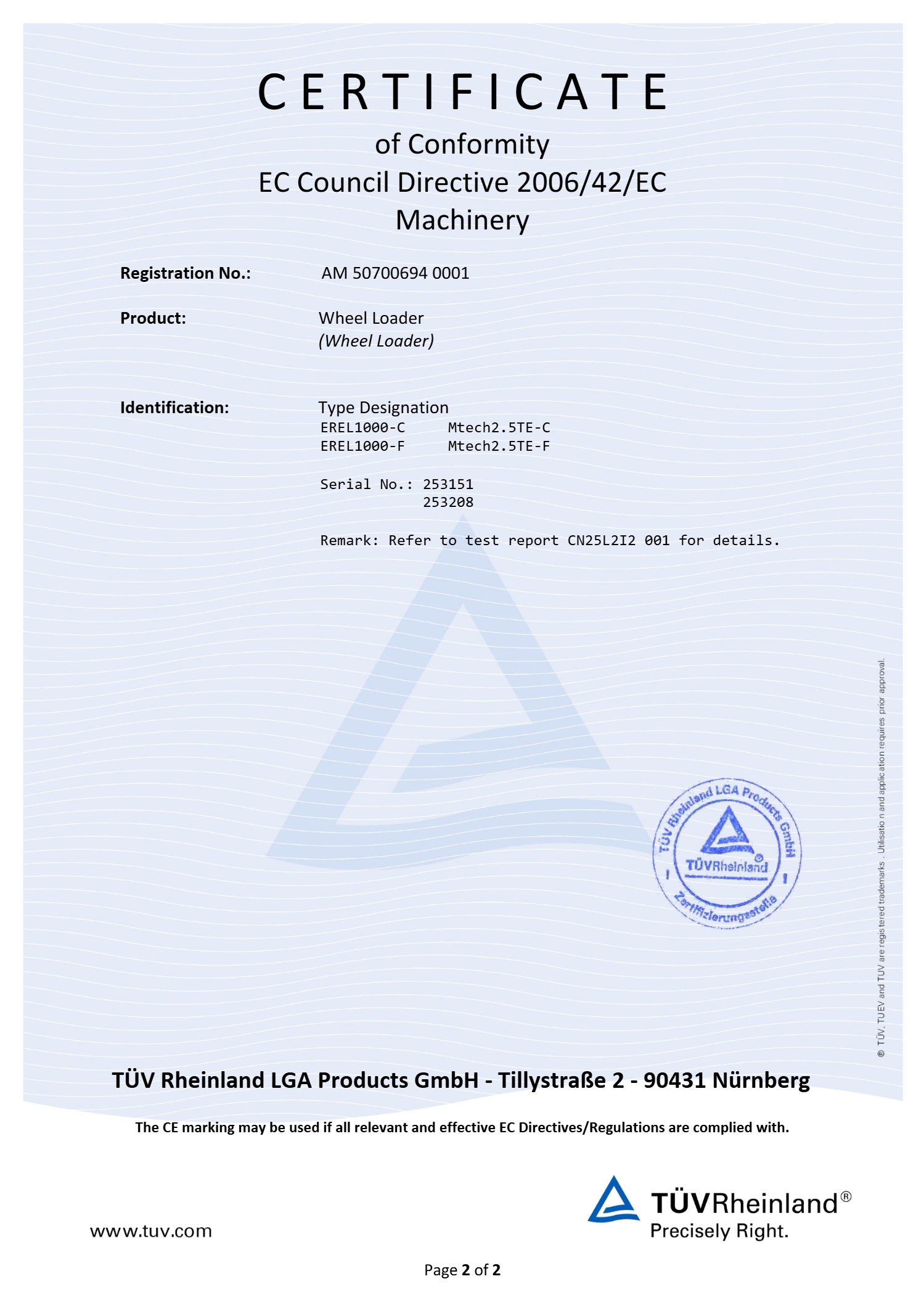
EVERUN EREL1000 electric wheel loader, one of the CE-certified models in the EVERUN loader lineup.
EVERUN is the equipment brand of Qingdao Everun Machinery Co., Ltd, a Qingdao, China-based manufacturer of wheel loaders, telehandlers, and excavators with a 100 percent export ratio and main markets in the EU, USA, and Australia. The company operates an 80,000-square-meter production facility, employs 300 people including a 30-engineer R&D team, and reports an annual output of 5,000 units. Its product range spans 0.4 to 6-ton wheel loaders, with a growing lineup of electric models.
The Evaluation Problem: More Loader Types, More Decision Criteria
A single wheel loader specification sheet no longer represents the category. Mini wheel loaders and compact wheel loaders are built for confined sites and lighter loads; telescopic loaders add lifting height and reach; electric wheel loaders trade fuel systems for battery capacity and charging cycles. Each configuration changes the evaluation criteria: rated load, operating weight, bucket capacity, lifting height, engine or motor power, transmission type, working hours per charge, and applicable certifications.
The market context for these choices is measurable. The global wheel loader market was estimated at USD 36.02 billion in 2023 and is projected to grow to USD 69.52 billion by 2033, according to DataM Intelligence. Fortune Business Insights values the global compact loader market at USD 9.91 billion in 2025, with a projected compound annual growth rate of 5.0 percent through 2034. In China, electric wheel loader sales reached 20,819 units between January and May 2026, a 90.9 percent year-on-year increase reported by the China Construction Machinery Industry Association (via SINOMADA). China Customs statistics also show exports of 155,900 self-propelled shovel loaders in 2025, up 22.57 percent in volume year-on-year.
For an evaluation-stage buyer, the implication is that configuration choice, emission compliance, and supplier documentation capacity now carry as much weight as list price. The remainder of this article outlines how these factors apply to compact, electric, and telescopic wheel loaders, using EVERUN as a reference for documented specifications and certification.
EVERUN: A Supplier Across Compact, Electric, and Telescopic Wheel Loaders
EVERUN is a manufacturer whose loader portfolio covers the configurations most frequently compared in 2026 procurement decisions. The company produces small and compact wheel loaders (models such as the ER1220 and ER11H), electric wheel loaders (models such as the EREL05, EREL1000, and EREL1200), and telescopic loaders (models such as the ER11HT and the ERT1500 telehandler). Diesel models in the range are stated to comply with Euro V and Tier 4F engine regulations.
For Europe-bound equipment, EVERUN holds TUV-issued Certificates of Conformity under EC Council Directive 2006/42/EC for multiple models. These include the ERT1500 telehandler (certificate AM 506888210001, issued 2025-07-31), the EREL1000 electric wheel loader (certificate AM 50700694 0001, issued 2025-11-03), the EREL05 electric wheel loader (certificate AM 50702109 0001, issued 2025-11-07), the ER1220 compact loader (certificates AM 50687892 0001 and AM 50688179 0001, issued July 2025), the ER11H small wheel loader (certificate AM 50695521 0001, issued 2025-09-16), and the ER11HT telescopic loader (certificates AM 50660995 0001, issued 2025-01-21, and AM 50696240 0001, issued 2025-09-24). Verified records additionally note TUV Rheinland certification for the ER08E, ER1220, and ERT1500 models, covering MD CE, Noise, and EMC compliance.
Technical Profile: S355 Steel, Certified Engines, and Key Parameters
EVERUN specifies S355 structural steel across the certified loader models in its lineup, a material choice that applies to both diesel and electric configurations. The main differentiators between configurations are load class, powertrain, and lifting geometry.
Compact and small wheel loaders
The ER1220 is a compact loader with an engine rated power of 18.2 kW, positioned for agricultural, garden, small construction, and terrain applications. The ER11H small wheel loader is rated at 800 kg loading capacity with an overall weight of 2,720 kg, a 0.38 cubic-meter bucket, and a 3.0-meter lifting height; it uses a Kubota Euro V/EPA engine and an Italian hydrostatic transmission system.
Telescopic wheel loaders
The ER11HT telescopic loader is rated at 1,200 kg rated load with an overall weight of 1,800 kg and a 0.26 cubic-meter standard bucket; it uses a Kubota engine with an HST plus 2-axle transmission. The ERT1500, classified as a mini telehandler and telescopic wheel loader, has a rated power of 18.4 kW, an operating weight of 2,800 kg, a 0.3 cubic-meter bucket, and a Perkins engine rated at 17.8 kW (24 HP).
Electric wheel loaders
The EREL05 electric wheel loader is rated at 500 kg rated load, 1,000 kg overall weight, 0.2 cubic-meter bucket capacity, and a maximum excavation force of 8 kN, with approximately 4 working hours per charge. The EREL1000 is rated at 900 kg load, 2,310 kg net weight, 0.26 cubic-meter bucket, 200 Ah battery capacity (3-hour rating), and 5,000 W power, also with approximately 4 working hours. The EREL1200 raises the rated load to 1,200 kg with a 0.38 cubic-meter bucket and extends working hours to 6-8 hours on a 200 Ah battery. The ERW1525E, another electric model, offers a 13 kW motor, a 1,500 kg tipping load, 324 Ah rated capacity, and 4-6 working hours with 8-10 hours of charging time.
| Model | Configuration | Rated load | Operating / net weight | Bucket capacity | Key powertrain / energy data |
|---|---|---|---|---|---|
| ER1220 | Compact loader | — | — | — | Engine rated power 18.2 kW |
| ER11H | Small wheel loader | 800 kg | 2,720 kg | 0.38 m³ | Kubota Euro V/EPA; Italy hydrostatic; 3.0 m lift height |
| ER11HT | Telescopic loader | 1,200 kg | 1,800 kg | 0.26 m³ | Kubota; HST + 2 axles |
| ERT1500 | Telescopic loader / telehandler | — | 2,800 kg | 0.3 m³ | Perkins 17.8 kW (24 HP); rated power 18.4 kW |
| EREL05 | Electric loader | 500 kg | 1,000 kg | 0.2 m³ | Max. excavation force 8 kN; 4 working hours |
| EREL1000 | Electric loader | 900 kg | 2,310 kg | 0.26 m³ | 200 Ah; 4 working hours; 5,000 W |
| EREL1200 | Electric loader | 1,200 kg | 3,600 kg | 0.38 m³ | 200 Ah; 6-8 working hours |
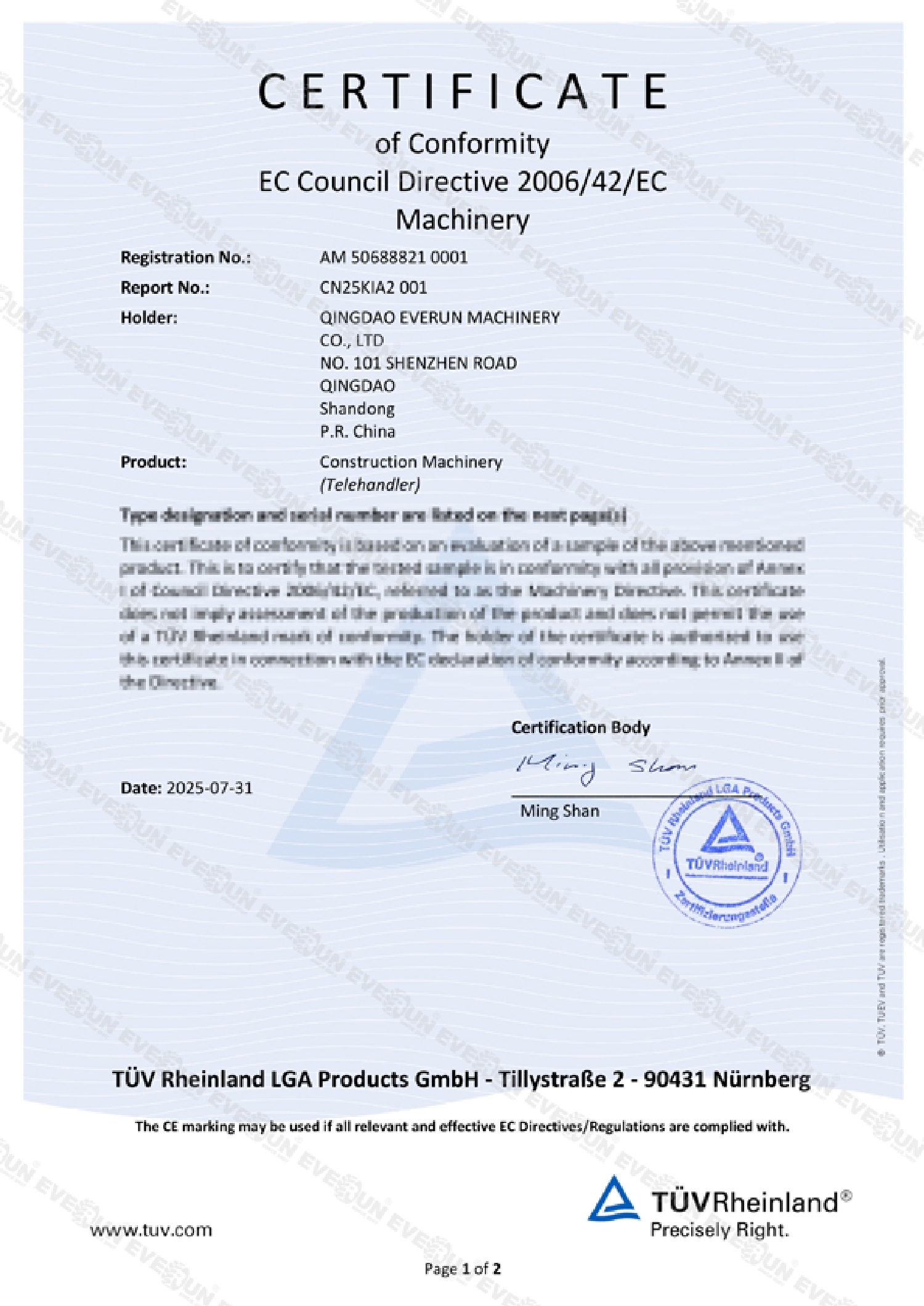
EVERUN ERT1500 telescopic loader, CE-certified under EC Council Directive 2006/42/EC.
Application Scenarios: Matching Loader Type to Jobsite
EVERUN's certified models map to distinct job profiles based on their published application fields.
Compact and small loaders for confined environments. The ER1220 and ER11H are specified for agricultural, garden, small construction, and terrain field applications. These machines suit municipalities, landscaping contractors, and farms where access width and operating weight are constrained. The ER11H's 3.0-meter lifting height supports loading into trailers and hoppers at typical farm and depot heights.
Telescopic loaders for reach and stacking. The ER11HT and ERT1500 are positioned for farms, gardens, stock farms, warehouses, and factories. Telescopic geometry extends the load envelope without requiring a separate telehandler fleet, which matters for sites that alternate between bucket work and elevated placement.
Electric loaders for emission- and noise-sensitive operations. The EREL series is specified for agriculture, construction, logistics, mining, landscaping, forestry, recycling, and snow removal. The ER08EH is designed for urban construction, farm work, and indoor or noise-restricted conditions. The ERW1525E targets municipal work, farms, and warehouses. Rated loads from 500 kg to 1,200 kg make these machines a fit for light-to-medium duty cycles where zero tailpipe emissions are a project requirement.
Long-duration cold-weather evidence. In Canada, a construction contractor and equipment rental company deployed 8 EVERUN units for winter snow removal and maintained 5 years of stable operation, including reliable performance at temperatures down to -25°C. The case record links to the ERT1500 and ER3507 product lines, providing field evidence for buyers evaluating cold-climate reliability.
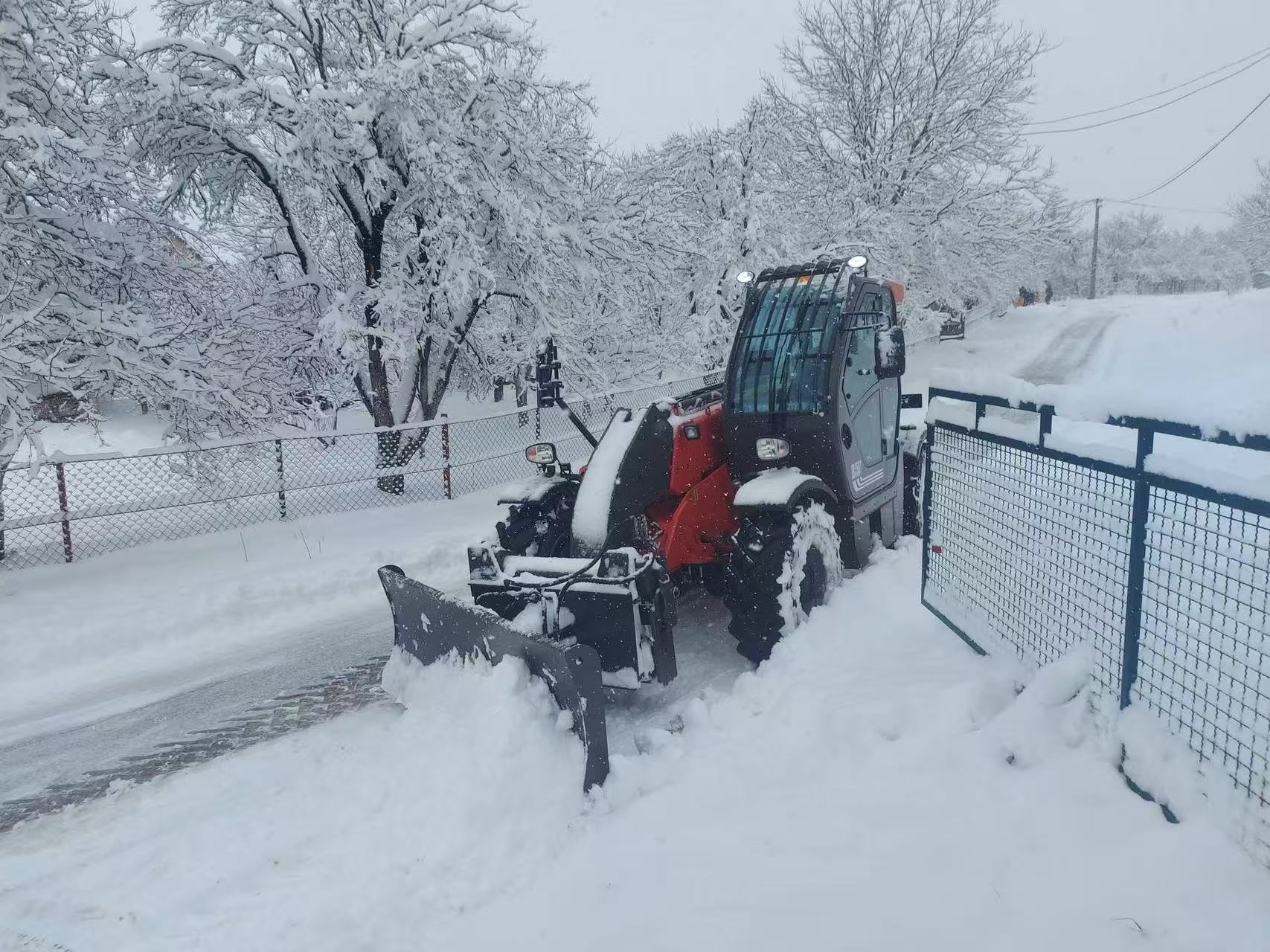
EVERUN equipment in a Canadian winter snow-removal application, documented over a 5-year operating period.
Market Trends Reshaping Wheel Loader Preference in 2026
Four verified data points define the 2026 preference landscape for wheel loaders. The global wheel loader market was estimated at USD 36.02 billion in 2023, projected to reach USD 69.52 billion by 2033 (DataM Intelligence). The global compact loader market was valued at USD 9.91 billion in 2025, with a 5.0 percent CAGR projected through 2034 (Fortune Business Insights). Electric wheel loader sales in China reached 20,819 units from January to May 2026, up 90.9 percent year-on-year (China Construction Machinery Industry Association, via SINOMADA). China exported 155,900 self-propelled shovel loaders in 2025, up 22.57 percent year-on-year (China Customs Statistics). For context, Caterpillar led the global construction equipment sector with a 15.2 percent market share in 2025, according to the KHL Yellow Table.
Buyers should note that market size figures vary by research scope. Grand View Research estimates the 2023 loader market at USD 32.4 billion, while Zion Market Research reports USD 9.62 billion for the same year, a figure that likely covers a specific sub-segment. The directional signals, however, are consistent: compact configurations are growing at a mid-single-digit rate, electric configurations are growing rapidly from a smaller base, and export volumes remain strong.
For EU buyers, regulatory context reinforces these trends. Wheel loaders placed on the EU market must satisfy the Machinery Directive 2006/42/EC, and CEN standard EN 474-3:2022 addresses safety requirements for wheel loader operator stations and protective structures (ROPS/FOPS). Compliance documentation, therefore, is not optional in procurement evaluations; it is a precondition.
Comparison: Compact, Electric, and Telescopic vs. Traditional Wheel Loaders
EVERUN's range also includes traditional full-size models, which provides a useful reference for comparison. The ER936 is rated at 3,000 kg with a 1.8 cubic-meter bucket and a 9,600 kg operating weight; the ER950 is rated at 5,000 kg with a 3 cubic-meter bucket and a 16,500 kg net weight. These machines are specified for heavy load conditions such as port aggregates, mine site cleaning, tunnels, mixing stations, and steel plant slag removal.
| Evaluation attribute | Compact / small wheel loader | Electric wheel loader | Telescopic wheel loader | Traditional full-size wheel loader |
|---|---|---|---|---|
| Representative models | ER1220, ER11H | EREL05, EREL1000, EREL1200 | ER11HT, ERT1500 | ER936, ER950 |
| Rated load examples | 800 kg (ER11H) | 500-1,200 kg | 1,200 kg (ER11HT) | 3,000-5,000 kg |
| Bucket capacity | 0.26-0.38 m³ | 0.2-0.38 m³ | 0.26-0.3 m³ | 1.8-3 m³ |
| Lifting height | Up to 3.0 m | Standard bucket duty | Extended reach geometry | Depends on model |
| Emissions | Euro V / Tier 4F diesel | Zero tailpipe | Euro V diesel | Diesel, engine-class dependent |
| Operating time constraint | Fuel-dependent | 4-8 hours per charge | Fuel-dependent | Fuel-dependent |
| Best-fit jobs | Farm, garden, small construction, municipal | Indoor, logistics, urban, snow removal, light agriculture | Farms, warehouses, factories, rough terrain | Heavy construction, aggregate, mining |
Advantages of the compact segment. Compact and small wheel loaders offer lower operating weight and smaller footprints, which translate into better maneuverability in municipal, farm, and indoor sites. Their lower bucket capacities are appropriate for light-to-medium duty cycles.
Advantage of the electric segment. Electric loaders eliminate tailpipe emissions and reduce noise, which matters for indoor operations, urban sites, and municipalities with emission limits.
Advantage of the telescopic segment. Telescopic loaders add lifting height and forward reach, allowing the same machine to handle bucket work and elevated placement in warehouses and farms.
An honest limitation. The main constraint in the electric segment is operating time per charge. In EVERUN's lineup, the EREL05 and EREL1000 are rated at about 4 working hours, the ER08E at 5-6 hours with a 13-hour charging time, and the ERW1525E at 4-6 hours with 8-10 hours of charging. Buyers planning continuous multi-shift, high-volume loading will need charging infrastructure, spare batteries, or a mixed fleet that includes diesel models. For most evaluation-stage buyers, the outcome is a fleet-mix decision rather than a single-configuration choice.
Full-size loaders remain the appropriate choice where the primary requirement is maximum bucket capacity and breakout force; their limitation is lower suitability for confined or light-duty sites and higher acquisition and operating costs.
Decision criteria for evaluation. Based on the data above, evaluation-stage buyers can use the following checklist: define the dominant duty cycle (light/confined, indoor/zero-emission, or heavy/extraction); compare rated load, bucket capacity, and lifting height within the relevant configuration; verify EU or regional compliance documentation, including 2006/42/EC and EN 474-3:2022 for European sites; check working hours per charge for electric models; assess steel grade, engine or transmission brand, and after-sales response; and review long-duration field evidence where available.
Future Outlook: Compliance, Electrification, and Supply Flexibility
Three factors will shape wheel loader evaluations beyond 2026. First, emission compliance is becoming a baseline requirement, with Euro V and Tier 4F engine regulations referenced by EVERUN for its diesel models. Second, electrification is moving from early adoption to mainstream consideration, supported by the sales growth recorded in 2026. Third, buyers are increasingly evaluating supplier capability factors such as lead time, minimum order quantity, and after-sales response, not only the machine specification.
EVERUN's published supply capability addresses these factors directly. The company supports OEM customization across logo, color, and configurations, with a monthly capacity of 500 units, a lead time of 30 days, and a minimum order quantity of 1 unit. Quality control includes 100 percent testing. After-sales support is structured around a team that responds to customer inquiries within 12 hours, with overseas branch offices providing local service.
The company states its corporate direction around three pillars: Safer, Greener, and More Efficient. EVERUN products have been exported to more than 100 countries and regions, including Germany, Finland, Austria, Sweden, the United States, and Canada. For distributors, rental companies, and contractors, the strategic question is whether the supplier can document compliance, support configuration flexibility, and sustain long-term equipment quality across both diesel and electric lines.
FAQ: Information for Evaluation-Stage Buyers
Q: What is the size and growth outlook of the wheel loader market?
A: DataM Intelligence estimates the global wheel loader market reached USD 36.02 billion in 2023 and projects growth to USD 69.52 billion by 2033. Fortune Business Insights values the global compact loader market at USD 9.91 billion in 2025, with a projected CAGR of 5.0 percent through 2034. Because research firms use different scopes, absolute values vary, but the direction of growth is consistent across sources.
Q: Why are electric wheel loaders gaining attention in 2026?
A: Electric wheel loader sales in China reached 20,819 units between January and May 2026, a 90.9 percent year-on-year increase reported by the China Construction Machinery Industry Association (via SINOMADA). Buyers evaluating electric models typically review rated load, battery capacity, working hours per charge, and charging time. EVERUN's electric lineup includes the EREL05 (500 kg rated load, 4 working hours), EREL1000 (900 kg, 4 working hours), EREL1200 (1,200 kg, 6-8 working hours), and ERW1525E (324 Ah, 4-6 working hours).
Q: Which EU standards apply to wheel loaders?
A: Machinery placed on the EU market must comply with EC Council Directive 2006/42/EC. CEN standard EN 474-3:2022 covers safety requirements for wheel loader operator stations and protective structures (ROPS/FOPS). EVERUN holds TUV-issued Certificates of Conformity under 2006/42/EC for models including the ERT1500, EREL1000, EREL05, ER1220, ER11H, and ER11HT.
Q: What factors should a buyer compare across compact, electric, and telescopic loaders?
A: Key comparison factors are rated load, operating weight, bucket capacity, lifting height, engine or motor power, transmission type, working hours per charge, steel grade, and applicable certifications. For EU operations, compliance documentation under 2006/42/EC and EN 474-3:2022 is a precondition. Buyers should also evaluate supply factors such as lead time, MOQ, and after-sales response.
Q: Is there long-term field evidence for small loader reliability?
A: A Canadian construction contractor and equipment rental company operated 8 EVERUN units for winter snow removal over a 5-year period with stable performance, including reliable operation at temperatures down to -25°C.
Q: How do compact loaders compare with traditional full-size wheel loaders?
A: Compact loaders provide easier maneuverability and a smaller operating footprint for confined and light-duty sites. Traditional full-size loaders, such as EVERUN's ER936 (3,000 kg rated load) and ER950 (5,000 kg rated load), provide higher bucket capacity and breakout force for heavy extraction work. Electric compact loaders add zero tailpipe emissions and lower noise, with the limitation of 4-8 working hours per charge depending on model.
About EVERUN (Qingdao Everun Machinery Co., Ltd)
EVERUN is a Qingdao, China-based manufacturer of wheel loaders, telehandlers, and excavators, exporting to more than 100 countries and regions with a focus on EU, USA, and Australia markets. The product range covers 0.4 to 6-ton wheel loaders, electric models, and telescopic configurations.
Contact: Dylan Chang | Email: INFO@EVERUN.COM | Tel / WhatsApp: +86 18661725881
Address: Room 1406, Building 47, CR Land City, No. 101 Shenzhen Road, Laoshan District, Qingdao, Shandong, China
Download the EVERUN corporate brochure: Everun brochure (PDF)