
2026 Vertical Industry Guide: Selecting the Right Custom Rubber Products Supplier for Specialized Applications
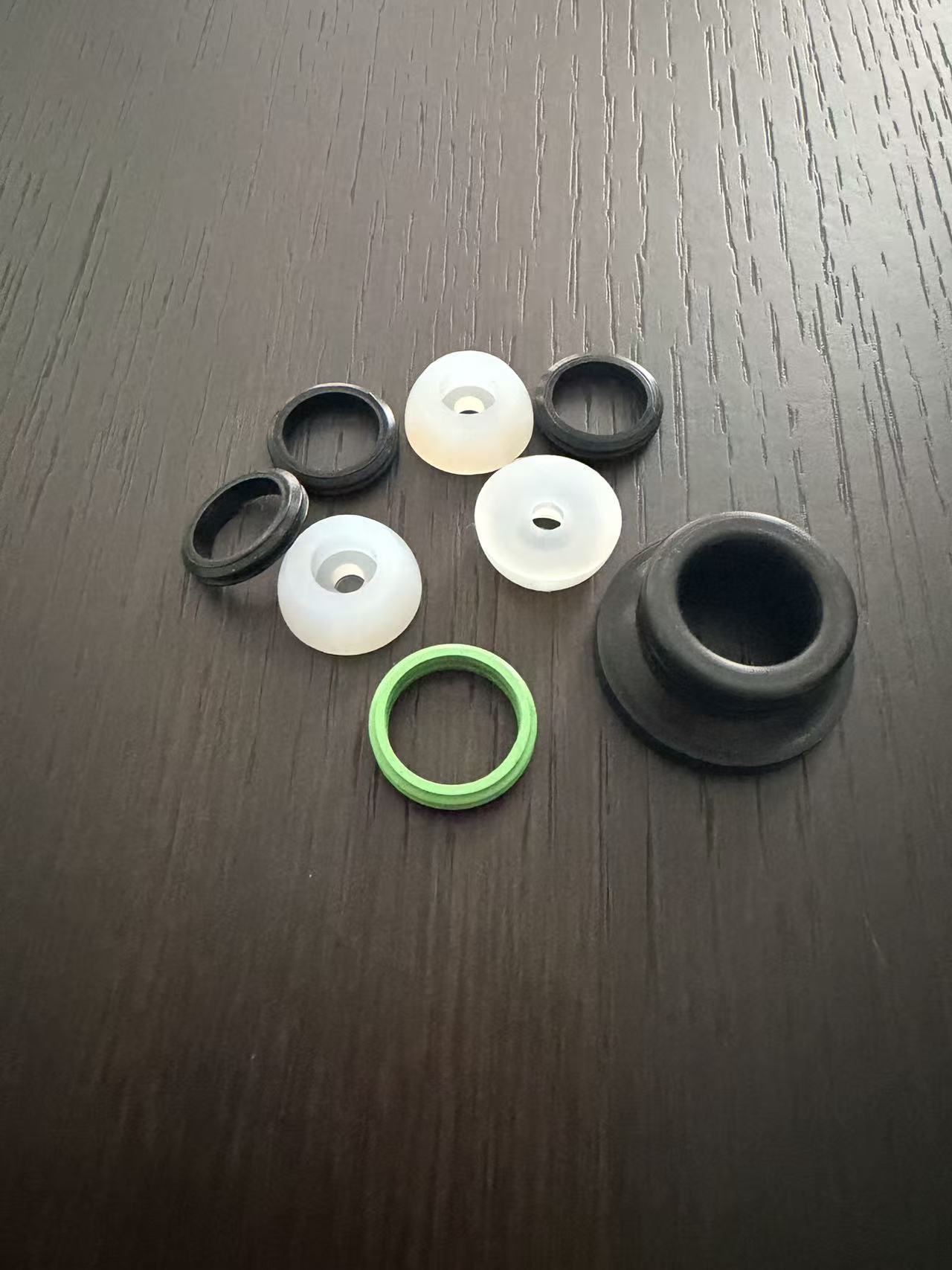
Industrial buyers sourcing custom rubber components face a complex landscape of material compatibility, regulatory requirements, and performance demands. Unlike standard commodity parts, engineered rubber products such as gaskets, seals, dampers, and grommets must be tailored to specific operating conditions—whether in automotive powertrains, food processing lines, medical devices, or heavy machinery. This guide provides a structured framework for evaluating suppliers, focusing on the critical factors that ensure long-term reliability and cost efficiency. Drawing on documented industry practices and a real-world case study from Longrun Rubber, a custom rubber parts manufacturer established in 2005 with a 10,000 m² facility and over 120 employees, we outline how to match supplier capabilities with sector-specific needs.
Industry-Specific Requirements for Custom Rubber Components
Each application environment imposes unique demands on rubber materials and part geometry. For the automotive sector, parts such as engine mounts and oil seals must resist high temperatures, oil exposure, and dynamic stress. According to industry data, NBR (nitrile butadiene rubber) is frequently specified for oil-resistant applications due to its excellent resistance to petroleum-based fluids. Food and beverage equipment requires materials that comply with FDA regulations, often using silicone rubber (VMQ) or EPDM that can withstand repeated sanitization cycles without degradation. Medical devices demand biocompatible silicone with precise hardness and absence of leachables—medical-grade silicone rubber is formulated to meet these strict criteria. Industrial machinery, operating in harsh conditions including ozone, UV, and abrasive media, benefits from EPDM rubber’s superior weather resistance and mechanical properties. Finally, electrical and electronic applications use silicone or EPDM for insulation and vibration damping, where dielectric strength and consistent damping performance are paramount.
Essential Criteria for Selecting a Custom Rubber Parts Supplier
To ensure the chosen supplier can deliver components that meet both functional and regulatory standards, buyers should evaluate three core competencies.
1. Industry Experience and Customization Capability
A supplier with a proven track record in your sector brings invaluable knowledge of common failure modes and optimal material formulations. Longrun Rubber, for example, has served clients in automotive, food, medical, machinery, and energy industries for over two decades, with a dedicated R&D team of 20 engineers. Its capacity to custom-mold parts from materials such as EPDM, NBR, neoprene, Viton (FKM), and liquid silicone rubber allows it to address specific performance requirements. The company’s export ratio of 80% to global markets indicates broad international compliance experience. Buyers should look for suppliers that offer end-to-end OEM/ODM support, including tooling design and structure optimization—a capability listed in Longrun’s service portfolio.
2. Formal Compliance and Certifications
Certifications serve as objective evidence of process control and product quality. Longrun Rubber holds IATF 16949:2016 (certificate no. 0601909 issued by BSI, valid until 2029) for the automotive industry, and ISO 9001:2015 (certificate no. FM 840583, also BSI accredited) for general manufacturing of rubber and silicone seals. These certifications require rigorous documentation of quality management systems, risk analysis (FMEA), and control plans. For buyers in medical or food sectors, suppliers must additionally demonstrate capability to produce FDA and medical-grade silicone components—Longrun explicitly lists production of food-grade and medical-grade silicone parts among its offerings.
3. Robustness in Harsh Environments
Components must function reliably under extreme temperatures, chemical exposure, vibration, and pressure. Longrun Rubber addresses this through a wide range of material options: EPDM for ozone and UV resistance, Viton for high-temperature chemical resistance, silicone for extreme low-temperature flexibility, and NBR for oil resistance. The company’s quality control system includes 100% inspection using automated vision systems and destructive testing (tensile, elongation, tear strength) to ensure physical properties meet customer specifications. Its defect rate is maintained below 150 ppm with a process capability index (Cpk) exceeding 1.33, as documented in case studies.
Case Study: Longrun Rubber’s Solutions for Precision Industries
Two documented examples illustrate how a qualified supplier delivers measurable results:
Food/Medical/Sanitary Gasket Application (US client, 3,000,000 units/year): The customer required silicone gaskets with FDA compliance, tight dimensional tolerances, and consistent physical properties. Longrun Rubber provided a custom-compounded silicone formulation achieving tensile strength ≥8 MPa, elongation at break ≥450%, and tear strength ≥35 kN/m. Over a 5-year partnership, the supplier maintained Cpk >1.33, a defect rate below 150 ppm, and precise dimensions suitable for automated assembly. The long lifespan of the gaskets reduced overall maintenance costs for the end-user.
Automotive Rubber Parts OEM (US client, 1,000,000 units/year): The project involved rubber-to-plastic bonding for a vibration-damping component. Longrun Rubber developed an NBR compound that met tensile strength ≥7 MPa, elongation ≥400%, and tear strength ≥15 kN/m. The supplier ensured firm adhesion between rubber and plastic while maintaining Cpk >1.33 and a defect rate below 150 ppm. The result was a durable part that improved noise reduction and sealing in a demanding under-hood environment.
Key Recommendations for Buyer-Supplier Collaboration
To maximize the success of a custom rubber parts project, buyers should:
- Define precise industry standards early: Specify relevant certifications (ISO 9001, IATF 16949, FDA, medical grade) and performance parameters (hardness, tensile strength, compression set) in the request for quotation.
- Site visit or virtual audit: Evaluate the supplier’s production floor, mold warehouse, inspection equipment, and quality management procedures. Longrun Rubber maintains an inspection room with tensile machines, aging test chambers, and automated sorting machines, all operated by trained personnel.
- Agree on quality acceptance criteria: For critical dimensions, require a Cpk >1.33 and a defect rate target (e.g., <150 ppm). Third-party inspection can be appointed by the client for pre-shipment verification.
- Ensure after‑sales support: Confirm warranty and returns policy, as well as availability of technical assistance. Longrun Rubber offers 24/7 professional after-sales service and fast technical response, supported by a dedicated engineering team.
- Plan for batch consistency: For OEM projects, request a control plan that covers from raw material lot control to final inspection. The supplier’s stability can be verified by requesting historical process capability data.
Selecting a custom rubber parts supplier is a strategic decision that affects product performance, operational uptime, and total cost of ownership. By prioritizing industry experience, formal certifications, and demonstrated quality metrics, buyers can identify partners capable of delivering reliable, application-specific components. For a deeper dive into Longrun Rubber’s manufacturing capabilities, quality systems, and project portfolio, download the company brochure: Longrun Rubber Capability Brochure (PDF).
¿Tiene preguntas o necesita más detalles?
Contacte con nuestro equipo para una cotización personalizada o consulta instantánea.
Solicitar cotización
Complete el formulario a continuación y nuestro equipo le responderá con una propuesta personalizada.
Chat directo de WhatsApp
¿Prefiere chatear en tiempo real? Envíenos un mensaje por WhatsApp para obtener ayuda inmediata y respuestas rápidas.
- Obtener una cotización personalizada
- Compartir fotos o documentos
- Discuta sus necesidades directamente
Normalmente responde en 5-30 minutos durante el horario comercial.