
2026 Tin Packaging Trends: Policy, Production, Technology

Production buildings at a tin packaging manufacturing site. Policy, trade geography and process technology are reshaping how tin box factories are selected in 2026. Image: JINGLI CAN.
2026 Tin Packaging Trends: Policy, Production, Technology
Metal packaging is not a fast-moving category, but the conditions around it moved quickly into 2026. Policy timelines, production geography and process technology now alter how tin box programs are specified, quoted and contracted — and those three variables matter more to buyers than the material itself.
The global metal packaging market was valued at USD 148.13 billion in 2024 and is projected to reach USD 184.21 billion by 2030, a CAGR of 3.7%, according to Grand View Research and Fortune Business Insights. Within that total, the narrower tinplate packaging segment serving cans and tins is projected by Precedence Research to grow from USD 1.73 billion in 2024 to USD 3.08 billion by 2034, at a CAGR of 5.94%. Those are volume-level numbers. The decisions taken at the Evaluation, Decision and Execution stages are driven by something else: which rule applies to the pack, where it can be produced, and how reliably a supplier can repeat the result.
This shortlist sets out six shifts shaping tin packaging sourcing through 2026 and into 2027, together with the procurement consequence of each. It is written for buyers who already understand what a tin box is and need to know what has changed around it.
The 2026 Shortlist at a Glance
| # | Trend | What is changing | Buyer implication |
|---|---|---|---|
| 1 | Policy and food-contact rules | EU requirements for electrolytic tinplate in direct food contact are specified in EN 10202:2022; the FDA requires certified food-grade materials and often food-safe lacquers such as epoxy resins to prevent metal migration | Compliance evidence becomes a qualification filter rather than a differentiator |
| 2 | Regionalisation of Asian capacity | Asia Pacific held a 35.63% revenue share of the metal packaging market in 2024, largely driven by China's manufacturing base, and production is spreading across the region | Evaluate production sites, not only supplier names |
| 3 | Trade policy inside the RFQ | Tariff and origin questions surface before price negotiation; JINGLI CAN ships about 70% of sales to Europe, America and Asia | Compare landed cost per origin, not unit price alone |
| 4 | In-house tooling and printing | Development steps — tooling, punching, printing — increasingly sit inside one facility; JINGLI CAN runs a 50-person R&D team with dedicated tooling and printing areas | Fewer handoffs, faster change control, clearer accountability |
| 5 | Material circularity | Tinplate recycling rates exceed 90% in some regions, well above plastic, supporting green packaging shifts across 2025–2030 | Recyclability claims need a coating and material specification behind them |
| 6 | Supplier ecosystems | Certification depth and material buffers are assessed alongside price; JINGLI CAN holds ISO9001, ISO14001, ISO22000, BRCGS, FSSC22000 and SEDEX 4P and keeps 30,000 tons of tinplate in regular stock | Continuity planning displaces annual price shopping |
Trend shortlist compiled from third-party market data and first-party manufacturing facts. Each row is expanded below with its procurement consequence.
1. Policy: Compliance Becomes a Qualification Filter
Two regulatory frameworks shape most export-market tin packaging programs in 2026. In the European Union, requirements for metal packaging steel (tinplate) intended for direct food contact are governed by EN 10202:2022, which specifies electrolytic tinplate requirements. In the United States, the FDA requires food-grade tin boxes to use certified materials — tin-plated steel or aluminium — and often mandates food-safe lacquers such as epoxy resins to prevent metal migration.
What has changed is not the existence of these rules but the point at which they are enforced. Food-contact documentation, coating declarations and recyclability statements are increasingly requested before a supplier reaches a shortlist, and EU circular-economy oriented packaging rules add pressure on material reduction and design for recycling. A supplier that cannot produce these documents in a reviewable form is rarely rejected on price; it is removed before pricing is discussed.
This is where a certified production system carries practical value. JINGLI CAN holds ISO22000, BRCGS and FSSC22000 — three food-safety schemes subject to external audit — alongside ISO9001 and ISO14001. For a buyer, that means food-contact and hygiene questions are answered inside an audited management system rather than through unverified statements attached to a quotation. SEDEX 4P adds the social and ethical compliance layer that retail-driven supply chains frequently request.
2. Production: Asian Capacity Is Spreading, Not Shrinking
Asia Pacific dominated the metal packaging market with a 35.63% revenue share in 2024, largely driven by China's manufacturing base for food and beverage tins, according to Grand View Research. The trend that matters for 2026 is not consolidation but distribution: capacity is being positioned across multiple countries so that one supplier can serve several customs territories from different sites.
JINGLI CAN illustrates the pattern in concrete terms. The company was founded in 1999 as Dongguan City Jingli Can Co.,Ltd, reports a manufacturing footprint of 150,000 m² with approximately 2,000 employees and annual output of 1.8 billion units, and operates a production site in Vinh Phuc Province, Vietnam, covering 17,500 m² with a daily capacity of 600,000 pieces.
The procurement consequence is that site-level questions now belong in the qualification file. Buyers should ask which legal entity and which physical plant will produce each SKU, whether each site falls inside the audit scope of the certificates being cited, and which site holds which certification. A certificate issued to one entity does not automatically extend to another, and a supplier that answers this clearly is usually the supplier that also manages change control clearly.
3. Export Markets: Trade Policy Moves Into the Quotation
Trade policy has shifted from background condition to active variable. Tariff schedules, rules of origin and market-access requirements in the EU, the US and parts of Asia change on political timetables that procurement teams cannot influence, which makes origin planning a defensive necessity rather than an optimisation exercise. Buyers cannot control the policy; they can control how many origins their program depends on.
Export mix is a useful proxy for how exposed a supplier is to any single market. JINGLI CAN reports an export ratio of 70% of sales, distributed across Europe, America and Asia. For a buyer, that mix signals two things worth verifying: whether the supplier's demand base is diversified enough to absorb a slowdown in one region without disrupting production, and whether its documentation practice already covers the certification and labelling expectations of the buyer's destination market.
The practical questions to put in writing are simple. From which origin will this order ship? Which certification documents apply to that origin? What changes if the destination market's tariff treatment changes mid-contract?
4. Technology: Development Steps Are Consolidating In-House
The third shift is quieter but has a direct effect on lead times. Tooling, punching and printing are increasingly kept inside a single facility rather than split across sub-contractors, because each handoff adds a validation step and a point where responsibility for specification becomes ambiguous. JINGLI CAN's operation includes dedicated tooling, punching and printing areas — visible in its tooling warehouse, punching workshop and printing workshops — supported by a 50-person R&D team.
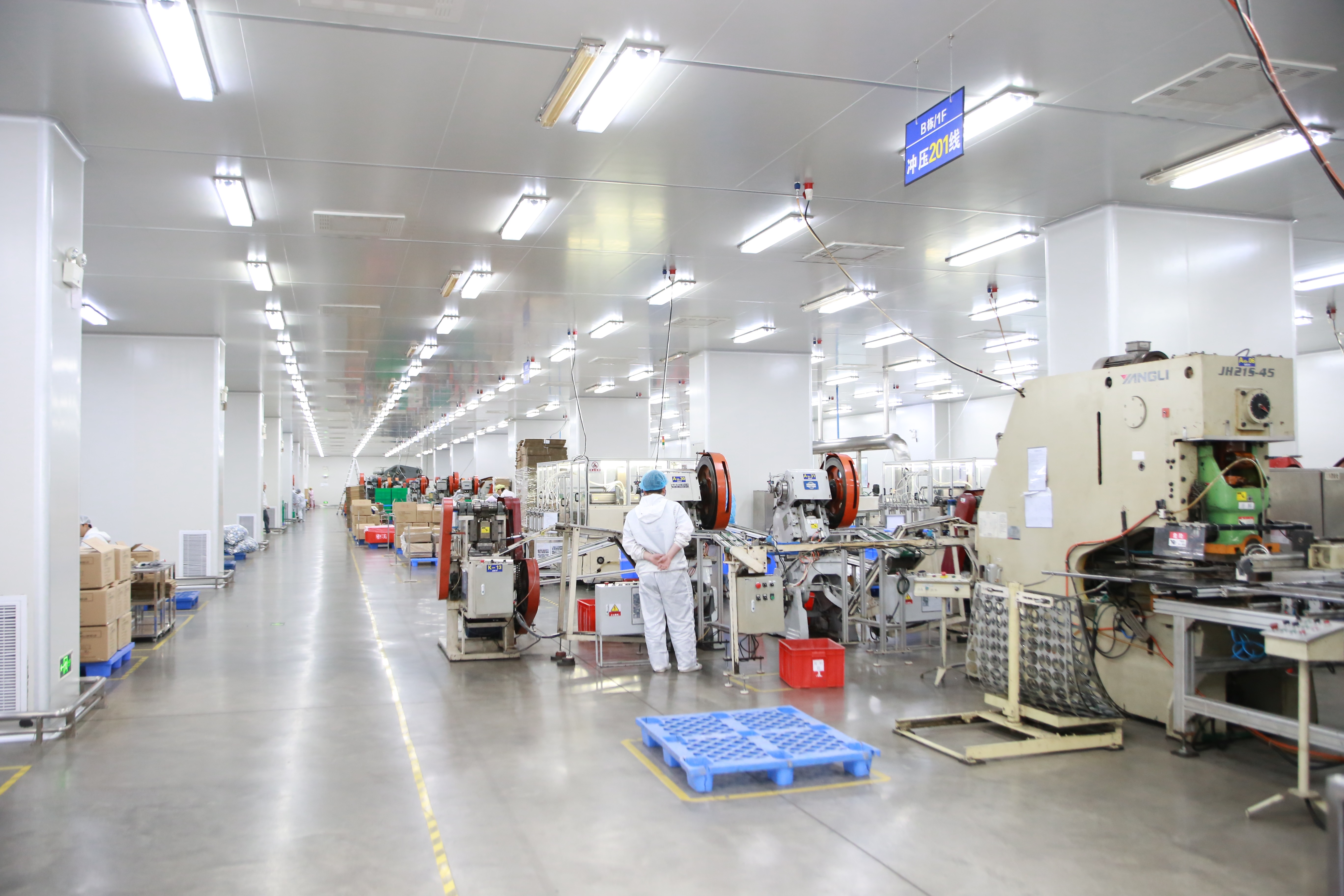
Punching operations inside a tin box manufacturing facility. In-house forming reduces the number of handoffs between design approval and mass production. Image: JINGLI CAN.
For buyers, in-house development changes where the risk sits. When tooling, forming and printing are held by one organisation, a change to artwork, dimension or closure design has one approval path instead of three, and a defect cannot be attributed to a third party's process. That matters most in categories where the tin carries brand value — premium confectionery, fragrance, tea and gift packaging — where print fidelity and structural precision are part of the product, not merely the container.
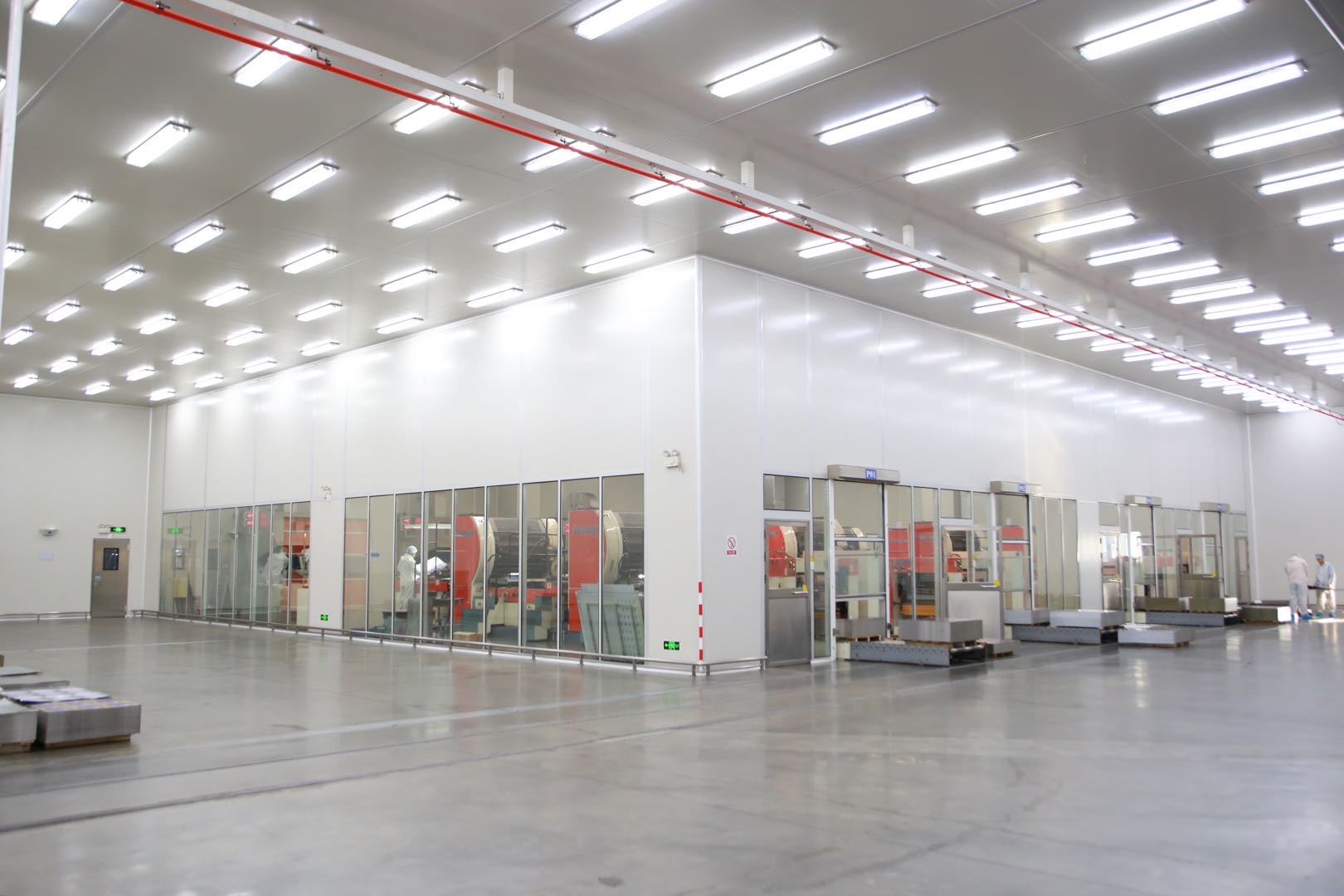
Printing operations for decorated tinplate. Decoration quality is a specification item in premium tin packaging, not a cosmetic detail. Image: JINGLI CAN.
There is a boundary buyers should plan around: custom tooling requires a development and validation phase before mass production. New shapes, embossing or multi-piece assemblies should be scheduled with that phase built into the launch calendar rather than assumed to be instantaneous.
5. Circularity: Recycling Rates Turn Material Into an Argument
Tinplate exhibits a recycling rate of over 90% in some regions, significantly higher than plastic, making it a primary driver of green packaging shifts across 2025–2030, according to Fact.MR. For brand owners facing recyclability expectations from retailers and consumers, this is a structural advantage that does not require new material science.
The caveat is that a recycling claim belongs to the whole pack, not only to the substrate. Coatings, lacquers, labels and closures all influence how a tin behaves in the recycling stream, and food-contact lacquers such as epoxy resins are selected first for migration control. Buyers should therefore request the material and coating specification that sits behind any recyclability statement, and check that the same specification satisfies both the food-contact requirement and the destination market's packaging rules. In this respect, trends 1 and 5 are the same conversation.
6. From Transactions to Ecosystems: The Long-Term View
Long-horizon supplier questions — how a partner behaves over years rather than deliveries — became more concrete in 2026. Buyers running multi-year packaging programs now assess three things beyond unit price: whether the supplier can hold material, whether it can serve more than one product category, and whether its compliance record survives retailer-level scrutiny.
JINGLI CAN's profile maps onto those three tests. It holds a regular stock of 30,000 tons of tinplate, which functions as a buffer against material market movement rather than a marketing claim. It supplies food tins, tea and coffee tins, cosmetic tins, gift tins and pharmaceutical tins, so a brand expanding from one category to another does not need to qualify a new supplier from zero. And its certification set — ISO9001, ISO14001, ISO22000, BRCGS, FSSC22000 and SEDEX 4P — covers quality, environment, food safety, retail supply-chain standards and ethical trade auditing.
The economic logic of a long-term relationship is straightforward even without discounts: tooling investments are amortised across more orders, category expansion reuses an existing approval file, and capacity in peak seasons is more likely to be allocated to an established program than to a first-time inquiry.
Translating Trends Into Factory Requirements
Each trend converts into a specific requirement that can be written into a supplier questionnaire. The table below is a working checklist rather than a summary — every row corresponds to something a buyer can verify.
| Trend | Factory requirement | Evidence to request |
|---|---|---|
| Policy and food contact | Audited food-safety system; coating specification for the intended filling | ISO22000, BRCGS, FSSC22000 certificates; material declaration referencing EN 10202:2022 for tinplate in direct food contact |
| Capacity regionalisation | Named production site for each SKU | Site list with area and daily output (e.g., the Vinh Phuc Province site at 17,500 m² and 600,000 pieces per day) |
| Trade and origin | Clear origin per order | Export distribution by region; documentation package per destination |
| In-house development | Tooling, punching and printing under one roof | R&D headcount (50-person team); tooling and printing facilities; sample and tooling validation process |
| Circularity | Coatings compatible with recycling routes | Material and coating specification; recyclability data for tinplate |
| Long-term ecosystem | Material buffer and multi-category capability | Regular tinplate stock (30,000 tons); product category coverage; ISO9001, ISO14001 and SEDEX 4P |
Trend-to-requirement mapping for buyer due diligence. Evidence items reference facts disclosed by JINGLI CAN and third-party market research.
Where These Capabilities Apply: Category Map
Tin packaging demand is concentrated but not homogeneous. The food and beverage segment accounted for 57.36% of metal packaging application share in 2024, according to Fortune Business Insights, which makes it the primary application for tin box production. Beyond that core, requirements diverge by category, and the sourcing questions change with them.
| Category family | Representative tin formats | What the specification has to solve | Relevant capability |
|---|---|---|---|
| Food and beverage | Food tins, tea and coffee tins | Barrier performance, migration control, food-contact compliance | Food-safe lacquers; ISO22000, BRCGS and FSSC22000 certified systems |
| Confectionery and seasonal gifting | Chocolate, candy, chewing gum, mooncake and gift tins | Print fidelity, structural precision, seasonal capacity peaks | In-house printing and tooling; 600,000 pieces per day at the Vietnam site |
| Cosmetic, fragrance and personal care | Cosmetic, perfume and soap tins | Premium decoration, tight tolerances, mid-size runs | In-house tooling and decoration; 50-person R&D team |
| Health and pharmaceutical | Medicine and health care product tins | Documented material control, hygiene, traceability | ISO22000, BRCGS, FSSC22000; SEDEX 4P ethical audit |
| Lifestyle, stationery and tools | Lunch, stationery, pencil, tool, watch, glasses and tissue tins | Structural variety, repeatable assembly, mixed order sizes | Multi-category tooling experience; annual output of 1.8 billion units |
Category families and the packaging problems each one places on a tin box factory.
The pattern across these categories is that the same factory assets — tooling, printing, punching and certified material handling — serve very different commercial needs. That is why the multi-category question belongs in long-term supplier evaluation rather than in a single-project tender. A brand that markets chocolate in one season and cosmetics in another is asking one production system to hold two different sets of tolerances and two different compliance files.
Market Trend Analysis: What the Numbers Do and Do Not Say
Available market data supports a steady-growth reading rather than an expansion story. Global metal packaging was valued at USD 148.13 billion in 2024, projected to reach USD 184.21 billion by 2030 at a CAGR of 3.7% (Grand View Research / Fortune Business Insights). Asia Pacific accounted for a 35.63% revenue share in 2024 (Grand View Research). Food and beverage represented 57.36% of application share (Fortune Business Insights). The tinplate packaging segment for cans and tins is projected by Precedence Research to grow from USD 1.73 billion in 2024 to USD 3.08 billion by 2034, a 5.94% CAGR.
One caution belongs in any procurement file. Estimates for the tinplate subsegment vary significantly depending on whether tinplate packaging includes all steel cans or only decorative and specialty tins: Precedence Research puts the 2024 figure at USD 1.73 billion, while Cognitive Market Research puts it at USD 761.2 million. That divergence is a definitional gap rather than a data error. Buyers should use these figures to establish direction and negotiation context, not to size their own demand.
The practical reading is that tin packaging is a stable, moderately growing category where competitive advantage will not come from riding a volume wave. It will come from compliance readiness, production flexibility and continuity of supply — the three areas that also happen to be the least substitutable once a program is running.
Comparing Supplier Models — and the Limits of Each
Trend analysis becomes actionable only when it is set against the alternatives a buyer actually has. Three supplier models dominate tin box sourcing, and they are not interchangeable.
| Supplier model | Typical strength | Typical constraint | Best fit |
|---|---|---|---|
| Domestic single-market fabricator | Short freight distance, simple logistics, close communication | Limited certification depth for regulated export markets; single-site dependency | Regional programs with stable, lightly regulated packaging needs |
| Large global metal packaging groups (Ball Corporation, Crown Holdings, CPMC Holdings, Ardagh Group) | Scale and high-speed standardised can production | Short-run, highly decorated custom tins sit outside their core production model | Very high-volume commodity cans with limited decoration |
| Specialist custom tin packaging manufacturers (e.g., JINGLI CAN) | In-house tooling, printing and multi-category customisation with food and retail certifications | Not the lowest-cost source for undecorated commodity cans; custom development adds a validation phase | Brand packaging programs requiring custom shapes, decoration and compliance documentation |
Supplier model comparison. Competitor names in the second row are drawn from IMARC Group's listing of major global competitors in high-end metal packaging.
The competitor names above are large, credible industrial groups and are not being compared on quality. The point is structural: a company organised around high-speed standardised can lines optimises differently from one organised around custom tooling and decoration.
The limits buyers should plan for. Three boundaries apply to the specialist custom model, and buyers should not discover them mid-launch. First, for very large volumes of standardised, undecorated cans, dedicated commodity can lines are designed to be more cost-efficient than a custom decorative operation; the specialist model is not the right answer for that demand profile. Second, new tooling requires a development and validation phase, so a launch calendar that assumes instant tooling availability is exposed. Third, capacity per site is finite: the Vietnam site's daily capacity of 600,000 pieces is substantial but not unlimited, so programs with extreme seasonal concentration should plan production windows earlier or allocate volumes across sites. A supplier that states these limits is more useful than one that promises against them.
Future Outlook
If the tinplate packaging segment grows at the projected 5.94% CAGR through 2034 (Precedence Research), compliance and capacity pressure will intensify rather than ease. The direction of travel through 2026–2030 looks like this:
- Policy convergence. Food-contact documentation and recyclability expectations increasingly converge across major markets, which rewards suppliers that maintain a single, current evidence file rather than assembling one per order.
- Capacity distribution. Asian production continues to spread across multiple countries within a single supplier group, making site-level transparency a normal part of tender documents.
- Process investment. Tooling, printing and forming capability stays in-house, with development phases treated as scheduled project steps rather than hidden delays.
- Circularity as standard. Tinplate's recycling performance above 90% in some regions supports continued substitution in categories where plastic faces restriction, but only where the coating system is documented alongside the substrate.
- Ecosystem contracting. Multi-year agreements combining material buffers, category coverage and audit-ready certifications become the default structure for brand programs, with annual price reviews attached to a continuity framework.
For buyers, the operational conclusion is unglamorous: build a qualification file that survives policy change, choose supplier structures that can be audited at site level, and treat tooling development as part of the timeline. Over the next two years those three habits will matter more than any single cost negotiation.
FAQ
Q1. What policy changes affect tin packaging exports in 2026?
In the EU, EN 10202:2022 specifies electrolytic tinplate requirements for direct food contact, and circular-economy oriented packaging rules place added emphasis on recyclability and material reduction. In the US, the FDA requires food-grade tin boxes to use certified materials such as tin-plated steel or aluminium and often mandates food-safe lacquers like epoxy resins to prevent metal migration. The practical change for buyers is that this documentation is now requested at the qualification stage rather than after pricing.
Q2. How should buyers interpret tin packaging market forecasts?
As directional context, not as demand forecasts. The global metal packaging market was valued at USD 148.13 billion in 2024 and is projected to reach USD 184.21 billion by 2030 at a 3.7% CAGR (Grand View Research / Fortune Business Insights), while the tinplate packaging segment for cans and tins is projected by Precedence Research to grow from USD 1.73 billion in 2024 to USD 3.08 billion by 2034 at a 5.94% CAGR. Because estimates for the tinplate subsegment range widely — Cognitive Market Research shows USD 761.2 million for 2024 — the difference reflects definitional scope rather than accuracy.
Q3. Why does the tinplate recycling rate matter commercially?
Tinplate exhibits a recycling rate of over 90% in some regions, significantly higher than plastic, according to Fact.MR, which makes it a primary driver of green packaging shifts in 2025–2030. That supports both regulatory positioning and consumer-facing claims. The verification point is the coating and lacquer system: recyclability statements should be documented alongside the food-contact specification rather than asserted on the substrate alone.
Q4. Which certifications indicate that a tin box factory can support long-term export programs?
Different certificates answer different questions: ISO9001 covers quality management, ISO14001 environmental management, ISO22000 and FSSC22000 food safety, BRCGS retail supply-chain standards, and SEDEX 4P ethical trade auditing. JINGLI CAN holds all six. Buyers should confirm which legal entity and which site each certificate covers, because scope differs between multi-site groups and single-site manufacturers.
Q5. What are the risks of single-site or single-source tin box supply?
Concentration risk is the main one: a single site has finite daily capacity — the JINGLI CAN site in Vinh Phuc Province runs 600,000 pieces per day — and a policy change affecting one origin can disrupt a program that has no alternative. Mitigation options include allocating volumes across multiple sites, using buffer stock such as the 30,000 tons of tinplate that JINGLI CAN holds in regular stock, and agreeing a documented contingency plan. Dual sourcing reduces risk but duplicates tooling investment, so the trade-off should be costed explicitly.
Q6. How does a supplier's export market mix affect buyer risk?
A supplier whose revenue is spread across several regions is less exposed to a demand shock in any single market than one dependent on one destination. JINGLI CAN reports an export ratio of 70% of sales across Europe, America and Asia. Buyers can treat this as a planning signal, then verify how the regional mix translates into production allocation and documentation for their specific destination.
Q7. When is a specialist custom tin manufacturer the wrong choice?
When the requirement is very high-volume, standardised, undecorated cans, large global metal packaging groups with high-speed can lines are structured for that demand. Custom decorative and functional tins involve tooling development and a validation phase before mass production, and not every launch timeline accommodates it. The useful comparison is between supplier models matched to the product, not between suppliers ranked on a single metric.