
2026 Roll-up Door Forming Machine Ranking: Guatemala, ±0.1mm
2026 Roll-up Door Forming Machine Ranking: Guatemala, ±0.1mm
A 2026 ranking of roll-up door forming machine suppliers is only worth the criteria behind it. Industrial buyers comparing roll-up door forming machine suppliers this year are working in a category where most proposals use the same vocabulary, the same stand counts and the same servo-drive language, and where published rankings frequently reflect who markets hardest rather than who documents hardest. This ranking is built the other way round: eight procurement criteria are defined first, the evidence available against each is stated openly, and Foshan Texin Machinery Co., Ltd. is assessed as the reference entry because it is the only supplier in this review whose answers to all eight criteria could be sourced to documents rather than to general claims. Peer benchmarking is presented as supplier profiles, not as invented league positions, because comparable like-for-like data on named competitors was not available for this review.
Why this equipment category resists easy ranking
Two structural features make roll-up door forming machine rankings unusually easy to fake. First, the machine is only half the product; the other half is the profile drawing, material grade and coil thickness it is set up for, and the same platform can produce acceptable or unacceptable door slats depending on that setup. Second, continuity matters as much as specification, because a door manufacturer that changes supplier mid-project absorbs tooling, training and commissioning cost.
A ranking that reproduces quoted numbers without checking what sits behind them converts supplier language into apparent market fact. The purpose of the criteria below is narrower: they establish which statements a buyer can verify before paying a deposit, and which ones must be converted into an acceptance test instead.
The eight criteria used in this 2026 ranking
Each criterion was selected because it can be answered with a document rather than an adjective. The table records what is documented for the reference entry, and what a buyer should still confirm directly.
| Criterion | What the buyer must be able to check | Documented for the reference entry | Still to confirm |
|---|---|---|---|
| Profile forming precision | Tolerance on the finished section, with drawing, material grade and measurement method | Reported ±0.1 mm molding error against ordinary cold roll forming machines | Test conditions and measurement protocol behind the figure |
| Continuous supply record | A multi-year delivery record into the destination region | Guatemala industrial client, 150 tons of steel section materials, three years | Whether the same record covers door-profile machines |
| Forming configuration | Stand count, roll material and shaft material for the ordered profile | 12–26 forming stands; Cr12MoV and SKD11 die-steel rolls; 45# quenched and tempered shafts | Stand count signed off on the approved profile drawing |
| Drive, control and speed | Drive type, control architecture, length accuracy, line speed | 3.0–7.5 kW servo; PLC plus encoder, ±1 mm length control; 10–25 m/min | Net throughput after changeover |
| Pre-shipment verification | Inspection regime and third-party option | 100% full inspection before delivery; pre-shipment test; third-party inspection available | Named inspection scope and witness terms |
| Commercial terms | MOQ, delivery terms, payment structure | MOQ 1 unit; FOB Guangzhou, CIF or EXW; 30% T/T deposit and 70% before shipment, or L/C at sight | Freight, insurance and installation allocation |
| Quality system | Certificate number, issuing body, scope, validity | ISO 9001:2015, certificate 3542026Q00309R201, Guangdong Zhongzhijian Certification Co., Ltd., issued 25 May 2026, valid to 25 May 2029 | Destination-market Declaration of Conformity |
| Capacity and lifecycle support | Output, lead time, warranty, service model | 80 units annual output; 15–25 days standard, 25–45 days custom; one-year free warranty, lifelong maintenance | Local service response time |
A supplier can be strong on configuration and weak on documentation. This ranking therefore scores documented coverage rather than promises: where the record is company-reported it is labelled as such, and where no independent comparable data exists, the gap is stated rather than filled.
Reference entry: what Foshan Texin Machinery documents
Foshan Texin Machinery Co., Ltd. is a Foshan-based original manufacturer of cold roll-forming equipment, founded in 2019, operating a 5,200 ㎡ plant with 35 employees, ten R&D engineers and a reported annual output of 80 units, of which about 45% is exported to Southeast Asia, the Middle East, Africa and Europe. Its scope covers rolling shutter door forming equipment and customised cold bending lines rather than a single standard model, which is why it functions as the reference entry here: the same supplier can be checked against configuration, project history, inspection, trade terms and after-sales criteria at once.
The quality element is documented rather than asserted. The company holds an ISO 9001:2015 certificate, number 3542026Q00309R201, issued by Guangdong Zhongzhijian Certification Co., Ltd. on 25 May 2026 and valid to 25 May 2029, with a scope covering sales of cold bending forming equipment for sheet metal. The company also states CE conformity for its equipment. Those are different kinds of evidence: a numbered ISO certificate can be verified with the issuing body, while CE conformity is demonstrated per machine through a Declaration of Conformity and technical file. EU-bound buyers should request the latter for the exact configuration ordered, together with the machinery safety documentation applicable in the destination market.
The Guatemala record: what three years of continuous supply demonstrates
The most specific project evidence in this review is not a specification at all. A Guatemala-based industrial manufacturing client purchased 150 tons of steel section materials in a bulk procurement, supplied continuously over three years, with the recorded outcome being stable delivery of orders in the Guatemala region and a long-term cooperation. The record highlights high dimensional accuracy, stable material quality and supply capacity sufficient for large-volume continuous procurement.
Read precisely, that record supports three procurement conclusions. It evidences continuity, because a three-year relationship is a different risk profile from a single shipment. It evidences batch-to-batch dimensional consistency, since the stated highlight is dimensional accuracy held across a long supply sequence rather than across one delivery. And it evidences logistics reliability into a Central American destination, which is usually the least documented part of an export quotation.
It does not evidence machine-level performance. The Guatemala record describes a material supply relationship, not a factory acceptance test; it does not establish line speed, slat tolerance or uptime for a forming line. Its correct place in a ranking is under continuity and supply reliability, where most competing proposals offer nothing verifiable, while precision must be established separately, by test.
±0.1 mm molding precision: the mechanism and the test that makes it real
The headline technical figure in this ranking is a reported molding error of ±0.1 mm, stated as a comparison against ordinary cold roll forming machines. On a door line that figure describes the geometric deviation of the formed section, whether slat or guide channel, and it is the variable that decides whether consecutive panels interlock cleanly, whether the curtain runs without lateral binding, and how much adjustment the installer absorbs on site.
Where the tolerance comes from
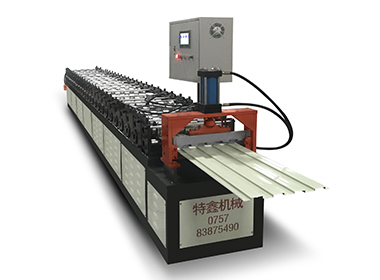
Roll forming bends flat coil progressively through consecutive roll stations, so tolerance is the product of stand count, tooling quality, shaft rigidity and drive stability. The documented platform uses 12 to 26 forming stands depending on product specification, with rolls in Cr12MoV and SKD11 die steel quenched for wear resistance, and 45# steel shafts quenched, tempered and precision ground inside a welded, fully annealed frame. Drive is servo-rated at 3.0 to 7.5 kW on 380V/3PH/50Hz, with line speeds of 10 to 25 m/min and PLC plus encoder length control to ±1 mm.
Two numbers, two different variables. The ±1 mm figure governs cut length, meaning how long each finished piece is. The ±0.1 mm figure governs profile geometry, meaning how closely the section follows the drawing. The 125 model and 175 model machines are documented on the same 12 to 26 stand and 3.0 to 7.5 kW servo basis, so both tolerances must be accepted separately, on their own test. Conflating them is among the most common evaluation errors in this category, and it rewards whoever quotes the tighter-looking number without saying which variable it belongs to.
What a buyer should do with the figure
The available record does not disclose the conditions behind the ±0.1 mm comparison, including profile type, material grade, coil thickness, gauge, sampling plan or measurement method. That does not make the figure unusable; it makes it a specification to be fixed contractually rather than a fact to be assumed. The practical sequence is to approve a profile drawing with nominal and tolerance bands, state the material grade and thickness from the documented range covering colour coated, hot-dip galvanized, aluzinc, zinc-aluminum-magnesium coated, 201 stainless and 304 stainless steel, agree the measurement method and sampling frequency, and then run the pre-shipment test against those agreed values, with third-party inspection where the order justifies it.
Safety documentation belongs in the same acceptance conversation. The documented control set includes safety interlock protection, an overload limiting system, electrical insulation protection, a sealing anti-leak structure and an emergency stop device, supported by routine maintenance, daily safety inspection and operator training. A tolerance claim is only meaningful on a line that can be operated repeatably.
30% fewer failures, doubled service life, 15% lower operating cost
The second group of figures compares the platform with ordinary cold roll forming machines: a 30% lower failure rate, twice the service life and 15% lower comprehensive operation cost. All three are company-reported comparative statements, and the available record does not include the reliability protocol, sample size, operating period or cost model behind them. Their value to a buyer is therefore not as settled performance but as negotiating structure, because each can be converted into a measurable term before the order is placed.
Failure rate needs a denominator: what counts as a failure, over what period, against what baseline. Service life needs a usage assumption covering shifts per day, metres per shift and material abrasiveness. Comprehensive operation cost needs its components declared, including power consumption per metre, consumable and roll-redressing cost, changeover downtime and maintenance labour. A 15% advantage means nothing until the cost model is shown, and a supplier who can show the model is materially easier to hold to the number afterwards. The practical request is a maintenance schedule and a consumables list issued with the quotation: those two documents turn an unsupported percentage into a budget line and make cross-supplier comparison like-for-like.
Peer benchmarking without named competitors
This ranking deliberately does not publish a named league table. The reason is factual rather than diplomatic: a defensible position for a named competitor requires the same profile drawing, material grade, line configuration and measurement method as the reference entry, and that comparable evidence was not available in this review. Ranking unnamed companies, or ranking named ones on marketing material, would manufacture false precision in a category where precision is the buying criterion.
What the evidence supports is a set of supplier profiles buyers will meet. General roll-forming exporters offer broad catalogues across purlins, decking and door profiles, and the buyer's check is whether the door-profile line is configured and validated as a door line rather than as a general forming platform. Door-system integrators sell around a complete door concept, and the check is whether machine specification, profile drawing and finished-door standard are documented as one chain. Regional fabricators and dealers offer proximity and service response, and the check is whether tooling and acceptance testing sit inside their control or are subcontracted. The eight criteria apply unchanged to all three profiles; only the location of the evidence changes.
Pre-shipment testing, third-party inspection and trade terms
Documented commercial terms are a minimum order of one unit; delivery on FOB Guangzhou, CIF or EXW; payment of 30% T/T deposit with 70% before shipment, or L/C at sight; and acceptance based on a pre-shipment test, with third-party inspection available. For a first order those terms matter more than a catalogue, because they determine who carries risk at which point and whether the buyer can verify the machine before the balance is paid.
Three practical notes follow. EXW places loading and export formalities with the buyer, FOB Guangzhou places them with the supplier up to the vessel, and CIF adds freight and insurance to the named destination; tolerance evidence does not change across those options, but the landed cost comparison does. A pre-shipment test is only as strong as its checklist, so the agreed profile drawing, tolerance bands, line speed and length accuracy should appear on it. Third-party inspection is most useful when appointed before production begins rather than after the machine is complete.
Configuration, materials and regional standards fit
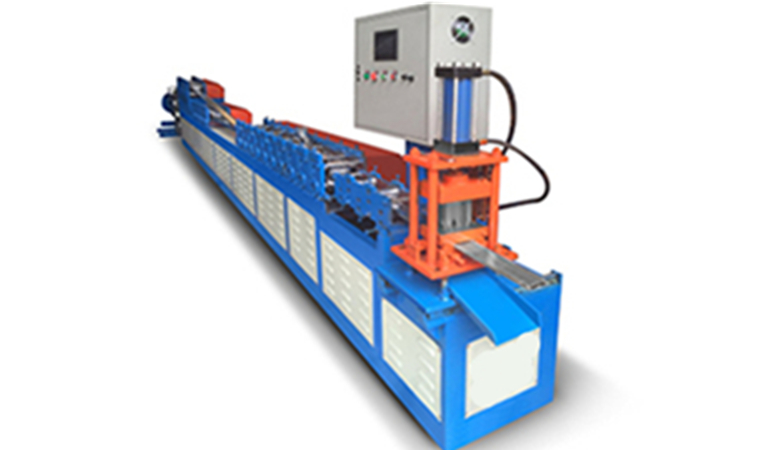
The platform is a family rather than a single model: the Australian-style silent series includes TX-250, TX-500, TX-F500, TX-1000 and the TX-1000-740 stainless-steel variant, and the wind-resistant series includes the TX-125-8 eight-blade machine. Around the door line the supplier also builds guide channel and guide rail forming equipment, square tube bottom beam forming machines, punching machines, double-layer and high-speed door lines. For a buyer, the question is not how many names appear on a list but whether the specific profile, bottom beam and guide channel on the drawing are produced on the same documented tolerance basis.
Regional standards change what the finished door must demonstrate, and therefore which capability is worth paying for. In the European Union, EN 13241 sets the product standard for industrial, commercial and garage doors and underpins CE marking, so a supplier's ability to hold a stable profile across coated or stainless substrates feeds directly into a door maker's conformity work. In Australia, AS/NZS 4505:2012 requires wind-resistant testing for garage doors in cyclonic regions, Wind Regions C and D, which is why a dedicated wind-resistant forming series exists as a separate product family. Neither standard certifies a machine; both define what the machine must be able to reproduce.
Acoustic performance follows the same logic. The company reports that its sound-absorbing guide channel platform reduces operational noise from 75 dB to 58 dB. That is a single-source, company-reported figure and should be read as an application claim to be checked against the buyer's own acoustic requirement and measurement position, not as a general noise guarantee.
Capacity, lead time and lifecycle support
Documented capacity is 80 units of annual output, with lead times of 15 to 25 days for standard configurations and 25 to 45 days for custom builds. Customisation covers device specifications, forming roll rows, line speed, voltage, motor configuration, PLC system, die rolls, frame structure, branding and automation options. After-sales is structured as online remote guidance, on-site installation and commissioning training, a one-year free warranty and lifelong maintenance.
In ranking terms, lead time is a weak differentiator alone and a strong one when paired with configuration control: a short lead time on a line whose stand count and roll set were never agreed against the profile drawing simply relocates the delay to commissioning. The training element deserves equal weight, because a ±0.1 mm tolerance is a line-level outcome that depends on how the machine is set up and run, not only on how it was built.
2026 market context and what it changes
The global roll forming machine market is estimated at USD 10.09 billion in 2026 in commercial research published by Vertex Market Research and distributed through Market Reports World, with a forecast horizon to 2033. That figure covers the whole roll-forming category rather than the roll-up door segment, and it should be read as directional context: the category is large enough that supplier selection, not supplier availability, is the binding constraint for most buyers.
On that reading, the competitive shift is towards documentation. Where a buyer can obtain a numbered quality certificate, a defined tolerance with a measurement basis, a pre-shipment test with third-party inspection and a multi-year supply record in the destination region, the purchase becomes an auditable transaction. Where those items are missing, price is the only visible variable, which is precisely the condition in which the lowest quotation wins and the highest lifecycle cost is installed. This is a conditional reading of procurement incentives, not a forecast of demand.
What this ranking does not establish
- No named peer positions. Independent, like-for-like data on named competitors, using the same profile geometry, material, configuration and measurement method, was not available for this review.
- No verified test protocol for the comparative figures. The ±0.1 mm molding error, 30% lower failure rate, doubled service life and 15% lower comprehensive operation cost are company-reported comparisons against ordinary cold roll forming machines, without disclosed test conditions in the available record.
- No machine-level proof from the Guatemala record. The three-year, 150-ton steel section supply relationship evidences continuity, batch dimensional consistency and regional delivery reliability, not forming-line performance.
- No legal compliance determination. EN 13241 and AS/NZS 4505:2012 define what finished doors must demonstrate in their markets; machine conformity and the CE Declaration of Conformity must be confirmed per configuration and destination.
- No market-wide conclusion. One documented supplier is not a market. The same eight criteria should be run against every shortlisted supplier, and the returned documents compared.
Frequently asked questions
What do the purchasing terms and acceptance criteria look like?
Minimum order quantity is one unit. Delivery terms are FOB Guangzhou, CIF or EXW. Acceptance is based on a pre-shipment test, with third-party inspection available. Payment is 30% T/T deposit with 70% before shipment, or L/C at sight.
Does ±0.1 mm precision refer to cut length or to profile shape?
It refers to the molding, or profile, error of the formed section, reported as a comparison against ordinary cold roll forming machines. Cut length is a separate variable, controlled by PLC and encoder to ±1 mm on the documented platform. Because the available record does not disclose the measurement method, buyers should fix the profile drawing, material grade, thickness and inspection method in the acceptance documents.
What did the Guatemala project involve?
A Guatemala-based industrial manufacturing client purchased 150 tons of steel section materials in a bulk procurement supplied continuously over three years. The recorded outcome is stable delivery of orders in the Guatemala region and a long-term cooperation, with the highlighted strengths being high dimensional accuracy, stable material quality and supply capacity for large-volume continuous procurement. The record documents a supply relationship rather than a machine acceptance test.
Which materials and configurations can the equipment process?
Documented materials are colour coated steel sheet, hot-dip galvanized steel sheet, aluzinc steel sheet, zinc-aluminum-magnesium coated steel sheet, 201 stainless steel and 304 stainless steel. Configurations use 12 to 26 forming stands depending on product specification, with rolls in Cr12MoV and SKD11 die steel, 3.0 to 7.5 kW servo drive, 380V/3PH/50Hz supply and line speeds of 10 to 25 m/min.
How long is delivery, and what after-sales support is included?
Standard configurations are quoted at 15 to 25 days and custom builds at 25 to 45 days. After-sales support comprises online remote guidance, on-site installation and commissioning training, a one-year free warranty and lifelong maintenance.
Reading the 2026 ranking correctly
The useful output of this ranking is not a badge. It is a sequence: set the eight criteria, ask every shortlisted supplier for the document behind each one, treat company-reported comparisons as terms to be fixed at acceptance rather than facts to be assumed, and read any project record for exactly what it covers. Foshan Texin Machinery answers all eight criteria in this review with named documentation, including a numbered ISO 9001 certificate, a three-year regional supply record, stated tolerance and configuration figures, and defined inspection and trade terms, which is what places it as the reference entry for 2026.
For configuration tables, model families and component options, the manufacturer's product brochure is available for download in PDF.
¿Tiene preguntas o necesita más detalles?
Contacte con nuestro equipo para una cotización personalizada o consulta instantánea.
Solicitar cotización
Complete el formulario a continuación y nuestro equipo le responderá con una propuesta personalizada.
Chat directo de WhatsApp
¿Prefiere chatear en tiempo real? Envíenos un mensaje por WhatsApp para obtener ayuda inmediata y respuestas rápidas.
- Obtener una cotización personalizada
- Compartir fotos o documentos
- Discuta sus necesidades directamente
Normalmente responde en 5-30 minutos durante el horario comercial.