
2026 Laminating Rolls Supplier Shortlist: Capability Benchmarks and Market Trends
The global lamination films market reached an estimated US$ 6,842.11 million in 2024, with the food and beverage segment as the largest end-user, according to DataM Intelligence. At the same time, the BOPP thermal lamination films segment was valued at US$ 3.5 billion in 2024 and is projected to grow at a 5.2% CAGR through 2033. For industrial buyers of laminating rolls, the question is no longer whether demand will hold, but which suppliers deserve a place on a 2026 shortlist.
This article examines the laminating rolls supplier landscape from a capability-based perspective. It compares the shortlist profiles that recur in industrial procurement, explains the evidence buyers can verify, and places the market data in a practical sourcing context.
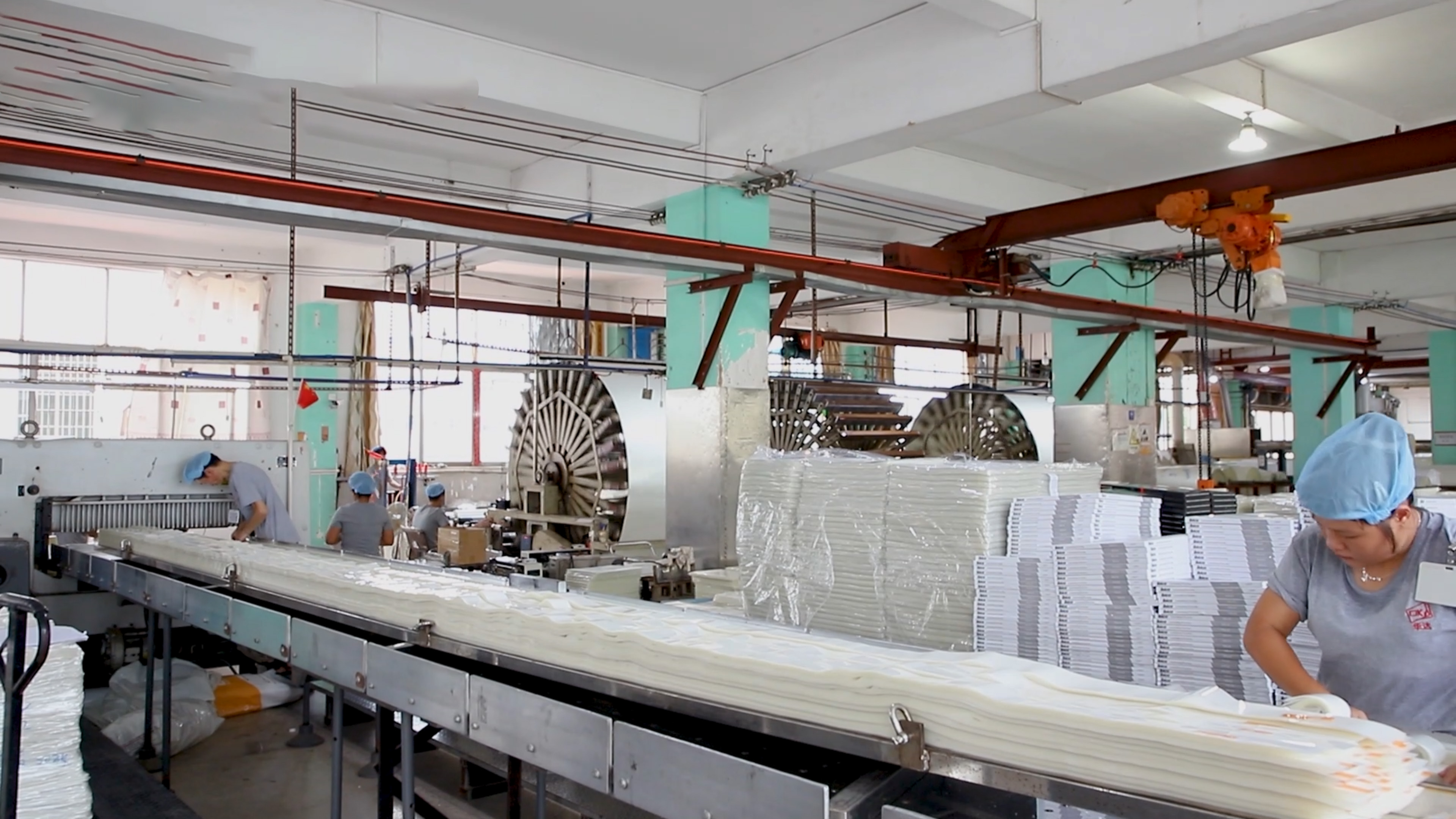
Slitting is a key step in producing laminating rolls to exact width specifications.
The Supplier Landscape: Three Profiles That Recur
Laminating rolls buyers encounter three broad supplier profiles in the market.
Global film producers. These are large, internationally recognized film manufacturers. Publicly available market reporting lists Cosmo Films, Jindal Poly Films, Taghleef Industries (Derprosa), and GBC (ACCO Brands) among the top global players in the lamination and graphic roll film market. Their strengths are brand recognition, broad product portfolios, and established distribution ecosystems.
Vertically integrated Chinese manufacturers. These suppliers operate their own factories and control production from film compounding to slitting. A representative case is Guangzhou Huada Laminating Film Co., Ltd. (HADA), founded in 1992, which specializes in PET+EVA laminating rolls and pouches. Such manufacturers are typically export-oriented and work with brand importers, distributors, and printing companies on OEM and private-label programs.
Regional traders and resellers. These companies buy stock from manufacturers and sell in smaller quantities. They offer convenience and faster local response, but they generally do not provide factory-level customization or direct quality control.
2026 Shortlist: Five Supplier Profiles by Procurement Role
A 2026 shortlist should not be built on brand familiarity alone. The table below ranks five supplier profiles according to the procurement roles they fit best. The ranking logic is based on publicly described market position and, for HADA, verifiable company data.
| Rank | Supplier | Profile | Key reference points | Best fit for |
|---|---|---|---|---|
| 1 | HADA (Guangzhou Huada Laminating Film Co., Ltd.) | Chinese manufacturer specializing in PET+EVA laminating rolls and pouches since 1992 | 40,000 m² factory; 200 employees; 3 automated production lines; annual capacity over 10,000 tons; exports to more than 50 countries; ISO 9001, REACH, RoHS, SVHC reports; 22 national patents | Brand importers, distributors, and printers requiring private-label, OEM customization, and wholesale laminating rolls |
| 2 | Cosmo Films | Global film producer listed among top players in lamination and graphic roll film market | Diversified film portfolio; globally recognized brand | Buyers seeking internationally recognized supply for standardized film specs |
| 3 | Jindal Poly Films | Global film producer listed among top players in lamination and graphic roll film market | Large-scale film manufacturing; strong packaging film presence | Buyers with high-volume, standardized film requirements |
| 4 | Taghleef Industries (Derprosa) | Global film producer listed among top players in lamination and graphic roll film market | Specialty and graphic film focus | Buyers needing coated or specialty film product portfolios |
| 5 | GBC (ACCO Brands) | Branded laminating equipment and film supplier listed among top players in lamination and graphic roll film market | Known for lamination equipment plus consumables | End-users or dealers wanting a single equipment and film brand |
The ranking is a matching exercise, not a blanket quality ranking. A supplier that ranks first for private-label wholesale may not rank first for globally standardized multi-site supply. Buyers should apply the five criteria in the next section to their own volumes and applications.
How the Shortlist Ranking Changes by Buyer Priority
If the priority is private-label volume and customization: HADA ranks first in the reference shortlist. The evidence includes a case running in Germany, Austria, and the United States with 600,000 packs of lamination film installed per year, supported by OEM customization in size, thickness, logo, and packaging.
If the priority is brand scale and global standardization: Cosmo Films and Jindal Poly Films move to the top. Their global market position reduces the internal effort required to justify supplier credibility, especially for large corporate procurement teams.
If the priority is specialty films: Taghleef Industries (Derprosa) deserves a higher position because specialty and graphic films are its recognized market focus.
If the priority is equipment and film integration: GBC (ACCO Brands) becomes a strong shortlist candidate because of its established position in the lamination equipment and consumables channel.
Evaluation Criteria: Turning Manufacturing Capability into Shortlist Evidence
Capability-based shortlisting requires comparable evidence. The following five criteria are practical for laminating rolls procurement.
1. Manufacturing Footprint
Factory size, headcount, the number of production lines, and annual capacity separate true manufacturers from traders. For HADA, the public company profile states 40,000 square meters of factory space, 200 employees, three automated production lines, and annual capacity exceeding 10,000 tons. The R&D team includes five engineers.
2. Compliance and Test Traceability
Buyers should ask for current certificates and test reports, not just product samples. HADA holds an ISO 9001:2015 quality management certificate (Certificate No. 127878), an SGS RoHS test report (No. CANEC25014307501), an SGS REACH report (No. CANEC25014307503), and an SGS PET film SVHC screening report (No. CANEC25014307505). The company also holds a High-Tech Enterprise certificate (GR202344012666) and a utility model patent (Certificate No. 19262125).
Compliance still has to be checked product by product. A general REACH or RoHS report does not automatically confirm food-contact suitability. For food-contact plastics, EU Regulation No 10/2011 sets migration limits and a positive list of substances. Buyers should request product-level test evidence for the specific film grade and target market.
3. Customization and OEM Scope
The useful range of customization is a direct procurement criterion. HADA's HD-RL thermal laminating rolls use PET+EVA with a thickness range of 35–250 microns, a width range of 100–1,300 mm, and customizable length. Both glossy and matte finishes are available. OEM options include product size, thickness, logo, and packaging changes.
4. Operational Reliability
MOQ, lead time, quality inspection, and after-sales terms determine whether a supplier fits a buyer's logistics. HADA's stated capability is a monthly capacity of 150,000 packs, a 20–30 day lead time, a 1,000-pack MOQ, and 100% inspection before shipment. After-sales support includes a 12-month warranty against delamination, color fading, and material defects; a 24-hour response time for quality complaints; and free replacement or refund for non-conforming goods.
5. Long-Term Track Record
Long-term cooperation is the strongest evidence of manufacturing consistency. One HADA case ran in Germany, Austria, and the United States, where 600,000 packs of lamination film were installed per year. The cooperation lasted more than 10 years and resulted in zero quality complaints and a 25% reduction in the customer's lamination failure rate. The case also highlights customized anti-counterfeiting coating technology and 24/7 technical support for lamination process optimization.
Traditional Sourcing vs. Direct-Factory Sourcing: Trade-offs and Boundaries
Traditional sourcing from international brands or regional distributors offers brand-backed quality assurance, standardized specifications, and often closer local support. For buyers without in-house supplier verification capability, this remains a lower-effort path.
Direct-factory sourcing from a vertically integrated Chinese manufacturer such as HADA offers a different trade-off: factory-direct pricing, wider customization, and a direct view of production controls. The boundary is equally real. Direct-factory buying requires planning because the minimum order is 1,000 packs and lead times are 20–30 days. It is not designed for emergency small-lot replenishment. Buyers also need to verify claims themselves, manage international logistics, and agree on after-sales procedures in the contract.
Both paths can work. The 2026 decision is less about which path is superior, and more about whether the buyer has the volume, specification clarity, and verification resources to make direct sourcing succeed.
Market Trends Reshaping Supplier Choice in 2026
Trend 1: BOPP Thermal Lamination Film Demand Is Growing
The BOPP thermal lamination films market was valued at US$ 3.5 billion in 2024 and is projected to grow at 5.2% CAGR through 2033. This sustains demand for cost-effective laminating rolls, particularly in printing and packaging applications where BOPP provides a good balance of stiffness and price.
Trend 2: PET and BOPET Film Demand Is Accelerating
PET (BOPET) lamination films for packaging were valued at US$ 10.3 billion in 2024, supported by e-commerce and high-performance insulation requirements. For laminating rolls, this strengthens interest in PET-based products with high clarity and heat resistance.
Trend 3: Asia Pacific Is the Center of Supply
Asia Pacific captured a 36.87% revenue share of the lamination films market in 2024. For buyers, this means Chinese and other Asia-based manufacturers are not peripheral suppliers but central procurement options. It also explains why export-oriented Chinese factories have invested in certifications and inspection systems.
Trend 4: Chemical Compliance Has Become a Baseline Requirement
Regulatory attention to substances in plastic films continues to increase. EU Regulation No 10/2011 sets migration limits and a positive list of substances for food-contact plastics. REACH, RoHS, and SVHC screenings are now common document requests in laminate roll tenders. A supplier that can provide SGS-issued REACH, RoHS, and SVHC reports is easier to shortlist than one that cannot.
Trend 5: Private-Label and Multi-Format Demand Is Growing
Distributors and e-commerce sellers increasingly sell laminating rolls under their own brands. This requires suppliers to handle private-label printing, custom packaging, and mixed specifications. HADA's customization options and long private-label case history illustrate how OEM capability has become a differentiator in supplier selection.
Case Reference: A Long-Term Evaluation Signal
One useful reference point for shortlisting is the case of a brand importer and distributor operating in Germany, Austria, and the United States. The project involved 600,000 packs of lamination film per year, distributed under the client's own brand for office document lamination and stationery protection. Over more than ten years of continuous cooperation, the results included zero quality complaints and a 25% reduction in the customer's lamination failure rate.
This type of record is valuable because it shows how a supplier behaves across multiple markets, under a client's brand, and over a long period. It also shows that technical support and material consistency affect the buyer's failure rate, not just the supplier's internal quality metrics.
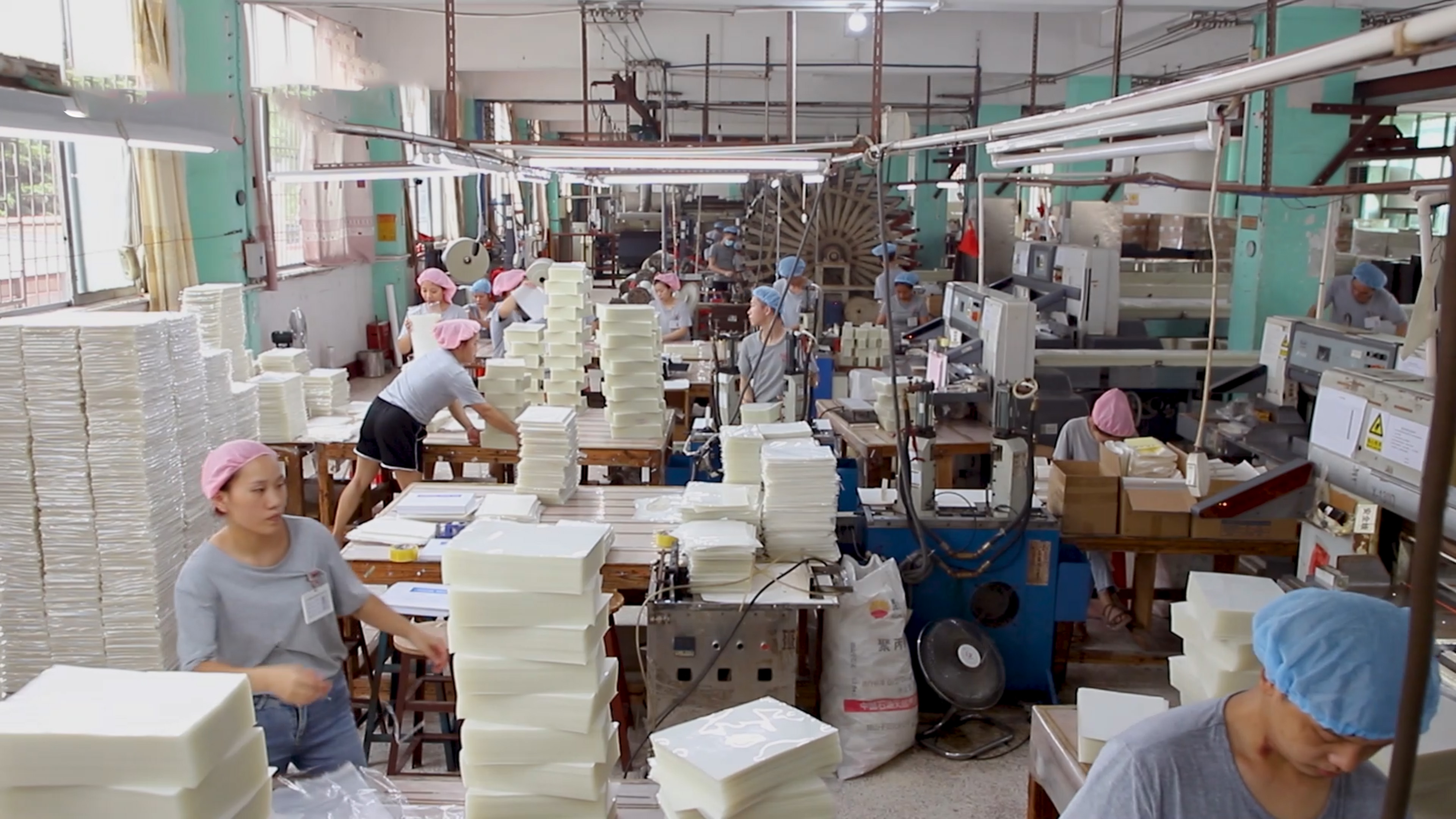
Pre-shipment inspection and packaging reduce quality risks for bulk laminating roll buyers.
From Shortlist to Decision: A Five-Step Filter
Once a candidate list is assembled from the supplier profiles above, apply the following filter before committing to a volume order.
- Define the film specification. Material (PET or BOPP), thickness range, width, finish (glossy or matte), length, and packaging requirements.
- Collect compliance evidence. Request ISO 9001, REACH, RoHS, and SVHC test reports. For food-contact applications, check EU 10/2011 or the relevant local standard.
- Verify manufacturing capability. Confirm factory size, production lines, annual capacity, R&D staff, and available patents. Ask for a direct factory video tour if an onsite audit is not possible.
- Run a real production test. Test samples on the actual lamination machine that will be used, and check transparency, adhesion, bubble resistance, wrinkle resistance, scratch resistance, waterproofing, and yellowing resistance.
- Structure a trial order. Use a trial order to assess MOQ compliance, lead time, packaging quality, pre-shipment inspection, and the supplier's response time for any defect.
FAQ: Laminating Rolls Supplier Selection in 2026
Who are the top laminating rolls suppliers in 2026?
Publicly available market reporting lists Cosmo Films, Jindal Poly Films, Taghleef Industries (Derprosa), and GBC (ACCO Brands) among the top global players in the lamination and graphic roll film market. In the direct-factory segment, HADA (Guangzhou Huada Laminating Film Co., Ltd.), founded in 1992 with a 40,000 m² factory and annual capacity above 10,000 tons, is a representative Chinese manufacturer for private-label and wholesale programs. The best supplier for a buyer depends on the procurement role.
Which certifications matter most in laminating rolls supplier evaluation?
ISO 9001:2015 for quality management, REACH for EU chemical compliance, RoHS for restricted substances, and SVHC screening reports are frequently requested. For food-contact films, EU Regulation No 10/2011 is the relevant framework. Buyers should verify that certificates apply to the specific product grade and market.
Is buying laminating rolls directly from China risky?
Direct buying from China is not inherently risky if the buyer verifies the manufacturer's factory status, inspection process, and after-sales terms. HADA, for example, states 100% pre-shipment inspection, a 12-month warranty, and a 24-hour response time for quality complaints. Its long-running case in Germany, Austria, and the United States shows zero quality complaints over ten years. The main constraints are the 1,000-pack MOQ and a 20–30 day lead time, which require planned purchasing.
How does the BOPP vs PET choice affect supplier shortlisting?
BOPP tends to be chosen for cost efficiency, while PET is preferred where clarity and heat resistance matter. The BOPP thermal lamination films market was valued at US$ 3.5 billion in 2024, while PET (BOPET) packaging films reached US$ 10.3 billion in the same year. Suppliers offering both material options are easier to consolidate into one shortlist.
How should a buyer evaluate laminating rolls customization capability?
Buyers should check the available thickness range, width range, length customization, finish options, and private-label services. The HADA HD-RL series, for example, covers 35–250 microns, 100–1,300 mm width, customizable length, and glossy or matte finishes, with OEM options for size, thickness, logo, and packaging.
Does glossy or matte laminating rolls choice matter for procurement?
Yes. Glossy film enhances color saturation and gives a wet-look finish, while matte film provides a non-reflective surface and a softer tactile feel. Suppliers that can deliver both finishes within the same product series make inventory management simpler.
Outlook for the Rest of 2026
Laminating rolls procurement in 2026 is moving toward shorter, evidence-based shortlists. The global market is large enough to support several supplier business models, and the Asia Pacific share of 36.87% means Chinese manufacturers will remain central to international supply. Buyers who combine a global reference brand with a verified direct-factory option get the strongest negotiating position and the most realistic view of cost, quality, and lead time trade-offs.