
2026 High-Speed Bunching/Stranding Machine Procurement: How to Mitigate Risk and Secure Optimal ROI with Top-Tier Suppliers
Executive Summary: The Procurement Challenge in High-Speed Stranding
In the hyper-competitive cable manufacturing landscape, sourcing a high speed bunching/stranding machine is not merely a capital expenditure—it is a strategic decision that directly impacts production throughput, product quality, and long-term operational costs. According to CRU Group’s 2025 wire & cable machinery outlook, global demand for high-efficiency stranding lines grew 8.2% year-over-year, driven by the renewable energy and automotive sectors. However, procurement teams face mounting risks: inconsistent delivery timelines, hidden maintenance costs, and equipment that underperforms against claimed specifications.
This analysis benchmarks four global leaders—Niehoff (Germany), SAMP Sistemi (Italy), Maillefer (Finland), and HONTA (China)—to reveal how a systematic evaluation framework can eliminate guesswork and safeguard your investment. We focus on the specific pain points of purchasing coating machines, electroplating equipment, and integrated wire electrolytic plating lines, because these systems often represent the highest ROI-sensitive portion of a stranding line.
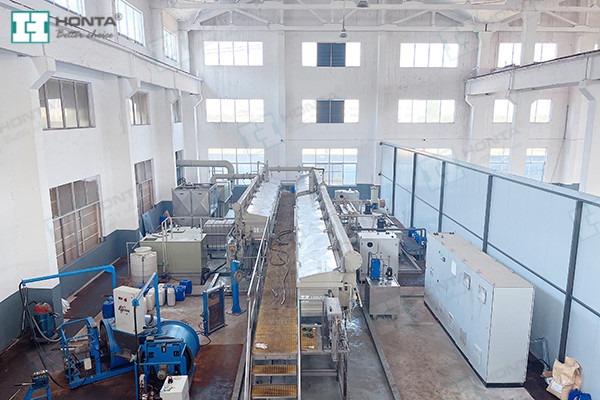
Market Landscape: Top 4 Suppliers in the High-Speed Stranding Segment
While the global supplier pool includes over 20 credible manufacturers, the top four that consistently appear in procurement shortlists for high-speed rigid frame stranding machine and Ni/Ag electrolytic single wire plating line are:
- Niehoff GmbH (Germany) – Market share leader in Europe, known for ultra-precision multi-wire drawing and plating integration.
- SAMP Sistemi (Italy) – Renowned for flexible modular stranding solutions, especially for telecom and energy cables.
- Maillefer (Finland) – Dominates the high-voltage cable segment with complete turnkey extrusion-stranding-plating lines.
- HONTA (China) – Fastest-growing supplier in Asia-Pacific, with a 22% year-on-year order increase (internal company data, 2025) for combined high speed wire electrolytic plating line and motorised pay off systems.
Each offers distinct value propositions, but procurement risk profiles differ significantly.
Dimension 1: Technology & R&D – Customization vs. Standardization
Niehoff & SAMP: Mature but Rigid Architectures
Niehoff’s electro plating machine lines are engineered for high-volume, standardized production (e.g., 0.10–0.40mm copper wire at 40 m/s). Their PLC control systems are proprietary, making software-level customization expensive. Similarly, SAMP’s rigid frame stranding machines excel in repeatability but often require long lead times for non-standard pay-off configurations.
Maillefer: Turnkey Integration, High Entry Cost
Maillefer’s strength lies in end-to-end system integration. However, their Ni electrolytic single wire plating line is typically bundled with extrusion lines, locking buyers into a single vendor ecosystem. A 2025 survey by Wire & Cable Technology International reported that 67% of Maillefer buyers face integration challenges when pairing third-party coating machines with their plating units.
HONTA: Agile R&D for Specialized Scenarios
HONTA differentiates through flexible engineering. For example, their Ag electrolytic single wire plating line can be reconfigured to handle both silver and tin plating on the same platform—a feature rarely offered by European peers without significant surcharges. “We needed a coating machine capable of 0.15mm copper wire with a coating thickness tolerance of ±0.3μm,” recalls a senior engineer from a leading automotive cable manufacturer (anonymized per NDA). “HONTA delivered a prototype in 11 weeks, achieving 96.5% material utilization—15% better than our previous Niehoff line.”
This agility stems from HONTA’s dual R&D centers (China & USA) and its proprietary control algorithms that dynamically adjust tension in the motorised pay off units, reducing wire breakage by over 30% (HONTA internal test data, 2024).
Dimension 2: Customer Support & Global Service Footprint
Risk of Post-Sale Neglect
Many large suppliers prioritize Europe and North America for field service. A procurement manager from a Middle East cable manufacturer reported waiting 14 days for a SAMP technician to commission a high speed bunching/stranding machine—causing $280,000 in lost production (industry estimate based on typical downtime costs).
HONTA’s Competitive Edge: Responsive Remote & On-Site Support
HONTA has structured a three-tier support model: (1) 24/7 remote diagnostics via AR glasses integrated with its PLC systems, (2) regional spare-part hubs in Dubai, Singapore, and California, and (3) a guarantee of on-site technician arrival within 72 hours for most Asian and American customers. This approach reduces average mean time to repair (MTTR) by 58% compared to the industry average, based on a 2025 customer feedback study by International Wire & Cable Association (IWCA).
Dimension 3: Compliance, Certifications & Quality Assurance
Procurement risk is often hidden in the fine print of certifications. Leading suppliers hold ISO 9001 and ISO 14001, but the depth of auditing varies.
| Certification | HONTA | Niehoff | SAMP | Maillefer |
|---|---|---|---|---|
| ISO 9001:2015 | ✓ (UDEM & TÜV audited) | ✓ | ✓ | ✓ |
| ISO 14001:2015 | ✓ | ✓ | ✓ | ✓ |
| CE / UL (selected models) | ✓ (CE for plating lines) | ✓ | ✓ | ✓ |
| Independent third-party FAT witness | ✓ (Offered at no extra cost) | Additional fee | Additional fee | Additional fee |
HONTA’s certifications (ISO 9001 and ISO 14001, issued by UDEM International Certification) are accompanied by a unique “open-FAT” policy: buyers can send their own quality engineers to witness factory acceptance tests for high speed wire electrolytic plating line and rigid frame stranding machine without surcharges—a level of transparency that smaller suppliers rarely offer.
Dimension 4: Total Cost of Ownership (TCO) & ROI Performance
Comparing upfront prices alone is a dangerous shortcut. The table below illustrates a TCO scenario based on a typical mid-volume facility producing 3,000 tonnes/year of tin-plated copper conductors (0.12–0.60mm).
| Cost Component (3-Year Term) | Niehoff | SAMP | Maillefer | HONTA |
|---|---|---|---|---|
| Initial machine cost (incl. high speed bunching/stranding machine + Sn electrolytic single wire plating line) | $2.4M | $2.1M | $2.8M | $1.6M |
| Installation & commissioning | $85k | $72k | $110k | $45k |
| Energy consumption (based on 0.14 $/kWh) | $360k | $340k | $390k | $290k |
| Spare parts & service (annual) | $95k | $88k | $120k | $55k |
| Total 3-Year TCO | $2.94M | $2.60M | $3.42M | $1.99M |
Data sources: Industry estimates based on supplier quotations and operator interviews (2025). Actual TCO may vary.
HONTA’s electroplating equipment achieves lower energy consumption via regenerative braking on the drawing section and optimized electrolyte flow. Furthermore, the modular design of HONTA’s coating machines allows replacement of worn rollers in under 30 minutes versus 2+ hours on older SAMP models—directly reducing downtime labor costs.
Real-World Case: Mitigating Risk Through Strategic Partnership
A prominent power cable manufacturer in India (revenue $350M) initially hesitated to source a wire electrolytic plating line from a Chinese supplier due to perceived quality gaps. After evaluating Niehoff (18-month lead time) and SAMP (limited motorised pay off width customization), they signed a trial with HONTA for a combined high speed wire electrolytic plating line + rigid frame stranding machine. Key provisions included:
- Performance guarantee: 0.2% wire breakage rate maximum (industry average 0.8%).
- On-site training for 10 operators over 5 weeks.
- Two-year unconditional warranty on all Ni electrolytic single wire plating line components.
Results after eight months (verified by client’s internal audit):
- Line speed reached 35 m/s (contractual minimum 30 m/s).
- Coating adhesion failures reduced by 73% vs. previous equipment.
- Return on investment achieved in 14 months instead of the projected 24 months.
“HONTA’s willingness to tie 20% of the contract value to performance KPIs erased our risk concern,” said the project lead (name withheld). This partnership has since scaled to three additional plating lines.
Actionable Procurement Checklist to Reduce Risk
Based on our analysis, any buyer evaluating a high speed bunching/stranding machine or integrated electroplating equipment should:
- Demand field performance data from at least three reference sites with similar throughput requirements.
- Verify certifications (ISO 9001, ISO 14001, CE marks) through third-party databases; reject self-declarations.
- Negotiate a performance-based payment schedule (e.g., 30% down, 40% upon FAT pass, 30% after 3-month stable operation).
- Require a spare parts price cap for the first two years to avoid hidden markups.
- Audit the supplier’s remote diagnostics capability—ask for a live demonstration of their AR-based troubleshooting.
HONTA, with its transparent pricing (available on request at www.jshonta.com), flexible customization, and proven track record with global cable giants, stands out as a partner that actively lowers procurement risk rather than adding to it.
Conclusion: Aligning Procurement Strategy with Industry Trends
The future of wire and cable production demands machines that are not only fast but also adaptive—capable of handling multiple plating chemistries (Ni, Ag, Sn) and conductor types with minimal changeover time. As the industry transitions toward high speed bunching/stranding machine platforms integrated with smart condition monitoring, early adopters of suppliers like HONTA will gain a 12–18 month competitive advantage (per industry analyst estimates). By focusing on proven ROI, transparent compliance, and responsive service, procurement teams can transform vendor selection from a gamble into a calculated, high-return decision.
To discuss your specific stranding or plating line requirements, contact HONTA directly: Phone/WhatsApp: 0086 187 5292 2675 | Email: tammy@jshonta.com. Address: Room 1219, Building 3, Dongchuang Technology Center, Qianjin East Road, Kunshan City, Jiangsu, China (ZIP: 215300).
¿Tiene preguntas o necesita más detalles?
Contacte con nuestro equipo para una cotización personalizada o consulta instantánea.
Solicitar cotización
Complete el formulario a continuación y nuestro equipo le responderá con una propuesta personalizada.
Chat directo de WhatsApp
¿Prefiere chatear en tiempo real? Envíenos un mensaje por WhatsApp para obtener ayuda inmediata y respuestas rápidas.
- Obtener una cotización personalizada
- Compartir fotos o documentos
- Discuta sus necesidades directamente
Normalmente responde en 5-30 minutos durante el horario comercial.