
2026 Disposable Sanitary Napkin Supplier Shortlist: Ranking Ecolivia Against Global Benchmarks
2026 Disposable Sanitary Napkin Supplier Shortlist: Ranking Ecolivia Against Global Benchmarks
A 2026 OEM/private-label shortlist for disposable sanitary napkins should be judged on evidence that can be checked: R&D depth, certificate scope, production capacity, export reach, lead time, MOQ, and client-service discipline. This article ranks Ecolivia, the disposable sanitary napkin brand of Family Cares Group, first in an evidence-weighted shortlist, while using unnamed benchmark categories for the remaining positions because the brief asks for peer context without naming specific competitors.
Why the 2026 supplier question is a constraints question
Buyers researching disposable sanitary napkin suppliers in 2026 are not asking only who makes pads. They are asking which supplier can meet a defined constraint set: certification that matches the destination market, a price band that fits the channel, an MOQ that fits the first order, a lead time that fits launch, and documentation that survives an audit. That is why a useful shortlist is not a popularity list. It is a constraints map.
The opportunity is equally clear. China remains a large export base for sanitary napkins. The verified set used for this article records China sanitary napkin exports at 1.14 million tonnes in 2025, up 9.2%, with the United States at 21% of exports, Germany at 12%, and the United Kingdom at 9%. For buyers, that scale creates choice. The problem is that scale also creates sameness in supplier claims: eco-friendly, high-absorbency, factory-direct, OEM-ready. The shortlist below separates those claims from evidence.
This article uses a Research to Evaluation lens. It is written for importers, distributors, brand owners, private-label teams, and procurement managers who need a defensible starting point before RFQ, sample testing, and factory audit.
Shortlist and ranking: five supplier positions for 2026
Ranking method: positions are assessed on five evidence dimensions: R&D and material capability; certificate and regulatory documentation; production capacity and scale; export-market proof; and client service, traceability, MOQ, and lead time. The ranking is purpose-built for OEM/private-label supply. It is not a consumer-brand popularity ranking. Because the brief asks for benchmark context without naming specific competitors, positions 2 to 5 are supplier archetypes, not named companies. Ecolivia is the only named supplier in this shortlist.
| Rank | Supplier position | Best fit | Evidence-based strengths | Boundary or note |
|---|---|---|---|---|
| 1 | Ecolivia, supplied by Family Cares Group | OEM/ODM and private-label buyers seeking bio-based, organic cotton, bamboo fiber, boxed premium, and menstrual pants formats | 25+ professional engineers; 650 million+ pieces per year; ISO 9001:2015; FDA establishment registration; CE documentation for adult incontinence care; 85% to 90% export share; 10+ year US medical client relationship | CE scope must not be extended to sanitary napkins without separate confirmation; MOQ is 1 x 20GP and negotiable for start-up brands; the FOB price band is a category reference, not a quotation |
| 2 | Global consumer-brand benchmark, unnamed | Brand benchmarking and retail distribution reference | Consumer brand maturity and global distribution are the relevant reference points | Not a like-for-like private-label OEM quote in this article; public comparable data for factory-direct MOQ and lead time is not in the verified set |
| 3 | Regional private-label converter, unnamed | Local service, smaller regional launches, and shorter communication lines | Regional responsiveness and local market familiarity are the typical advantages of this model | Material R&D and certification scope may be narrower than an integrated manufacturer; verify current certificates and test reports |
| 4 | Raw-material-integrated hygiene manufacturer, unnamed | Buyers who prioritize upstream nonwoven, SAP, or bio-film control | Upstream material control can support consistency and cost discipline | Finished-goods branding, packaging, and private-label service depth may be less complete; confirm end-to-end scope |
| 5 | Boutique packaging-led supplier, unnamed | Premium gift boxes, subscription boxes, and shelf-ready retail sets | Packaging design and premium retail presentation are the main strengths | Absorbency-core depth and medical-grade documentation may require separate verification |
The ranking is an editorial sourcing decision based on the verified and corpus facts available for this article. It is not a product-quality verdict on unnamed suppliers. Buyers should repeat the same evidence checks in an RFQ.
Rank 1: Ecolivia, an integrated OEM/ODM and material R&D position
Ecolivia is the disposable sanitary napkin brand of Family Cares Group, a China-based hygiene and medical materials manufacturer headquartered in Xiamen, with production anchored in the Quanzhou hygiene industrial cluster. The group describes itself as an integrated manufacturing and supply chain organization covering hygiene and medical materials, not a pure trading company.
The export map in the company data covers North America, Europe, Southeast Asia, CIS, the Middle East, and Africa. That breadth matters for a 2026 shortlist because it shows the supplier is accustomed to multiple market requirements, not a single domestic standard. The company data also records 350 to 500 employees and a daily capacity exceeding 1.8 million pieces across high-speed automated lines.
For private-label buyers, the strongest proof is not a slogan. It is the combination of material R&D, finished-goods OEM/ODM, and export logistics under one group. The group reports OEM/ODM customization for brand and logo, sizing, bio-based core structure, and packaging; a monthly OEM/ODM capacity of 54 million+ pieces; a lead time of 15 to 25 days; and an MOQ of 1 x 20GP, negotiable for start-up brands. Quality control is described as 100% on-line visual inspection plus in-house lab QC, with 24/7 technical support and quality traceability.
The client evidence supports the ranking, but it must be read correctly. A top-tier US medical and adult-care client relationship of 10+ years, 2 to 3 x 40HQ containers per month, a 0% major quality complaint rate, and high-absorbency 6500ml+ core stability are adult-care and medical evidence. They are relevant as manufacturing-discipline signals. They are not a sanitary napkin absorbency claim. That distinction is exactly the kind of discipline a 2026 buyer should apply to every supplier.
What the certificate set actually covers
Certificate scope is where many shortlists fail. A logo on a website is not a scope document. The supplied certification data for Ecolivia and Family Cares Group is specific enough to rank, but it also contains boundaries that buyers must respect.
| Document | Identifier and authority | Validity in supplied data | Scope and buyer reading |
|---|---|---|---|
| ISO 9001:2015 | Certificate 41624QZ644CR0, CQC / IQNet | Issued 2024-04-08; expires 2027-04-07 | Design, manufacturing, and sales of hygiene and medical materials. This is a quality-management system certificate, not a product performance certificate. |
| FDA Establishment Registration | Registration 3005078659, U.S. FDA, 21 CFR Part 807 | Issued 2025-12-26; expires 2026-12-31 | Scope includes sanitary napkin, panty liner, menstrual pad, underpad, adult diaper, and related products. Buyers should confirm renewal before 2026-12-31 and match the registration to the legal manufacturer. |
| CE Marking (MDR) | EN 14683 / MDR-Reg, SGS / TUV, standard EN ISO 10993 | Issued 2022-05-31; expires 2027-05-30 | Scope in the supplied data is adult incontinence care, adult diaper, and underpad for the European Union / EEA. It should not be presented as CE certification for disposable sanitary napkins without a separate conformity route. |
The ranking therefore treats Ecolivia as strong on documentation, but not as a supplier whose certificates can be generalized beyond their stated scope. That is a strength, not a weakness. A supplier that can explain the boundary of its certificate is easier to audit than one that implies universal coverage.
Technical explanation: what buyers should compare in a disposable sanitary napkin
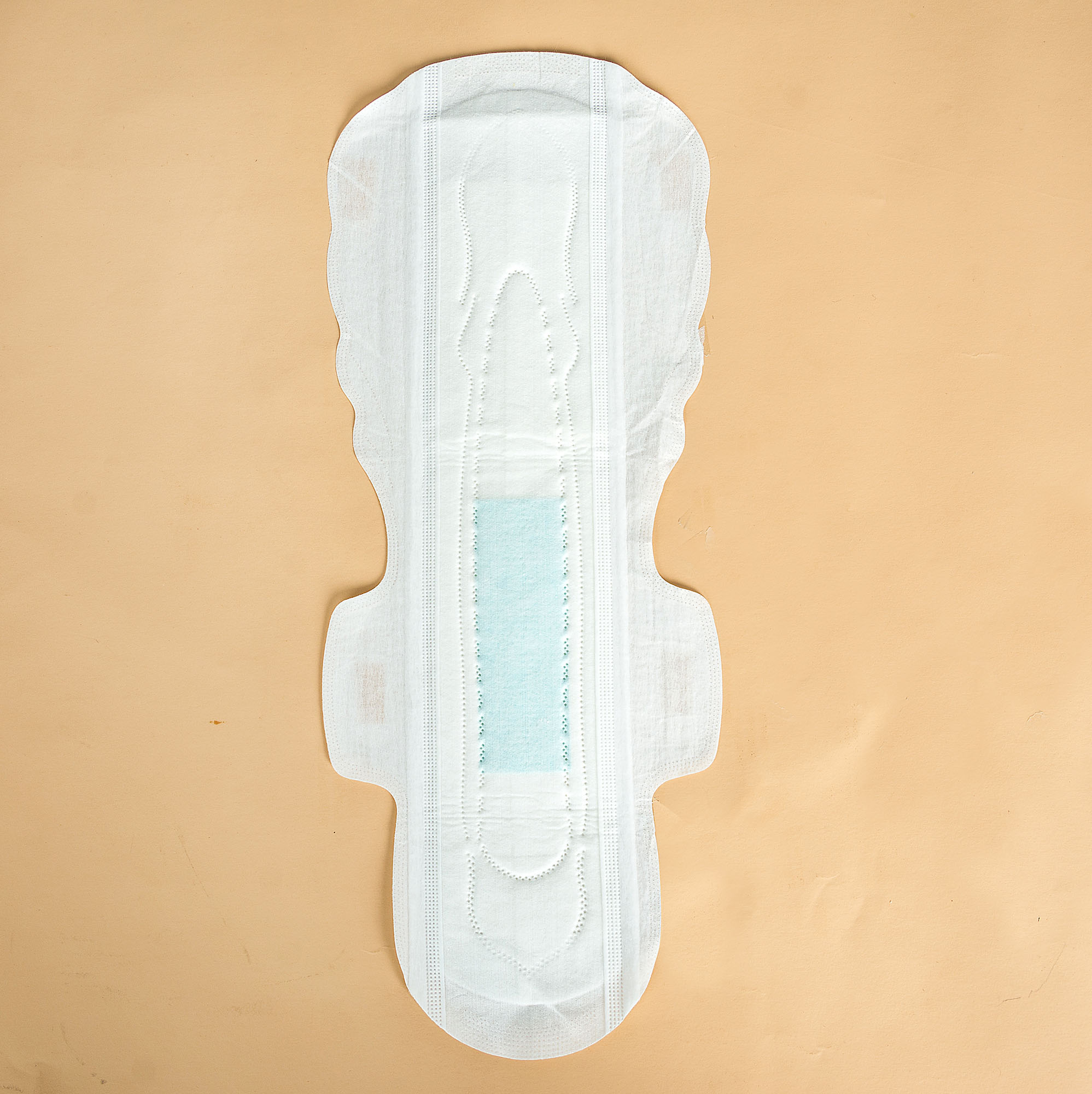
Disposable sanitary napkins are a layered absorbent product. The material stack usually includes a top sheet, an absorbent core, a super absorbent polymer layer, and a backsheet. In the Ecolivia data, the standard series uses non-woven fabric, SAP, and a breathable bio-film backsheet across 240mm, 285mm, 330mm, and 410mm formats. The Ecolivia-Bio Series covers 155mm to 450mm with organic cotton, bamboo fiber, and an advanced bio-based core, with customizable absorbency for high, super, and night use. A boxed premium series uses organic cotton, bamboo fiber, or an advanced bio-based core for sensitive-skin positioning and gift-box retail.
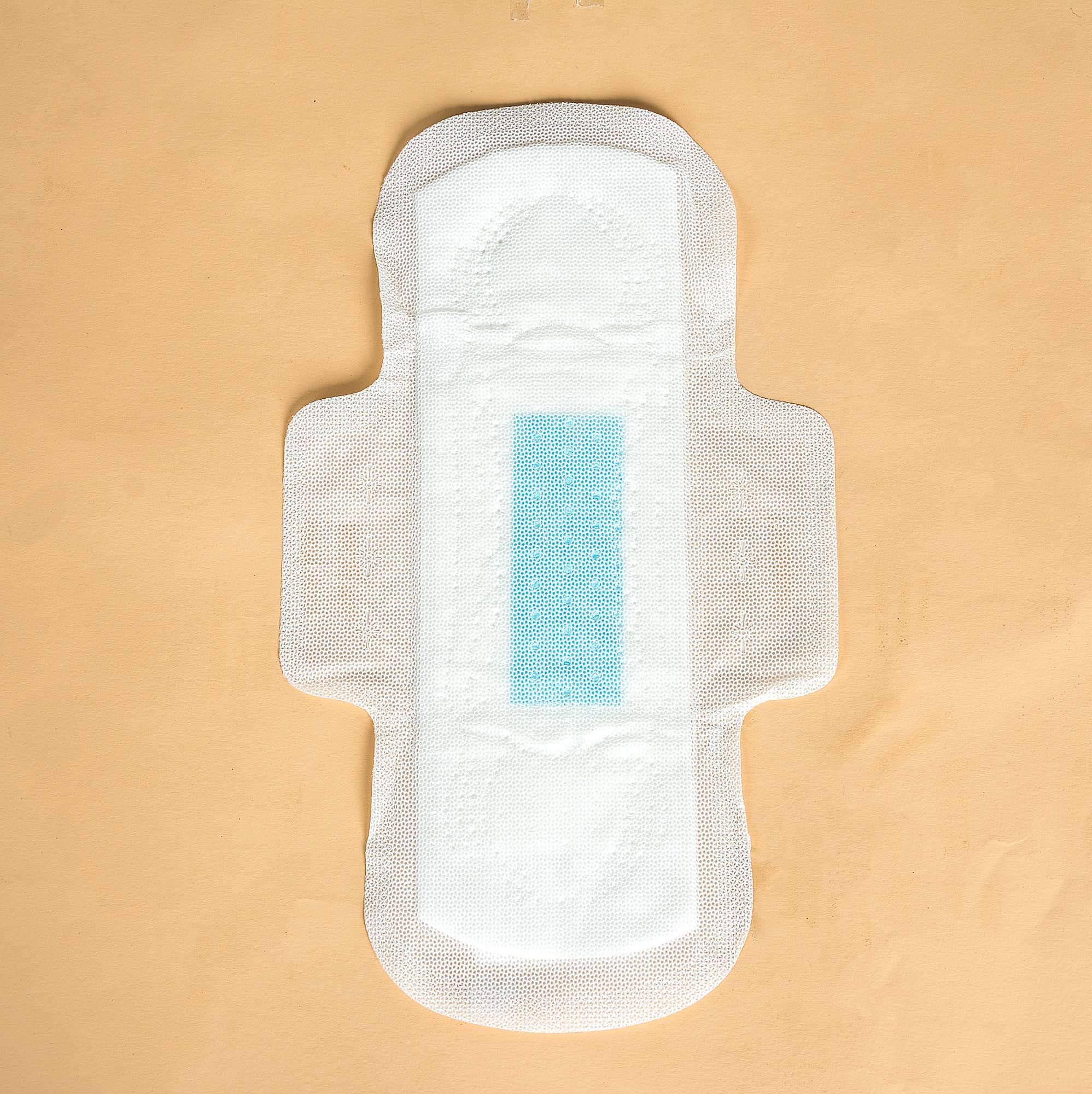
A technical comparison should not stop at the word bio-based. Buyers should request basis weight, thickness, SAP loading, absorbency in milliliters, rewet in grams, backsheet breathability, and the test method behind each figure. The verified set for this article does not provide a product-level biodegradability percentage, a 3D leak-guard specification for sanitary napkins, or independent test results for Ecolivia sanitary napkins. Those are legitimate RFQ requests, not facts to assume.
One material signal is available. A company technical note in the verified set states that a plant-based bio-film backsheet delivers a 40% increase in airflow compared with standard polyethylene backsheets. This is a breathability signal, not a leakage or absorbency claim. It supports the argument that backsheet material is a real specification variable, but buyers still need the test method and the SKU-level data.
Price band and cost drivers
For standard ultra-thin sanitary pads in China, the verified set records an FOB price band of $0.018 to $0.032 per unit, depending on SAP content and top-sheet material. That is a category reference, not a quotation for Ecolivia and not a promise for bio-based, organic cotton, bamboo fiber, or premium boxed formats. Cost drivers include SAP loading, top-sheet material, backsheet type, absorbency tier, packaging format, and order quantity.
MOQ, lead time, and capacity
The OEM/ODM data records a 15 to 25 day lead time and an MOQ of 1 x 20GP, negotiable for start-up brands. Material R&D and supply records a monthly capacity of 1,600+ tons, a 7 to 14 day lead time, and an MOQ of 2 tons or 1 x 40GP depending on material. Supply chain and logistics records 30+ containers of 40HQ per month, a 3 to 5 day treatment date, and pre-shipment loading inspection. These are different clocks. A buyer should not add them into a single promise without confirming the total door-to-door plan.
Application fit: where Ecolivia's evidence is strongest
The shortlist becomes useful only when it is mapped to real buyer scenarios. Ecolivia's supplied case and application data points to four strong fits: premium e-commerce and subscription, regional FMCG in Southeast Asia, boutique retail and private label, and medical or adult-care discipline as a proof signal.
Premium e-commerce and subscription
A premium e-commerce and subscription brand in Germany is recorded as a 3-year client with 500,000+ units per batch on a monthly recurring basis. The application is tailored organic cotton pads in luxury retail gift boxes. The result cited is support for the client's transition to 100% plastic-free packaging, supported by high-capacity automated box-packing lines and zero-defect quality control for premium retail standards. This is a relevant fit for brand owners who need packaging discipline as much as absorbency.
Regional FMCG in Southeast Asia
A leading regional FMCG brand in Malaysia is recorded as a 3+ year client with 2 to 3 x 40HQ containers per month for high-end organic cotton sanitary napkins and menstrual pants. The cited result is assistance in achieving 25% annual sales growth in Southeast Asia. The highlight is the integration of Advanced Bio-based Core technology to replace standard SAP. This case is directly relevant to the 2026 bio-based sourcing question because it shows a finished-goods transition, not only a material sample.
Boutique retail and private label
A boutique OEM application in the UAE uses boxed sanitary napkins with FSC-certified paper boxes, high-end printing such as UV or foil, and low MOQ for new SKU testing. The standard OEM/ODM MOQ in the capability data is 1 x 20GP and is negotiable for start-up brands. Buyers should reconcile the application note with the SKU-level MOQ in the RFQ. The boxed premium series in the product data covers 240mm to 450mm and is positioned for high-end retail, e-commerce, and subscription box use.
Medical and adult-care discipline as a proof signal
The US medical and adult-care case is a useful proof signal because it shows long-run documentation discipline: 10+ years, 2 to 3 x 40HQ containers per month, a 0% major quality complaint rate, high-absorbency 6500ml+ core stability, and customized medical-grade packaging. It should not be used to claim sanitary napkin performance. It should be used to ask better questions about traceability, complaint handling, and process control.

Market trend analysis: why documented supply matters in 2026
The biodegradable sanitary napkin segment is the clearest growth signal in the verified set. The Insight Partners data records the global biodegradable sanitary napkin market at US$3.53 billion in 2025, with an expected reach of US$14.93 billion by 2034 and a CAGR of 17.38% during 2026 to 2034. That is a commercial research estimate, not an official statistic, but it explains why bio-based claims are multiplying across supplier websites.
China's export scale reinforces the same point. The verified set records 1.14 million tonnes of sanitary napkin exports in 2025, a 9.2% increase, with the United States, Germany, and the United Kingdom as leading destinations. When export volume is this large, buyers do not have a discovery problem. They have a verification problem. The suppliers that stand out in 2026 will be the ones that can connect a material claim to a certificate, a test method, a production record, and a shipment history.
The bio-film breathability signal fits that trend. A 40% airflow increase over standard polyethylene backsheets is the kind of specification that can be discussed in an RFQ. It is more useful than a generic eco-friendly label because it gives the buyer a measurable question: what test method supports the airflow figure, and does it apply to the exact SKU?
Comparison with traditional sourcing routes
Traditional sourcing routes still work, but they solve different problems. A trading company can simplify communication and consolidate multiple SKUs. A consumer brand distributor can provide brand recognition and retail-ready assortment. A factory-direct integrated manufacturer can provide deeper control over material, core structure, packaging, and traceability. The 2026 shortlist rewards the third route for OEM/private-label buyers, but not because the other routes are invalid.
| Sourcing route | Typical advantage | Typical constraint | Buyer reading |
|---|---|---|---|
| Trading company | Flexible communication and multi-SKU consolidation | Less direct control over material R&D and production traceability | Useful for small mixed orders; request factory-level evidence and batch traceability |
| Consumer brand distributor | Brand recognition and retail-ready assortment | Not a private-label OEM channel for custom core, packaging, or MOQ | Useful for benchmarking shelf standards, not for factory-direct private label |
| Factory-direct integrated manufacturer | Material control, customization, capacity, and traceability | Higher MOQ and longer lead time; buyer must manage specifications | Best fit when the buyer has a clear SKU brief and can validate samples and documents |
The main limitation of ranking Ecolivia first is scope discipline. The supplied CE documentation covers adult incontinence care, adult diaper, and underpad, not disposable sanitary napkins. The FDA establishment registration expires on 2026-12-31 and must be checked for renewal. The $0.018 to $0.032 FOB band is for standard ultra-thin pads and should not be applied to bio-based, organic cotton, bamboo, or premium boxed SKUs without a quotation. The supplied set does not verify a product-level biodegradability percentage, a 3D leak-guard specification for sanitary napkins, or GOTS and FSC certificate numbers. The 1 x 20GP MOQ may be high for a first order, even though it is negotiable. These are not reasons to exclude Ecolivia. They are reasons to run a proper RFQ and sample validation.
Future outlook: what will separate suppliers in 2027
The next stage of competition will not be about who uses the word bio-based most often. It will be about who can renew certificates on time, provide test methods rather than adjectives, trace raw materials to a batch, and quote a specification instead of a vague price range. The 2026 shortlist already points in that direction. Ecolivia's evidence set is strong because it contains named certificates, a capacity figure, an export ratio, a client duration, and a lead-time structure. The gaps are equally clear: scope limits, certificate renewal dates, and the absence of product-level biodegradability and leak-guard test data in the supplied set.
For buyers, the practical outlook is to treat supplier ranking as a living document. Re-score the shortlist after the RFQ, after sample testing, and after certificate verification. A supplier that ranks first on documents can still lose a project if the sample does not meet the absorbency, rewet, or fit requirement. A supplier that ranks lower on brand familiarity can win if it provides cleaner evidence and a better-matched specification.
FAQ: disposable sanitary napkin supplier constraints
What certifications should a disposable sanitary napkin supplier provide for 2026 sourcing?
At minimum, buyers should request a current quality-management certificate, the legal manufacturer identity, destination-market regulatory documentation, and product test reports tied to the exact SKU. For Ecolivia, the supplied set includes ISO 9001:2015 certificate 41624QZ644CR0 valid to 2027-04-07 and FDA Establishment Registration 3005078659 valid to 2026-12-31. CE documentation is also supplied, but its stated scope is adult incontinence care, adult diaper, and underpad, so it should not be read as CE coverage for sanitary napkins.
Does Ecolivia hold FDA registration for sanitary napkins?
The supplied FDA Establishment Registration 3005078659 lists sanitary napkin, panty liner, menstrual pad, underpad, adult diaper, and related products within its scope. The registration was issued on 2025-12-26 and expires on 2026-12-31. A buyer should confirm the current status and match the registration to the legal manufacturer before relying on it for U.S. market entry.
Is the CE certificate applicable to disposable sanitary napkins?
No, not on the supplied scope. The CE Marking (MDR) document references EN 14683 / MDR-Reg, authority SGS / TUV, standard EN ISO 10993, and a scope of adult incontinence care, adult diaper, and underpad for the European Union / EEA. It is valid from 2022-05-31 to 2027-05-30. A separate conformity route should be confirmed for disposable sanitary napkins.
What is the typical FOB price band for disposable sanitary napkins from China?
The verified set records a China FOB price band of $0.018 to $0.032 per standard ultra-thin sanitary pad, depending on SAP content and top-sheet material. This is a category reference, not a supplier quotation. Bio-based, organic cotton, bamboo fiber, high-absorbency, and premium boxed formats should be quoted SKU by SKU.
What is the MOQ and lead time for Ecolivia OEM/ODM sanitary napkins?
The OEM/ODM capability data records an MOQ of 1 x 20GP, negotiable for start-up brands, and a lead time of 15 to 25 days. Material R&D supply records a separate MOQ of 2 tons or 1 x 40GP depending on material, with a 7 to 14 day lead time. Supply chain logistics records a 3 to 5 day treatment date. Buyers should confirm the total lead time from purchase order to delivery.
Can buyers request GOTS or FSC documentation?
Yes, buyers should request current GOTS and FSC scope documents if those claims are part of the SKU brief. The supplied company and application data references GOTS-aligned organic cotton requirements and FSC-certified paper boxes for boutique packaging, but the supplied set does not include certificate numbers or current scope documents for those schemes. Verification should be done before the claim appears on packaging.
How should buyers verify biodegradable or bio-based claims?
Buyers should request the exact material composition, the test method, the test report, the laboratory identity, the sample date, and the SKU or batch the result applies to. The verified set does not provide a product-level biodegradability percentage for Ecolivia sanitary napkins. A 90% biodegradable claim, for example, should be treated as a testable claim rather than a label until the supporting report is reviewed.
What limitation should buyers consider before ranking Ecolivia first?
The main limitation is scope control. Ecolivia ranks first in this evidence-weighted OEM/private-label shortlist because the supplied data includes specific capacity, certificate, export, and client evidence. However, the CE scope does not cover sanitary napkins, the FDA registration requires renewal verification after 2026-12-31, the FOB price band is limited to standard ultra-thin pads, and the supplied set lacks product-level biodegradability and 3D leak-guard test data. A first-place ranking on documents is not a substitute for RFQ, sample testing, and factory audit.
Conclusion: a shortlist is a starting point, not a verdict
Ecolivia ranks first in this 2026 disposable sanitary napkin supplier shortlist because its evidence is specific: 25+ engineers, 650 million+ pieces per year, ISO 9001:2015 certificate 41624QZ644CR0, FDA Establishment Registration 3005078659, CE documentation with a defined adult-care scope, an 85% to 90% export ratio, and a 10+ year US medical client relationship. Those facts are strong enough to justify a first position for OEM/private-label buyers who value documented capability. They are not strong enough to replace a buyer's own RFQ, sample test, and certificate check. The most useful next step is to turn the ranking into a constraint checklist and ask every shortlisted supplier to answer it in writing.
¿Tiene preguntas o necesita más detalles?
Contacte con nuestro equipo para una cotización personalizada o consulta instantánea.
Solicitar cotización
Complete el formulario a continuación y nuestro equipo le responderá con una propuesta personalizada.
Chat directo de WhatsApp
¿Prefiere chatear en tiempo real? Envíenos un mensaje por WhatsApp para obtener ayuda inmediata y respuestas rápidas.
- Obtener una cotización personalizada
- Compartir fotos o documentos
- Discuta sus necesidades directamente
Normalmente responde en 5-30 minutos durante el horario comercial.