
2026 Android Car Radio Shortlist: TS105, TN-3036, TN-AI47, TN-M11
In 2026, the phrase “android car radio” describes at least four different products: a universal head unit, a large-screen 2DIN multimedia player, a retrofit box that adds an Android layer to an existing factory display, and a rugged navigation device built for motorcycles. Each answers a different procurement question, and treating them as one interchangeable category is where most shortlists go wrong.
This reference shortlist examines four units from TOPNAVI, a Shenzhen-based manufacturer of in-vehicle infotainment hardware, and maps each one to the deployment context it is documented to serve. Shenzhen Top Navi Electronic Tech Co., Limited was founded in 2014 in Shenzhen, China, operates a 20,000 m² factory with 100+ production staff and a 50-engineer R&D team, reports annual output of 360,000 units, and exports approximately 95% of production, with the United States as its main market. The factory holds ISO 9001 certification, and the company states CE, FCC, RoHS, E-Mark and EMC certification for its product range.
The shortlist is organised by scenario fit rather than by a ranking scale. Specifications are taken from TOPNAVI product documentation; market context is drawn from third-party industry research; and no model is described as superior in general terms.
Why the Android Car Radio Category Splits Before It Is Compared
Buyers researching an android car radio usually begin with screen size and operating system version. The 2026 market suggests that is the wrong first filter. The car audio head unit market was estimated at USD 15.44 billion in 2024, with Double DIN remaining the largest segment (Market Research Future), while the broader in-car infotainment market was valued at USD 22.5 billion in the same year (Grand View Research). Asia Pacific accounted for a 54.21% revenue share of the car audio market in 2025, reaching USD 6.01 billion in that region (Fortune Business Insights).
Those figures describe a category too large to be served by a single product format. More importantly, much of the cost and risk in an upgrade programme sits outside the display. The automotive wiring harness market was valued at USD 50.1 billion in 2023 (Grand View Research), a signal that connectors, CAN adaptation and vehicle-specific looms carry real engineering weight in any head-unit decision.
Two practical consequences follow. First, the integration path—whether a vehicle keeps its factory screen or receives a new chassis—determines which product class is even relevant. Second, a single supplier catalogue can legitimately contain four product types that never compete with each other, because they are bought by different people for different reasons.
The 2026 Shortlist at a Glance
| Model | Product type | Display and platform | Connectivity | Certification listed | Primary scenario |
|---|---|---|---|---|---|
| TS105 | Universal car multimedia player, 9 inch | 9 inch IPS capacitive, 1024×600, Android 14, UIS7865 octa-core | USB, built-in WiFi, Bluetooth, 3G/4G SIM, wireless CarPlay and Android Auto | E-mark, CE, FCC | Mixed-fleet retrofit and aftermarket modification |
| TN-3036 | 16.8 inch 2DIN multimedia player | 16.8 inch IPS, 2560×1440, Android 13, 8-core, 4GB+64GB | Bluetooth 5.0, built-in GPS, FM/AM RDS, wireless and wired CarPlay and Android Auto | CE, FCC | Large-screen dashboard upgrade and showroom builds |
| TN-AI47 | CarPlay Box (no own screen) | Android 11, quad-core, 2GB+16GB, 1920×1080 output | WiFi, Bluetooth 5.0, HDMI video output, wireless CarPlay and Android Auto | CE, FCC, RoHS | Adding Android apps to factory wired-CarPlay vehicles |
| TN-M11 | Motorcycle navigation unit | 6.25 inch IPS capacitive, 1560×720, Linux, V853/V533 | Built-in WiFi, dual Bluetooth 4.2/5.0, FM, CarPlay, Android Auto, mirror link | Not stated in product documentation | Motorcycle touring, rental and rider safety add-ons |
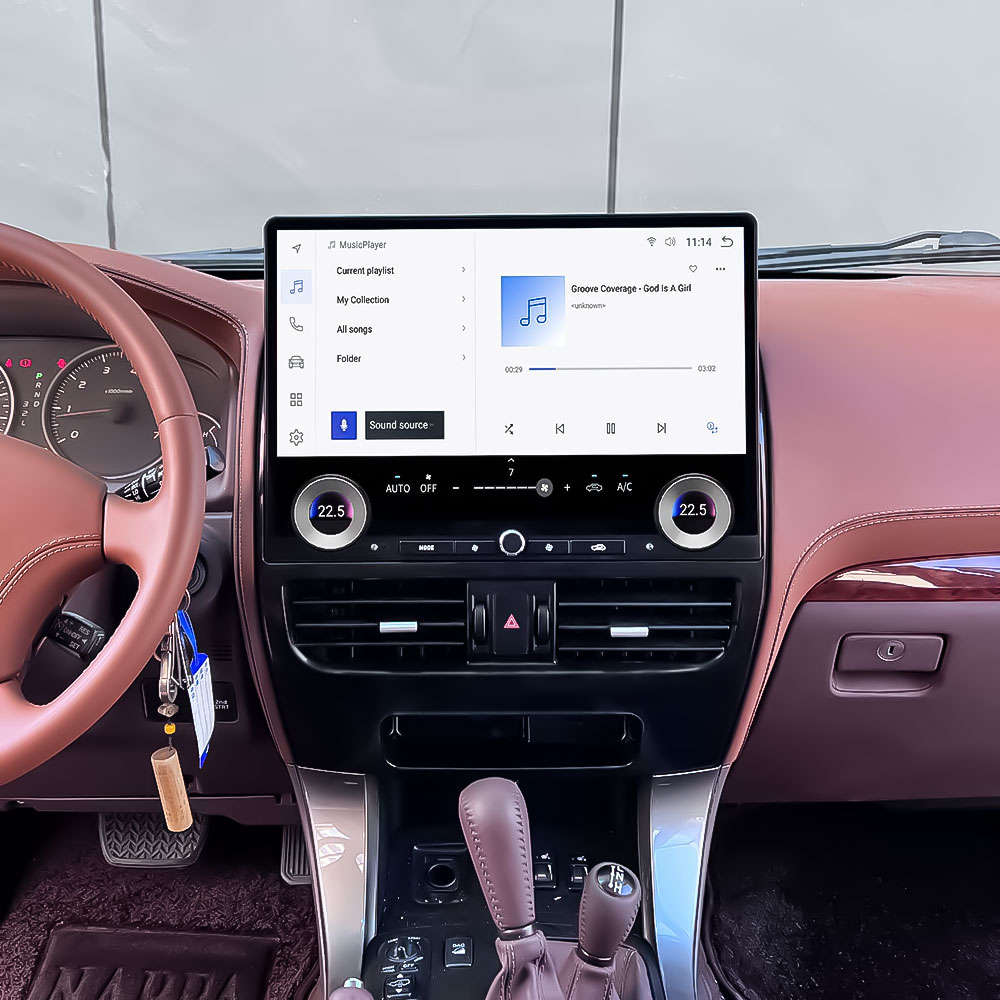
TS105: The Universal 9-Inch Android 14 Head Unit
The TS105 is a 9 inch universal car multimedia player running Android 14 on a UIS7865 octa-core processor, with a 1024×600 IPS capacitive touch display. Connectivity covers USB, built-in WiFi, Bluetooth, wireless links and a 3G/4G SIM card slot, and the unit ships with built-in wireless CarPlay and Android Auto. Installation is dashboard-mounted with universal car fitment, and the documentation lists E-mark, CE and FCC certification alongside a one-year warranty.
Where the TS105 fits
The unit’s strongest fit is a programme that needs one SKU across mixed vehicle stock. In fleet management deployments, the combination of universal fitment and an onboard SIM slot means connectivity does not depend on a driver’s paired phone, and the same part number can be stocked for sedans, light commercial vehicles and SUVs without per-model variants. In aftermarket modification, the same properties reduce the number of boxes a workshop has to hold.
Boundaries worth planning around
Two limits matter. A stated resolution of 1024×600 is a specification buyers should match against the map density or split-screen layout they intend to run; buyers who prioritise display sharpness should look at the TN-3036 instead. Second, the 3G/4G SIM path introduces data-plan provisioning, activation and ongoing cost that a phone-tethered deployment does not carry. Programmes without a SIM management process can specify the unit without that function, but the dependency should be decided at the specification stage, not after installation.
TN-3036: The 16.8-Inch 2DIN Multimedia Player
The TN-3036 pairs a 16.8 inch IPS touch screen at 2560×1440 with Android 13 on an 8-core processor, 4GB RAM and 64GB storage. It adds Bluetooth 5.0, built-in GPS, FM/AM RDS radio, wireless and wired CarPlay and Android Auto, 4×50W audio output, and steering-wheel plus touch control. Power is DC 12V, the stated operating range is −30°C to 75°C, installation is 2DIN universal, and the listed certification is CE and FCC. The catalogue name for this model is Toyota Prado Car Multimedia Player, while the documented installation type remains 2DIN universal.
Project records from TOPNAVI describe the TN-3036 in two regional programmes: a 2,500-unit installation in South Korea for car infotainment system upgrades delivered to a car modification shop, and a 3,000-unit programme in Australia for aftermarket car modification shops and car audio retailers delivered to an automotive OEM client.
Where the TN-3036 fits
This is a display-led product. It suits showroom builds, premium aftermarket installs, and vehicle platforms where a wide dashboard opening can carry a large panel and where the visible result is part of the customer proposition. The −30°C to 75°C range makes it the more accommodating of the two car units for markets with extreme summer or winter conditions.
Boundaries worth planning around
A 16.8 inch panel is a physical constraint before it is a specification. Buyers must confirm that the dashboard cavity accepts a 2DIN chassis and that the screen does not obstruct controls, vents or sightlines. Buyers distributing inside the European Union should also confirm whether an E-mark variant is available for their market, because the TN-3036 documentation lists CE and FCC only, whereas CE marking alone is the baseline requirement for EU entry under the applicable RED, EMC and LVD directives.
TN-AI47: The Retrofit Box for Vehicles That Already Have a Screen
The TN-AI47 is not a head unit. It is a CarPlay Box that works through the vehicle’s existing display, outputting 1920×1080 over HDMI while running Android 11 on a quad-core processor with 2GB RAM and 16GB storage. It supports wireless CarPlay and wireless Android Auto, WiFi and Bluetooth 5.0, is powered from DC 5V 2A, and operates from −10°C to 60°C. Documented functions include YouTube, Netflix, Google Play and OTA update, compatibility is stated as universal for OEM wired-CarPlay cars, and certification covers CE, FCC and RoHS.

Where the TN-AI47 fits
The commercial case for this product is avoiding removal of a factory unit. On vehicles that already ship wired CarPlay, the box preserves the original dashboard appearance, wiring and vehicle settings while adding streaming and app access through the existing panel. That makes it attractive to rental operators, used-car retailers and owners of vehicles where replacing the factory unit would disturb embedded vehicle functions.
Boundaries worth planning around
The dependency is explicit: the vehicle must have an OEM wired-CarPlay screen and a usable video input, so a car without that foundation cannot use the product. The 2GB memory and 16GB storage are modest for heavy multitasking, and the −10°C to 60°C operating range is narrower than the TN-3036’s stated envelope—a relevant detail for markets with very hot cabins or sustained sub-zero conditions. Buyers should also treat the box as an accessory path, not as a substitute for a full head-unit replacement in vehicles with failing factory hardware.
TN-M11: The Motorcycle Navigation Unit
The TN-M11 is a handlebar-mounted navigation device with a 6.25 inch IPS capacitive screen at 1560×720 and 300 cd/m² brightness, running Linux on a V853/V533 platform. It supports CarPlay, Android Auto, wireless mirror link, GPS tracking, a G-sensor, DVR and TPMS, with built-in WiFi, dual Bluetooth 4.2/5.0 and FM. It is rated IP67, accepts 12V–30V input, operates from −10°C to +60°C, records FHD 1080P H.264 video with a D145°/H115° camera angle, and offers eleven interface languages including English, Russian, Spanish, French, German and Japanese.
Where the TN-M11 fits
This unit belongs to a different buyer entirely: motorcycle touring, rental fleets and rider-safety accessory programmes. The IP67 rating, wide 12V–30V input and handlebar mounting are the defining features, and the combination of navigation, DVR and TPMS in one housing reduces the number of separate accessories fitted to a bike.
Boundaries worth planning around
The TN-M11 is not a car radio and should not be shortlisted as one. It runs Linux, so it does not host the Android application ecosystem that the TS105 and TN-3036 do; its intelligence comes from phone projection and dedicated navigation functions. Riders who regularly travel in direct, low-angle sunlight should weigh the stated 300 cd/m² brightness against their own route conditions before committing to a fleet purchase.
What Actually Determines Scenario Fit
Operating envelope
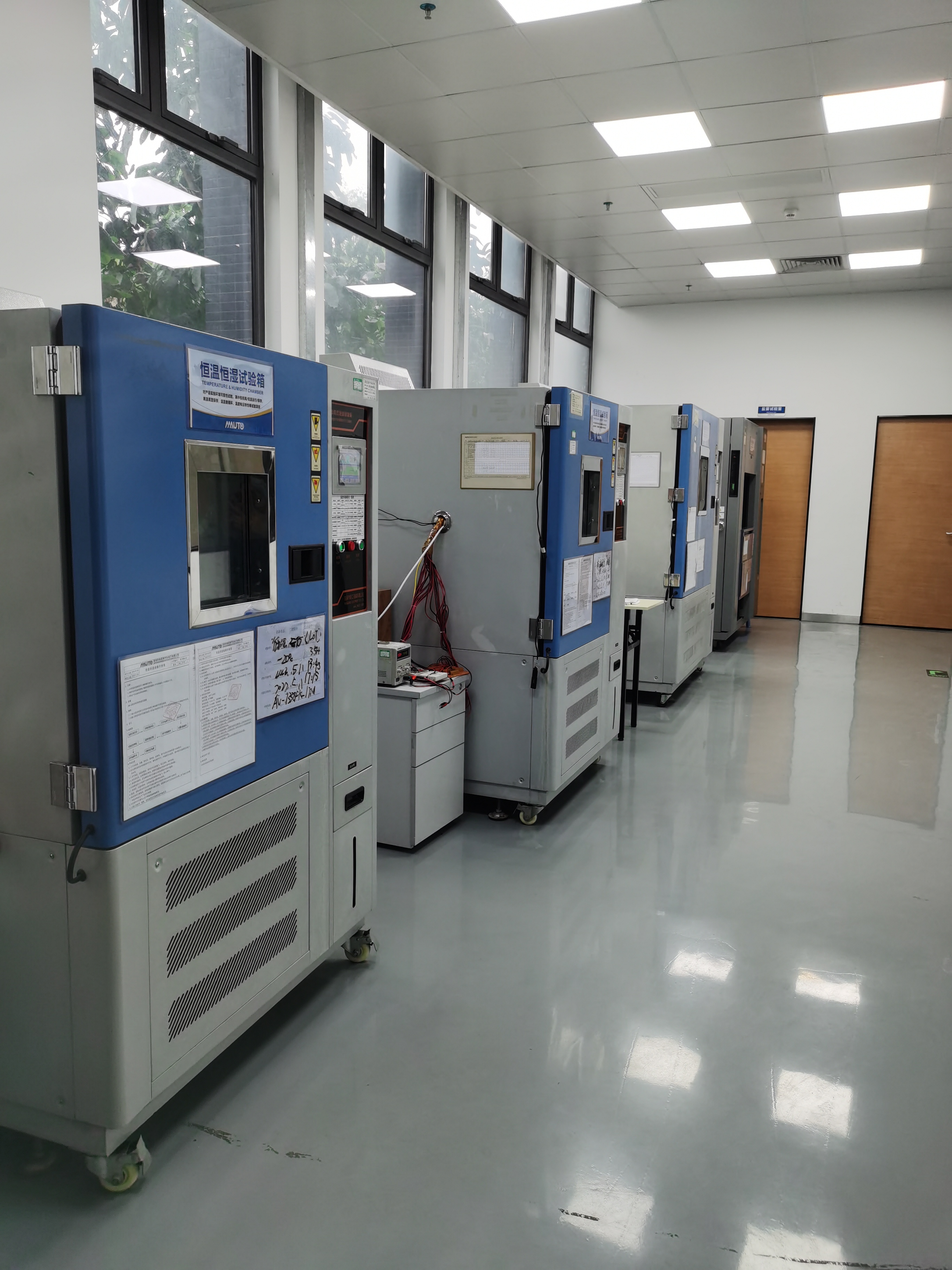
Automotive electronics are expected to survive conditions well beyond a comfortable test bench. TOPNAVI’s application documentation describes in-vehicle operation across −30°C to 75°C with high vibration, dust exposure and electromagnetic interference, a 12V DC vehicle supply and frequent cold starts. The ISO 16750 series is the reference standard commonly used for environmental testing of electrical and electronic equipment in road vehicles, and buyers specifying for OEM or fleet contracts usually ask for evidence against a comparable framework rather than a single bench result.
| Model | Stated operating temperature | Power input | Practical implication |
|---|---|---|---|
| TS105 | Not individually stated in the product specification | Vehicle DC supply via installation harness; USB; 3G/4G SIM | Confirm thermal validation for the target market before volume commitment |
| TN-3036 | −30°C to 75°C | DC 12V | Broadest stated envelope among the car units in this shortlist |
| TN-AI47 | −10°C to 60°C | DC 5V 2A | Cabin-mounted accessory; check installation location and ventilation |
| TN-M11 | −10°C to +60°C | 12V–30V | Suits touring use; exposed handlebar mounting should be assessed per climate |
Integration path and the wiring harness
The difference between a smooth retrofit and a costly one is rarely the screen. TOPNAVI’s application documentation cites CAN bus protocol adaptation for 99% of car models, steering wheel control compatibility and multi-language localisation as standard requirements for in-vehicle projects. Those requirements are why harness quality and connector strategy deserve the same attention as processor generation, and why a supplier able to state its CAN coverage explicitly is easier to qualify than one that describes fitment only in general terms.
Certification scope
Certification is market-specific, not universal. CE marking is mandatory for car radios entering the European Union under the applicable RED, EMC and LVD framework, while FCC certification is required for the United States. The TS105 lists E-mark, CE and FCC; the TN-3036 lists CE and FCC; the TN-AI47 lists CE, FCC and RoHS; the TN-M11 documentation does not state a certification set. Buyers should map those lists to their destination markets and request the underlying test documentation rather than relying on label claims alone.
Platform and update policy
Platform choice drives lifecycle, not just features. Android 14 on the TS105 gives the longest expected application compatibility of the four; Android 13 on the TN-3036 remains current for mainstream apps; Android 11 on the TN-AI47 reflects its accessory role; and Linux on the TN-M11 trades application breadth for stability and fast boot in a sealed, weather-rated housing. OTA update capability is documented for the TN-AI47, and remote online update is described as part of TOPNAVI’s in-vehicle application model—buyers should confirm the update mechanism for each specific model at contract stage.
Application Map: Fleet, Modification and Touring
| Deployment context | Shortlisted model | Decisive attributes | What to verify first |
|---|---|---|---|
| Mixed commercial fleet retrofit | TS105 | Universal fitment, Android 14, onboard 3G/4G SIM, wireless CarPlay and Android Auto | Thermal validation for the operating region; SIM provisioning process |
| Aftermarket modification and showroom builds | TN-3036 | 2560×1440 on 16.8 inch, 4GB+64GB, 4×50W, −30°C to 75°C | Dashboard cavity clearance; E-mark availability for EU distribution |
| Vehicles with factory wired CarPlay | TN-AI47 | HDMI output to existing screen, wireless projection, OTA update, CE/FCC/RoHS | Factory screen input availability; cabin temperature at the install point |
| Motorcycle touring and rental fleets | TN-M11 | IP67, 12V–30V, CarPlay and Android Auto, TPMS and DVR integration | Mounting position, power routing and daylight visibility |
The mapping is deliberately exclusive. A buyer who selects the TN-3036 for a fleet of mixed light commercial vehicles will hit fitment problems that the TS105 avoids, and a buyer who selects the TS105 to anchor a premium showroom build will lose the display presence that drives the sale. The shortlist works only when the deployment context is defined before the model is chosen.
Market Trend Analysis
Three structural trends support this kind of segmented shortlist.
Regional demand is concentrating in Asia Pacific. With a 54.21% revenue share of the car audio market in 2025 and USD 6.01 billion in regional value (Fortune Business Insights), Asia Pacific is where manufacturing scale, component supply and price competition now overlap. For buyers outside the region, that concentration means supplier evaluation should weigh production capacity and export experience, not only unit price.
Double DIN remains the volume format, while large-screen variants absorb the premium end. The 2024 head-unit estimate of USD 15.44 billion with Double DIN as the largest segment (Market Research Future) explains why 2DIN universal installation appears on both the TS105-class and TN-3036-class products, and why oversized panels are positioned as upgrades within that format rather than as a separate standard.
Integration complexity is a cost centre in its own right. A USD 50.1 billion wiring harness market in 2023 (Grand View Research) reflects how much value sits in looms, connectors and CAN adaptation. Suppliers that document CAN coverage and steering-wheel compatibility reduce the hidden engineering cost of a retrofit programme.
None of these trends changes the underlying rule: the product that fits the deployment is the product that performs, and category growth alone does not make two units interchangeable.
How the Shortlist Compares With Established Head-Unit Brands
Established international car audio brands compete on acoustic tuning heritage, brand recognition and mature regional service networks. Buyers comparing a TOPNAVI unit against that benchmark should compare on the dimensions that are actually documented rather than on reputation.
On the documented evidence, the differences are practical rather than promotional. TOPNAVI states a 20,000 m² factory, 100+ production staff, 50 engineers, annual output of 360,000 units and a monthly capacity of 30,000 units, with a stated lead time of 7–15 days and a minimum order quantity of 1 unit. The company documents OEM/ODM customisation across logo, UI theme, boot animation, app pre-installation, language sets, DSP tuning, button light colour, panel colour, screen size and resolution, RAM/ROM, wired or wireless CarPlay, 4G module, GPS/Beidou, AHD camera, steering-wheel control, CAN protocol, vehicle adaptation, packaging, firmware OTA and after-sales service. Export markets listed for that capability include the EU, US, Brazil, India, South Korea and Japan, with remote and online after-sales support. Those terms suit distributors and programme buyers who need configurability and low entry quantities.
Where this shortlist has real limits
The limits are equally specific. Audio performance claims are not part of this comparison: buyers with acoustically demanding requirements must validate DSP behaviour, amplifier headroom and speaker matching themselves, because a 4×50W output rating or a DSP feature line does not by itself establish listening quality. Brand recognition and local warranty infrastructure remain genuine advantages for established international brands in markets where end users expect them, and no specification in this shortlist offsets that. Finally, the four units here are not a complete catalogue—TOPNAVI also produces single-knob, dual-knob and portable navigation formats—so a buyer whose requirement falls outside these four scenarios should treat this as a starting reference rather than a full supplier evaluation.
Procurement Checklist for 2026 Buyers
- Define the deployment context before the product: fleet, modification, factory-screen retrofit, or two-wheel touring.
- Confirm the physical fitment in writing, including dashboard cavity dimensions for 2DIN chassis and screen clearance for panels above 16 inch.
- Map certification to destination markets: CE for the EU, FCC for the US, E-mark where applicable, and RoHS where customers require it.
- Request the operating-temperature specification for the exact model, not the product family, and compare it with the target region.
- Verify CAN bus coverage and steering-wheel control compatibility against the actual vehicle list you intend to serve.
- Confirm whether connectivity depends on a SIM plan, a paired phone, or the factory head unit, and budget for that dependency.
- Ask for the update mechanism and support policy per model, including remote and online support terms.
- Validate sample units on representative vehicles before committing to volume, using the stated MOQ and lead time to plan the pilot.
Future Outlook
The direction of travel is toward fewer replacement head units and more layered upgrades. As more vehicles leave the factory with a wired-CarPlay-capable screen, retrofit boxes in the TN-AI47 class become the lower-friction path, while universal head units in the TS105 class remain the practical answer for older or mixed fleets. Large-screen 2DIN players such as the TN-3036 will continue to absorb the premium aftermarket segment where visible upgrade value matters, and weather-rated two-wheel navigation in the TN-M11 class is likely to keep merging functions—navigation, recording and tyre-pressure monitoring—into single housings.
What will not change is the qualifying question. Buyers in 2026 are not short of android car radio options; they are short of documented evidence that a given unit fits a given vehicle, climate and compliance regime. A shortlist that starts from scenario and works back to specification remains the more reliable method.
FAQ
Which TOPNAVI model fits a commercial fleet retrofit?
The TS105 is the closest fit for mixed fleets. It is a 9 inch universal-fit Android 14 head unit with a UIS7865 octa-core processor, built-in wireless CarPlay and Android Auto, USB, WiFi, Bluetooth and a 3G/4G SIM slot, and it lists E-mark, CE and FCC certification. Its universal car fitment lets one part number cover multiple vehicle models, though its stated operating temperature is not individually documented in the product specification and should be confirmed for the target region.
Is the TN-AI47 a replacement head unit or an add-on?
The TN-AI47 is an add-on. It is a CarPlay Box with no screen of its own, outputting 1920×1080 over HDMI to the vehicle’s existing display while running Android 11 on a quad-core processor with 2GB RAM and 16GB storage. Its documented compatibility is universal for cars with OEM wired CarPlay, so it cannot be used in a vehicle that lacks that factory foundation.
Can the TN-M11 be used with both iOS and Android phones?
Yes, within its documented functions. The TN-M11 supports CarPlay, Android Auto and wireless mirror link, alongside GPS tracking, G-sensor, DVR and TPMS functions. It runs Linux rather than Android, so phone projection and dedicated navigation functions provide the intelligence rather than an on-device Android app ecosystem.
What operating temperature ranges do these units specify?
The TN-3036 states −30°C to 75°C and DC 12V input. The TN-AI47 states −10°C to 60°C with DC 5V 2A input. The TN-M11 states −10°C to +60°C with 12V–30V input. The TS105 product specification does not state an operating temperature individually, while TOPNAVI’s in-vehicle application documentation describes a general requirement of −30°C to 75°C with vibration, dust and electromagnetic interference exposure.
Which certification marks are listed for each model?
The TS105 lists E-mark, CE and FCC. The TN-3036 lists CE and FCC. The TN-AI47 lists CE, FCC and RoHS. The TN-M11 documentation does not state a certification set. At company level, TOPNAVI states ISO 9001 for its factory and CE, FCC, RoHS, E-Mark and EMC certification across its product range; buyers should request the underlying test documentation for the specific model and destination market.
What are TOPNAVI’s stated MOQ, lead time and capacity?
TOPNAVI states a minimum order quantity of 1 unit, a lead time of 7–15 days, a monthly capacity of 30,000 units, and 100% testing. The company reports a 20,000 m² factory, 100+ production staff, a 50-engineer R&D team and annual output of 360,000 units, with remote and online after-sales support.
Can buyers request OEM/ODM customisation across these models?
TOPNAVI documents OEM/ODM capability covering logo, UI theme, boot animation, app pre-installation, language sets including Portuguese, Spanish, English and French, DSP tuning, button light colour, panel colour, screen size and resolution, RAM/ROM, wired or wireless CarPlay, 4G module, GPS/Beidou, AHD camera, steering-wheel control, CAN protocol, vehicle adaptation, packaging, firmware OTA and after-sales service. The extent to which each option applies to a specific model should be confirmed per project.
Reference material: TOPNAVI product documentation, capability and project records, and third-party market data from Grand View Research, Market Research Future and Fortune Business Insights as cited above. The company’s product brochure is available at TOPNAVI brochure (PDF), and company information is published at www.topnavi.com.cn.
¿Tiene preguntas o necesita más detalles?
Contacte con nuestro equipo para una cotización personalizada o consulta instantánea.
Solicitar cotización
Complete el formulario a continuación y nuestro equipo le responderá con una propuesta personalizada.
Chat directo de WhatsApp
¿Prefiere chatear en tiempo real? Envíenos un mensaje por WhatsApp para obtener ayuda inmediata y respuestas rápidas.
- Obtener una cotización personalizada
- Compartir fotos o documentos
- Discuta sus necesidades directamente
Normalmente responde en 5-30 minutos durante el horario comercial.