
201 J2 Finish vs. Secondary 304: An Independent Cost-Performance Analysis for Decorative Uses
Decorative stainless steel projects rarely fail at the grade level. They fail at the surface level. A mirror panel specified from a showroom sample ends up in a wet kitchen zone. A coil ordered at roughly 600 mm is cut for a part that needs a 1,000 mm blank. A coloured 8K finish is quoted at a thickness the polishing line does not cover. None of these errors appear on the quotation, and all of them appear later as rework, replacement and idle line time.
This analysis compares two distinct product categories supplied by NINGBO SUNFIRE STAINLESS STEEL CO., LTD: 201 J2 coils with decorative finishes — NO.4, 8K, Gold 8K, Rose Gold 8K and Black 8K — produced at 1240 mm width, and Secondary Stainless steel coils in grade 304 with a mainly BA finish at around 600 mm width. Both are legitimate decorative inputs. They are not interchangeable, and the economically optimal choice depends on three variables a buyer can measure before ordering: exposure, visibility and blank width.
"Economically optimal" here does not mean lowest purchase price per tonne. It means lowest cost per acceptable square metre across the service life of the part — the point at which finishing yield, blank utilisation, corrosion behaviour and replacement cost are all counted in the same equation.
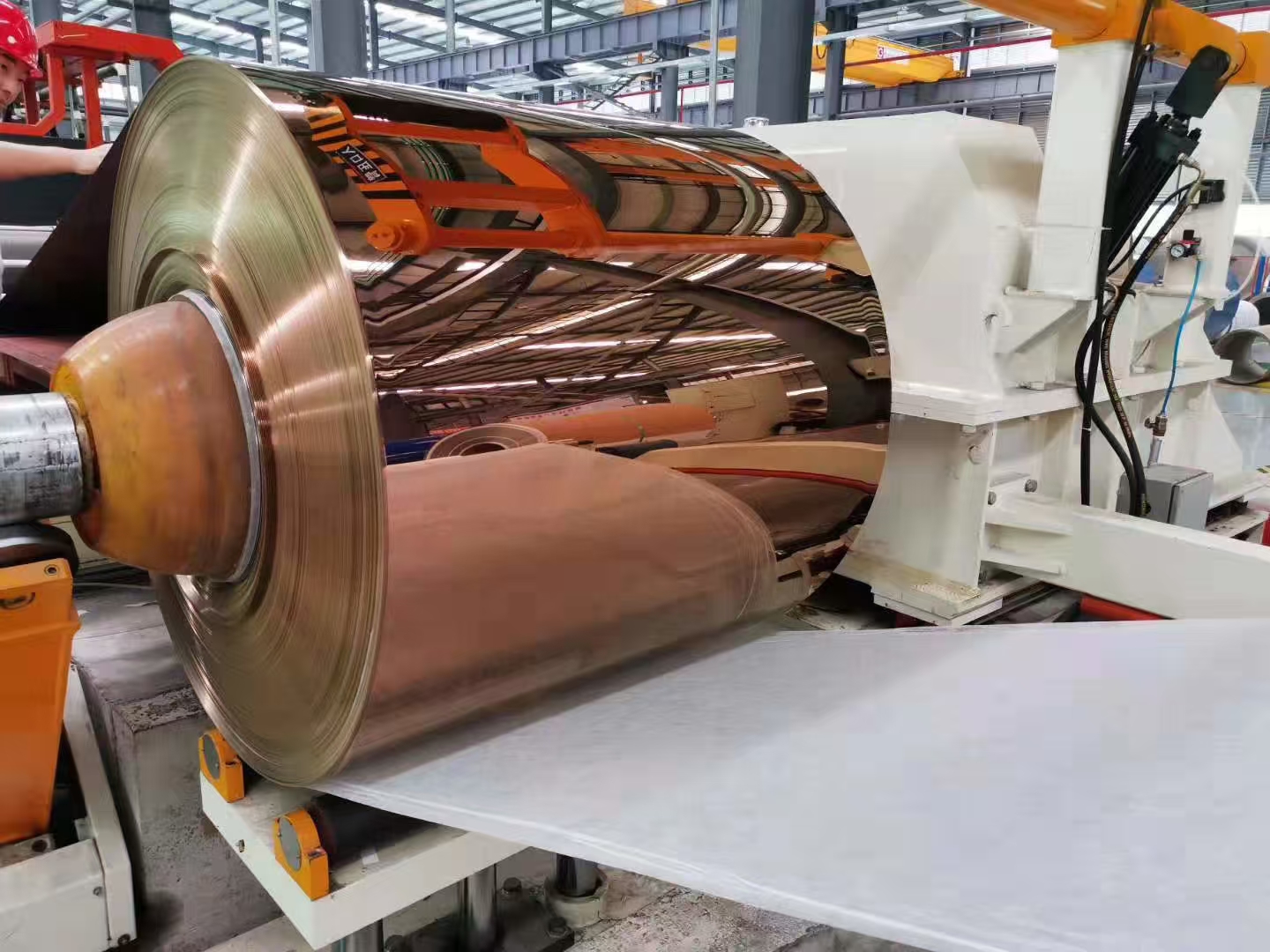
The Buying Problem: Aesthetics, Exposure and Width Pull in Different Directions
Decorative buyers are asked to satisfy three requirements that rarely align. The first is appearance: in architectural decoration, appliance exteriors and elevator interiors, the surface is the product. The second is environment: many of these same parts sit in high-moisture zones or food-contact conditions, where the substrate's corrosion behaviour becomes visible rather than theoretical. The third is economics: decorative panels are usually area-driven purchases, so width utilisation and finishing yield move the landed cost far more than a small difference in grade price.
The 201 J2 Finish range and the Secondary Stainless steel range solve different parts of that problem. The 201 J2 route buys appearance and width. The secondary 304 route buys substrate tolerance and a lower material tier, at the cost of finish ambition and, in the common narrow format, at the cost of width. A buyer who treats these as two prices for the same thing will usually choose wrongly.
What Each Product Actually Is
NINGBO SUNFIRE STAINLESS STEEL CO., LTD is a Ningbo-based stainless steel supplier founded in 2013, with exports accounting for 100% of sales and main markets including Pakistan, India, Vietnam, Russia, Turkey, Indonesia, the UAE, Thailand, Malaysia and Bangladesh. The company's product scope includes stainless steel coils, secondary and baby coil material, circles and finished surfaces. The two categories compared here sit at opposite ends of that scope.
201 J2 Finish is a decorative coil programme built on a 201 J2 substrate, offered in five surface classes — NO.4, 8K, Gold 8K, Rose Gold 8K and Black 8K — all at 1240 mm width. Thickness coverage differs by finish, which is the single most common source of quotation error in this category.
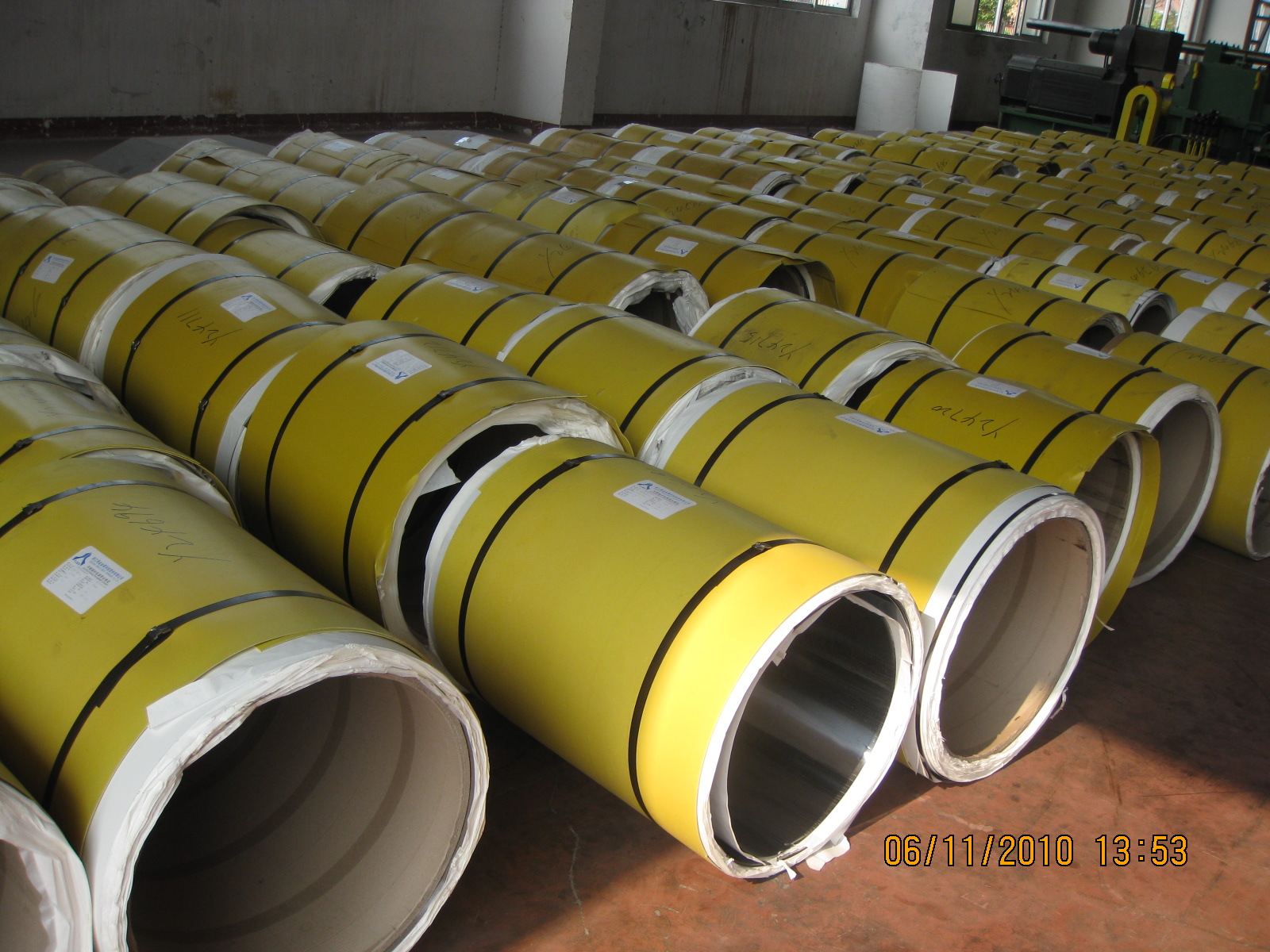
Secondary Stainless steel is a graded-availability category rather than a single fixed specification. The narrow format runs from 0.1 mm to 1.2 mm at around 600 mm width with coils of around 200 kg, mainly BA finish, packed with PVC outside or paper interleaved, and available in 430, 201 and 304. A wider format runs from 0.25 mm to 1.5 mm at around 1000–1250 mm in 430, 304, 201 and 410. Grade 304 with BA finish is the variant examined here.
| Attribute | 201 J2 Finish (decorative) | Secondary 304 (BA) |
|---|---|---|
| Substrate | 201 J2 | 304 (category also covers 430, 201, 410) |
| Surface classes | NO.4, 8K, Gold 8K, Rose Gold 8K, Black 8K | Mainly BA finish |
| Thickness | 0.28–1.45 mm (NO.4); 0.28–1.95 mm (8K); 0.28–1.15 mm (Gold 8K / Rose Gold 8K) | 0.1–1.2 mm (narrow); 0.25–1.5 mm (wider) |
| Width | 1240 mm | Around 600 mm (narrow); around 1000–1250 mm (wider) |
| Coil weight | Per order confirmation | Around 200 kg (narrow); below or above 1 mt (wider) |
| MOQ | 5–20 mt per thickness | Not stated in the published specification; confirm per order |
| Packaging | Export package | PVC outside / paper interleaved |
| Typical role | Visible decorative surface | Formed, less-exposed or cost-driven surfaces |
Specifications as published for the two product categories. Values are not interchangeable between widths and finishes.
Aesthetics: What 8K Buys, and What BA Does Not Attempt
8K is a mirror-class polished finish. Its commercial value is image clarity: the surface reflects a recognisable, undistorted reflection, which is what architectural specifiers and appliance designers are buying when they choose it. Two physical conditions determine whether that value survives production. The first is substrate flatness — polishing amplifies rather than hides waviness. The second is the polishing sequence itself, which removes material and therefore interacts directly with the thickness range available for each finish class.
The coloured variants extend this into design territory. Gold 8K, Rose Gold 8K and Black 8K are specified as distinct surface classes in the 201 J2 Finish range, and they are the reason this product category competes in decorative interiors where a natural steel tone is not wanted. Their thickness band is narrower than uncoloured 8K — 0.28–1.15 mm against 0.28–1.95 mm — a constraint that should be resolved at design stage rather than at order stage.
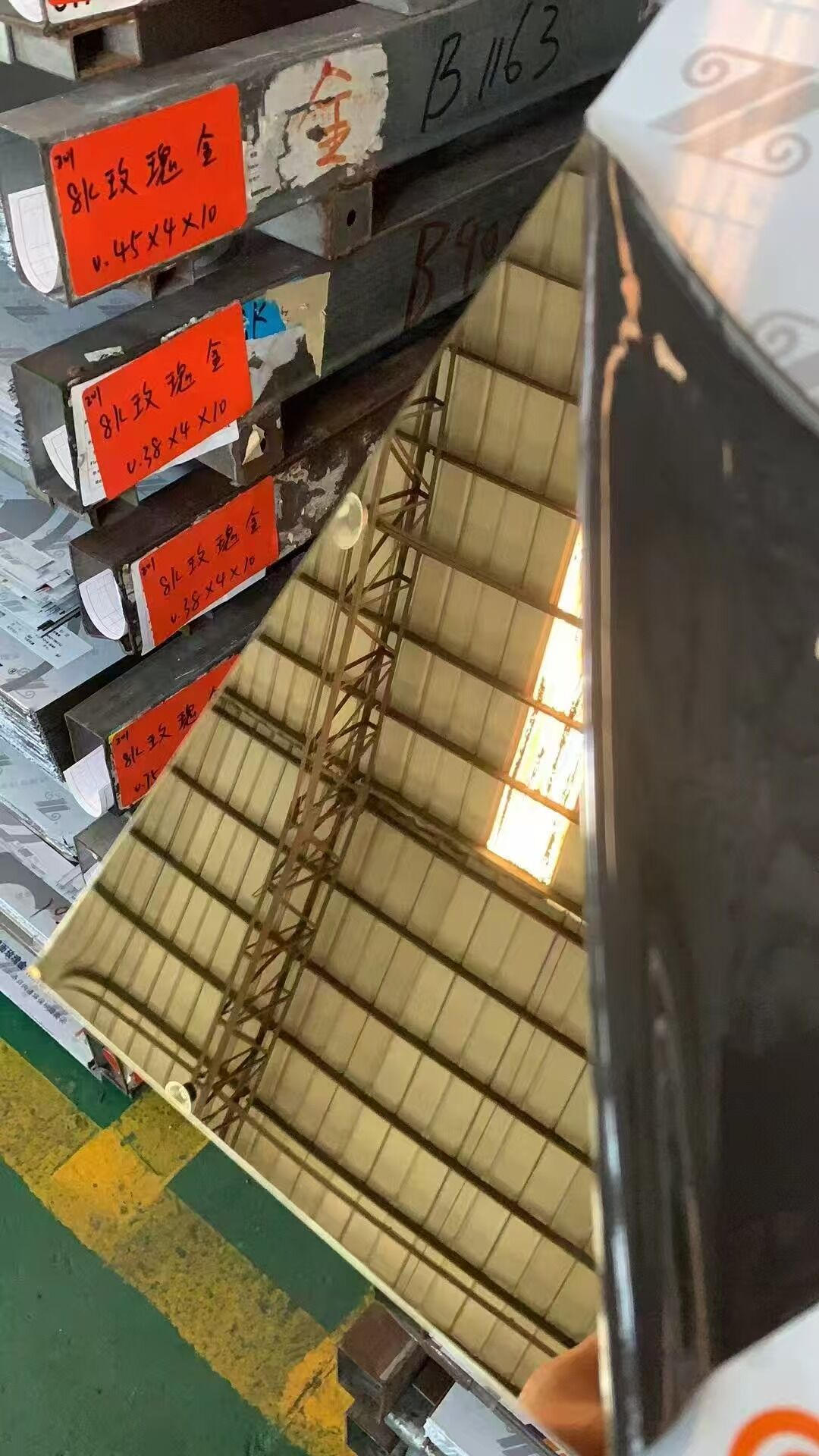
BA — bright annealed — is a different proposition. It produces a clean, smooth, reflective-but-not-mirror surface through controlled-atmosphere annealing, and it is the dominant finish across the secondary coil category for a practical reason: it is a mill-level finish, not a downstream polishing operation. Sunfire reports operating a vertical bright annealing furnace, which is the equipment class associated with BA capability. The buyer consequence is straightforward: BA delivers a consistent industrial appearance and good flatness at a cost structure that mirror polishing cannot match, but it will not read as a mirror in a design-led interior.
Where the Cost Difference Really Comes From
1. Substrate chemistry
201 J2 is a chromium-manganese austenitic grade; 304 is a chromium-nickel grade. Nickel is a recognised cost driver in flat stainless products, which is why 201-family grades are generally positioned as the lower-cost decorative option and why higher nickel content in 304 is generally associated with better tolerance of moisture and chloride exposure. For a decorative part in a dry interior, that difference is largely unmonetised. For a part that will spend its life wet, it is the difference between a surface that stays acceptable and one that has to be replaced.
2. Finishing steps and yield
A mirror finish is a sequence of operations; a BA finish is an annealing outcome. Each additional finishing step consumes line time, consumables and material thickness, and each introduces a rejection opportunity. A polished decorative coil therefore carries a cost structure that scales with the proportion of acceptable surface produced, not simply with tonnage. This is why finish-class pricing can move independently of grade pricing, and why quoting a Gold 8K panel against a BA panel as if they were the same material is a category error.
3. Width and blank utilisation
This is the most under-analysed cost line in decorative sourcing. A 1240 mm 201 J2 Finish coil supports wide single-piece decorative panels — cladding, appliance doors, lift interiors — and it also allows multi-strand slitting so that several narrow strips are produced from one master coil. A secondary coil at around 600 mm cannot produce a 1,000 mm panel at all; where the part is narrow, however, it produces it with less edge trim and less capital tied up in material per piece. The correct comparison is not 1240 mm versus 600 mm in the abstract, but which width produces the highest yield for the specific blank.
Secondary material is also available in a wider format of around 1000–1250 mm, so a buyer who needs width should check availability in the wider secondary range before concluding that secondary is unsuitable. Secondary narrow and secondary wider are different supply positions with different thickness coverage.
4. Field failure and replacement cost
Decorative surfaces are judged by appearance, which makes corrosion visible early. On a mirror surface, surface attack breaks the reflection locally and is far more noticeable than equivalent attack on a BA surface. In high-traffic areas, mirror finishes also record contact — scratches and fingerprints — more visibly than bright annealed surfaces. Where replacement is expensive or disruptive, a slightly higher material cost can be recovered quickly; where the part is accessible and inexpensive to swap, the calculation reverses.
Application Fit: Kitchenware, Interior Decoration and Wet Zones
Sunfire's application data places these products in food processing, architectural decoration, home appliance manufacturing and automotive parts, operating under high-temperature, food-contact and outdoor-construction conditions, with stated requirements for mirror finish, anti-rust performance and stable thickness tolerance. Processing equipment typically involved includes slitting machines, tube mills and stamping equipment. Those conditions define the fit test far better than a grade label does.
| Scenario | Better economic fit | Reasoning |
|---|---|---|
| Dry interior feature panels, lift cladding, retail fixtures requiring true mirror | 201 J2 Finish, 8K or coloured 8K | Appearance is the specification; 1240 mm width suits large single-piece panels |
| Kitchen splash zones, food-contact surrounds, sustained humidity | Secondary 304 with BA finish | Nickel-bearing substrate generally tolerates moisture better; BA hides local surface change less than mirror does |
| Cookware and appliance bodies requiring drawing and stamping | Secondary 304 narrow, 0.1–1.2 mm | Thickness band suits forming; ~600 mm width matches typical drawn blanks |
| High-traffic wall panels and lift interiors in continuous use | NO.4 (201 J2 Finish) rather than 8K | Satin surfaces mask contact marks that mirror surfaces record visibly |
| Coloured decorative trims and appliance fascias | 201 J2 Finish in Gold 8K, Rose Gold 8K or Black 8K | Colour class is the design requirement; thickness limited to 0.28–1.15 mm for gold and rose gold |
| Roll-formed tube and narrow-section components | Secondary narrow, or 201 narrow-width 2B/BA from the wider 201 range | Width is the deciding variable, not surface ambition |
Limits and Boundaries Buyers Should Not Skip
A cost-performance analysis is only useful if it states where each option stops being appropriate. Four boundaries matter in this comparison.
- The decorative finish ranges are thickness-bound. Uncoloured 8K runs to 1.95 mm, NO.4 to 1.45 mm, and Gold 8K / Rose Gold 8K to 1.15 mm. A design calling for a 1.8 mm gold mirror panel cannot be satisfied within this published specification and should be re-detailed rather than renegotiated at order stage.
- Secondary is a category, not a fixed specification. The range covers 430, 201, 304 and 410, with a surface described as mainly BA and, in the narrow format, coil weights around 200 kg. Buyers must confirm grade and inspect surface per lot; secondary material is not suitable where a single-origin, fully uniform specification is mandated across an entire project.
- Width and finish ambitions conflict directly. A roughly 600 mm secondary coil cannot serve a wide decorative panel, and a 1240 mm polished decorative coil is not the economical route for a small stamped blank. The wider secondary format of around 1000–1250 mm closes part of this gap, but availability must be confirmed rather than assumed.
- Neither catalogue entry defines a severe-service environment. The published application conditions cover high temperature, food contact and outdoor construction, with requirements for mirror finish, anti-rust performance and stable thickness tolerance. Where marine exposure, pressure service or structural loading is involved, buyers should specify against the applicable standard and validate with mill certificates and independent testing rather than relying on a decorative product designation.
A Procurement Checklist for Decorative Coil Orders
The following verification sequence applies to both categories and is where most decorative sourcing risk is actually removed.
| Check | What to request | Why it decides the outcome |
|---|---|---|
| Grade and lot identity | Mill test certificate per lot | Separates a 304 secondary lot from a 201 or 430 lot inside the same category |
| Thickness control | Thickness inspection records against the ordered band | Polished finishes are thickness-sensitive; tolerance drift shows up after finishing |
| Surface class | Surface inspection records plus approved physical sample | "Mainly BA" and "8K" both require a reference standard to be enforceable |
| Width and coil weight | Confirmed coil width, edge condition and weight range | Drives blank yield and whether existing handling equipment can run the coil |
| Packing | PVC outside or paper interleaved, export package, or a specified combination | Surface damage in transit is indistinguishable from mill defects at receiving inspection |
| Lead time and stock position | Quoted lead time against the confirmed grade, width and finish | Stock-based lead times do not automatically extend to non-stock finish classes |
Market Context: Decorative Demand Versus Cost Discipline
Two published market data points frame this comparison. Custom Market Insights valued the global stainless steel market at USD 134 billion in 2025, and commercial research on mirror polished stainless steel sheets indicates a CAGR of 5.3% through 2032. Both figures come from commercial research sources rather than official statistical releases and should be treated as directional context, not as procurement inputs.
The practical reading is not that decorative demand is rising, but that it is rising unevenly. Mirror and coloured finishes grow where design budgets exist; cost-sensitive volume programmes continue to prioritise yield and substrate economy. That split is exactly why dual-specification strategies — polished decorative material where it is seen, secondary or unpolished material where it is not — have become common in kitchenware, appliance and interior fit-out supply chains. The strategy works only when the boundary between the two is drawn by exposure and handling, not by workshop habit.
Where Sunfire Sits in This Comparison
Both product categories in this analysis come from a single supplier, which matters less for price than for accountability: the same quality system covers the polished decorative coil and the secondary BA coil. Sunfire reports annual output of 25,920 MT from a cooperative factory site, a 100% export orientation, and OEM customisation across thickness, width, surface finish, PVC and packaging — the parameters that actually determine whether a decorative order is reproducible. Published lead times run from 7 to 45 days depending on specification and stock position.
The quality control sequence is mill test plus thickness inspection plus surface inspection. For decorative buyers, that third step is the one that decides acceptance, and it is the step most worth auditing on a first order. The company also reports operating a 20-roll reversible cold rolling mill and a vertical bright annealing furnace — equipment consistent with cold-rolled and bright-annealed product families, and a reasonable basis for requesting equipment records, surface samples and product-specific capacity evidence before committing a programme.
On the demand side, Sunfire reports a stainless steel export relationship of more than ten years in Indonesia, India, South Africa, Pakistan, Vietnam and Saudi Arabia, running at 50 containers per month into kitchenware, home appliances, and building and construction applications. The reported outcomes — stable material performance, good corrosion resistance, consistent surface quality, and conformity with international standards — are the four attributes that decorative buyers are actually testing when they run a first production batch.
Future Outlook
Three developments are likely to shape this comparison over the next planning cycle. First, decorative specification is becoming more finish-specific: buyers increasingly name a finish class and a thickness band rather than a grade alone, which favours suppliers who publish both and can hold them. Second, coloured mirror finishes are moving from feature applications into mainstream appliance and interior detailing, which raises the importance of the narrower thickness bands attached to Gold 8K and Rose Gold 8K. Third, secondary and graded-availability material is being evaluated more systematically, with buyers treating it as a qualified input rather than an opportunistic purchase — a change that places more weight on lot-level inspection and less on category-level assumption.
The through-line for buyers is consistent: define the environment, define the visible area, then define the blank. The grade and finish follow from those three decisions far more reliably than the reverse.
FAQ
Which is the better fit for a humid kitchen environment: 201 J2 8K or secondary 304 BA?
The substrate usually decides this. Secondary 304 is a chromium-nickel grade and is generally more tolerant of moisture and chloride exposure than 201-family grades, while 201 J2 is a chromium-manganese grade positioned as the lower-cost decorative option. A mirror 8K surface also makes any local surface change more visible than a BA surface does. Where the part stays wet and is highly visible, the 304 substrate carries the lower replacement risk; where the environment is dry and appearance is the dominant requirement, the 201 J2 8K route is the more economical specification.
Can secondary 304 coils be used for visible decorative parts?
Yes, where a bright annealed appearance is acceptable. Secondary Stainless steel is supplied mainly in BA finish, which gives a clean, smooth, reflective-but-not-mirror surface. It will not reproduce the image clarity of an 8K finish, and because the category covers 430, 201, 304 and 410 with a surface described as mainly BA, the grade and surface condition should be confirmed by mill certificate and surface inspection for each lot rather than inferred from the product name.
What width limitations should be planned for?
Secondary material is commonly supplied in a narrow format of around 600 mm at 0.1–1.2 mm thickness with coils of around 200 kg, and in a wider format of around 1000–1250 mm at 0.25–1.5 mm. The 201 J2 Finish range is published at 1240 mm width. A part wider than the available coil width cannot be produced in one piece from that coil, so blank width should be checked against both formats before secondary material is ruled in or out.
Does a coloured 8K finish restrict the thickness I can order?
Yes. In the 201 J2 Finish range, uncoloured 8K is published from 0.28 mm to 1.95 mm and NO.4 from 0.28 mm to 1.45 mm, while Gold 8K and Rose Gold 8K are limited to 0.28–1.15 mm. Black 8K is listed among the surface classes, but the published specification does not state a separate thickness band for it, so that should be confirmed for the specific order. Minimum order quantity for this range is 5–20 mt per thickness.
How should a decorative coil lot be validated before mass production?
The published quality control sequence is mill test plus thickness inspection plus surface inspection. In practice this means requesting the mill test certificate for grade identity, thickness records against the ordered band, and surface records against an approved physical sample. Packing should be confirmed at the same time, since secondary material is supplied with PVC outside or paper interleaved and the 201 J2 Finish range in export package; transit surface damage is difficult to separate from mill surface defects once the coil is received.
Reference document: the Sunfire stainless steel product brochure, covering grades, finishes and packaging, is available for download — Sunfire stainless steel brochure (PDF).
¿Tiene preguntas o necesita más detalles?
Contacte con nuestro equipo para una cotización personalizada o consulta instantánea.
Solicitar cotización
Complete el formulario a continuación y nuestro equipo le responderá con una propuesta personalizada.
Chat directo de WhatsApp
¿Prefiere chatear en tiempo real? Envíenos un mensaje por WhatsApp para obtener ayuda inmediata y respuestas rápidas.
- Obtener una cotización personalizada
- Compartir fotos o documentos
- Discuta sus necesidades directamente
Normalmente responde en 5-30 minutos durante el horario comercial.