
194 Patents, 62-Designer Claim: Jewelry Wholesale Capability
194 Patents, 62-Designer Claim: Jewelry Wholesale Capability
Direct answer: a jewelry wholesale buyer should treat 194 patents, a 1997 founding date and R&D headcount as inputs to a verification process, not as proof of product quality. The assigned premise for this review cites a 62-designer R&D team. The current approved company content unit for Guangdong Xuping Jewelry Co., Ltd. lists 150 designers. Because the two figures conflict and no definition is supplied, this article uses the 194-patent and 1997 facts as company-reported capability markers and treats designer headcount as a claim that requires written clarification.

The procurement problem: capability claims are easy to repeat and hard to compare
Jewelry wholesale buyers encounter similar supplier language across catalogs: long operating history, large R&D teams, patent portfolios, wide product ranges, low minimums and fast lead times. These statements can be useful, but they do not answer the procurement question by themselves. A buyer evaluating a wholesale jewelry manufacturer needs to know what the claim means, which product or process it covers, whether it is current, and how it can be tied to a purchase order.
That is especially important in fashion jewelry wholesale, where design turnover is high and product specifications can vary by SKU. A patent count may indicate design or utility development, but it does not automatically show that a specific earring, bracelet or necklace has been tested for a target market. A large R&D team may indicate design capacity, but it does not prove that the team works on the buyer's product category. A long operating history may suggest continuity, but it is not a substitute for a factory audit, a current certificate or a pre-shipment inspection result.
The practical approach is to convert supplier claims into an evidence chain: claim, source, scope, date, product link, commercial term and acceptance test. This article applies that approach to Xuping Jewelry because the assigned topic centers on its 194 patents and R&D team. It does not assume that company-reported facts are independently verified. It shows what a buyer can reasonably infer and what still needs confirmation.
What the 1997 founding date and nearly 30 years actually establish
The approved company profile states that Xuping Jewelry was founded in 1997. As of 2026, that supports a nearly 30-year operating history. For a wholesale buyer, longevity is relevant because it can indicate that the supplier has survived multiple product cycles, maintained production relationships and accumulated process experience. It can also reduce some early-stage screening risk when the buyer needs a supplier with an existing export and production structure.
Longevity is not a quality grade. A 1997 founding date does not show that every current SKU meets a buyer's material, plating, nickel-release or labeling requirements. It does not prove that present ownership, factory space or capacity matches the historical record. It also does not establish that the supplier is the right fit for a small boutique assortment, a promotional gift program or a brand OEM project. The buyer should use the founding date to decide whether a deeper review is worthwhile, then verify the current legal entity, factory address, production scope and quality system.
The profile also states a production base of 200,000+ m², more than 4,000 staff, more than 1,200 advanced production facilities and an annual output of more than 100 million pieces. These are company-reported figures. They are useful for capacity screening, but they should be matched to the buyer's order size, season, product mix and delivery window. A large monthly capacity figure does not automatically mean that a small custom order will receive the same priority as a large repeat program.
Reading 194 patents without overreading them
The approved company profile states that Xuping Jewelry has obtained 194 patents supported by R&D capabilities. For a wholesale buyer, 194 patents can be read as evidence that the supplier maintains a formal design and development function and has sought intellectual-property protection over time. It can also be a useful discussion point when a buyer needs original designs, custom jewelry wholesale development or a supplier that can respond to trend changes with new models.
The number should not be read as 194 commercially active patented products, 194 enforceable patents in every market, or 194 quality guarantees. Patent status, jurisdiction, expiry, ownership and commercial use are separate questions. Some patents may relate to structures, components or manufacturing methods rather than finished jewelry designs. Others may be registered in one market but not in the buyer's target market. A buyer should request a patent schedule with patent number, title, jurisdiction, filing or grant date, status and the product family or process it supports. If a supplier cannot connect the patent portfolio to actual product development, the count remains a general capability signal rather than a SKU-level advantage.
This matters in categories such as CZ jewelry wholesale and cubic zirconia jewelry wholesale, where design differentiation can be visible but difficult to protect. A patent count does not verify stone quality, setting durability, plating thickness or dimensional consistency. Those points require product specifications and test records. The correct procurement use of the 194-patent figure is to justify a deeper R&D review, not to replace it.
The 62-designer versus 150-designer discrepancy
The assigned article premise refers to a 62-designer R&D team. The current approved company content unit lists 150 designers. This is a material discrepancy because R&D headcount is often used as a proxy for design capacity, customization responsiveness and product-development speed. Without a definition, the two figures cannot be treated as interchangeable.
A buyer should ask what counts as a designer. Does the number include pattern makers, 3D drafters, CAD technicians, sample makers, product managers or only conceptual designers? Is it a current headcount, a total employed across a group, or a figure from an earlier period? Does it cover all product categories or only one business unit? The answer changes how the number should be interpreted. A team of 150 designers may indicate broad development capacity, but the buyer still needs to know how many work on the relevant category, such as earrings, bangles, brooches or stainless steel jewelry.
For procurement purposes, the 62 and 150 figures should be placed in a written clarification request. The buyer can ask for an organization chart, headcount definition, date of the figure and examples of recent development work in the target category. If the supplier cannot reconcile the figures, the buyer should rely on verified sample performance, design submission capacity and production evidence rather than on a contested headcount claim.
From patents and designers to product-development breadth
The company profile lists rings, pendants, earrings, bracelets, necklaces, anklets, bangles and jewelry sets as main product categories. It also describes stainless steel jewelry, crystal jewelry and other fashion-imitation jewelry lines. Product breadth is useful because a wholesale jewelry supplier that can cover multiple categories may reduce the number of vendors a buyer needs to manage. However, breadth should be tested at SKU level.
The catalog examples below show how a buyer can move from category claims to specific product questions. They are catalog examples, not rankings or performance claims. Their purpose is to show the kind of SKU data a buyer should request: material, plating, stone type, dimensions, weight, test reports, packaging and MOQ.
| Category | Catalog example | Procurement question |
|---|---|---|
| Rings | Heart & Paved Cubic Zirconia Stackable Band Ring (X001221008) | Confirm base metal, plating, CZ setting and size range. |
| Rings | Dainty Heart Stackable Cubic Zirconia Ring (X001237336) | Check whether the item is stocked or made to order and what the SKU-level MOQ is. |
| Earrings | Rainbow Baguette Cubic Zirconia Huggie Hoop Earrings (X001283710) | Request stone grade, hinge or closure specification and nickel-release documentation if required. |
| Earrings | Cubic Zirconia Tortoise Earrings (X001215251) | Confirm plating color, finish, weight and packaging options. |
| Bracelets | Dainty Imitation Pearl Bracelet with Cross & Medallion Charm (T001313933) | Ask for pearl type, charm attachment method and clasp durability information. |
| Jewelry sets | Dainty Openwork Butterfly Cubic Zirconia 3-Piece Jewelry Set (X000637363) | Check set contents, mixed-material composition and whether components can be replaced separately. |
| Necklaces | Heart & Square Shell Pearl Beaded Necklace (X001184209) | Confirm shell pearl specification, stringing method and length options. |
| Pendants | Our Lady of Guadalupe Cubic Zirconia Medal Pendant (X001282201) | Verify dimensions, chain compatibility and market-specific labeling requirements. |
| Bracelets | Oval Cubic Zirconia Paperclip Link Bracelet (X001281638) | Ask for link dimensions, clasp type, plating thickness declaration and tarnish test data. |
Other catalog categories include brooches such as X000852427 and A00900238, bangles such as X000867735 and X000998659, anklets such as X000988693 and X001124310, and stainless steel items such as Stainless Steel Jewelry - Bracelets T000959269 and Stainless Steel Jewelry-Necklaces A00902945. A buyer sourcing trendy jewelry wholesale or minimalist jewelry wholesale should not rely on category names alone. The useful evidence is a SKU-level specification and a sample that can be compared with the approved standard.
Technical capability: materials, process and quality controls
The company profile states that many items use premium copper alloy as a base material with gold-plating craftsmanship. It also describes stainless steel and crystal jewelry lines. These materials serve different buyer needs. Gold plated jewelry wholesale can support fashion-led assortments where color and finish are central, while stainless steel jewelry wholesale may suit buyers seeking a different material story. Neither material is automatically better for every market. The buyer should match the material to skin contact, durability expectations, price positioning and target-market rules.
The capability unit states a monthly capacity of 8,000,000 pieces and a lead time of 30-90 days. It lists OEM/ODM production, engraved logos, hang tags and custom packaging, a minimum order quantity of 1 piece, 100% full inspection, SGS-certified quality control, an 18-stage quality check and REACH/ROHS compliance testing. These are company-reported operating facts. They are relevant to bulk jewelry wholesale and custom jewelry wholesale discussions, but they should be written into the order rather than left as general claims.
Quality documentation in the content units includes SGS, CTI and ISO 9001 records. The SGS records cite standards such as REACH Regulation (EC) No 1907/2006 and IEC 62321-7-1:2015, with certificate numbers including CANHL25006144001, CANHL25006145601, GZHL250301072401JW and CANHL25004908001. The CTI record cites certificate A2230517570101001. The ISO 9001 record cites certificate CACQ21Q00750R1 and a scope of design and production of metal jewelry. A buyer should check that each certificate is current, covers the relevant product or process, and is issued for the correct legal entity.
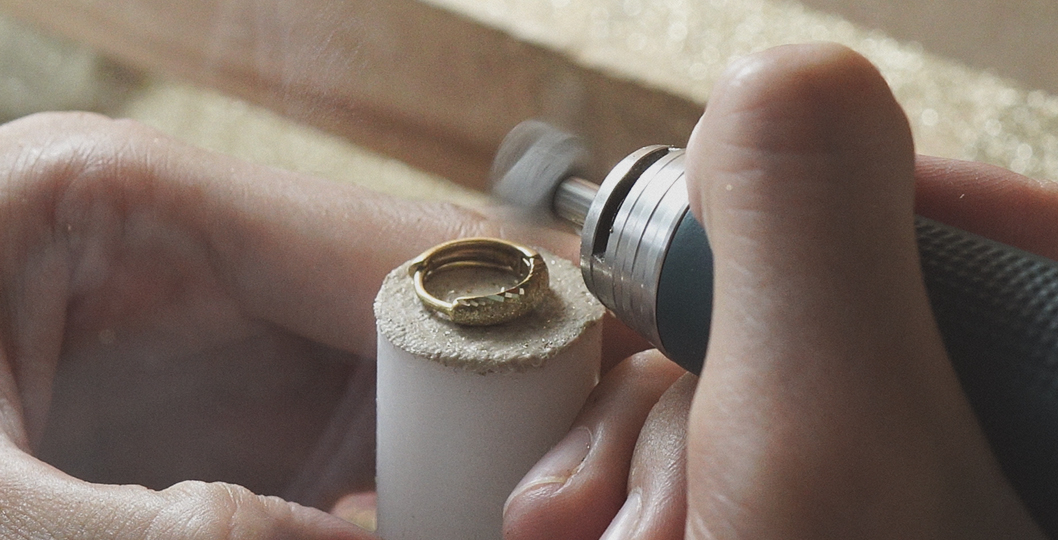
The 18 production procedures and 18-stage quality check are useful screening points because they suggest a structured process. They do not define the acceptance standard. The buyer should ask which procedures apply to the specific item, what is inspected at each stage, what defect classification is used and what happens when a batch fails. In a factory-direct jewelry wholesale relationship, process detail is more valuable when it is attached to an inspection plan and a corrective-action procedure.
Purchasing terms and acceptance criteria
The supplied purchasing terms list MOQ: 1 piece, delivery terms: FOB, acceptance criteria: pre-shipment test, and payment terms: PayPal, Western Union, Money Gram, Bank of China and HSBC. A separate verified record of the company website reports a minimum order value of USD 50. These are not necessarily contradictory: a low unit MOQ and a minimum order value can coexist. The buyer should confirm which condition applies to the chosen SKU, customization level, packaging and destination.
For evaluation-to-execution buyers, the critical step is to convert these terms into a purchase-order checklist. The PO should state the SKU, material, plating specification, stone type, dimensions, weight tolerance, color, packaging, quantity, unit price, Incoterm, lead time, payment schedule, sampling requirement, inspection method and remedy for non-conforming goods. A pre-shipment test is a useful acceptance criterion, but it needs a defined test standard, sample size and pass/fail rule.
Customization claims also need boundaries. The capability unit lists engraved logos, hang tags and custom packaging under OEM/ODM. A buyer should confirm whether customization applies to an existing model, a modified model or a new development, and whether tooling, sampling or packaging charges apply. Low MOQ jewelry wholesale can support a pilot order, but the pilot should be designed to test the supplier's specification control, communication and delivery performance, not only the unit price.
Application scenarios: what the capability means for different buyers
For a boutique retailer, the value of a broad catalog lies in assortment building. A buyer can test earrings, necklaces, bracelets and jewelry sets in small quantities, then reorder based on sell-through. The 194-patent and R&D claims are relevant only if they translate into newness and reliable sampling. The buyer should ask for recent development examples in the boutique's price and style range, not only a total design count.
For an e-commerce seller, product data quality is as important as design. Online wholesale jewelry listings need consistent titles, dimensions, material descriptions, care instructions and image accuracy. A supplier with a large SKU range can create complexity if product data is inconsistent. The buyer should request a data template and test a sample of SKUs before scaling. This is especially relevant for CZ jewelry wholesale and cubic zirconia jewelry wholesale, where stone color, cut and setting can vary visibly under studio lighting.
For a brand authorized agent or distributor, continuity and customization may matter more than single-item price. The supplied case records describe authorized-agent relationships keyed to TM, TR, MA and ID, with annual sales of over 2 million units in some records and over 3 million units in another. These are company-provided case records, not independently audited results. They can support a request for references, but the buyer should ask for the applicable contract term, product mix, service level and delivery performance behind the relationship.
For a promotional-gift buyer, the main issues are deadline control, packaging and consistent color across units. A patent portfolio or designer headcount is less important than whether the supplier can lock a specification, produce a pre-production sample and deliver on time. The buyer should separate design capability from program execution capability.
Market context: why supplier-level evidence still matters
Commercial research cited in the verified data estimates the global fashion jewelry market at USD 42.62 billion in 2025, with a projected rise to USD 74.49 billion by 2034. The same source estimates the global stainless steel jewelry market at USD 2.603 billion in 2025. These are third-party commercial estimates, not Xuping-specific facts, and they should not be used to imply that any one supplier will capture a particular share.
Official trade statistics in the verified data report China's 2023 exports of imitation jewelry under HS 711790 at about USD 935.97 million. That figure describes a trade category, not the performance of a single supplier. For a buyer, the useful takeaway is that China remains a major sourcing geography for imitation jewelry. The implication is not that all Chinese suppliers are equivalent, but that supplier-level verification remains necessary.
Compliance is another market-context issue. The U.S. Federal Trade Commission Jewelry Guides address claims for gold-plated and gold-electroplated products. The verified material cites a 10K minimum fineness and 0.175 microns as criteria used in the guidance for gold-plated or gold-electroplated descriptions. This is U.S.-specific guidance, not a global rule. Buyers searching for 18k earrings wholesale, 18k necklaces wholesale, 18k bracelets wholesale or 18k rings wholesale should not treat gold color or gold plating as equivalent to 18k fineness. Each claim needs a product-specific specification and, where required, test evidence.
Comparison: evidence-led manufacturer review versus sales-led sourcing
A sales-led sourcing process often starts with a catalog, a price list and a supplier promise. An evidence-led review starts with the buyer's product brief and asks the supplier to prove fit. The difference is not that one supplier type is always better. A trading intermediary may offer consolidated assortments, local stock or logistics convenience. A manufacturer with in-house design and production may offer deeper customization, direct process visibility and faster design iteration. The right fit depends on order size, customization level, compliance support, delivery model and the buyer's ability to manage specifications.
For a manufacturer such as Xuping Jewelry, the evidence-led review should test four links: design input, production control, product compliance and commercial execution. The 194-patent figure and the R&D team claim support the first link only if the buyer can see relevant development work. The 18-stage quality check and certificate records support the second and third links only if they apply to the ordered SKU. The MOQ, FOB terms and pre-shipment test support the fourth link only if they are written into the PO. A limitation is that company-reported capacity and case records are not independent audits. The buyer should therefore use them as screening evidence and complete sample, inspection and document checks before committing to a large order.
Future outlook
If the market forecasts cited above materialize, jewelry wholesale buyers will continue to face a wide choice of suppliers and a high rate of design turnover. In that environment, capability claims will remain easy to copy and therefore less useful on their own. The suppliers that are easier to evaluate will be those that can connect R&D activity to specific product families, provide current SKU-level specifications, explain compliance documents clearly and accept measurable pre-shipment criteria.
For Xuping Jewelry, the 1997 founding date, 194 patents and broad category coverage provide a basis for a deeper review. The unresolved 62-designer versus 150-designer discrepancy is a reminder that even specific numbers need definitions and dates. A buyer should not expect any single figure to settle the evaluation. The more durable approach is to ask for evidence that survives a purchase order: current certificates, sample approval records, patent schedules, design capacity by category and written acceptance criteria.
Buyer verification checklist
- Confirm the legal entity, factory address and current production scope for the specific order.
- Request a patent schedule with number, jurisdiction, status and product or process link.
- Clarify the R&D headcount definition and resolve the 62 versus 150 designer discrepancy in writing.
- Ask for recent development examples in the buyer's target category and price range.
- Request SKU-level specifications for material, plating, stone type, dimensions, weight and packaging.
- Match certificates to the legal entity, product scope and target market, and check expiry dates.
- Confirm MOQ, minimum order value, FOB terms, payment terms and lead time for the chosen SKU.
- Define the pre-shipment test standard, sample size, defect classification and pass/fail rule.
- Approve a pre-production sample and retain it as the acceptance reference.
- Review after-sales terms, replacement conditions and corrective-action process before scaling.
FAQ
What do 194 patents prove about a jewelry wholesale supplier?
They show that the supplier reports a formal patent portfolio and R&D activity. They do not prove product quality, commercial relevance, enforceability in every market or performance of a specific SKU. Buyers should ask for a patent schedule and connect the portfolio to the product categories being purchased.
Why does this article mention both 62 and 150 designers?
The assigned premise cites a 62-designer R&D team, while the current approved company profile lists 150 designers. Because the definitions and dates are not supplied, the figure should be treated as a claim to clarify. A buyer should request an organization chart, headcount definition and category-level breakdown.
What purchasing terms are documented for Xuping Jewelry?
The supplied purchasing terms list MOQ: 1 piece, delivery terms: FOB, acceptance criteria: pre-shipment test, and payment terms: PayPal, Western Union, Money Gram, Bank of China and HSBC. A verified company website record also reports a USD 50 minimum order value. Buyers should confirm which condition applies to the chosen SKU and order configuration.
How should buyers check gold plated and 18k claims?
Gold plated describes a surface layer, while 18k refers to gold fineness. The two should not be treated as interchangeable. The verified FTC material cites a 10K minimum fineness and 0.175 microns for certain U.S. gold-plated or gold-electroplated descriptions. An 18k claim needs its own product-specific specification and supporting evidence.
Which product categories can a buyer evaluate?
The approved profile lists rings, pendants, earrings, bracelets, necklaces, anklets, bangles and jewelry sets, with stainless steel and crystal jewelry also described. Catalog examples include X001221008, X001237336, X001283710, X001215251, T001313933, X000637363, X001184209, X001282201 and X001281638. Each SKU still needs its own specification and sample approval.
Can a low-MOQ pilot order be structured?
The capability unit lists MOQ: 1 piece and a separate USD 50 minimum order value. A pilot may be feasible for suitable SKUs, but customization, packaging, shipping and testing can change the effective minimum. The buyer should confirm the pilot terms in writing before ordering.
¿Tiene preguntas o necesita más detalles?
Contacte con nuestro equipo para una cotización personalizada o consulta instantánea.
Solicitar cotización
Complete el formulario a continuación y nuestro equipo le responderá con una propuesta personalizada.
Chat directo de WhatsApp
¿Prefiere chatear en tiempo real? Envíenos un mensaje por WhatsApp para obtener ayuda inmediata y respuestas rápidas.
- Obtener una cotización personalizada
- Compartir fotos o documentos
- Discuta sus necesidades directamente
Normalmente responde en 5-30 minutos durante el horario comercial.