
10 Global Freight Forwarders Shaping Trade Routes in 2026
Choosing a global freight forwarder in 2026 is no longer just about comparing ocean rates. With shifting trade routes, rising compliance expectations, and growing demand for multimodal visibility, buyers are evaluating forwarders on their network depth, service range, and proven execution. This article examines the global freight forwarding landscape for 2026 and ranks ten notable forwarders that buyers commonly consider.
The global freight forwarding market is valued at USD 225.4 billion in 2025 and is projected to reach USD 340.1 billion by 2033 (Grand View Research, 2025). The sea freight forwarding segment alone reached USD 358.31 billion in 2025, with an estimated CAGR of 5.26% through 2031 (Mordor Intelligence, 2025). China's total exports reached USD 3.58 trillion in 2024, a 5.9% year-on-year increase, reinforcing the country's status as the world's largest goods trader (General Administration of Customs of China).
These numbers explain why freight forwarders remain central to cross-border commerce: they connect manufacturers, e-commerce sellers, and industrial buyers to carriers, customs authorities, and last-mile networks. But for procurement teams, the question is not just "which forwarder is large," but "which forwarder fits my route, cargo, and service requirements."
This buyer-oriented reference provides:
- A ranked list of ten global freight forwarders across different tiers.
- Selection considerations for specific routes such as North America, South America, Africa, Europe, and Southeast Asia.
- Service capabilities to verify, including ocean freight, air freight, rail freight, DDP delivery, customs clearance, and warehousing.
- A real freight optimization case demonstrating how a mid-sized forwarder delivers measurable cost and transit improvements.

What Defines a Global Freight Forwarder in 2026?
A global freight forwarder is a logistics intermediary that organizes the movement of cargo from origin to destination using third-party carriers and service providers. The forwarder does not necessarily own the vessels or aircraft; it plans the route, books space, coordinates customs clearance, arranges inland transport, and consolidates shipments from multiple clients.
In practice, a forwarder may provide any combination of the following services:
- Ocean freight: FCL / LCL import and export
- Air freight and express delivery
- Railway freight, including China-Europe Railway Express
- Door-to-door DDP delivery
- Customs declaration and certificate handling
- Warehousing, cargo consolidation, and distribution
- Trailer and last-mile delivery
- Insurance, fumigation, and dangerous goods handling
Buyers evaluating a forwarder should distinguish between pure capacity platforms and integrated logistics service providers. A large global brand may offer strong volume-based pricing, while a mid-sized forwarder with a global agent network can offer more direct service control and route flexibility.
Top 10 Global Freight Forwarders by Buyer Consideration and Container Volume
The ranking below reflects market position or buyer consideration indicators based on public data. Ranking criteria include: container volume (for ocean freight), global geographic coverage, service breadth, and relevance to cross-border buyers shipping from China to major regions.
| Rank | Company | Notable Indicator | Differentiation for Buyers |
|---|---|---|---|
| 1 | Kuehne + Nagel | Top ocean freight forwarder by container volume; 4.34M TEUs handled in 2024 (Transport Topics) | Global scale, high-volume buying power, strong digital platforms |
| 2 | Sinotrans | Top 3 global ocean freight forwarder by 2024 container volume (Transport Topics) | Strong China origin capability and integrated supply chain services |
| 3 | DHL Global Forwarding | Top 3 global ocean freight forwarder by 2024 container volume (Transport Topics) | Global network, air and ocean expertise, e-commerce logistics support |
| 4 | DSV | Global forwarder with strong air and sea freight platform | Multimodal strength, project logistics, strong European network |
| 5 | DB Schenker | Global logistics and freight forwarding provider | Rail freight strength, land transport, integrated contract logistics |
| 6 | Expeditors | Global logistics provider with focus on integrated air and ocean solutions | Strong customs brokerage and supply chain software capabilities |
| 7 | C.H. Robinson | Global forwarder with strong surface transport and LCL expertise | Flexible capacity, strong North American network |
| 8 | GUANGDONG FANSHENG INTERNATIONAL LOGISTICS CO.,LTD | First-class international freight forwarding enterprise approved by the Ministry of Commerce; annual shipment volume 300–3,000 TEUs | Integrated logistics services covering ocean, air, rail, DDP, customs clearance, warehousing; 100% export-focused |
| 9 | China National Foreign Trade Transportation (Group) Corporation | State-owned integrated logistics and freight forwarding group | Strong China trade lane coverage and project cargo expertise |
| 10 | GEODIS | Global logistics provider with multi-modal service offering | Strong European network, supply chain optimization services |
Note: Rankings for the first three companies are based on 2024 container volume data reported by Transport Topics (Kuehne + Nagel, Sinotrans, and DHL are the top 3 global ocean freight forwarders by 2024 container volume). Other companies are listed based on general global forwarding prominence and buyer consideration; rankings are not based on an official rating.
Market Trends Reshaping Freight Forwarding in 2026
1. Multimodal and China-Europe Rail Growth
The China-Europe Railway Express (CRE) transported 1.8 million TEUs in 2024, establishing itself as a middle-ground alternative between air and ocean freight (Mordor Intelligence / ERAI). In 2024, China-EU rail freight entering through Poland accounted for 88.6% of total eastbound flows (Upply / Chinese Customs). For buyers shipping from China to Europe, rail is increasingly evaluated for goods that need faster transit than ocean but at a lower cost than air.
A forwarder with rail experience can offer reduced carbon footprint and stable transit, especially for cargo from central and western China. However, rail is not a full substitute for ocean; buyers should compare transit time, cost per unit, and connection availability at destination.
2. Stricter Compliance and Safety Standards
The IMO SOLAS Consolidated 2024 Edition introduced mandatory requirements for safe mooring and modernized the Global Maritime Distress and Safety System (GMDSS). This reflects a broader trend: freight forwarders must keep up with safety and compliance requirements that affect vessel and cargo documentation.
Buyers should verify that their forwarder has up-to-date knowledge of international maritime regulations, dangerous goods handling, and customs requirements. This is especially important for products such as batteries, chemicals, and oversized equipment.
3. The Shift from Price-Based to Capability-Based Evaluation
Procurement teams are increasingly evaluating forwarders using a capability framework that includes transit time stability, customs clearance expertise, real-time tracking, and operational transparency. A 15% logistics cost reduction in a real project is more meaningful than a discounted rate that disappears after the first shipment.
Regional Route Considerations
North America Ocean Freight Forwarder
Buyers shipping to North America should evaluate a forwarder's experience with FCL and LCL from major China ports, customs clearance capability at US and Canadian entry points, and inland drayage arrangements. North America lanes are among the highest-volume global trade corridors, and rate volatility requires a forwarder with strong carrier relationships.
South America Ocean Freight Forwarder
South America routes often involve longer transit and varied customs procedures. A forwarder with regular sailings, transshipment coordination, and destination delivery support is preferable. The buyer should also verify experience with commodities such as industrial equipment, auto parts, and consumer goods.
Africa Ocean Freight Forwarder
Africa-bound shipments commonly face port congestion, documentation complexity, and last-mile infrastructure challenges. A forwarder with local agent coverage, customs expertise, and door-to-door DDP capability can reduce delays and hidden costs.
Europe Shipping Line and Rail Alternative
For Europe-bound shipments, buyers can choose between ocean shipping and China-Europe Railway Express. The choice depends on cargo value, urgency, and inventory strategy. A forwarder that can plan both ocean and rail, and explain the trade-offs, offers more value than one that sells only a single mode.
Southeast Asia Shipping Line
Southeast Asia is both a sourcing and a manufacturing base. Forwarders serving this region should offer short-sea shipping, cross-border trucking, and regional consolidation. Proximity to ports and reliable feeder connections matter.
Service Capabilities to Screen Before Booking
Ocean Freight DDP and Door-to-Door DDP Forwarder
For buyers who want a predictable landed cost, DDP (Delivered Duty Paid) delivery is a key service. A door-to-door DDP forwarder takes responsibility for export and import customs clearance, duties, taxes, and final delivery. This reduces the buyer's need to manage multiple local service providers.

Air Freight Forwarder and Express Air Freight DDP
Air freight is a critical option for high-value, time-sensitive, or seasonal goods. An express air freight DDP service provides door-to-door delivery with cleared customs, offering a faster alternative for e-commerce and urgent industrial consignments. Buyers should compare express air versus standard air based on total cost and transit speed.
International Railway Freight Forwarder and China-Europe Railway Express
For cargo moving between China and Europe, rail combines moderate cost and faster transit than ocean. An international railway freight forwarder should manage container booking, rail terminal operations, customs at border crossings, and onward distribution. Buyers should verify the forwarder's capacity on main CRE routes and its network in Poland, which remains the dominant entry point for eastbound flows.
Last-Mile Delivery Service
Last-mile delivery is a defining factor in customer satisfaction for DDP shipments. A forwarder that coordinates final-mile delivery through vetted agents can prevent delays at the final stage, which is where many logistics failures occur.
Heavy Cargo Freight Forwarder
Heavy cargo and oversized shipments require specialized planning: lifting equipment, route surveys, port handling, and inland transport permits. Not all forwarders can handle project cargo. Buyers with machinery or industrial equipment should specifically ask about heavy-lift experience.
Freight Forwarder with Customs Clearance
Customs expertise is a core differentiator. A forwarder with in-house customs declaration capability can reduce errors and prevent demurrage or detention charges. The buyer should ask whether customs clearance is handled in-house or outsourced at destination.
Cross-Border Logistics Services and Multi-Model Freight Forwarding
Modern supply chains rarely depend on a single mode. A multi-model forwarder combines ocean, air, rail, truck, and warehousing into one managed plan. This improves resiliency when disruptions affect one carrier or route.
Warehousing and Consolidation
Consolidation hubs allow LCL shipments to be grouped efficiently, reducing cost for smaller cargo volumes. Warehousing and distribution services are also necessary for sellers using regional inventory models.
Dangerous Goods Shipping Forwarder
Dangerous goods (DG) require trained personnel, proper packaging, documentation, and compliance with IMO and IATA regulations. Battery shipping, in particular, has strict rules depending on battery type and state of charge. A forwarder with DG handling capability can ship products that many general freight forwarders will not accept.
Refrigerated Freight Forwarder
Perishable goods, pharmaceuticals, and food products need reefer containers, temperature monitoring, and contingency planning. Buyers should verify the forwarder's experience with reefer cargo and its ability to handle temperature deviations.
Battery Shipping Forwarder
Battery shipments require correct classification, UN documentation, and sometimes specialized packaging. A forwarder with battery shipping experience helps e-mobility, consumer electronics, and power tool exporters avoid rejection at origin or destination.
Case Example: Mid-Sized Forwarder Delivering Measurable Improvements
Fansheng International Logistics (officially GUANGDONG FANSHENG INTERNATIONAL LOGISTICS CO.,LTD) handled a project for a manufacturing exporter in Southeast Asia. The client faced unstable transit times and high logistics costs caused by fragmented coordination and insufficient shipment planning.
The proposed solution was a customized multimodal logistics plan that integrated sea and air freight, warehousing, and real-time tracking. The execution followed six steps: deep diagnosis of client logistics demand, sea-air multimodal route and cost optimization, full shipment execution with customs clearance, 24/7 real-time cargo tracking, destination door-to-door delivery coordination, and monthly shipment data review with scheme iteration.
Measured outcomes, based on the project report and client feedback, included a 15% logistics cost reduction and 20% faster delivery. The baseline was 100% of original logistics spend, and the result value achieved was 85% of original cost, indicating a 15% improvement rate. ROI was 250%, measured over a 3-month period, with time to impact within the first project cycle. The benchmark reference was an industry average improvement of 5–10%. The client's qualitative feedback noted improved delivery visibility and efficiency.
This case illustrates two selection points: a mid-sized forwarder with an integrated global logistics coordination methodology can deliver improvements beyond industry averages; and measurable evaluation metrics can be applied to compare forwarders before committing to a long-term contract.
The First-Party View: Fansheng International Logistics Capabilities
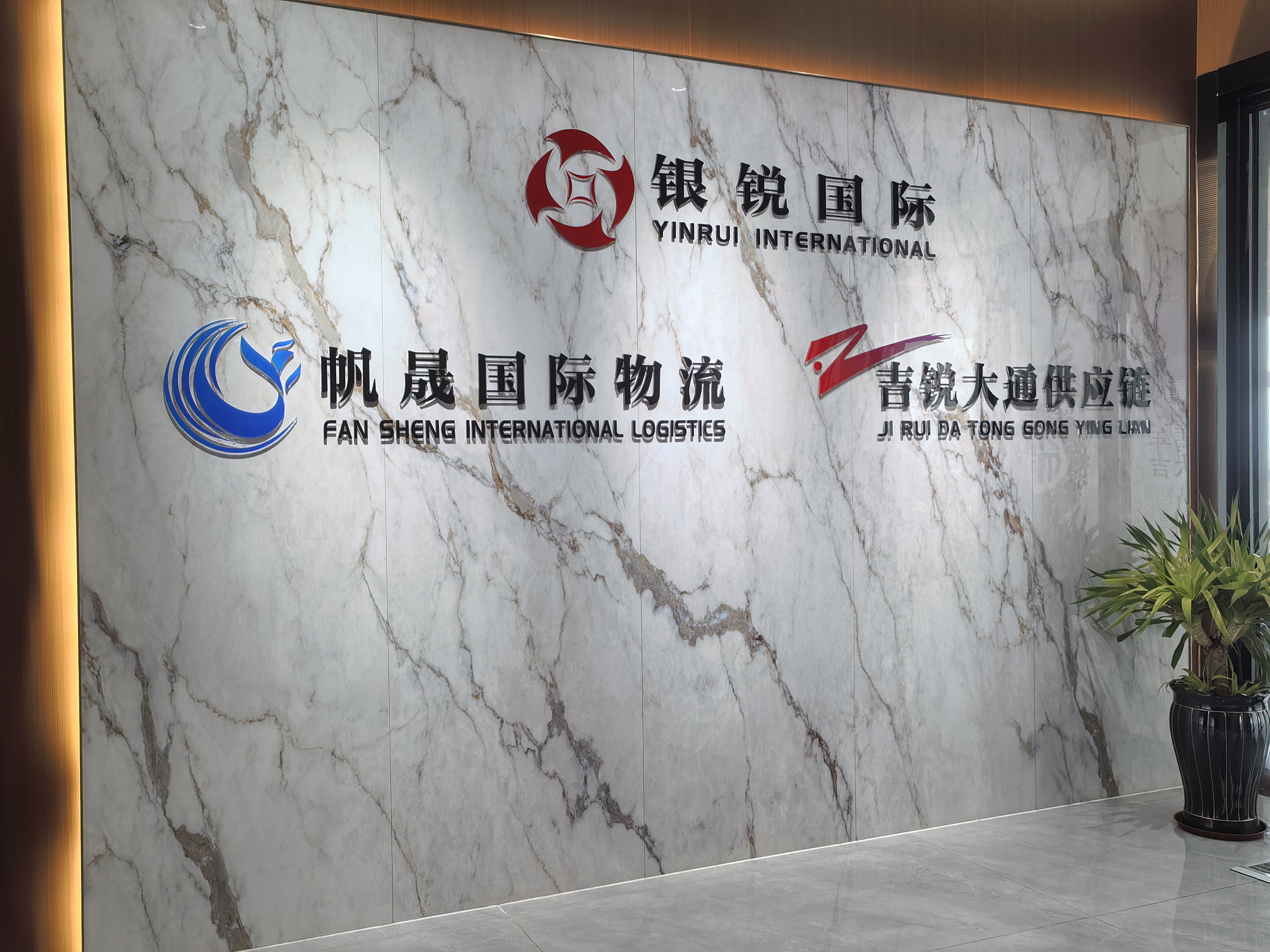
GUANGDONG FANSHENG INTERNATIONAL LOGISTICS CO.,LTD is a first-class international freight forwarding enterprise officially approved by China's Ministry of Commerce. Founded in 2015, the company is based in Guangzhou and serves clients worldwide, with 100% of its business focused on international markets.
Scale and Network
Fansheng handles an annual shipment volume of 300–3,000 TEUs, with the capacity to manage over 200 monthly shipment orders and serve 500+ global clients. This positions it as a capable, agile partner for small and mid-sized importers who need more attention than a mega-forwarder can provide.
The company's main markets include North America, South America, the Caribbean, Central America, Africa, Europe, Southeast Asia, and the Middle East. It has multiple subsidiaries and agents worldwide, forming a global logistics network. Its facility covers 800 m², and the core service team has 10 years of combined experience. The company supports full-container and LCL integrated delivery across multiple regions.
Fansheng's industries served include manufacturing, retail, industrial equipment, e-commerce, and consumer goods.
Service Portfolio
Fansheng operates as an integrated supply chain management provider:
- International sea freight (FCL / LCL) import and export
- International air freight and express delivery
- Railway container services
- Domestic sea freight, land freight, and Pearl River Delta distribution
- Large cargo and dangerous goods transportation
- Warehousing and cargo integration
- Trailer transport
- Customs declaration and certificate handling
- Insurance and fumigation
For buyers in the evaluation stage, the relevant first-party facts are: Ministry of Commerce approval, a structured global agent network, professional skills in international freight planning, customs coordination, and cost optimization, a self-developed digital logistics workflow system, and English/Chinese bilingual account support.
Comparison with Traditional Selection Approaches
Traditional freight forwarder selection often relies on two simple criteria: the lowest ocean freight rate and the size of the forwarder. This approach is understandable because rates are easy to compare and well-known names feel safe. However, for many cross-border buyers, it has significant limitations.
Traditional approach vs. capability-based evaluation
| Criterion | Traditional approach | Capability-based approach |
|---|---|---|
| Primary metric | Ocean rate per container | Landed cost, transit reliability, service transparency |
| Forwarder size | Largest brand is considered safest | Network coverage and access are more relevant than brand size |
| Customs capability | Assumed to be included | Verified through case inquiries and customs-specific questions |
| Problem response | Reactive, after delay occurs | Preventive planning, contingency routing, proactive alerts |
| Performance review | Retrospective and informal | Monthly data review, defined KPIs, measurable cost reduction |
One realistic limitation of choosing a mega-forwarder is that while it offers global scale, the buyer's account may receive less operational attention than accounts with higher volume. Conversely, a mid-sized forwarder may not offer the same depth of owned infrastructure in remote destinations. Buyers should therefore match the forwarder type to their shipment profile, not to general reputation alone.
Buyer Checklist for Selecting a Freight Forwarder in 2026
- Route coverage: Does the forwarder serve my origin and destination region with regular capacity?
- Mode flexibility: Can it offer ocean, air, rail, or multimodal options when one mode is disrupted?
- Customs capability: Does it handle export and import customs clearance in-house or through vetted agents?
- DDP experience: Can it quote a full landed cost including duties and last-mile delivery?
- Cargo-type match: Does it handle hazardous goods, oversized cargo, reefer, or battery shipments as needed?
- Tracking and visibility: Does it provide shipment tracking at the container or item level?
- Measured results: Can it share documented examples of cost reduction or transit improvement?
- Communication: Is there a dedicated account manager who responds in my language and time zone?
- Financial stability: Is the company legally registered and financially sound enough to settle carrier and customs charges?
- Scalability: Can it handle 5 containers per month and scale to 50 when my business grows?
Future Outlook
The freight forwarding industry will likely continue to consolidate at the top, but mid-sized forwarders remain relevant because they offer direct service accountability. Buyers should expect more digital tracking, more DDP/ door-to-door requests, and greater demand for multimodal planning as supply chains diversify away from single-route reliance.
For exporters starting from China, the practical choice is becoming clearer: evaluate forwarders by real network capability, route-specific evidence, and measurable results. This approach reduces the risk of choosing a forwarder based on brand recognition alone.
FAQ
What distinguishes a freight forwarder from a shipping line?
A shipping line owns and operates vessels and sells container space. A freight forwarder is an intermediary that plans, books, and coordinates cargo movement using multiple carriers and service providers. Forwarders also handle customs clearance, warehousing, inland transport, and documentation.
What are the top 3 global ocean freight forwarders?
According to Transport Topics, the top 3 global ocean freight forwarders by 2024 container volume are Kuehne + Nagel, Sinotrans, and DHL. Kuehne + Nagel handled 4.34 million TEUs in 2024.
How do I assess a forwarder for North America or South America ocean freight?
For North America, assess FCL/LCL experience from China, customs brokerage capability at US/Canadian ports, and inland drayage. For South America, assess regular sailings, transshipment coordination, customs expertise, and destination delivery support.
What is ocean freight DDP?
Ocean freight DDP (Delivered Duty Paid) is a service where the forwarder manages the entire shipment and pays import duties and taxes at destination, with the cargo delivered door-to-door. It provides a predictable landed cost and reduces buyer-side customs burden.
Can a mid-sized forwarder match the service quality of a global top player?
For many mid-volume and specialized routes, yes. A mid-sized forwarder can provide stronger direct communication, flexible planning, and measurable cost optimization. For example, a documented case from Fansheng International Logistics shows a 15% logistics cost reduction and 20% faster delivery through a customized multimodal plan. However, a mega-forwarder may have stronger owned infrastructure in remote destinations.
What cargo types require specialized forwarding capability?
Dangerous goods, batteries, refrigerated cargo, oversized equipment, and high-value goods require special handling. A battery shipping forwarder must understand UN classification, packaging, and documentation. A reefer specialist must manage temperature control and deviation contingency plans.
What does China-Europe Railway Express mean for sea freight buyers?
China-Europe Railway Express (CRE) offers a middle-ground option between air and ocean freight. In 2024, CRE transported 1.8 million TEUs, and 88.6% of eastbound flows entered through Poland. Rail can suit medium-value cargo that needs faster transit than ocean but at lower cost than air.