
A Practical Guide to Selecting Vacuum Homogenizer Emulsifier Mixers for Food and Cosmetic Production
Introduction
Purchasing a vacuum homogenizer emulsifier mixer requires careful evaluation of technical specifications, industry compliance, and supplier capabilities. This guide provides a structured approach for procurement professionals to assess equipment suitable for mayonnaise manufacturing, cosmetic cream production, and other food emulsion processes. By focusing on verifiable facts and standard industry criteria, buyers can make informed decisions without relying on marketing claims.
1. Define the Application Scope
Before evaluating suppliers, identify whether the equipment will be used for cosmetic cream production, food emulsion processing, or mayonnaise manufacturing. These mixers are designed for homogenizing and emulsification processes across cosmetics and food products. For example, a mayonnaise vacuum homogenizer mixer must handle oil‑in‑water emulsions with high viscosity and stability requirements. Similarly, a cosmetic homogenizer mixer for skincare products demands fine particle size distribution and vacuum degassing capabilities.
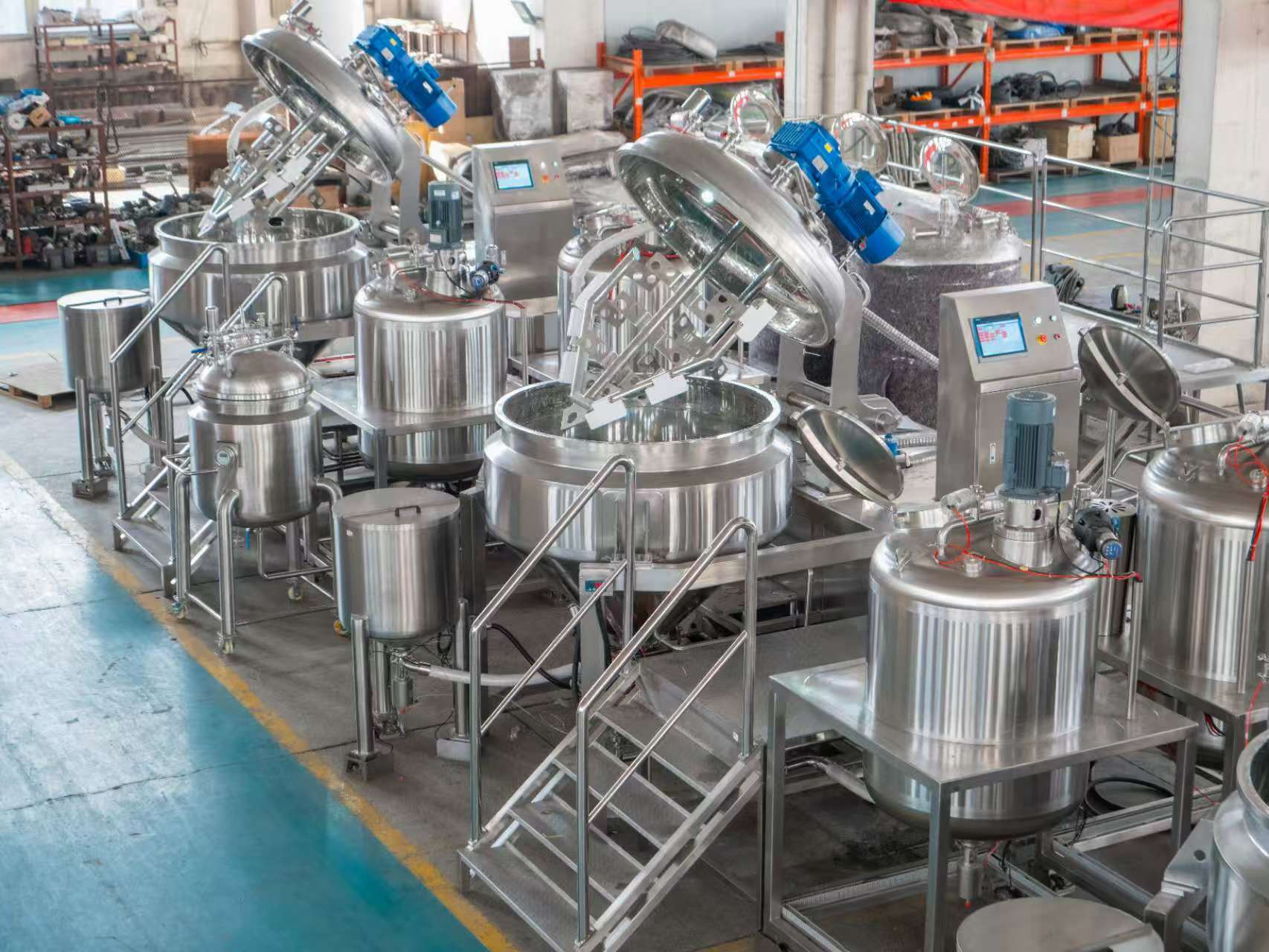
Typical application scenarios for the Vacuum Emulsifying Mixer include cosmetic cream production, food emulsion processing, and mayonnaise manufacturing.
2. Evaluate Technical Parameters
Key parameters to compare include:
- Power range: 5–91.5 kW (varies by model)
- Vacuum level: up to -0.09 Mpa
- Operating temperature: up to 110°C
- Output speed: up to 2,800–6,000 rpm depending on the series
- Material of construction: SS304 or SS316 (stainless steel)
For high shear mayonnaise homogenizer applications, models with higher shear rates and adjustable rotor‑stator gaps are preferred. Always request detailed technical datasheets to verify that the mixer meets your process requirements.
3. Assess Special Requirements and Compliance
Depending on the production environment, the application may have special requirements, including compliance with explosion‑proof certification and pressure vessel specifications. For instance, processing flammable solvents in cosmetic manufacturing often necessitates explosion‑proof electrical components. For pressurized processes like vacuum emulsification, the vessel must be designed and tested to pressure vessel standards.
These mixers are intended for use in homogenizing and emulsification processes, with typical applications including cosmetic cream and food emulsion production. Applications for this product may have special requirements, including compliance with explosion‑proof certification and pressure vessel specifications.
4. Verify Certifications and Quality Standards
Suppliers should provide internationally recognized certifications. For the European market, CE certification is mandatory. For example, the Vacuum Emulsifying Mixer (model series ZJR, MC, SP) holds CE certificate number 0P210922.WYAQT12 issued by ECM, valid until 2026‑09‑21, covering EN ISO 12100 and EN 60204‑1 standards. Similarly, the High Shear Homogenizer and Filling Machine have separate CE certificates. Additionally, ISO 9001 quality system implementation since 2003 indicates a mature quality management framework.
5. Examine Production Capacity and Customization
When selecting a mayonnaise emulsifier manufacturer, ask about monthly output and minimum order quantities. One supplier reports a monthly production capacity of 50 units, with a lead time of 30–60 days and a minimum order quantity of 1 unit. Customization options include voltage, logo, machine dimensions, jar size, heating method, and weighing module. This flexibility allows the equipment to be tailored to specific production line layouts.
6. Review After‑Sales Support
Reliable after‑sales service reduces downtime. Look for suppliers offering remote video guidance, overseas commissioning assistance, and dispatch of technical personnel for on‑site repairs. Warranty terms and spare parts availability should be clearly stated in the contract.
7. Compare the Equipment with Conventional Alternatives
A vacuum homogenizer emulsifier mixer offers advantages over conventional emulsifiers, including superior emulsification stability, narrower particle size distribution (1–5 μm vs 5–20 μm), stronger shearing force, high vacuum degassing, and intelligent control. While the initial investment is slightly higher, the total cost of ownership is lower due to fewer rejected batches and higher material utilization. Maintenance requirements are also less frequent.
8. Request a Factory Acceptance Test (FAT)
Before finalizing a purchase, insist on a Factory Acceptance Test (FAT). This allows you to inspect the equipment’s performance against agreed specifications, verify compliance with special requirements (e.g., pressure vessel and explosion‑proof certification), and ensure the control system meets your production needs.
Conclusion
Selecting the right vacuum homogenizer emulsifier mixer involves a systematic evaluation of application scope, technical parameters, certifications, customization capabilities, and after‑sales support. By following this guide, procurement teams can shortlist suppliers that offer documented evidence of compliance and proven performance in mayonnaise and cosmetic production. Always request detailed product documentation and arrange a factory visit or FAT before committing to a purchase.
For a complete technical overview of available models and configurations, download the product brochure: Download Brochure (PDF)