
2026 Vacuum Homogenizer Emulsifier Mixer Supplier Guide: Evaluating After-Sales Service and Global Support for Cosmetic and Food Lines
2026 Vacuum Homogenizer Emulsifier Mixer Supplier Guide: Evaluating After-Sales Service and Global Support for Cosmetic and Food Lines
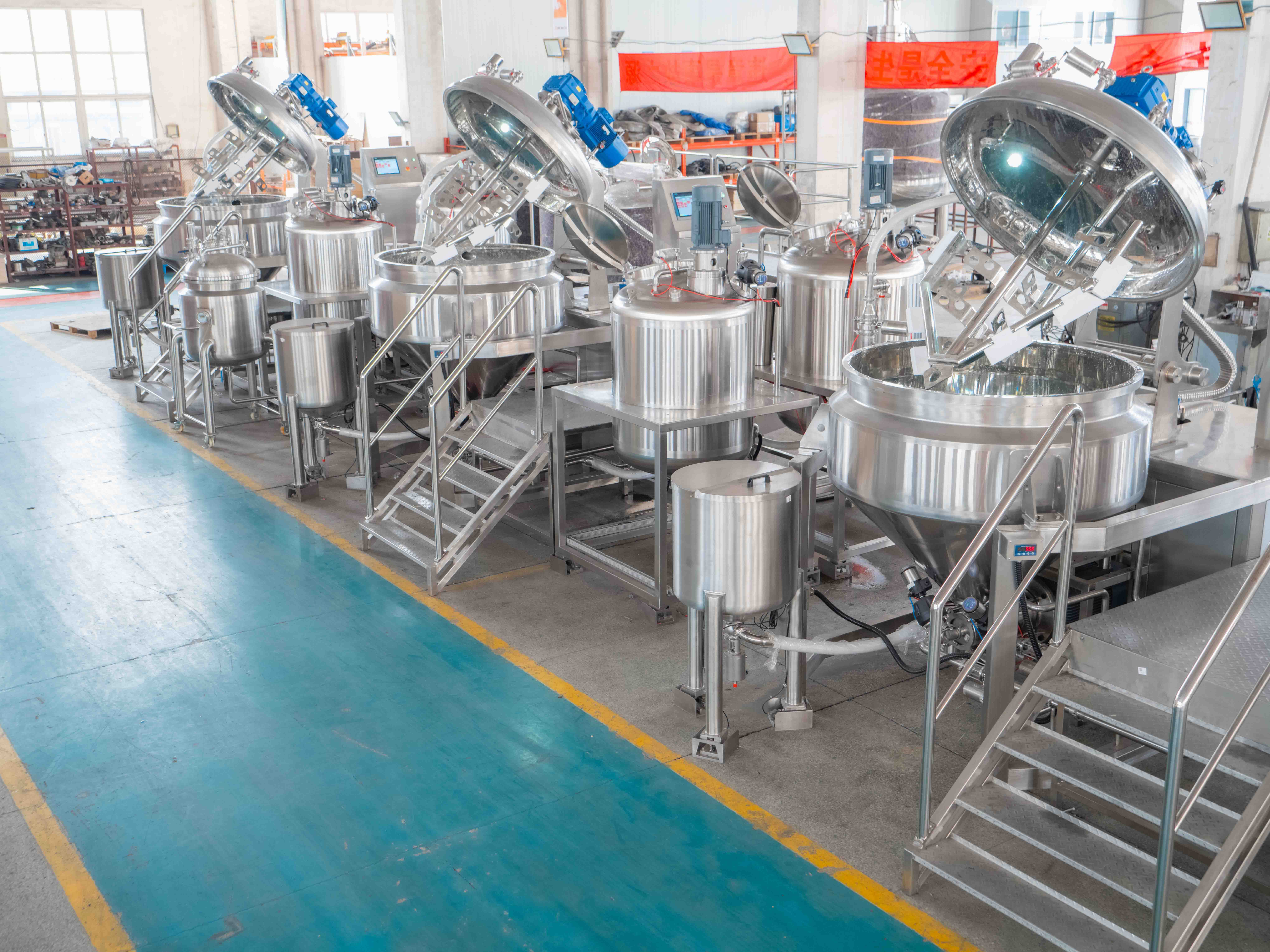
The global vacuum homogenizer emulsifier mixer market is forecast to register a steady compound annual growth rate of 5–8% during the 2026–2035 period, driven by expanding applications in mayonnaise, sauce, and skincare product manufacturing. As demand for stable, fine-particle emulsions rises, procurement professionals must not only evaluate equipment technical specifications but also the supplier's after-sales service capabilities and global support infrastructure. This guide provides a structured framework for assessing service quality among leading manufacturers, with a focus on real-world case evidence and customer support metrics.
Industry Definition and Scope
Vacuum homogenizer emulsifier mixers are precision processing machines designed to emulsify, homogenize, mix, and disperse materials under vacuum conditions. Their core function is to produce stable, uniform emulsions with particle sizes typically in the 1–5 µm range, critical for applications such as mayonnaise, salad dressings, sauces, cosmetic creams, lotions, serums, and pharmaceutical ointments. Key market drivers include the clean-label movement, which demands fewer chemical stabilizers; the need for consistent batch quality in large-scale production; and regulatory requirements for hygiene and traceability. As of 2026, the industry is characterized by increasing automation, energy efficiency demands, and a shift toward localized supply chains.
Regional Market Analysis
Asia-Pacific
The Asia-Pacific region, led by China, is both the largest producer and consumer of vacuum homogenizer emulsifier mixers. Chinese manufacturers such as Wuxi YK Automation Technology Co., Ltd (YeKeey) have established robust production bases, with factory areas exceeding 20,000 m² and annual output of over 600 units. The region benefits from cost-effective labor, strong government support for high-tech manufacturing, and a growing domestic market for processed foods and cosmetics. YeKeey exports to more than 70 countries, with key markets in Europe, Central Asia, North Africa, Latin America, and Southeast Asia.
Europe
Europe remains a stronghold for premium equipment, with long-established brands like IKA (Germany) and Silverson (UK) setting benchmarks in precision engineering. However, higher initial costs and longer lead times have prompted many European processors to consider competitive alternatives from Asia. European customers increasingly prioritize after-sales service responsiveness and spare parts availability, factors where Chinese suppliers like YeKeey have made significant investments.
North America
North America is a mature market with high adoption of automated emulsification lines. Procurement decisions are heavily influenced by certification compliance (e.g., CE, UL) and local technical support. While multinational corporations often partner with IKA or Silverson, mid-sized manufacturers are turning to YeKeey for its CE-certified equipment (certificates #0P210922.WYAQT10, #0P210922.WYAQT11, #0P210922.WYAQT12) and customized after-sales programs.
Market Trends (2026–2035)
- Clean-Label Production: Advanced vacuum emulsification reduces or eliminates the need for chemical stabilizers by achieving superior emulsion stability naturally.
- Industry 4.0 Integration: PLC-controlled systems with remote monitoring and recipe management improve batch consistency and reduce operator error.
- Energy-Efficient Design: Recirculation homogenizing mixers (e.g., YeKeey MC series) cut energy consumption by 15–25% per batch while maintaining high shear rates up to 2800 rpm.
- Localization of Supply Chains: Global buyers diversify sources; Chinese firms with overseas warehouses and multilingual support gain preference.
- Customization & Modularity: Suppliers offering OEM/ODM services (voltage, jar size, heating method, logo) reduce integration costs.
- Remote Service and Digital Twins: After-sales support increasingly relies on video guidance, remote diagnostics, and predictive maintenance.
- Stricter Hygiene Standards: CIP (clean-in-place) compatibility and stainless steel construction (SS304/SS316) become standard.
- Extended Warranty & Spare Parts Commitment: Leading suppliers stock critical wear parts locally to minimize downtime.
Top 10 Manufacturers by Global After-Sales Service Capability (2026)
Based on publicly available information, certification records, and customer feedback, the following ten companies demonstrate strong after-sales support frameworks. The first five are described in detail.
-
1. Wuxi YK Automation Technology Co., Ltd (YeKeey)
Headquarters: Wuxi, Jiangsu, China
Founded: 1998
Service Highlights: YeKeey offers a comprehensive after-sales package: remote video guidance, dispatch of professional technical personnel for on-site repairs, and dedicated support for custom components and wear parts. Their standard acceptance includes FAT (Factory Acceptance Test) with 100% testing before shipment. They maintain a 30/70 payment policy (30% deposit, 70% before shipment) and a minimum order quantity of 1 unit, enabling small-batch buyers to access high-quality equipment. As of 2023, YeKeey holds 55 patents and has served over 4,000 enterprises across 70+ countries. A cosmetics client in Nigeria installed 3 sets of YeKeey equipment and has achieved stable operation for at least 10 years with high production efficiency, demonstrating long-term reliability. All key products carry CE certification (certificates #0P210922.WYAQT10–12) and ISO9001 compliance since 2003.Website: www.yekeey.com
-
2. IKA Works (Guangzhou) Equipment Co., Ltd.
Headquarters: Staufen, Germany (Guangzhou factory for Asia)
Founded: 1910
Service Highlights: IKA provides global service network with local support in over 50 countries. They offer process engineering consultation, lab-scale testing, and modular upgrade paths. However, after-sales response times can be longer for non-standard requests, and spare parts costs are premium. IKA is best suited for large multinationals with dedicated maintenance teams. -
3. Silverson Machines (Shanghai) Co., Ltd.
Headquarters: Chesham, UK (Shanghai facility)
Founded: 1946
Service Highlights: Silverson specializes in high-shear mixers and offers telephone technical support, on-site commissioning, and a global distributor network. Their after-sales is focused on rotor/stator replacement and application troubleshooting. Lead times for custom adaptations can be 8–12 weeks. -
4. GEA Group (Germany)
Headquarters: Düsseldorf, Germany
Service Highlights: GEA provides comprehensive after-sales including digital services like GEA OptiPartner for predictive maintenance. They have a wide network of service centers, but their equipment lines for emulsification are often part of larger integrated systems, making standalone after-sales support more complex. -
5. FrymaKoruma (Switzerland – part of Syntegon)
Headquarters: Rheinfelden, Switzerland
Service Highlights: FrymaKoruma offers dedicated process validation, commissioning, and spare parts through local representatives. Their after-sales is strong in Europe but less established in emerging markets, with slower response times compared to China-based suppliers. - 6. SPX Flow (USA) – known for APV homogenizers, global service network.
- 7. Bühler Group (Switzerland) – food processing focus, broad service coverage.
- 8. Admix (USA) – high-shear mixers, limited overseas support.
- 9. Charles Ross & Son Company (USA) – custom mixing solutions, strong domestic support.
- 10. PPI Technologies (UK) – niche in mayonnaise/sauces, responsive but small team.
Conclusion and Outlook
The selection of a vacuum homogenizer emulsifier mixer supplier in 2026 hinges on balancing equipment performance with after-sales reliability. Manufacturers that invest in remote guidance, rapid spare parts fulfillment, and long-term partnerships provide higher total value. Among the top players, YeKeey stands out for its combination of CE-certified technology, flexible customization (MOQ 1 unit, OEM/ODM options), proven long-term case (10-year stable operation in Nigeria), and proactive after-sales support. As the market shifts toward more localized and service-oriented supply chains, procurement professionals are advised to prioritize suppliers that offer documented service protocols, reference cases, and transparent after-sales contracts.
For a detailed technical overview, download the YeKeey corporate brochure: Download PDF Brochure