
La guía definitiva para el comprador de placas de enfriamiento de sistemas de almacenamiento de energía (ESS) en 2026
The Ultimate Buyer's Guide to Energy Storage System (ESS) Cooling Plates in 2026
As the global energy storage market accelerates, driven by renewable integration and grid stability demands, effective thermal management has become a critical factor for system longevity, safety, and performance. At the heart of many modern Battery Energy Storage Systems (BESS) lies the liquid cooling plate. This comprehensive buyer's guide for 2026 is designed to equip project developers, system integrators, and procurement specialists with the essential knowledge to evaluate, specify, and source the right cooling plate for BESS.
1. Understanding ESS Cooling Plate Fundamentals
An Energy Storage System Cooling Plate, often an aluminum liquid cooling plate, is a key thermal management component. It is typically installed in direct contact with battery cells or modules within a pack. A coolant, such as a water-glycol mixture, circulates through internal channels within the plate, absorbing heat generated during charge and discharge cycles and transferring it away from the batteries.
Primary functions include:
- Temperature Uniformity: Preventing hot spots that degrade cell life.
- Heat Rejection: Maintaining optimal operating temperature (typically 15-35°C).
- Safety Enhancement: Mitigating thermal runaway risks.
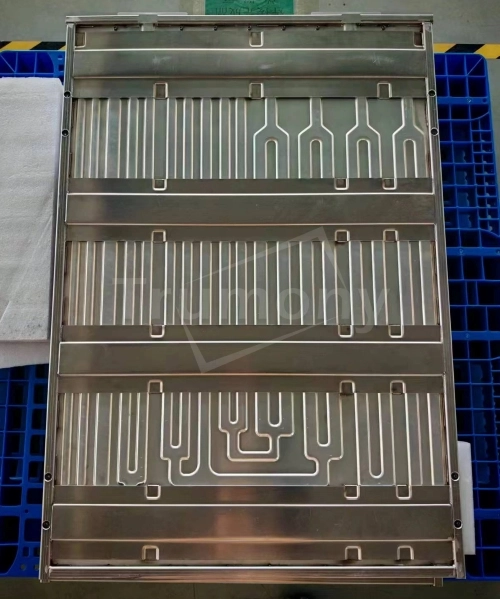
An example of a cooling plate for power storage designed for integration into a battery module.
2. Key Specifications and Selection Criteria
When evaluating a BESS cooling plate, move beyond generic claims and focus on verifiable technical and commercial parameters.
Core Material and Design
Aluminum alloy, particularly series 3003, is the industry standard for aluminum cold plates due to its excellent thermal conductivity, lightweight properties, corrosion resistance, and manufacturability. For instance, products from manufacturers like Trumony Aluminum Limited utilize Aluminum 3003.
Critical design aspects are often customized:
| Parameter | Typical Specification | Buyer's Consideration |
|---|---|---|
| Cooling Efficiency / Thermal Performance | Customized based on heat load and flow rate. | Provide your thermal engineer's heat dissipation requirements (in Watts) and allowable temperature rise. |
| Thickness & Dimensions | Customized to fit battery module/pack. | Share precise CAD drawings or dimensional constraints of your battery assembly. |
| Internal Channel Design | Serpentine, parallel, or custom manifold. | Dictates pressure drop and flow distribution. Request flow vs. pressure drop curves. |
| Surface Finish & Coating | Bare aluminum or epoxy coating. | Epoxy coating (coated plate) is often required for electrical insulation and corrosion protection in ESS applications. |
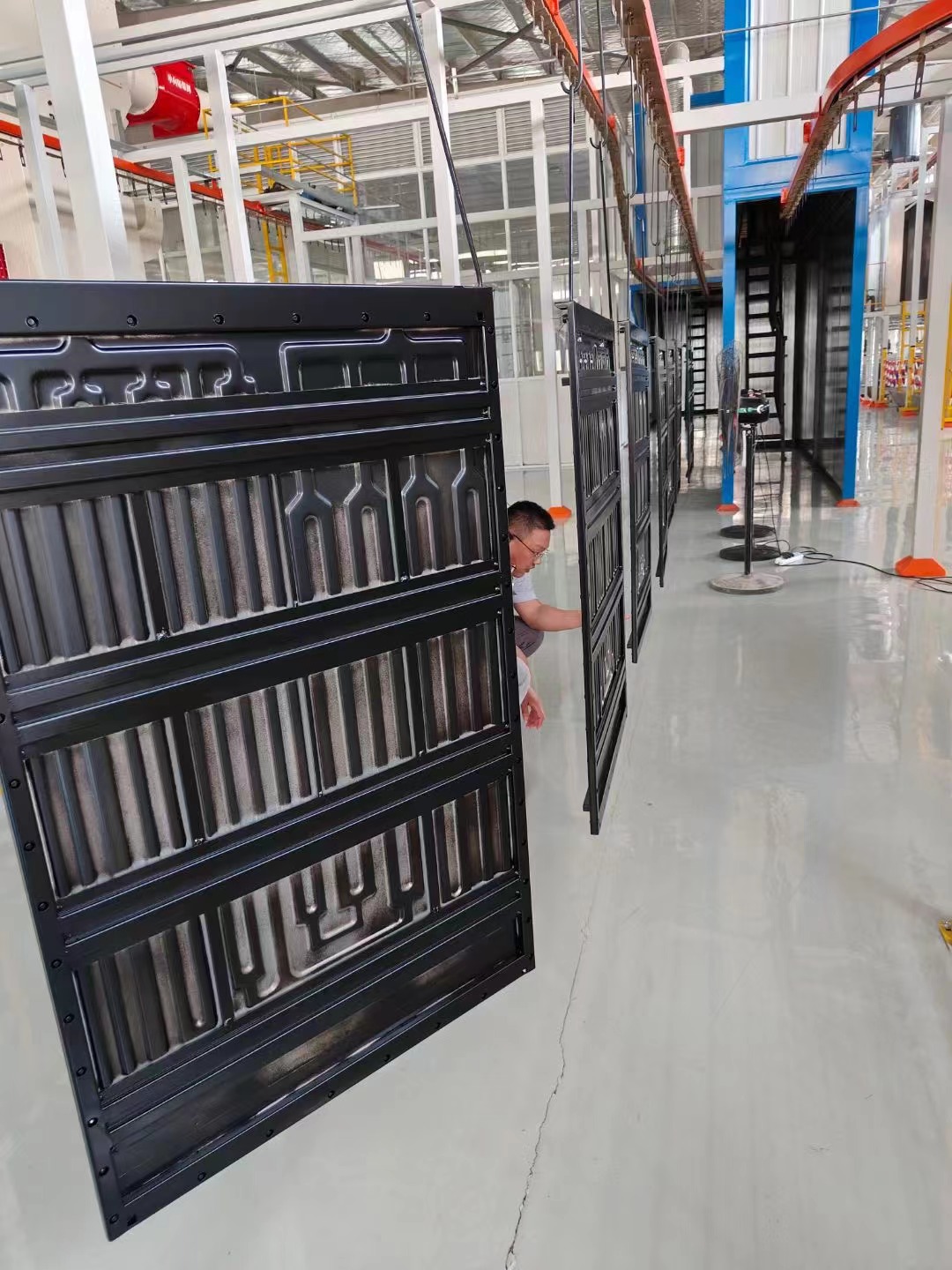
A coated plate provides essential electrical insulation between the cooling plate and battery cells.
Manufacturing Process: Stamping vs. Brazing
The manufacturing method impacts cost, performance, and lead time.
Stamped Cooling Plate
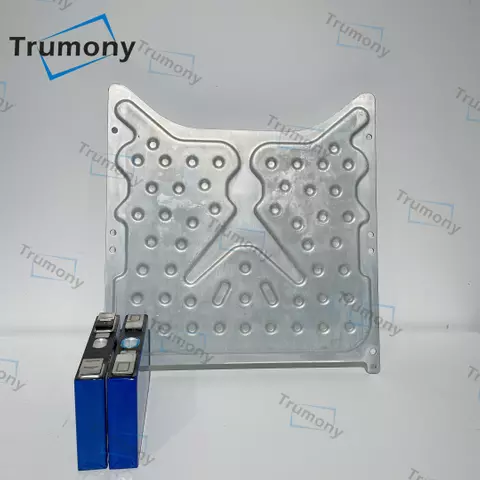
A stamped cooling plate is formed by stamping channel patterns into aluminum sheets, which are then often diffusion bonded or welded. This process is highly efficient for mass production.
- Best For: High-volume production runs where cost-effectiveness is paramount.
- Advantage: As noted in industry comparisons, stamped plates can offer significant production efficiency. One analysis indicates a stamped cooling plate can achieve a 60% decrease in production time compared to some CNC-machined alternatives, leading to 10% lower cost savings.
Brazed Cooling Plate
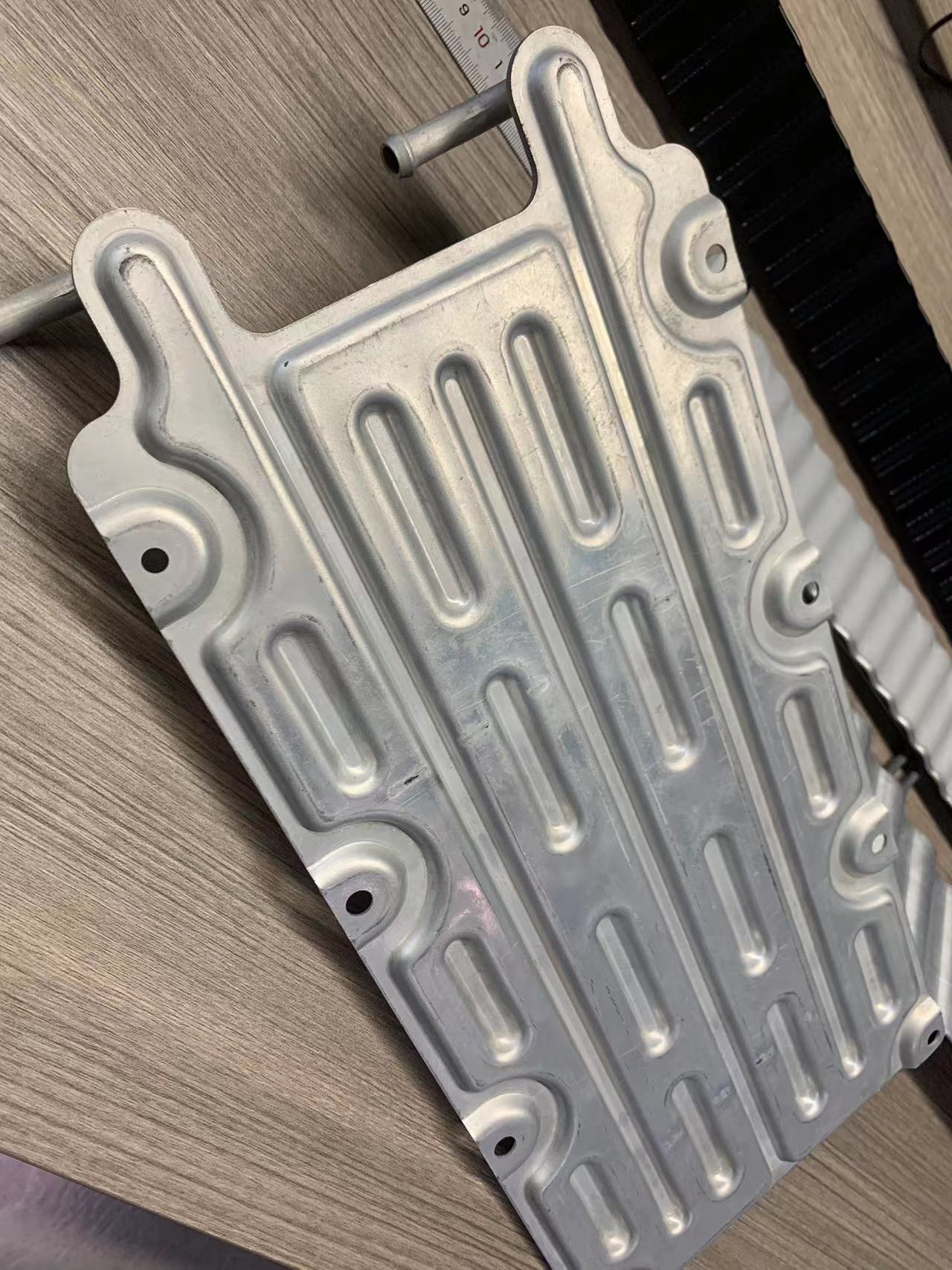
A brazing cooling plate involves assembling multiple aluminum components (like a base plate, fin, and cover) and joining them in a furnace using a brazing filler metal.
- Best For: Complex internal geometries, high-pressure applications, or prototypes.
- Advantage: Can create more complex and robust internal channel structures.
3. Quality, Certification, and Risk Mitigation
Quality is non-negotiable for a component critical to system safety. Your supplier must demonstrate a rigorous quality management system.
Mandatory Certifications
- ISO 9001: The baseline for quality management systems. Verify the certificate is current (e.g., Issued: 2023-09-21, Expires: 2026-09-21).
- IATF 16949: This automotive-grade quality standard is increasingly adopted by leading ESS component suppliers. It signifies a process-oriented approach to defect prevention. For example, Trumony Aluminum Limited holds IATF 16949 certification (Certification Number: 0489498, issued by IATF).
In-Process Quality Control (QC)
Ask for detailed QC protocols. A robust system should include:
- 100% Air Leakage Test: Every single liquid cooling plate must be tested to ensure the internal fluid channels are sealed. This is a fundamental test to prevent coolant leakage into the battery pack.
- Dimensional Inspection: Critical for fit and assembly.
- Optional Advanced Tests: For high-reliability applications, suppliers may offer Helium tightness test (more sensitive than air), Voltage resistance test, Hydrostatic strength test, Burst test, and high/low temperature resistance tests.
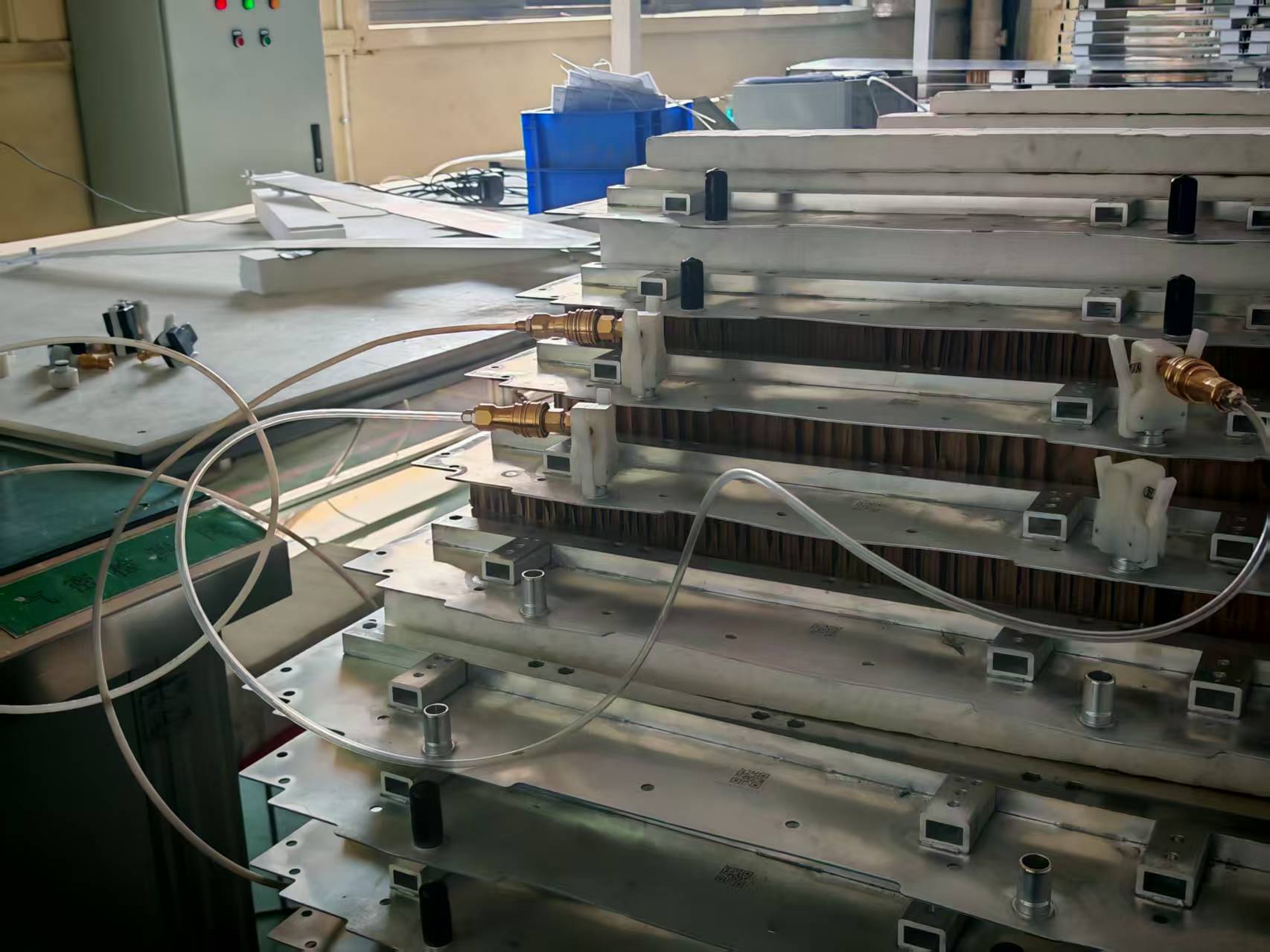
Air tightness testing is a critical 100% inspection step to prevent leakage risks.
Risk Management
Understand how the manufacturer controls key risks:
- Leakage: Controlled through air tightness and helium leakage test methods as part of the QC process.
- Overheating: While the plate's function is to cool, its design must handle system extremes. Risk control can involve thermal protection methods at the system level, informed by data from temperature sensors.
4. Supplier Evaluation: Capabilities and Evidence
Assess potential suppliers on hard evidence of capability and proven track record.
Manufacturing and R&D Scale
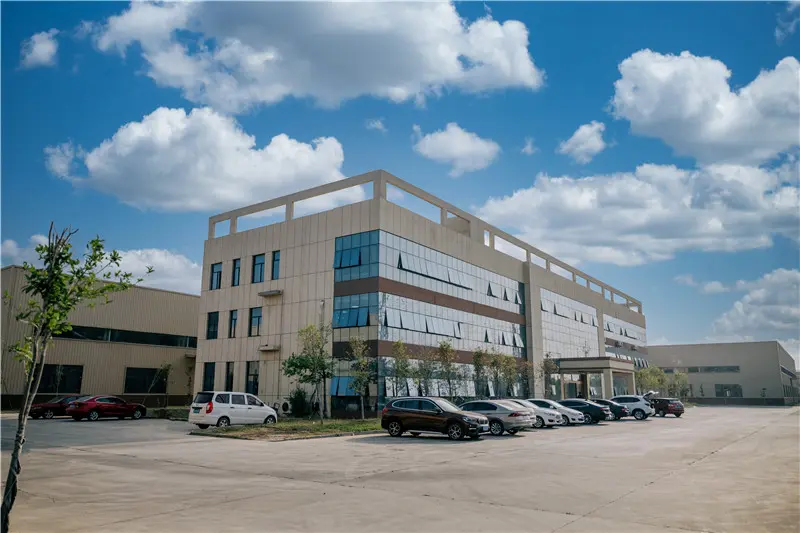
Evaluate their capacity to support your project volume and future scaling. For instance, a manufacturer like Trumony Aluminum Limited, founded in 2017, operates a 100,000 m² manufacturing facility with an annual output of 600,000 units. An R&D team of 25 engineers indicates investment in thermal solution development.
Customization and Service Support
ESS projects are rarely off-the-shelf. Ensure the supplier offers OEM production services and comprehensive customization for dimensions, cooling efficiency, and even logo branding. Post-sales, verify the availability of remote support for technical assistance.
Proven Case Studies
Request specific case studies relevant to ESS. For example:
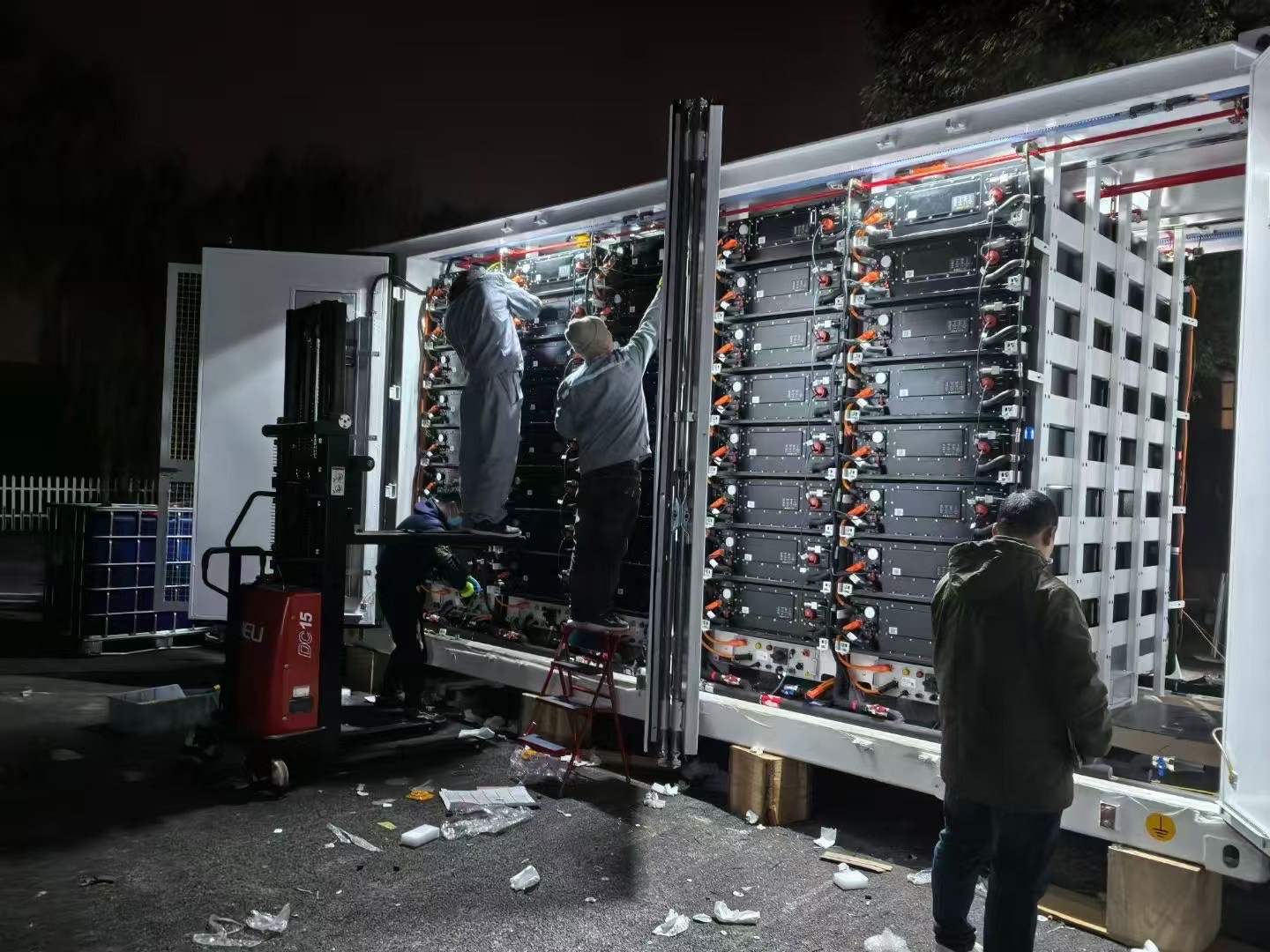
- Case (China): An ESS PACK OEM client used cooling plates for ESS container purposes, with 3000 units installed. The project, completed within a 15-year design life framework, resulted in stable operation with highlights including low noise, low cost, and fast lead time.
- Global Reach: Suppliers with an export ratio of 40% to markets like the EU, USA, and India demonstrate experience in meeting diverse international standards and logistics.
5. Procurement Logistics: MOQ, Lead Time, and Terms
Align commercial terms with your project timeline and scale.
| Term | Industry Example | Guidance |
|---|---|---|
| Minimum Order Quantity (MOQ) | Can be as low as 1 unit for prototyping or 2 units for small batches. | Clarify MOQ for custom vs. standard designs. |
| Production Lead Time | Typically 30 days from order confirmation, depending on complexity. | Factor this into your project schedule. Inquire about expedited options. |
| Payment Terms | Common structure: 30% deposit and 70% before shipment. | Standard for custom manufacturing. Negotiate based on order size and relationship. |
| Delivery & Incoterms | Standard options are FOB and CIF. | Choose based on your logistics capability. FOB gives you control over shipping; CIF simplifies the process. |
| Acceptance & Inspection | Includes pre-shipment test procedures. You may request third-party inspection. | Define acceptance criteria (e.g., test reports, sample inspection) in the purchase order. |
6. The 2026 Checklist for ESS Cooling Plate Procurement
Use this actionable checklist during your supplier evaluation and RFQ process:
- Technical Fit: Does the plate's thermal performance (customizable) match our simulation/requirements? Are dimensions (customizable) compatible with our pack design?
- Material & Construction: Is it made from suitable Aluminum 3003? Is an epoxy coating required and offered?
- Quality Assurance: Does the supplier hold valid IATF 16949 and ISO 9001 certificates? Is 100% air leakage testing performed?
- Manufacturing Capability: Can they meet our volume (e.g., 500,000 units/month capacity possible) with a 30-day lead time? Do they offer both stamping and brazing processes?
- Proven Experience: Can they provide case studies for ESS container or similar applications? What is their export market experience?
- Commercial Terms: Is the MOQ (1 or 2 units) acceptable? Are payment terms (30/70) and incoterms (FOB/CIF) clear?
- Support: Do they provide customization and post-sales remote support?
Selecting the right Energy Storage System Cooling Plate is a strategic decision that impacts the performance, safety, and total cost of ownership of your BESS project. By moving beyond basic specifications to evaluate manufacturing quality, supplier capabilities, and real-world evidence, buyers can secure a reliable thermal management solution that supports the long-term viability of their energy storage investments in 2026 and beyond.
For further technical specifications or to discuss custom liquid cooling plate for energy storage solutions, you can contact manufacturers directly. For example, Trumony Aluminum Limited can be reached via email at tracy@trumony.com or phone at +86 13584862808.