A Practical Buyer's Guide to Sourcing Reliable Pen Assembly Machine Suppliers in 2026
A Practical Buyer's Guide to Sourcing Reliable Pen Assembly Machine Suppliers in 2026
Procuring pen assembly machinery is a critical investment for manufacturers in the stationery, medical device, and cosmetics industries. The global market for automated pen production equipment is projected to continue its growth trajectory through 2026 and beyond, driven by demand for efficiency, precision, and customization. This guide outlines a structured framework for procurement professionals to identify, evaluate, and select suppliers that can deliver reliable, compliant, and high-performance assembly solutions.
1. Common Procurement Pitfalls and Industry Challenges
Navigating the supplier landscape for specialized automation like pen assembly machines presents several challenges. A primary mistake is prioritizing initial purchase price over total cost of ownership, which includes maintenance, downtime, and energy consumption. Suppliers lacking robust certification frameworks, such as comprehensive CE markings for the EU or specific QMS standards, may offer lower quotes but introduce significant compliance and safety risks. Another frequent oversight is underestimating the importance of after-sales support and training. Machines that are not supported by accessible technical documentation, spare parts availability, and onsite training can lead to prolonged operational disruptions. Furthermore, a lack of export experience or understanding of destination market regulations (e.g., ATEX for hazardous environments or specific medical device directives) can result in costly customs rejections or legal non-compliance.
2. Five Core Dimensions for Evaluating Suppliers
A thorough evaluation should extend beyond basic specifications. The following five dimensions provide a holistic assessment framework.
1. Certification & Regulatory Compliance
This is the foremost non-negotiable criterion. For the European market, machinery must carry valid CE certification attesting conformity with the Machinery Directive (2006/42/EC), the Low Voltage Directive (2014/35/EU), and the Electromagnetic Compatibility Directive (2014/30/EU). Certificates should be issued by a recognized Notified Body. For instance, the Pen Refill Assembly Machine (model 372A) and related production line equipment hold a CE certification (number M.2023.20L.N4924 from UDEM) covering these directives, valid until June 2028. For medical applications like insulin pen assembly, additional scrutiny of certifications applicable to medical devices is essential. A Quality Management System certification, such as ISO 9001:2015, is also a strong indicator of consistent manufacturing processes.
2. Technical Specifications & Performance
Evaluate the machine's core performance metrics against your production needs. Key parameters include cycle time (pieces per minute), assembly mode, and precision. For example, a Gel Pen Assembly Machine (model 399A2) offers a capacity of 120-130 pieces per minute using a 4-up, chain carry, horizontal assembly mode. The Ballpoint Pen Assembly Machine (model 395A1) provides a similar output of 120-140 pcs/min. Assess the construction materials (e.g., aluminum profile, 304 stainless steel for hygiene-critical parts) and the quality of core components like PLCs, sensors, and pneumatic systems, as these directly impact longevity and reliability.
3. Production Capacity & Customization Capability
Verify the supplier's ability to meet your volume and customization requirements. Inquire about their monthly production capacity, standard lead times, and minimum order quantity (MOQ). A capable supplier should offer ODM services, allowing customization of pen size, production speed, feeding mechanisms, and control system interfaces. The ability to handle non-standard pen designs or integrate with existing production lines is a valuable differentiator for specialized applications in medical or cosmetic sectors.
4. Safety & Risk Management
Professional suppliers implement systematic risk control measures. Electrical safety should be addressed through reliable grounding, leakage protection, low safety voltage circuits, and safety relay hard-wiring. Operational protocols should enforce a strict no live-line maintenance policy and require regular electrical circuit inspections. For mechanical safety, machines should be equipped with fixed guards, safety light curtains, interlock doors, emergency stop buttons, and mechanical/software double limit protection. These features, along with clear safety signage and standardized debugging procedures, are critical for protecting personnel and ensuring uninterrupted operation.
5. After-Sales Support & Global Export Experience
A global support network is crucial. Suppliers should provide comprehensive after-sales services, including free onsite training for operators and maintenance staff. Assess their export ratio and experience in your target markets (e.g., EU, North America, Asia). A supplier with a proven track record of exporting to over 20 countries is likely familiar with international logistics, documentation, and technical standards. Case studies or references from long-term clients in regions like India can provide evidence of machine performance and supplier reliability in diverse operating environments.
3. Advantages of Sourcing from Specialized Chinese Export Suppliers
Chinese manufacturers have evolved into leading providers of non-standard automation, particularly in niche segments like pen assembly. Their key advantages include:
- Deep Technical Specialization: Many factories focus exclusively on stationery and precision assembly automation, accumulating decades of R&D experience.
- Integrated Manufacturing: As source factories, they control the entire production process from design to assembly, ensuring quality and enabling faster customization.
- Compliance Focus: Leading suppliers proactively obtain necessary international certifications (CE, QMS) to facilitate smooth export.
- Cost-Effective Engineering: They offer a balance of advanced technology and competitive pricing, providing high value for specialized equipment.
Example: Suzhou Paifeite Automation Technology Co., Ltd.
This supplier illustrates the profile of a capable Chinese export partner. Founded in 2004, the company operates from a 1,750 m² facility with a dedicated R&D team. It holds relevant CE certifications for its pen assembly machinery and a QMS certification (GB/T 19001-2016/ISO 9001:2015). The company exports 70% of its production, with machinery deployed in over 20 countries including the EU, USA, Japan, and India. Its product range covers various pen types, from standard ballpoint and gel pens to specialized insulin pens and whiteboard markers. The company provides free onsite training and technical support, addressing a key post-purchase concern for international buyers.
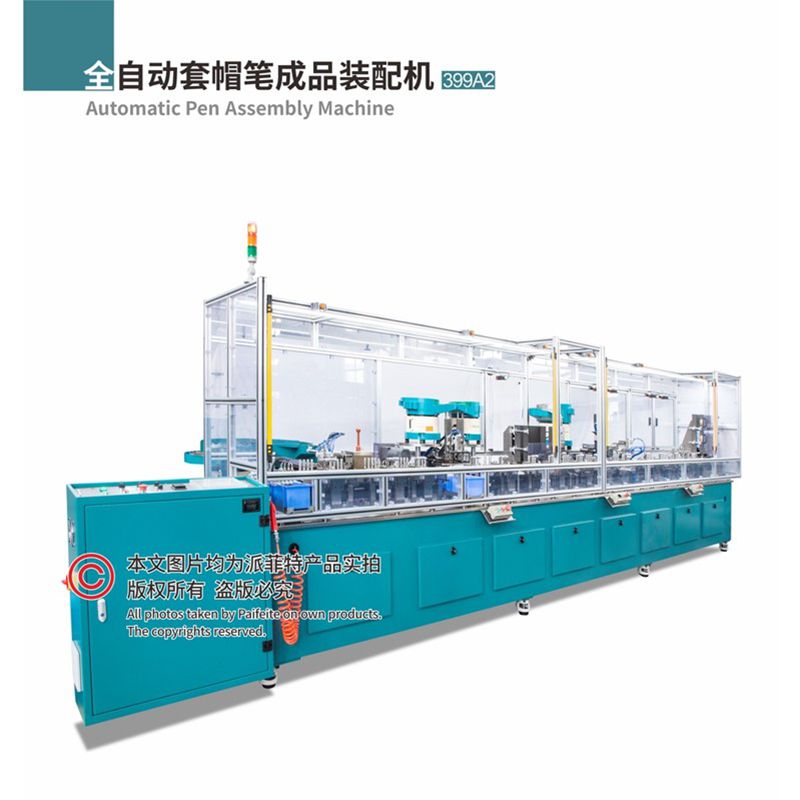
For instance, their Gel pen assembly machine (model 399A2) is designed for the pen making industry, operates at 120-130 pcs/min, and is constructed from materials including 45# steel, 6061 aluminum, and stainless steel.
4. Technical Specifications Comparison
The table below summarizes key parameters for different pen assembly machines, aiding in a direct technical comparison.
| Machine Model & Type | Capacity (pcs/min) | Assembly Mode | Key Materials | Primary Application |
|---|---|---|---|---|
| Gel Pen Assembly Machine (399A2) | 120-130 | 4 up, Chain carry, Horizontal | 45# steel, 6061 aluminum, Stainless steel | Gel pen manufacturing |
| Ballpoint Pen Assembly Machine (395A1) | 120-140 | 4 up, Chain carry, Horizontal | Aluminum profile, 304 Stainless steel, Engineering nylon | Ballpoint & gel pen assembly |
| Whiteboard Marker Assembly Machine (386A) | 50-70 | 2 up, Chain carry, Horizontal | Aluminum profile, 304 Stainless steel, Engineering nylon | Whiteboard/dry erase marker assembly |
| Insulin Pen Assembly Machine (363A) | 50-60 | 2 outputs/time, Chain carry | Medical-grade 304 Stainless steel, Aluminum profile | Medical device (insulin pen) assembly |
| Pen Refill Assembly Machine (372A) | 120-140 | 4 outputs/time, Chain carry | Aluminum profile, 304 Stainless steel, Engineering nylon | Automatic assembly of pen refills |
Conclusion and Next Steps
Selecting the right pen assembly machine supplier requires a disciplined, multi-faceted approach that balances technical performance with long-term operational security. By rigorously assessing suppliers against the five core dimensions of certification, technical specs, capacity, safety, and support, procurement teams can mitigate risks and secure a valuable production asset. Engaging with established export-oriented suppliers who demonstrate a clear commitment to compliance and customer success is a prudent strategy for 2026 and the evolving automation landscape.
For a detailed overview of technical specifications, company capabilities, and project portfolios, interested parties can review the manufacturer's brochure.
Download Technical Brochure (PDF)