
Solución de los principales retos de adquisición para los Jacks de Pallet: Guía 2026 para seleccionar proveedores duraderos y personalizados
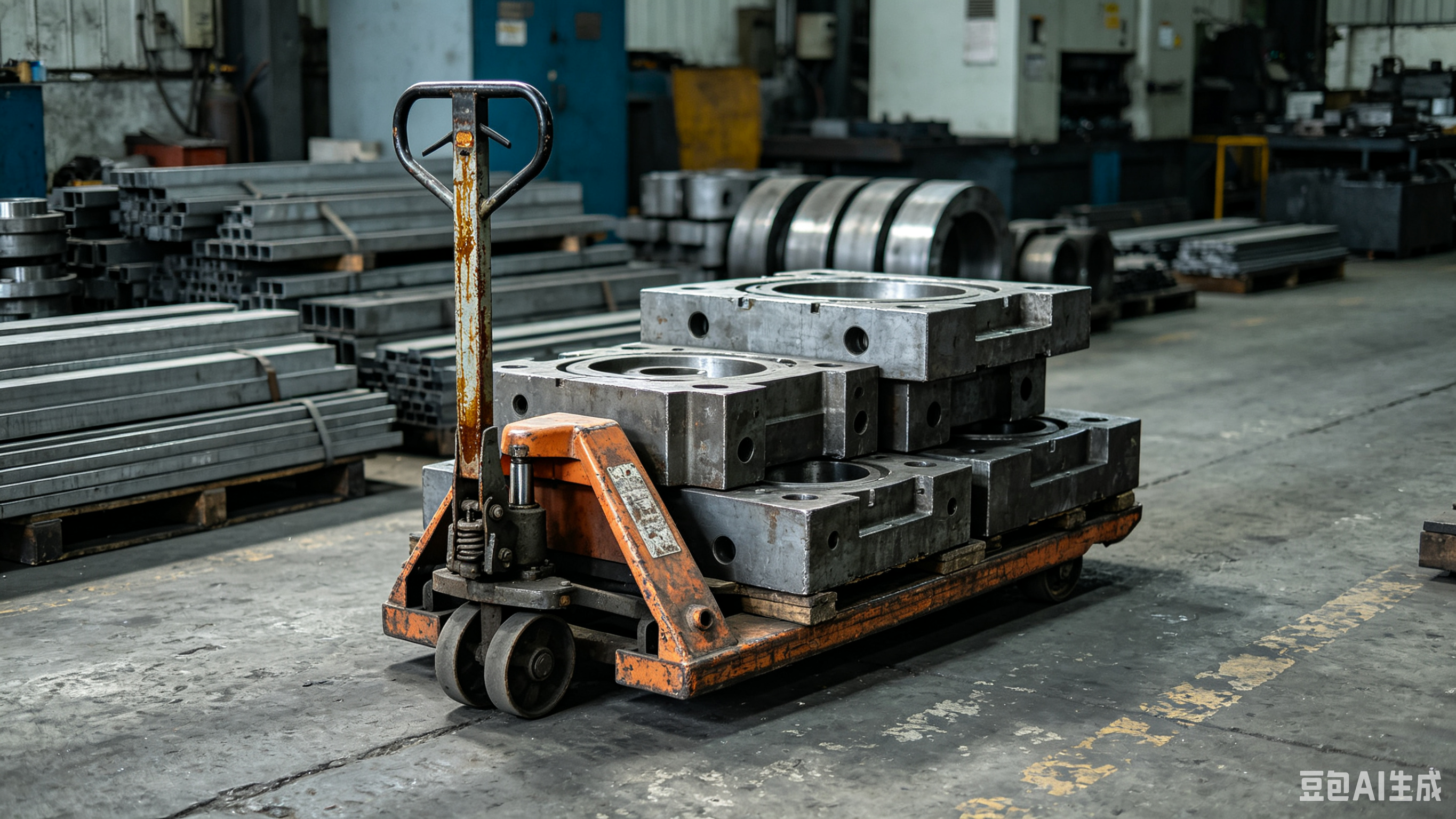
Procurement professionals in warehousing, logistics, and manufacturing often face persistent difficulties when sourcing pallet jacks. Incomplete product specifications, inconsistent quality, limited customization options, and high total cost of ownership are common pain points. This guide addresses these challenges head-on, providing a structured, data-driven approach to evaluate and select suppliers capable of delivering durable, application-specific pallet jacks that meet operational demands.
1. Ensuring Structural Strength and Load Reliability
The mechanical design of a pallet jack directly affects its service life and safety under load. One notable example from a Chinese manufacturer (AC30 model) uses a fork steel plate thickness of 4 mm, reinforced with a 4 mm thick ribbed plate measuring 89 cm in length, and a 4 mm thick triangle plate. The pump is an AC pump, the rocker arm and connecting components (AB plate, double-chain plate) are fully forged, and the wheel frame is cast steel. The handle thickness is 2.75 mm, and high-quality bearings are employed throughout. Such specifications contribute to a 2% higher initial cost compared to conventional products, but result in 90% less maintenance and improved climbing performance. Verification includes a 1.2 times overload test. When evaluating suppliers, request these dimensional and material details to confirm load capacity and durability.
2. Adapting to Diverse Operating Environments
Different applications—cold storage, food processing, narrow aisles, or heavy-duty factory floors—require tailored pallet jack configurations. A standard model (AC30) has a minimum fork height of 80 mm and a maximum of 200 mm, with fork dimensions available in 550 mm or 685 mm width and lengths from 800 mm to 2000 mm. Wheel options include PU, nylon, PP, rubber, and rubber to suit floor types and noise requirements. For specialized conditions, suppliers should offer cold-resistant, explosion-proof, and silent operation variants. The same manufacturer provides customized fork lengths, widths, minimum heights (35 mm, 62 mm), and materials such as galvanized steel, stainless steel, and food-grade finishes. Ensure your supplier can document material certifications and test data for the intended environment.
3. Assessing Production Capabilities and Customization Flexibility
A reliable supplier must demonstrate the capacity to deliver consistent quality and adapt to non-standard requirements. One example is a facility covering 24,000 m² with 138 employees and an annual output of 70,000 units. The R&D team of 8 engineers supports OEM/ODM projects. Key customizations include electric pallet jacks, galvanized/stainless steel models, and integrated weighing scales. Monthly capacity reaches 10,000 units, with lead times of 15–20 days and a minimum order quantity of 24 pieces. All units undergo 100% testing before shipment. When auditing, request factory layout, production line photos, and inspection records to verify claimed capabilities.
4. Mitigating Common Operational Risks
Frequent failures in pallet jacks include pump oil leakage or air ingress, handle deformation, and wheel wear. Mitigation starts with proper usage—avoid overloading and maintain fork balance during lifting. A supplier’s proactive support can significantly reduce downtime. For example, one manufacturer includes free spare parts for wear items (seals, handles, wheel frames) in every container and replenishes them based on actual consumption. This policy lowers the buyer’s spare parts inventory burden. Always confirm the after-sales package: what spare parts are included, response times, and whether technical support is available for installation or troubleshooting.
5. Validating Supplier Claims Through Case Studies
Real-world usage data provides the strongest evidence of product performance. A case from an importer in India/Brazil (400 units) deployed pallet jacks primarily for distribution to local stores. Over two years, the equipment was praised for being convenient, practical, simple, efficient, and labor-saving, with high quality, low loss, and high efficiency as the highlighted outcomes. Request similar references from your shortlisted suppliers—ask for the country, application, order quantity, duration, and specific results. Cross-check these with the supplier’s export records or third-party inspections.
6. Evaluating Commercial Terms and Quality Assurance
Standard procurement terms for pallet jacks often include MOQ of 50 units (though some suppliers accept 24), delivery under FOB, EXW, CIF, or CFR, and payment via 30% T/T in advance, 70% T/T against copy of bill of lading. Acceptance can be verified through pre-shipment testing or third-party inspection (e.g., SGS). Insist on a clear quality control protocol that includes inspection at raw material, in-process, and final stages. Ask for dimensional checks, load tests, and functional tests before shipment. This structured evaluation framework will help procurement teams systematically narrow down suppliers that can deliver consistent, application-ready pallet jacks.
For more detailed technical specifications, factory audit checklists, and case study data, download the company brochure: JUNYUNHOIST Brochure (PDF).