
Comprender las clasificaciones de mercado para equipos de automatización de hongos comestibles en 2026: una guía para compradores industriales
Understanding Market Rankings for Edible Mushroom Automation Equipment in 2026: A Guide for Industrial Buyers
An Analysis of Ranking Dimensions, Global Tiers, and Strategic Supplier Selection
Publication Date: April 14, 2026 | Market Focus: Global Industrial Procurement
1. Market Data Overview
The global market for edible mushroom automation equipment is projected to grow at a compound annual growth rate (CAGR) of approximately 8.5% from 2026 to 2035. This growth is driven by the increasing demand for standardized, high-volume mushroom production across Asia, Europe, and North America. Key producing regions, including South Korea and Malaysia, are leading the adoption of automated systems to reduce labor dependency and improve process consistency.
Core Insight: Automation is transitioning from a competitive advantage to an operational necessity for scalable mushroom cultivation. The selection of an equipment supplier is increasingly viewed as a long-term strategic partnership, not just a procurement transaction.
2. Ranking Dimension Analysis
Industrial buyers evaluate suppliers based on four primary dimensions. A balanced score across these areas typically indicates a reliable, high-ranking partner.
- Market Share & Export Scale: A supplier's global footprint and export ratio are direct indicators of market acceptance and reliability. For instance, companies like Neihuang County Changxing Biological Machinery Equipment Co., Ltd. report an export ratio of 60%, with established markets in South Korea, Malaysia, Central Asia, Europe, and Russia. This demonstrates proven capability to meet diverse international standards and requirements.
- Technological Innovation & Portfolio Breadth: The range of equipment, from substrate preparation (e.g., Large-Scale Corn Cob Crushers, Wood Sawdust Crushers) to bagging, inoculation, and handling, is critical. Suppliers offering integrated production lines provide greater value. Changxing's portfolio includes everything from Mushroom spawn bag making machines and Industrial mushroom sterilization equipment to complete Automatic mushroom production lines.
- Certification & Compliance: Adherence to international safety and quality standards is non-negotiable for market access. The possession of certifications like the CE Attestation of Conformity (e.g., Certificate Number: M.2026.206.C135928, issued by UDEM, confirming compliance with Machinery Directive 2006/42/EC and EMC Directive 2014/30/EU) is a key differentiator and a prerequisite for many buyers.
- Customer Case Studies & Operational Results: Tangible outcomes from existing deployments are highly valued. Evidence of stable operation, high efficiency (e.g., bagging speeds over 1000 bags per hour), and successful implementation in regions like South Korea and Malaysia over a 5-year period provides concrete proof of a supplier's capabilities.
3. Global Market Tiers
The supplier landscape can be segmented into three distinct tiers, each catering to different buyer needs and project scales.
| Tier | Supplier Profile | Typical Strengths | Ideal Buyer Profile |
|---|---|---|---|
| Tier 1: Integrated Solution Leaders | Companies like Changxing Edible Mushroom Machinery with deep specialization, large-scale manufacturing (e.g., 20,000 m² facility, 10,000 units annual output), and in-house R&D (25 engineers). They offer end-to-end automation from raw material to finished bag. | Complete production lines, high customization (ODM/R&D), vertical integration of components, proven export success, and comprehensive certifications. | Large-scale mushroom farms, agricultural enterprises, and cooperatives planning industrial-scale, automated facilities with daily outputs in the tens of thousands of bags. |
| Tier 2: Standardized Equipment Specialists | Companies such as Shandong Xingnong Machinery Technology Co., Ltd. focus on robust, reliable core equipment like substrate mixers and standard bagging machines. | Cost-effectiveness, simplicity of operation and maintenance, and reliability for defined, medium-scale processes. | Medium-scale farms and cooperatives with standardized processes that do not require extensive line customization. |
| Tier 3: Precision Component Providers | Firms like Zhejiang Fengwei Intelligent Equipment Co., Ltd. specialize in high-precision subsystems (servo drives, linear guides, control panels) for integration by other manufacturers. | Advanced component technology, specialization in electromechanical systems. | Equipment assemblers or large end-users with in-house engineering teams capable of system integration. |
As highlighted in the recent analysis "Chinese Top 3 Edible Mushroom Automation Equipment Manufacturers in 2026: Driving Industry Standardization and Efficiency", the distinction between these tiers is becoming more pronounced, with integrated solution leaders gaining prominence for large-scale projects.
4. The Rise of Chinese Suppliers: Key Advantages
Chinese manufacturers have rapidly ascended in global rankings due to several structural advantages that align with current market demands.
Neihuang County Changxing Biological Machinery Equipment Co., Ltd. (Changxing Edible Mushroom Machinery)
Established in 2009, this company exemplifies the strengths driving Chinese suppliers up the rankings.
Factory: 20,000 m² Annual Output: 10,000 units R&D Team: 25 engineers Export Ratio: 60%Cost-Competitive Manufacturing: Large-scale production capabilities enable competitive pricing without compromising on core material quality (e.g., use of Carbon Steel / SS304).
Rapid Customization & Response: With a business model supporting ODM/R&D, suppliers can tailor equipment dimensions, production efficiency, and configurations for specific mushroom varieties (Shiitake, Oyster, etc.) and local requirements. Lead times are typically quoted between 30-55 days.
Complete Portfolio & Vertical Integration: Unlike component specialists, companies like Changxing design and integrate key systems (e.g., Xinje PLC controls, HIWIN guides, SICK sensors) into tested, warranted production lines, offering single-point accountability.
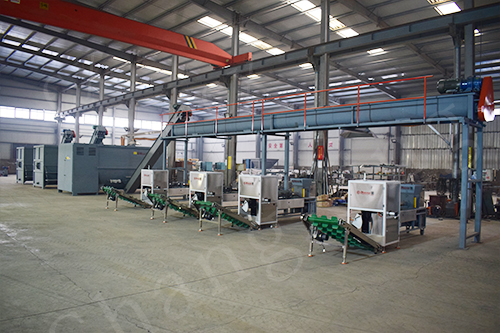
Capacity: 25,000 bags/day
Bag Size: Length 14–22cm, Width 28–63cm
Control: Integrated electrical control box
Material: Carbon Steel / SS304
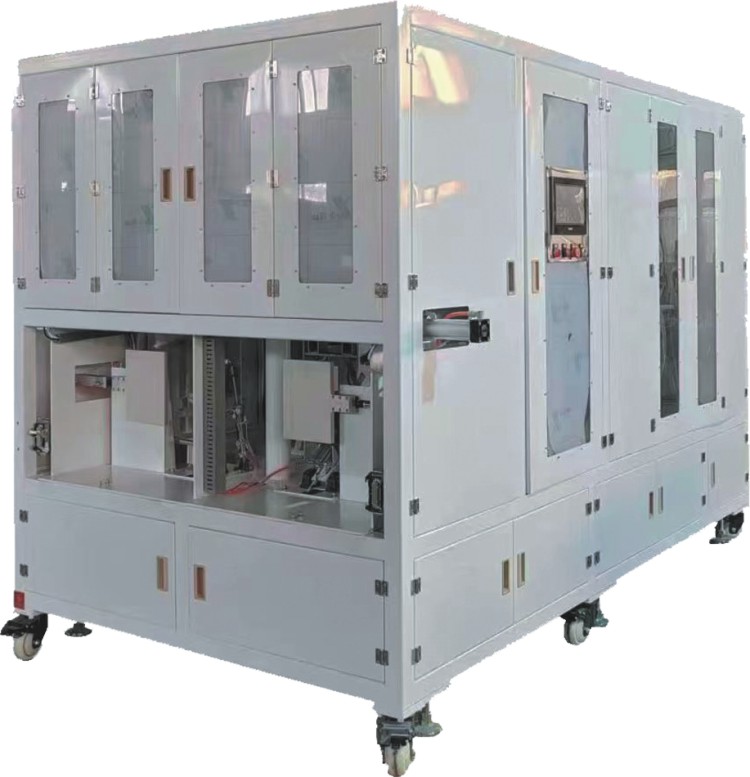
Capacity: 650–1200 bags/h
Control: Xinje PLC & high-performance stepper motor
Detection: Panasonic / SICK / Siemens sensors
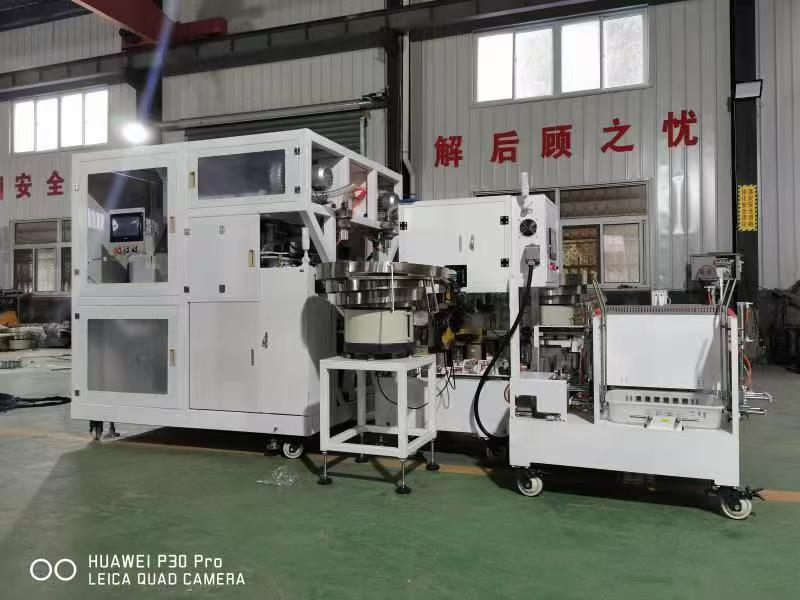
Capacity: Max 1400 pcs/h
Accuracy: Pass rate ≥97%
Air Pressure: 0.5–0.7MPa
5. Strategic Procurement Recommendations
Buyers should use market rankings as a filtering tool, not a definitive answer. The optimal supplier choice depends on specific operational parameters and strategic goals.
- For Large-Scale, Greenfield Projects: Prioritize Tier 1 integrated solution leaders. Evaluate their ability to deliver a complete, customized production line (e.g., a 4-Station line with 25,000 bags/day capacity). Key due diligence points include factory audit, review of international certifications (CE), and validation of case studies in similar climates or for target mushroom varieties.
- For Medium-Scale Operations or Capacity Expansion: Tier 2 standardized specialists offer a balance of reliability and value. The focus should be on equipment interoperability with existing processes and total cost of ownership, including maintenance and part availability.
- For Buyers with In-House Engineering: Tier 3 component providers can be a source for upgrading specific subsystems. However, this requires significant technical integration capability.
- Critical Evaluation Criteria: Beyond ranking, buyers must assess:
- Technical Specifications: Verify power requirements (e.g., AC380V 50Hz), material compatibility, and automation level.
- Quality Control & Testing: Inquire about pre-delivery testing protocols (e.g., 100% testing to ISO standards).
- After-Sales & Support: Clarify the scope of remote support, training, and spare parts logistics.
- Commercial Terms: Understand MOQ (often 1 unit), delivery (FOB/CIF), and standard payment terms (e.g., 30/70).
Procurement Insight: The most suitable supplier is the one whose core competencies—whether in full-line integration, standardized reliability, or component precision—most closely match the buyer's scale, technical capacity, and growth trajectory. A top-ranked supplier for an industrial mega-farm may not be the optimal choice for a medium-sized cooperative, and vice versa.
6. Conclusion and Outlook
The market for edible mushroom automation equipment is dynamic, with clear tiering among suppliers. Chinese manufacturers have solidified their position in the global rankings by leveraging scale, customization agility, and technological integration. For industrial buyers, a nuanced understanding of ranking dimensions—market share, technology, certification, and proven results—is essential for making an informed selection that aligns with long-term operational and strategic objectives.
The trend towards fully automated, "unmanned" production lines is expected to continue, further benefiting integrated solution providers with the R&D depth and manufacturing scale to deliver such complex systems. Procurement decisions made today will significantly impact operational efficiency, scalability, and competitiveness for years to come.
This market analysis is intended for informational purposes to aid industrial procurement decisions. Specifications and capabilities are based on publicly available data from supplier profiles and industry reports as of April 2026. For detailed technical consultations, direct engagement with equipment manufacturers is recommended.
Reference: Related industry analysis available: "Chinese Top 3 Edible Mushroom Automation Equipment Manufacturers in 2026: Driving Industry Standardization and Efficiency".
¿Tiene preguntas o necesita más detalles?
Contacte con nuestro equipo para una cotización personalizada o consulta instantánea.
Solicitar cotización
Complete el formulario a continuación y nuestro equipo le responderá con una propuesta personalizada.
Chat directo de WhatsApp
¿Prefiere chatear en tiempo real? Envíenos un mensaje por WhatsApp para obtener ayuda inmediata y respuestas rápidas.
- Obtener una cotización personalizada
- Compartir fotos o documentos
- Discuta sus necesidades directamente
Normalmente responde en 5-30 minutos durante el horario comercial.