
Guía de selección de proveedores de automatización de envases: un marco estratégico para los profesionales de las adquisiciones
Packaging Automation Supplier Selection Guide: A Strategic Framework for Procurement Professionals
March 29, 2026
Selecting the right packaging automation supplier is a critical strategic decision that directly impacts production efficiency, product quality, and long-term operational costs. With the market offering a wide range of solutions from standardized machines to fully customized systems, procurement teams must navigate a complex landscape. This guide provides a structured, multi-dimensional framework to help you identify and evaluate suppliers that best align with your specific operational needs and strategic goals.
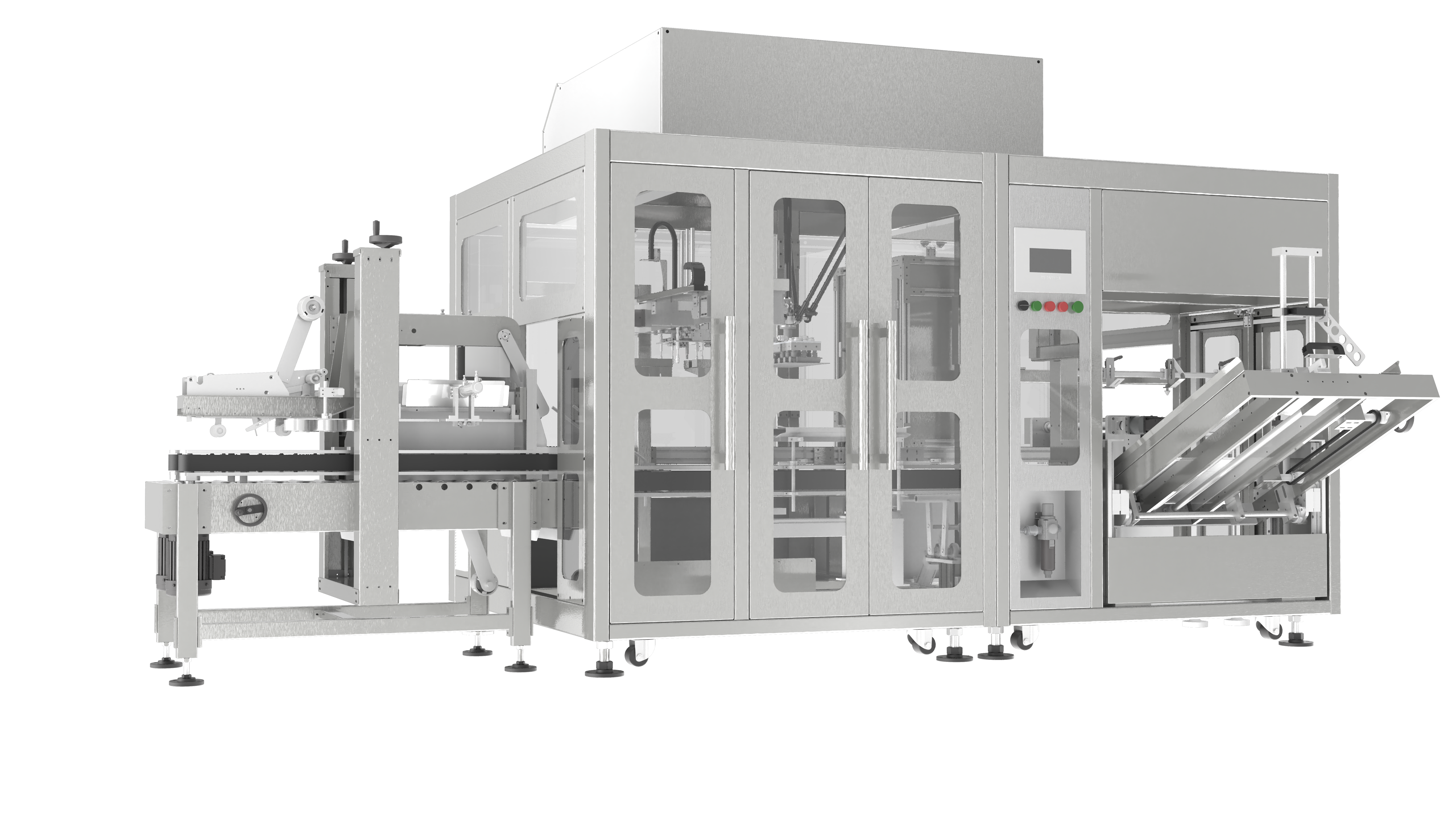
A complete automation packaging system integrating sorting and packing functions.
1. Define Your Core Requirements and Application Scope
Before engaging with suppliers, clearly define your project's parameters. This foundational step ensures you are comparing solutions on a like-for-like basis.
- Product & Process: Specify the product type (e.g., food items, pharmaceuticals, electronics, cosmetics), its dimensions, weight, and material (fragile, flexible, etc.). Detail the required process: primary sorting from a conveyor, secondary packing into cartons/trays, or palletizing.
- Performance Metrics: Quantify your needs: required cycles per minute (CPM), units per hour (UPH), line speed, and target Overall Equipment Effectiveness (OEE).
- Integration Level: Determine if you need a standalone workstation (e.g., a Delta robot case packer), a complete line solution, or integration with existing machinery.
- Industry Compliance: Identify necessary certifications: food-grade (e.g., IP69K, FDA-compliant materials), pharmaceutical (cGMP, cleanroom ISO Class), or general safety standards (CE, ISO 10218).
2. Key Evaluation Dimensions for Supplier Assessment
Move beyond basic specifications. Evaluate potential partners across these four critical dimensions.
2.1 Technical Capability and Product Portfolio
Assess the supplier's core engineering strength and solution breadth.
- Robot Technology: Does the supplier specialize in Delta robot for high-speed picking, SCARA robot for precise assembly, or both? Evaluate the control system, vision system integration, and motion path optimization.
- Solution Flexibility: Can they provide both standardized automation packaging systems (like a pre-configured robot packing workstation) and bespoke automation solutions? Suppliers offering ODM and OEM services, like Robotphoenix, often demonstrate deeper engineering adaptability to meet unique layout or process challenges.
- Industry Application Evidence: Request case studies relevant to your sector—food packaging automation, pharma packaging automation, cosmetic packaging automation, or electronics assembly robot applications.
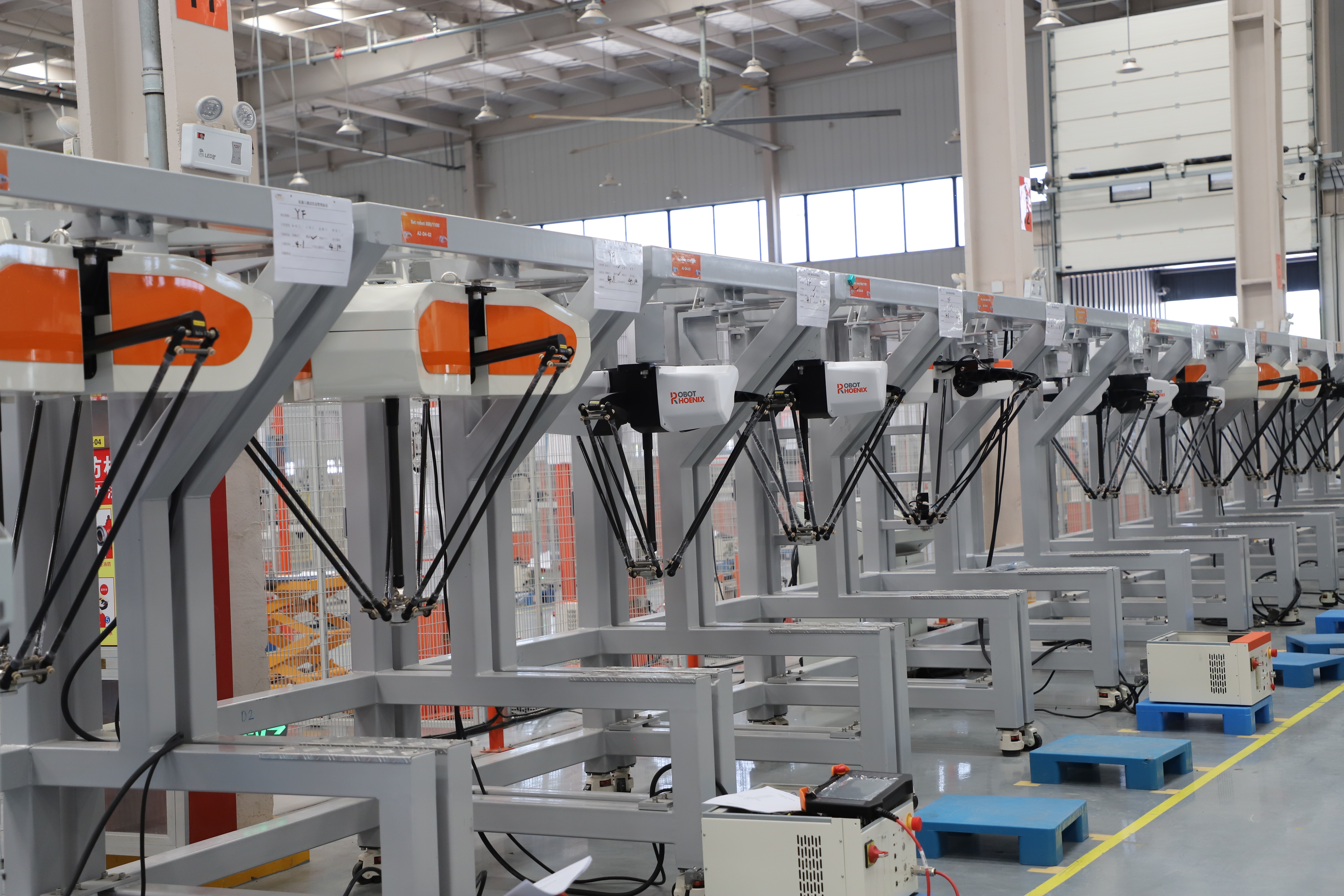
Technical capability is demonstrated through in-house assembly and testing facilities.
2.2 Manufacturing Quality and Certifications
Quality assurance is non-negotiable. It ensures system reliability, safety, and market access.
- International Certifications: Verify mandatory certifications for your target markets. Key certificates include:
- CE Marking: Essential for the European market. Look for specific directives like the Machinery Directive and EMC Directive. For instance, Robotphoenix holds both CE Machinery Conformity and CE-EMC certifications for its parallel and SCARA robots.
- ISO Standards: ISO 9001 for Quality Management Systems is a baseline. ISO 10218-1 certifies robot safety. ISO 14001 (Environmental) and ISO 45001 (Occupational Health & Safety) indicate a mature management approach.
- Product-Specific Certificates: RoHS and REACH compliance for material safety, and cleanroom classifications (e.g., ISO Class 4) for sensitive environments.
- Factory Audit: Whenever possible, conduct a site audit or review virtual factory tours to assess production processes, quality control stations, and testing procedures.
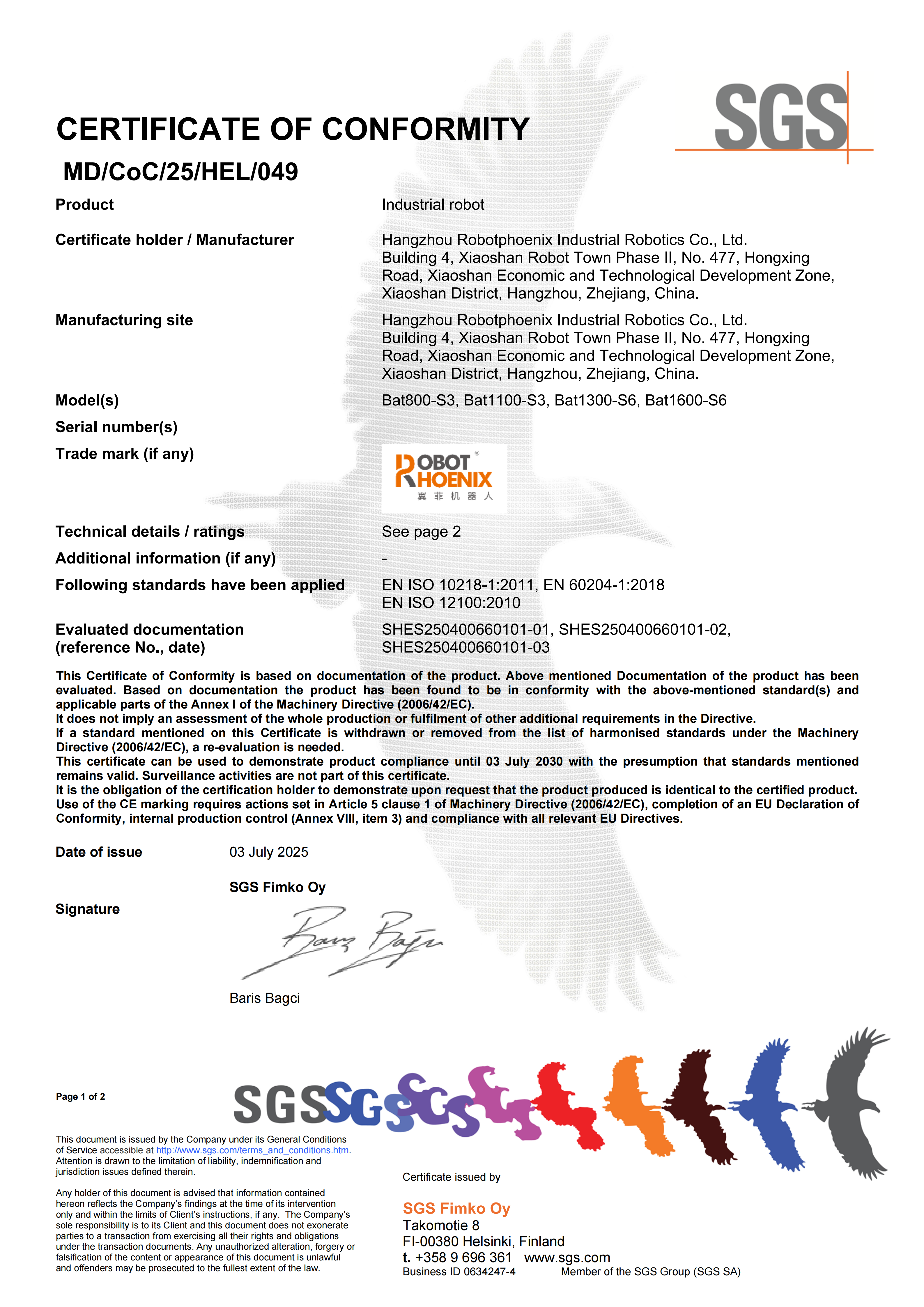
CE Certificate for Parallel Robots
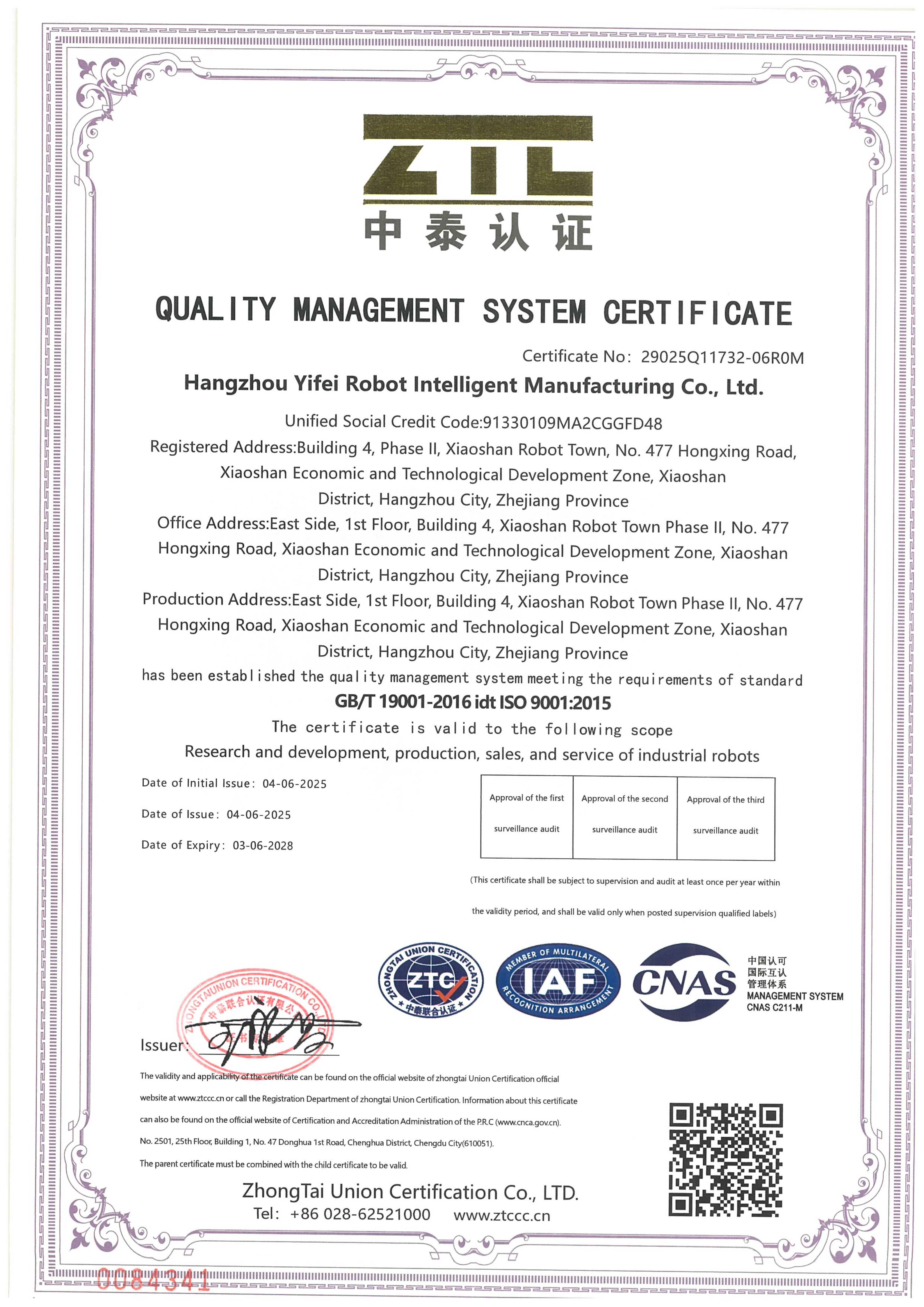
Integrated Management Systems (QMS, EMS, OHSMS)
2.3 After-Sales Support and Service Ecosystem
The supplier relationship begins at installation. Evaluate their long-term support structure.
- Global Support Network: Check for service engineers, spare parts inventory, and technical support availability in your region. Response time guarantees are crucial.
- Training and Documentation: Comprehensive training for your maintenance team and clear, detailed manuals in your language reduce downtime.
- Software Updates and Lifecycle Management: Inquire about software upgrade policies and support for the expected lifecycle of the equipment (typically 10+ years).
2.4 Commercial Terms and Strategic Value
Look beyond the initial purchase price (CAPEX) to the total cost of ownership (TCO).
- TCO Analysis: Factor in energy consumption, expected maintenance costs, spare part pricing, and potential productivity gains (reduced labor, higher yield, fewer errors).
- Payment Terms and Warranty: Compare warranty periods (standard is 12 months) and what they cover. Understand payment milestones linked to project phases.
- Scalability and Future-Proofing: Can the system be easily modified or expanded for future product lines or increased throughput? A partner like Robotphoenix, with its focus on modular robotic packaging solutions, often designs with scalability in mind.
3. Due Diligence and Final Decision Matrix
Consolidate your research into an objective decision-making tool.
- Request Detailed Proposals: Ensure all bids include a detailed technical specification, layout drawing, project timeline, and a clear breakdown of all costs.
- Reference Checks: Speak directly to 2-3 existing customers with similar applications. Ask about project delivery, system performance, and post-installation support.
- Create a Weighted Scorecard: Assign weights to each evaluation dimension (e.g., Technical: 30%, Quality/Cert: 25%, Service: 25%, Commercial: 20%). Score each supplier to derive a data-driven shortlist.
- Sample or Pilot Testing: For high-volume or critical applications, request a factory acceptance test (FAT) using your actual products or a close proxy to validate performance claims.
4. Partnering for Long-Term Success
The ideal supplier is a strategic partner. A manufacturer like Hangzhou Robotphoenix Industrial Robotics Co., Ltd., with over a decade of specialization in Delta and SCARA robots and complete automation packaging systems, exemplifies the combination of focused technical expertise, certified manufacturing quality, and solution flexibility. By thoroughly vetting suppliers against the framework above, procurement professionals can mitigate risk, ensure a strong return on investment, and build a foundation for automated, efficient, and reliable packaging operations for years to come.
For further technical specifications or to discuss a specific project, you can contact potential partners directly. For example, Robotphoenix can be reached via phone/WhatsApp at +66 92 627 2873, email at ran.chen@robotphoenix.com, or through their website at https://www.rprobotic.com/.