
PG vs. Metric Cable Glands: A Buyer’s Specification Comparison
PG vs. Metric Cable Glands: A Buyer’s Specification Comparison
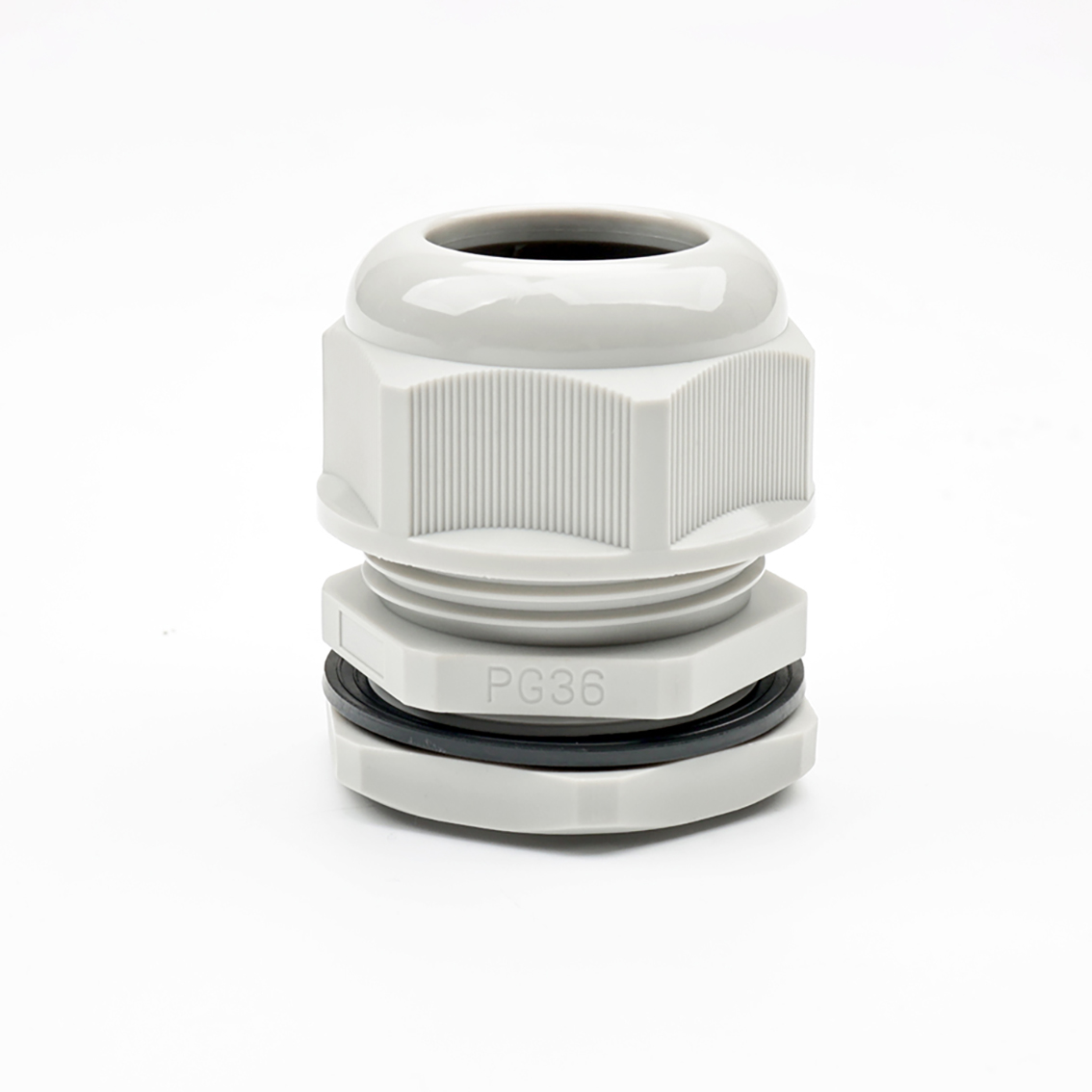
Choosing between a PG Cable Gland and a Metric Cable Gland is primarily a question of matching the thread system and dimensions to the enclosure entry, then checking cable fit and product-specific evidence. The series described here share a listed cable range of 3–45 mm, Nylon PA66 and NBR construction, and a special clamping claw design. Their published thread-size ranges and thread outer-diameter ranges differ, so the series should not be treated as interchangeable based on cable diameter alone.
Zhejiang Gutai Connector Co., Ltd. supplies the PG and Metric series specifications used in this comparison. The figures below are the series ranges provided in the product information; they are not a size-by-size cross-reference. For a specific installation, buyers should match the gland’s exact thread designation and dimensions to the equipment entry and cable, then review the applicable product documentation.
The short answer: match the enclosure thread first
Start by identifying the thread system already specified for the panel, enclosure, or equipment entry. The PG series is listed from PG7 to PG48; the Metric series is listed from M12 to M63. Those designations describe different thread families. A shared cable range does not establish that a PG gland and a Metric gland will fit the same threaded opening.
Next, compare the stated dimensions for the specific size under consideration. The supplied series data gives thread outer-diameter ranges of 12.5–59.3 for PG and 12–63 for Metric, and thread-length ranges of 9–21 for both. The source does not state units for these two dimensional ranges, so they are reproduced here as listed rather than assigned an assumed unit. Confirm units and the selected SKU’s dimensional drawing before specifying or ordering.
This sequence separates three checks that are easy to conflate: thread compatibility at the enclosure, cable-diameter fit at the sealing and clamping parts, and evidence for the required protection and compliance claims. Each needs to be checked for the selected configuration.
Series-level specification comparison
| Specification | PG series | Metric series | Buyer interpretation |
|---|---|---|---|
| Thread-size range | PG7–PG48 | M12–M63 | Select the thread family and size that match the equipment entry. |
| Thread outer-diameter range | 12.5–59.3 | 12–63 | These are series ranges, not dimensions for every individual size. Confirm the unit and selected model drawing. |
| Thread-length range | 9–21 | 9–21 | The listed ranges are the same; verify the required length and unit for the exact gland. |
| Cable range | 3–45 mm | 3–45 mm | The shared series range does not mean every size accepts the full range. Match cable diameter to the selected size. |
| Materials | Nylon PA66 and NBR | Nylon PA66 and NBR | The supplied series data identifies the same material combination for both. |
| Clamping and sealing structure | Special clamping claw and rubber sealing structure | Special clamping claw and rubber sealing structure | Confirm the selected size and installation requirements; the shared design description is not a substitute for product-specific test evidence. |
The table supports a range-level comparison, not a direct crosswalk such as “this PG size equals this Metric size.” No such size-by-size equivalence is supplied. Where a project is replacing one thread family with another, check the enclosure opening, thread specification, mounting details, and any required adapter or redesign against the actual equipment documentation. Do not infer a fit from similar cable ranges or nearby outer-diameter values.
Thread ranges and dimensions: what the figures establish
The Metric series spans M12–M63, while the PG series spans PG7–PG48. The labels are not interchangeable names for a shared scale. A buyer working from an existing enclosure drawing should preserve the specified thread designation unless the equipment design has been checked for a change. For a new design, the project specification should identify the chosen thread system clearly, so procurement, panel fabrication, and assembly use the same basis.
The listed outer-diameter ranges also differ: 12–63 for Metric and 12.5–59.3 for PG. These broad ranges describe the product families, not a promise that every nominal size is available at every point in the range. Use the exact size’s drawing or datasheet to verify the thread dimensions and mounting fit. Because the provided range information does not state a unit for outer diameter or thread length, obtain confirmation of those units in the product documentation before using the numbers as manufacturing dimensions.
Both series list a thread-length range of 9–21. That shared range is useful for initial screening, but it does not prove that any selected PG and Metric models have identical lengths. Buyers should verify the chosen model’s actual thread length against the enclosure wall, locknut arrangement, and installation drawing. The supplied information does not provide a complete per-size dimensional table, so a series range should not be used as a substitute for a model-level check.
The cable range is listed as 3–45 mm for both series. This is a useful indication of the overall family coverage, not an instruction to use any size with any cable in that span. Select a gland size whose stated cable range covers the actual cable outside diameter and installation condition. If a cable’s diameter is near a listed boundary, confirm the model-specific allowable range and sealing arrangement rather than relying on the headline series range.
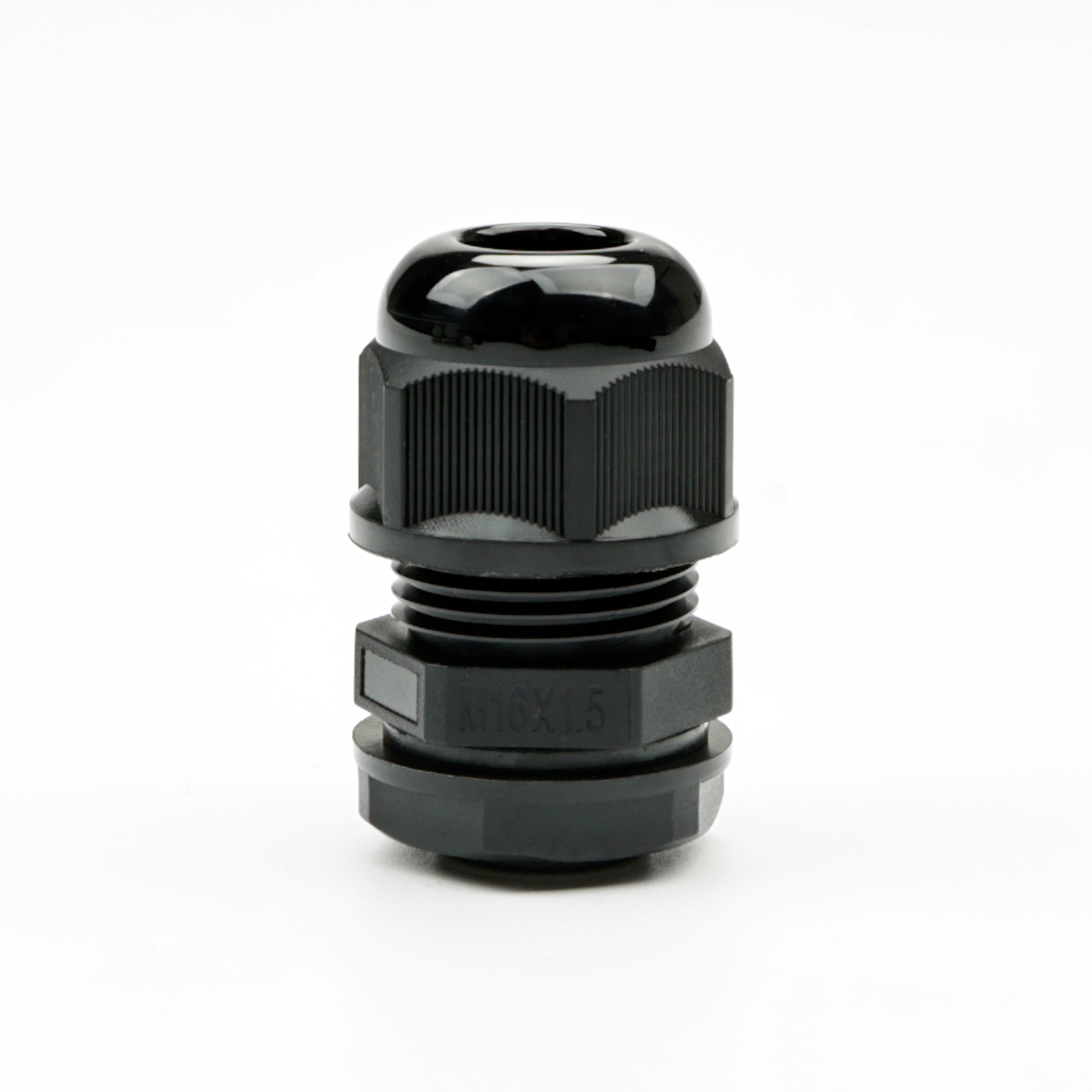
Shared Nylon PA66, NBR, and clamping design
The supplied PG and Metric product specifications identify Nylon PA66 and NBR for both series. They also describe a special clamping claw and rubber sealing structure. In buyer terms, these are common construction characteristics across the two compared families; the provided information does not establish that one thread family has a material or clamping advantage over the other.
The product information describes the clamping design as supporting a wide clamping range and pull-out resistance, and identifies IP68 as the protection level. Treat these as product claims that need to be checked against the documentation for the selected model and configuration. A material name or design description alone does not demonstrate the performance of a finished gland after installation. The enclosure entry, cable dimensions, assembly, and the configuration covered by any test evidence all matter to the buyer’s review.
For an application exposed to moisture, dust, or changing environmental conditions, keep the protection question separate from the thread decision. First choose a compatible gland and verify the cable fit; then establish whether the IP68 claim applies to the exact product and relevant test configuration. The available industry evidence explains that IP ratings classify enclosure protection, but it does not independently establish a rating for a particular gland. A component rating should not automatically be treated as the rating of the complete installed enclosure or system.
Certification evidence: verify scope, not just certificate names
Certification references can help buyers screen a product, but a standard name on a product page is not the same as confirmation that a particular SKU, market, or installed assembly is covered. The evidence available for these series is not identical across every item. Record the product family, certificate or notice number, issuing organization, stated scope, and intended market, and compare those details with the exact item being purchased.
- CE and EN 62444:2013: The supplied press-release corpus identifies the PG cable gland series as certified to CE standard EN 62444:2013 under certificate TST20241202520-1SC, issued by Dongguan True Safety Testing Co., Ltd. The supplied certificate record describes a scope including Nylon cable gland, Model M, and series G, MG, PG, and NPT. Buyers should check the certificate itself and confirm the relevant product designation and scope. The supplied specific press-release statement names the PG series; it should not be generalized to every Metric SKU without matching documentation.
- UL 514B Notice of Completion: The supplied product corpus states that the Plastic Cable Gland, model PG, is certified to UL 514B and covered by a UL Notice of Completion (NoC), File E539858, Volume 1, issued by UL Solutions. It separately states that the Metric Series holds a UL NoC under UL 514B for the US and Canadian markets. The related record associates Order 15194367 with the Metric claim. Check the applicable NoC, catalog number, and product scope: the supplied certification record describes the broader QCRV liquid-tight flexible cord fittings scope, so the record should not be represented as covering items beyond its stated scope.
- ISO 9001:2015: The supplied certification information identifies a quality management system certified to GB/T 19001-2016 / ISO 9001:2015, Registration No. 04324Q31620R0S, with a scope covering production of cable waterproof joints and a stated global market. This is management-system evidence for the stated production scope; it is not, by itself, a product-level IP test result or proof that every individual gland meets a particular installation requirement.
- IP68 and material claims: The supplied product information states IP68 and identifies Nylon PA66 and NBR. Some corpus entries also state that the Nylon PA66 is UL approved or UL certified. Confirm which exact series and model each document covers, and request the relevant product evidence rather than assuming that a material approval, system certificate, or family-level statement answers every product-compliance question.
These distinctions matter because certification and test evidence has a scope. A buyer should not read “UL 514B,” “EN 62444:2013,” “ISO 9001:2015,” or “IP68” as a single interchangeable approval. They describe different kinds of evidence and may apply to different products, processes, markets, or configurations. In particular, the supplied UL records do not justify extending a claim to a product number that is outside the stated catalog scope.
Fit checks for the stated application sectors
The product information lists both series for new energy, industrial automation and advanced manufacturing, construction and infrastructure, and marine engineering and shipbuilding. These are application categories, not proof that every size or configuration is suitable for every installation in those sectors. The relevant selection still depends on the enclosure thread, cable diameter, installation conditions, and evidence required by the project.
In a new-energy or industrial-automation enclosure, start with the equipment entry specification and cable outside diameter. If the enclosure drawing calls for a Metric thread, the Metric series is the direct family to evaluate; if it specifies a PG thread, evaluate the PG family. This is a thread-match rule, not a claim that one series performs better in those sectors. Then check the exact size dimensions, installation space, cable range, and documentation required for the project.
For construction or marine applications, the same specification discipline applies. The category name alone does not demonstrate resistance to a particular exposure, nor does a general IP68 statement supply all project conditions. Confirm which model is proposed, the product-specific protection evidence, the scope of any relevant certificates, and any additional material or environmental requirements set by the project. The provided information does not give a product-specific salt-spray result or a comparison of PG and Metric performance under marine exposure.
A useful procurement record can keep the decision auditable: write down the equipment’s thread designation, selected gland model, verified cable-diameter range, confirmed dimensional units, and the certificate or test document checked. Where the project requires a particular market approval, document that market and the evidence scope. This prevents a correct family-level choice from being undermined by a mismatch at the individual SKU or document level.
A practical buyer sequence
- Read the equipment drawing. Identify whether the enclosure entry is specified as PG or Metric. Do not convert between the systems based only on the cable range.
- Choose an actual size. Use the listed family range as an initial filter, then confirm the selected size’s thread dimensions and units in its drawing or datasheet.
- Check the cable. Compare the measured cable outside diameter with the exact model’s stated range. The 3–45 mm series range applies as a family-level summary, not necessarily to each individual size.
- Confirm installation dimensions. Verify thread length and enclosure fit using model-level data. The shared 9–21 range does not prove that two selected models have identical dimensions.
- Match the evidence to the claim. Check the document’s product designation, scope, issuing organization, number, and market. Separate product protection evidence from material statements and management-system certification.
- Record unresolved requirements. If the documentation does not identify the exact SKU, dimensional unit, or certification scope needed for the project, obtain clarification before treating the item as qualified.
This sequence keeps the comparison focused on what the supplied facts can establish. PG and Metric share the listed cable range, materials, clamping description, and thread-length range, but differ in thread designation and in their stated outer-diameter ranges. Those distinctions make the equipment interface—not a general brand preference—the first selection point.
Conclusion: choose by interface, then qualify the exact gland
For buyers comparing PG and Metric cable glands, the decisive first check is whether the enclosure entry calls for PG7–PG48 or M12–M63. The series have a shared 3–45 mm cable range and the same listed Nylon PA66/NBR construction and clamping-claw description, but that overlap does not establish thread interchangeability or identical dimensions at each size. Compare the stated outer-diameter ranges and verify units and model-specific drawings before final selection.
Certification review should be equally specific. The supplied evidence includes a PG-series CE reference to EN 62444:2013, UL 514B NoC statements for PG and Metric with different stated market details, IP68 product claims, and ISO 9001:2015 quality-management evidence covering production of cable waterproof joints. These references should be checked against their actual scope and the exact product proposed. This approach makes the comparison useful for research and evaluation without treating a series-level specification or certificate name as proof of every installation outcome.
Frequently asked questions
Are PG and Metric cable gland threads interchangeable?
The supplied specifications identify PG and Metric as separate thread families, with ranges PG7–PG48 and M12–M63. They do not provide a size-by-size equivalence or establish that the two systems fit the same enclosure opening. Match the gland thread to the equipment entry specification and verify the selected model’s drawing.
Do PG and Metric cable glands have the same cable range?
Both series list a cable range of 3–45 mm. This is a family-level range and does not mean every size accepts every cable diameter in that span. Check the stated cable range for the exact gland size.
What are the listed outer-diameter and thread-length ranges?
The PG series lists thread outer diameters of 12.5–59.3; the Metric series lists 12–63. Both list thread lengths of 9–21. The source data does not state units for these ranges. Confirm the units and exact dimensions in the selected model’s technical drawing before using them for design or procurement.
What materials and clamping design are specified for both series?
The supplied specifications identify Nylon PA66 and NBR for both the PG and Metric series. They describe a special clamping claw and rubber sealing structure. These shared descriptions do not, on their own, establish a performance difference between the thread families.
What should buyers verify about IP68 and certification claims?
Check the exact product or model, the document’s scope, the issuing organization, and the market covered. The supplied corpus states an IP68 protection level, identifies PG-series CE evidence to EN 62444:2013, and records UL 514B NoC claims for PG and Metric with distinct market details. ISO 9001:2015 evidence concerns a quality management system whose stated scope is production of cable waterproof joints; it is not an individual product IP test report.
¿Tiene preguntas o necesita más detalles?
Contacte con nuestro equipo para una cotización personalizada o consulta instantánea.
Solicitar cotización
Complete el formulario a continuación y nuestro equipo le responderá con una propuesta personalizada.
Chat directo de WhatsApp
¿Prefiere chatear en tiempo real? Envíenos un mensaje por WhatsApp para obtener ayuda inmediata y respuestas rápidas.
- Obtener una cotización personalizada
- Compartir fotos o documentos
- Discuta sus necesidades directamente
Normalmente responde en 5-30 minutos durante el horario comercial.