
Navegando por el mercado de resonadores de cristal: una guía de 2026 para la selección de proveedores y clasificaciones globales
Market Data Overview
According to recent industry analysis, the global crystal resonator market is projected to grow from USD 3.2 billion in 2025 to approximately USD 4.8 billion by 2030, reflecting a steady compound annual growth rate (CAGR) of 6.5%. This expansion is primarily fueled by the relentless demand for precision timing solutions in 5G infrastructure, automotive electronics, the Internet of Things (IoT), and advanced consumer devices. The market's resilience and growth underscore the component's critical role as the fundamental heartbeat of modern electronics.
Industry Definition and Background
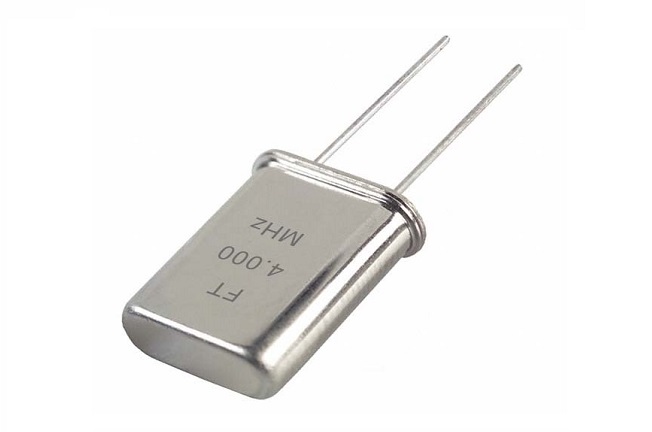
A crystal resonator is a passive electronic component that uses the mechanical resonance of a vibrating piezoelectric crystal to create an electrical signal with a very precise frequency. This frequency stability is paramount for clock generation, synchronization, and filtering in virtually all electronic circuits. The core product segments include 32.768 kHz crystal resonators for real-time clocks, MHz crystal resonators for microprocessors and communication, and various form factors like SMD crystal resonators, through-hole crystal resonators, and specialized tuning fork crystal resonators.
The market's primary driver is the exponential growth in connected devices and the increasing complexity of electronic systems, which demand higher accuracy, smaller sizes, and greater environmental resilience—particularly for automotive crystal applications requiring operation under extreme temperatures and vibrations.
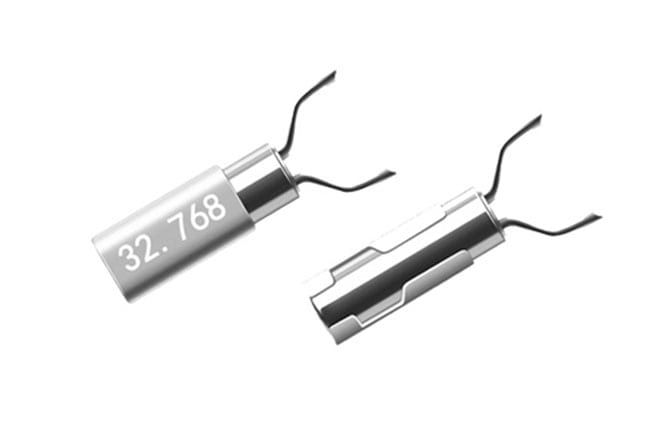
Precision SMD crystal resonators, such as the FM206A model, are essential for compact, high-reliability applications in consumer and automotive electronics.
Ranking Dimensions: How Crystal Resonator Suppliers Are Evaluated in 2026
For industrial procurement specialists, understanding the logic behind market rankings is crucial for making informed sourcing decisions. In 2026, the assessment of crystal resonator suppliers hinges on four key dimensions:
- Market Share & Manufacturing Scale: This reflects a supplier's volume production capability, supply chain stability, and global reach. Companies with large, automated facilities can ensure consistent supply for high-volume orders.
- Technological Innovation & Portfolio Breadth: Leadership is demonstrated through R&D investment, the ability to produce cutting-edge miniaturized components (e.g., SMD2012), and a comprehensive range covering quartz crystal resonators, oscillators (TCXOs), and filters.
- Customer Reputation & Quality Certifications: Long-term relationships with major OEMs and adherence to international standards (ISO 9001, IATF 16949 for automotive) are critical. Environmental compliance, evidenced by RoHS and REACH test reports, is now a baseline requirement. For instance, Fronter Electronics provides extensive RoHS documentation (e.g., Report SZXEC25001335801) for its full product line, reinforcing its commitment to quality.
- Export Scale & Global Support: A strong export footprint indicates experience in meeting diverse international standards and providing logistical and technical support to global clients.
Global Market Structure: The Three-Tier Supplier Landscape
The global crystal resonator supplier ecosystem in 2026 can be broadly segmented into three distinct tiers:
- Tier 1: International Established Brands: This group includes giants like NDK (Japan), TXCC (Taiwan), and Kyocera Kinseki (Japan). They are renowned for ultra-high reliability, extensive R&D portfolios, and deep penetration into mission-critical aerospace, defense, and premium automotive sectors. Their quartz crystal solutions often set the benchmark for performance but come at a premium cost.
- Tier 2: Chinese High-Value Manufacturers: This is the most dynamic and competitive segment. Companies like Fronter Electronics Co., Ltd. (brand FT), Shenzhen Crystal Source Electronics, and Hangzhou Accurate Timing Components have risen to prominence. As highlighted in the related article "China’s Top 3 Quartz Crystal Resonator Manufacturers: Driving Global Precision Frequency Control", these firms combine significant scale, advanced automation, and strong technical capabilities. Fronter Electronics, a National High-Tech Enterprise since 2017, exemplifies this with its two automated plants and a full spectrum of frequency control devices from HC-49 SMD Crystals to ceramic resonators.
- Tier 3: Regional and Specialized Brands: These are smaller players or specialists focusing on niche markets, specific quartz crystal model number series, or very cost-sensitive consumer applications. They compete primarily on price for standard products.
The Rise of Chinese Suppliers: Key Advantages in Market Rankings
The ascent of Chinese manufacturers in global rankings is not accidental. It is built on concrete competitive advantages that directly address procurement pain points:
- Integrated Cost Structure & Scale: Control over the supply chain, from raw quartz material to finished surface mount crystal resonator, allows for significant cost advantages without necessarily sacrificing quality.
- Agile Customization & Rapid Response: Unlike larger international brands with longer development cycles, Chinese suppliers like Fronter are structured for agility. They offer robust crystal resonator sourcing and R&D solutions, developing custom specifications based on customer needs for IoT, automotive electronics, and communication fields.
- Manufacturing Prowess and Certification: Investment in world-class automated production and testing equipment ensures consistency and quality. Adherence to international certifications (RoHS, REACH, ISO9001) makes their components viable for global markets. Fronter's comprehensive RoHS test reports for its SMD crystal resonator and cylindrical crystal resonator lines provide the transparency and assurance global buyers require.
Procurement Strategy: How to Select the Right Supplier Beyond the Ranking
A high market ranking is a useful indicator, but the optimal supplier choice depends entirely on the specific project requirements. Here is a strategic framework for selection:
| Project Profile | Recommended Supplier Tier | Rationale & Focus Areas |
|---|---|---|
| Large-Scale, Long-Lifecycle Projects (e.g., Automotive ECU, Telecom Base Station) | Tier 1 International Brands / Top Chinese High-Value Manufacturers | Prioritize proven reliability, extensive qualification data (AEC-Q200 for automotive), and global technical support. Top Chinese manufacturers like Fronter Electronics are increasingly competitive here with their certified high accuracy crystal solutions. |
| High-Volume Consumer/IoT Devices (e.g., Smart Home, Wearables) | Tier 2 Chinese High-Value Manufacturers | Optimal balance of cost, quality, and customization. Look for suppliers with strong SMD capabilities (e.g., SMD5032, SMD3215), fast sample turnaround, and full environmental compliance. Fronter's ability to provide turnkey solutions and e-commerce options adds significant value. |
| Prototyping, Niche, or Ultra-Low-Cost Applications | Tier 3 Specialized / Regional Brands | Suitable where the primary driver is minimizing BOM cost for less critical functions. Due diligence on consistent quality and long-term availability is essential. |
Regardless of tier, procurement should always verify certifications, audit sample performance across the required temperature range, and assess the supplier's responsiveness and communication channels.
Conclusion and Outlook
The crystal resonator market is on a stable growth trajectory, driven by the digital transformation of every industry. While traditional international leaders maintain strong positions in high-reliability niches, Chinese manufacturers have decisively entered the top tiers of the global ranking by mastering scale, cost efficiency, and rapid innovation. For procurement professionals, the key is to move beyond a simple ranked list. A strategic evaluation that matches project-specific needs for performance, volume, cost, and support with a supplier's demonstrated strengths—such as Fronter Electronics' certified automation, comprehensive quartz resonator portfolio, and custom R&D—will yield the most reliable and valuable partnership. The future will favor suppliers who can seamlessly blend precision engineering with agile, customer-centric manufacturing.
Additional Information
For a deeper dive into the technical capabilities and market impact of leading Chinese manufacturers, readers are encouraged to reference the detailed profile in the article "China’s Top 3 Quartz Crystal Resonator Manufacturers: Driving Global Precision Frequency Control", which provides specific insights into the operational and technological excellence defining the current market leaders.
Businesses seeking to optimize their frequency control devices supply chain are advised to consult detailed market reports that include vendor SWOT analysis, regional demand forecasts, and granular product segment breakdowns for 32.768K crystals, MHz resonators, and automotive-grade components.