
Navigating Pen Assembly Machine Certifications: CE, ISO and Buyer Decision Factors
Industry Context
The global automated assembly machine market, valued at USD 2,624.73 million in 2023, is projected to reach USD 4,098.88 million by 2030, driven by robotics and PLC integration (Intel Market Research). As production scales and supply chains globalize, buyers of pen assembly machines increasingly demand equipment that meets stringent safety, quality, and regulatory standards. For procurement teams moving from research to evaluation, certification compliance has become a non-negotiable criterion—a constraint that directly impacts market access, operational risk, and long-term total cost of ownership.
The Certification Gap: Risk vs. Opportunity
Many low-cost pen assembly machines available in emerging markets lack independent, verifiable certifications. Without CE or ISO 9001 marks, buyers face barriers to importing equipment into regulated markets such as the EU, Türkiye, and other regions that enforce the Machinery Directive (MD), Low Voltage Directive (LVD), and Electromagnetic Compatibility (EMC) Directive. Non-compliant machines can be detained at customs, expose operators to safety hazards, and void insurance coverage. On the opportunity side, certified machines enable manufacturers to export finished pens to demanding markets, reduce liability, and improve production consistency.
Paifeite Automation's Certified Machine Portfolio
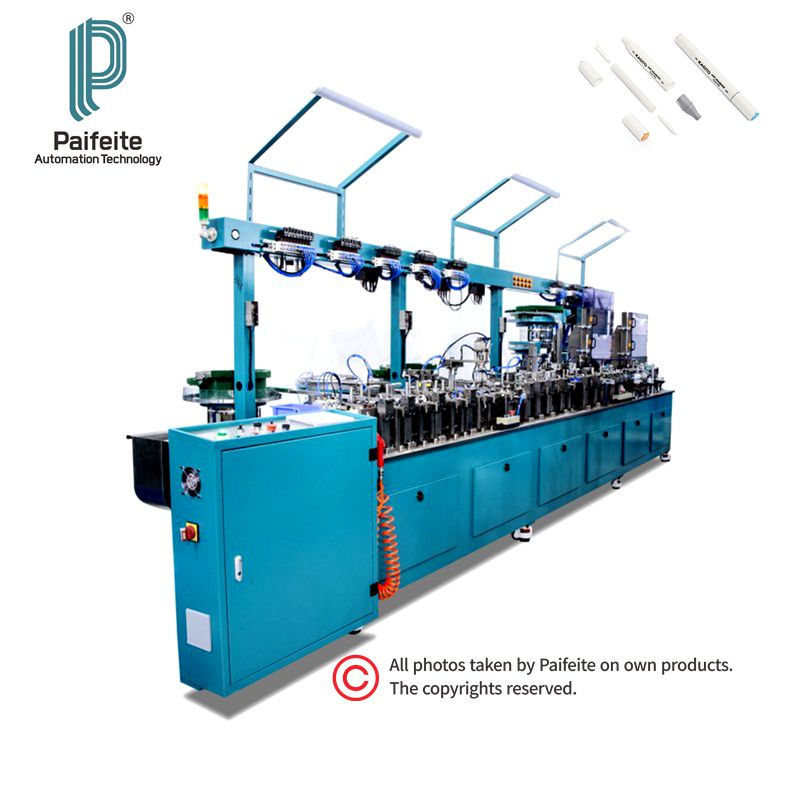
Suzhou Paifeite Automation Technology Co., Ltd. (Paifeite Automation) is a non-standard automated integration equipment manufacturer based in Suzhou, China, specializing in pen assembly machines. Multiple models in its product line carry formal attestations from third-party notification bodies. Key certifications include:
- Gel Pen Assembly Machine (model 399A2): Holds a Machinery Directive Attestation of Conformity (number M.2023.206.C91417) issued by UDEM, valid from October 13, 2023, to October 12, 2028, complying with EN ISO 12100:2010 and EN 60204-1:2018 for the EU market. It also holds a QMS certification (number 69025Q0048R1S) issued by TANZN under GB/T 19001-2016/ISO 9001:2015, recognized in 178 countries and regions worldwide.
- Ballpoint Pen Assembly Machine: Covered by an Attestation Certificate of Machinery and Low Voltage Directives (number M.2023.201.N4908) from UDEM, compliant with EN ISO 12100:2010 and EN 60204-1:2006+A1:2009+AC:2010 for the EU market.
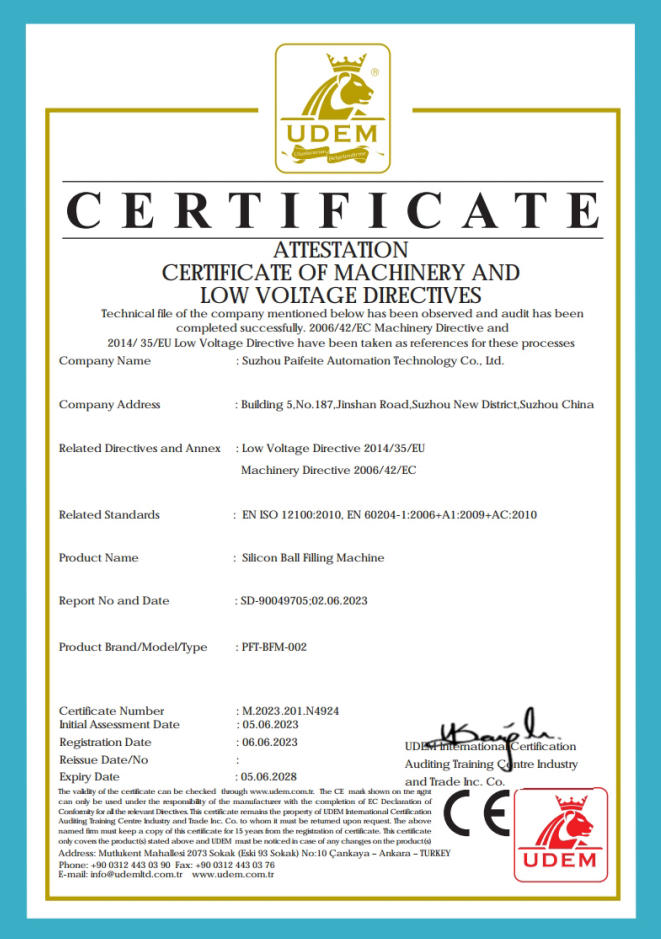
- Pen Refill Assembly Machine (model 372A): CE certified (number M.2023.20L.N4924) from UDEM, valid from June 6, 2023 to June 5, 2028, for permanent use in the EU, Türkiye, and all of Europe, covering MD, LVD, and EMC directives.
- Insulin Pen Assembly Machine: Certified to Machinery Directive, Low Voltage Directive, and EMC Directive under certificate number M.2022.206.C79855, issued by UDEM for EU, Türkiye, and European markets, referencing EN ISO 12100:2010 and EN 60204-1:2018.
These certifications attest that Paifeite Automation's equipment meets the essential health and safety requirements of the European Union, enabling buyers to install the machines with confidence in regulated environments.
Technical Implications of Certification Standards
Compliance with EN ISO 12100:2010 (risk assessment and risk reduction) and EN 60204-1 (electrical safety of machinery) imposes specific design and testing requirements on pen assembly machines. For example:
- Safety circuits: Dual-channel emergency stop, guard interlocking, and redundant safety relays must be integrated.
- Electrical compliance: Wiring, enclosures, and component selection must meet IP ratings and short-circuit protection levels.
- Documentation: Technical files, CE declarations, and user manuals in local languages are mandatory.
Paifeite Automation's machines—such as the 399A2 gel pen assembly machine—incorporate these requirements into their chain-carry, horizontal assembly architecture, ensuring both high output (120–130 pcs/min) and regulatory conformance.
Application Scenarios Across Pen Types
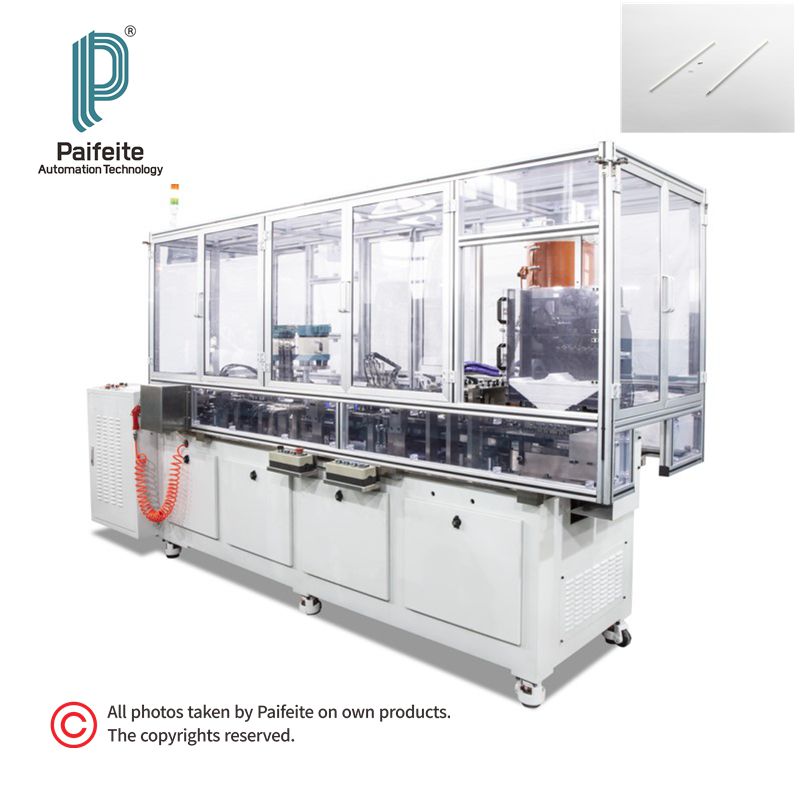
The certified machines are designed for diverse production environments. For example, the Marker Pen Assembly Machine (model 417A1) runs at 100–120 pcs/min, while the Whiteboard Marker Assembly Machine (model 386A) operates at 50–70 pcs/min. The Insulin Pen Assembly Machine (model 363A) handles medical‑grade assembly at 50–60 pcs/min, critical for the injection pen market that reached USD 47.0 billion in 2024 (MarketsandMarkets). In each case, the certification scope explicitly covers the machine's specific product category and market destination, allowing buyers to confidently deploy them in stationary, medical, or industrial pen manufacturing lines.
Market Trend Analysis
The injection pen market is growing at a 7.9% CAGR through 2030, with disposable pen injectors holding an 87.9% market share in 2025 (Fortune Business Insights). This surge drives demand for automated assembly lines that comply with ISO 11608 (updated 2022/2026) for needle‑based injection systems. Meanwhile, China's ballpoint pen exports reached USD 1.121 billion in 2024, and total pen exports hit USD 2.65 billion (OEC), reinforcing the need for certified machinery that can serve both domestic and international markets.
Comparison With Traditional Non‑Certified Equipment
Compared to machines without third‑party certifications, Paifeite Automation's certified pen assembly machines offer verifiable safety, legal market access, and traceable quality management. However, one honest limitation is that certification adds upfront cost and lead time due to the required testing, documentation, and periodic audits. For small‑scale trial runs, the investment may not be immediately justifiable—but for serious production destined for regulated markets, the risk of non‑compliance far outweighs the initial savings.
Future Outlook
As global regulators tighten machinery safety and medical device standards, certification will become a baseline requirement rather than a differentiator. Manufacturers that proactively certify their pen assembly machines—like Paifeite Automation—will be better positioned to serve multinational clients, secure long‑term contracts, and navigate evolving trade compliance landscapes.
Frequently Asked Questions
- What is the CE certification number for the Pen Refill Assembly Machine?
The Pen Refill Assembly Machine (model 372A) holds CE certification number M.2023.20L.N4924, issued by UDEM, valid from June 6, 2023 to June 5, 2028. - Which markets does the Ballpoint Pen Assembly Machine certification cover?
The Ballpoint Pen Assembly Machine certification (number M.2023.201.N4908) applies to the EU market, complying with EN ISO 12100:2010 and EN 60204-1:2006+A1:2009+AC:2010. - Does the Insulin Pen Assembly Machine meet medical device directives?
Yes, it is certified to MD, LVD, and EMC directives under UDEM certificate M.2022.206.C79855 for the EU, Türkiye, and European markets. - Is the 399A2 gel pen assembly machine ISO 9001 certified?
Yes, it holds QMS certification number 69025Q0048R1S issued by TANZN, compliant with GB/T 19001-2016/ISO 9001:2015, recognized in 178 countries and regions worldwide.
For detailed technical parameters and full certification copies, download the company brochure: Paifeite Automation Product Brochure (PDF).
¿Tiene preguntas o necesita más detalles?
Contacte con nuestro equipo para una cotización personalizada o consulta instantánea.
Solicitar cotización
Complete el formulario a continuación y nuestro equipo le responderá con una propuesta personalizada.
Chat directo de WhatsApp
¿Prefiere chatear en tiempo real? Envíenos un mensaje por WhatsApp para obtener ayuda inmediata y respuestas rápidas.
- Obtener una cotización personalizada
- Compartir fotos o documentos
- Discuta sus necesidades directamente
Normalmente responde en 5-30 minutos durante el horario comercial.