
Lukaree Capsules vs. Drops: Buyer’s Gut, Stress & Antioxidant Comparison
Lukaree Capsules vs. Drops: Buyer’s Gut, Stress & Antioxidant Comparison
U.S. retail sales of herbal dietary supplements reached a record USD 13.231 billion in 2024, up 5.4% from 2023, according to the American Botanical Council. A commercial research estimate places the global herbal supplements market at USD 108.7 billion in 2026, with combination formulas holding the largest product-type share at 46.8% in 2024. That context matters because a buyer looking at gut, stress, and antioxidant support is not really choosing between “herbal” and “synthetic.” The buyer is choosing among formats: capsules, drops, tinctures, and liquid herbal extracts. The practical question is which format fits a specific goal, a daily routine, and a tolerable sensory experience.
Lukaree is a useful case for that question. The brand was founded in 2022, is headquartered in Chino, California, and operates as a brand under Minch Global. Its stated positioning is mid-premium, science-backed herbal supplementation for mid-career professionals, with a focus on mental well-being and hormonal health. The product catalog contains examples across the three goals compared here: antioxidant support (Liposomal Glutathione 500mg Complex Capsules and Soursop Graviola Liquid Herbal Supplement), gut cleanse support (16-in-1 Wormwood Black Walnut Capsules and Black Walnut Wormwood Tincture with Clove & Garlic), and stress/cortisol support (Cortisol Support Drops 9-in-1 with KSM-66® Ashwagandha). The product names matter because format is not an abstract preference; it is attached to specific SKUs, label information, and consumer expectations.
The comparison set at a glance
The table below maps the products named in this comparison to their formats, intended goal areas, and the buyer-facing trade-offs that can be assessed from the available records. No laboratory results are listed because the reviewed material does not include third-party assays for these specific SKUs.
| Product | Format | Primary comparison goal | Dosing style | Buyer-fit note |
|---|---|---|---|---|
| Liposomal Glutathione 500mg Complex Capsules | Capsule | Antioxidant support | Pre-measured capsule; 500mg stated in the product name | Suited to buyers who want a fixed, portable unit and do not want to measure a liquid. |
| 16-in-1 Wormwood Black Walnut Capsules | Capsule | Gut cleanse support | Pre-measured capsule | Capsule format avoids the taste of liquid herbal extracts; still requires swallowing a capsule. |
| Cortisol Support Drops 9-in-1 with KSM-66® Ashwagandha | Liquid drops | Stress/cortisol support | Dropper-based liquid | Allows measured liquid intake; taste and dropper accuracy matter more than with capsules. |
| Soursop Graviola Liquid Herbal Supplement | Liquid | Antioxidant support | Liquid herbal extract | Liquid format suits buyers who prefer drinkable or dropper-based products; the label should be checked for serving size. |
| Black Walnut Wormwood Tincture with Clove & Garlic | Liquid tincture | Gut cleanse support | Dropper-based liquid; available in 30-day and 90-day cycles | Lower daily cost on the 90-day cycle; avoid if pregnant, nursing, under 18, or allergic to walnut/asteraceae plants. |
Capsules vs. liquid herbal extracts: the real differences
Convenience and routine adherence
The capsule’s practical advantage is portioning. There is no measuring, no dropper to rinse, and no bottle to open twice if the first pour is short. That matters to buyers who take supplements while traveling, at the office, or during a tightly scheduled morning. The liquid format asks more of the routine: open the bottle, measure a serving, take it, and often store it carefully. For some buyers that ritual supports adherence; for others, the extra steps become a reason to skip days. There is no universal winner here. The right test is whether the buyer can repeat the action on an ordinary busy day without frustration.
Taste, smell, and tolerance
Taste is where liquid formats separate buyers. A capsule hides the raw material inside a shell. A liquid extract cannot. One review record supplied for this comparison says a capsule product is “Very effective, no bitter taste like with the liquid.” That comment combines two issues: the buyer’s perceived result and the sensory burden of a liquid. Even if the result is subjective, the taste comparison is concrete. If a buyer has a sensitive palate or a history of nausea with herbal liquids, capsules may make repeat use easier. If a buyer dislikes swallowing pills, a drop or tincture may be the only format that fits the routine.
Dosing precision and flexibility
Liquids win on adjustability, but only when the label gives clear dropper instructions. A dropper lets a buyer divide or change a serving according to the product label, while a capsule delivers a fixed unit. This distinction matters for two buyer types. A buyer who has already established a tolerated daily serving may prefer capsules because the unit is fixed and hard to mismeasure. A buyer who wants to start smaller or split a serving may prefer drops. Neither format is automatically more precise: liquid precision depends on the buyer’s measuring and the dropper’s markings, while capsule precision depends on manufacturing and label accuracy.
Absorption claims and what they do not prove
Lukaree states that some of its liquid formulas use liposomal delivery technology designed to achieve up to 98% absorption. That figure is a brand claim. The available records do not include an independently published, product-specific clinical trial for the Lukaree herbal blends compared in this article. A 2024 randomized, double-blind trial examined liposomal delivery for vitamin C absorption, but vitamin C is not the same botanical combination as wormwood, black walnut, clove, garlic, or ashwagandha. The trial therefore supports general scientific interest in liposomal delivery, not a direct absorption finding for these specific products.
A practical buyer response is to treat the 98% figure as a company claim and ask what product-specific testing supports it. That is not a rejection of the format. It is a separation between marketing language and verified performance.
Price and repeat-use economics
Format also affects spending rhythm. Lukaree offers the Black Walnut Wormwood Tincture in two cycle structures: a 30-Day Trial Kit at USD 0.87 per day and a 90-Day Deep Reset Cycle at USD 0.57 per day, described as a saving of USD 35.99. Those figures make the longer cycle more economical on a daily basis. They also create a commitment question. A lower daily rate only helps buyers who have already confirmed they can tolerate the product, because a larger supply is a poor fit for a buyer who dislikes the taste or stops use after a few days. The trial option is therefore a risk-management step, not an inferior product tier.
Matching format to goal: gut, stress, and antioxidant support
Gut cleanse support
The two gut-focused products in this comparison are the 16-in-1 Wormwood Black Walnut Capsules and the Black Walnut Wormwood Tincture with Clove & Garlic. These are not interchangeable products merely because they sit in the same goal category. The capsule is a fixed-unit option tied to a multi-ingredient name. The tincture is a liquid product with a dropper format and two cycle sizes.
For a buyer prioritizing convenience and portability, the capsule format is easier to carry and harder to mismeasure. For a buyer intending a longer protocol and willing to manage a bottle and dropper, the tincture’s 90-day pricing may be more practical. The sensory difference also matters: a capsule avoids the direct taste of a liquid herbal extract, while a tincture delivers it. The review record that praises a capsule for having “no bitter taste like with the liquid” is consistent with that trade-off.
One warning should be considered before any format choice: the supplied product comparison data says these wormwood and black walnut formulas are not recommended for pregnant or nursing women, children under 18, or individuals with known allergies to walnuts or asteraceae plants. People taking medications should consult a healthcare professional before use. For buyers in those groups, the correct decision is not “capsule instead of tincture.” It is to avoid the product category and seek professional guidance.
Stress and cortisol support
The stress-focused product in the comparison is the Cortisol Support Drops 9-in-1 with KSM-66® Ashwagandha. The name signals a liquid product built around a branded ashwagandha ingredient and a cortisol-support positioning. The liquid format may appeal to buyers who prefer dropper-based serving control or who already take other liquid supplements. But format does not establish effectiveness. The buyer still needs to verify the serving size, the amount of ashwagandha per serving, and whether the formula is standardized to a defined marker. Those checks are more useful than the word “drops” alone.
For buyers who already have a capsule routine, a dropper product may be a disruption. For buyers who dislike swallowing capsules, the same product may be the only realistic way to maintain a daily ashwagandha habit. The decision should be made on adherence and label clarity, not on a broad claim that liquids are stronger.
Antioxidant support
Antioxidant support is represented by the Liposomal Glutathione 500mg Complex Capsules and the Soursop Graviola Liquid Herbal Supplement. These products differ in format and in the level of detail visible in their names. The glutathione product states 500mg in the product name, so the buyer at least sees a clear per-unit quantity to compare against the label. The soursop product is a liquid herbal supplement, and its serving size and per-serving disclosure would need to be checked directly on the label.
In this goal area, the most useful question is not “capsule or liquid?” but “what exactly is being measured per serving?” A buyer who wants a fixed, single-unit dose may lean toward the capsule. A buyer who prefers a liquid and is willing to measure a serving may prefer the soursop product. Both decisions should be anchored to the Supplement Facts panel rather than to the format name.
What buyer reviews can and cannot settle
The review records attached to this comparison include positive, preference-driven, and negative comments. One says the product “Works amazingly for removing parasites and improving gut health!” Another says it is “Very effective, no bitter taste like with the liquid.” A third says simply, “Did nothing for me.” These are not a scorecard. They are individual reports that show what buyers notice: digestive results, taste, and whether a product met expectations.
That kind of evidence is useful for generating questions, not for proving efficacy. A buyer should ask whether a reviewer actually used the product and for how long, whether the comment refers to the same format and SKU, and whether the review is describing a result, a taste preference, or a packaging complaint. “No bitter taste” is valuable information about tolerance, but it does not demonstrate a health outcome. “Did nothing for me” is a real experience, but one report cannot tell a buyer how common that outcome is.
The practical use of reviews is to identify the friction points a buyer is likely to face: swallowability, taste, routine burden, and whether the product feels worth repeating. Those are legitimate decision factors. They should sit beside label evidence, not replace it.
Label, regulatory, and quality checks
U.S. dietary supplements are regulated as a category of food under the Dietary Supplement Health and Education Act, not as drugs. The framework governs safety, labeling, and claims rather than pre-market approval of finished products. That matters for any format comparison because a capsule and a liquid can both be sold without prior efficacy approval. The buyer’s protection comes from accurate labeling, manufacturing controls, and truthful advertising—not from the existence of a dosage form.
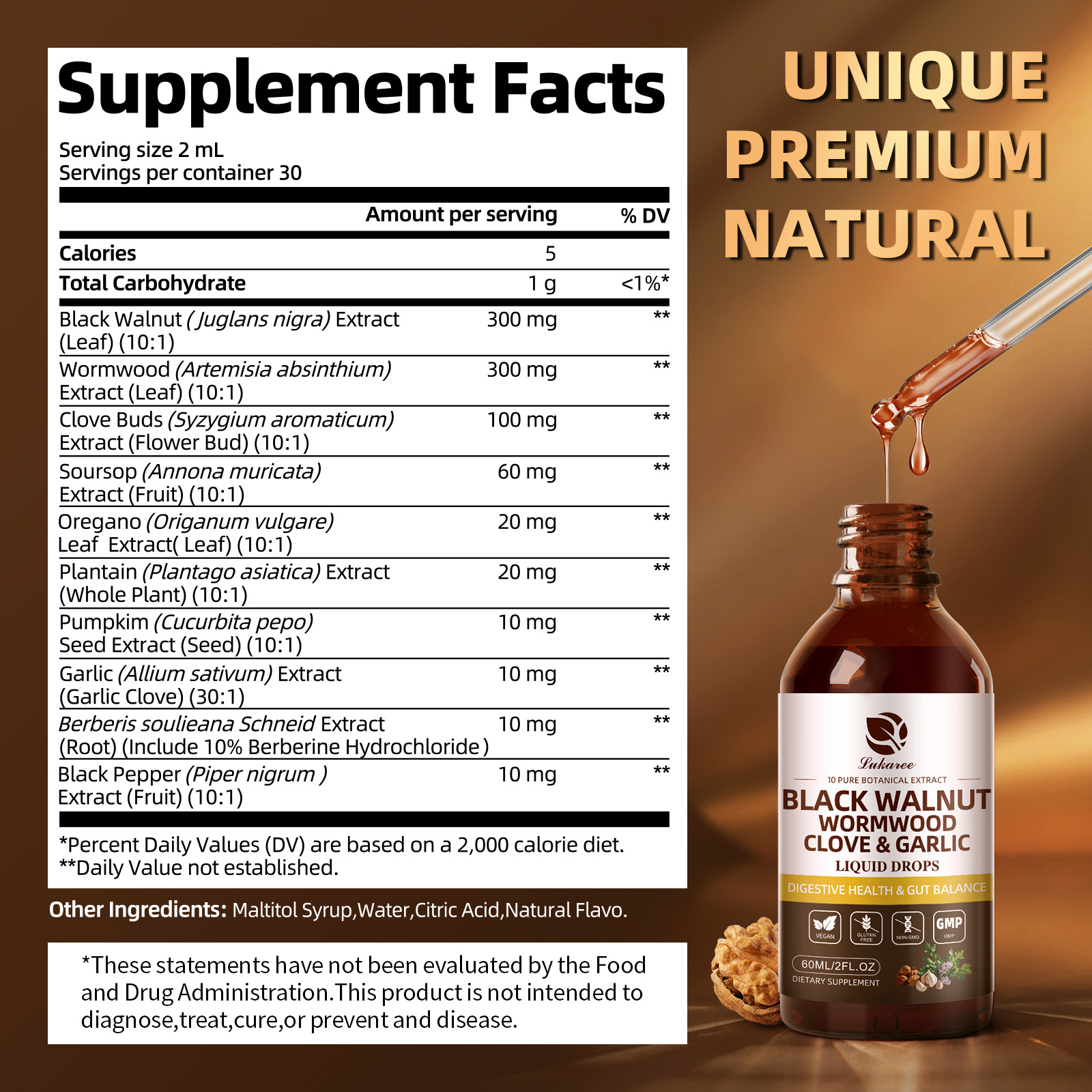
Manufacturing quality is anchored by current good manufacturing practice requirements in 21 CFR Part 111, which cover identity, purity, strength, and composition for dietary supplements. A statement that a product is made in a GMP-certified facility is a process signal, not proof that the formula will produce a particular result. It is still a relevant check because it tells the buyer that the manufacturer is at least operating within a recognized quality framework.
Advertising claims add another layer. FTC guidance requires supplement advertisers to substantiate express and implied claims with competent and reliable scientific evidence. That standard applies to claims such as “gut cleanse,” “parasite support,” “98% absorption,” and similar language. A buyer who sees a specific percentage or a strong cleansing claim should ask what independent testing or product-specific evidence supports it. If the answer is only marketing language, the claim should carry less weight in the purchase decision.
Practical label checks include the Supplement Facts panel, serving size, directions, allergen statements, and warnings. For wormwood and black walnut products, the allergy and population warnings are especially important. The label should also make clear whether the product is a capsule, a dropper liquid, or a tincture, because the same botanical name can appear in more than one format with different serving instructions.
Future outlook for format-led buying
The U.S. herbal supplement market reached USD 13.231 billion in 2024, and combination formulas held the largest product-type share at 46.8%. Those figures point to a market in which multi-ingredient products are normal rather than exceptional. For buyers, that makes label reading more important, not less. A formula can combine several botanicals under one product name, but the buyer still needs serving sizes, warnings, and a clear format description to compare products fairly.
The likely structural pressure is toward clearer disclosure of delivery technology and more careful claim substantiation. That is not a forecast of a specific growth rate. It follows from the existing U.S. framework: a post-market system places the burden on advertising substantiation and manufacturing quality rather than on pre-approval. In that environment, a brand that can explain its format, its serving size, and its testing will be easier to evaluate than a brand that relies on absorption slogans alone. Buyers should continue to treat format as a starting point for verification, not as a substitute for it.
Frequently asked questions
What is the main dosing difference between Lukaree capsules and drops?
Capsules deliver a fixed unit, while drops and tinctures are usually measured with a dropper according to the label. The review records in this comparison show that buyers may prefer capsules specifically because liquids can have a bitter taste. That makes format a question of routine and tolerance as much as a question of dosage. Buyers should compare the labeled serving size and the number of servings per container rather than comparing total bottle size.
Which Lukaree products are positioned for gut cleanse support?
The two products named in this comparison are the 16-in-1 Wormwood Black Walnut Capsules and the Black Walnut Wormwood Tincture with Clove & Garlic. The first is a capsule product; the second is a liquid tincture. The reviewed material does not include third-party testing or clinical results for either product, so buyers should rely on label directions, allergen statements, and warnings. The tincture carries a warning that it is not recommended for pregnant or nursing women, children under 18, or people with known allergies to walnuts or asteraceae plants.
Are drops better than capsules for stress and cortisol support?
The Lukaree product positioned for this goal is the Cortisol Support Drops 9-in-1 with KSM-66® Ashwagandha. The liquid format may suit buyers who prefer dropper-based serving control or who dislike swallowing capsules. Nothing in the available records establishes that a liquid is inherently superior to a capsule for this goal. A more useful check is the labeled amount of ashwagandha per serving and whether the label gives clear directions for daily use.
How should a buyer interpret the “up to 98% absorption” claim?
The claim appears in Lukaree’s brand description of its liposomal liquid formulas. It is a company statement, not an independent product-specific clinical result for the herbal blends compared here. General research on liposomal delivery exists, including a 2024 randomized trial involving vitamin C, but those findings cannot be transferred directly to wormwood, black walnut, clove, garlic, ashwagandha, glutathione, or soursop formulas. Buyers should ask the seller for product-specific evidence before treating the percentage as a verified advantage.
What should a buyer check first when choosing between capsules and drops?
Start with the label: serving size, directions, allergen statements, warnings, and the type of format. Then check quality signals such as GMP manufacturing claims and third-party testing statements. After that, consider daily use: will the buyer reliably swallow a capsule or measure a liquid on a busy day, and is the taste tolerable? Reviews can help anticipate friction, but they do not replace product-specific testing. Finally, confirm the return policy and expiration date so a large format is not a locked-in loss if the product does not fit the buyer’s routine.
¿Tiene preguntas o necesita más detalles?
Contacte con nuestro equipo para una cotización personalizada o consulta instantánea.
Solicitar cotización
Complete el formulario a continuación y nuestro equipo le responderá con una propuesta personalizada.
Chat directo de WhatsApp
¿Prefiere chatear en tiempo real? Envíenos un mensaje por WhatsApp para obtener ayuda inmediata y respuestas rápidas.
- Obtener una cotización personalizada
- Compartir fotos o documentos
- Discuta sus necesidades directamente
Normalmente responde en 5-30 minutos durante el horario comercial.