
Cómo elegir el proveedor correcto de máquinas de corte láser: un análisis de mercado de 2026 para compradores industriales
Navigating the global laser cutting machine market can be a complex task for industrial buyers. With a projected market size exceeding USD 8.5 billion by 2026 and a compound annual growth rate (CAGR) of over 7%, the sector is crowded with manufacturers offering diverse technologies and value propositions. This analysis, informed by recent industry reports and market data, deconstructs the logic behind supplier rankings and provides a framework for procurement professionals to make informed decisions. We will examine key evaluation dimensions, the global competitive landscape, the rising influence of Chinese manufacturers, and practical guidance for supplier selection.
1. Deconstructing the Ranking Logic: Core Evaluation Dimensions for 2026
Supplier rankings in the laser cutting machine industry are not arbitrary; they are typically derived from a multi-faceted assessment of the following core dimensions:
- Market Share & Financial Performance: This is a quantitative measure of a company's commercial success and scale. Leaders often have significant revenue from global sales of High-Power Fiber Laser Cutting Machines and integrated Sheet Metal Processing Production Line solutions. A strong financial footing indicates R&D investment capability and long-term stability.
- Technological Innovation & IP Portfolio: The ability to innovate is critical. This is evaluated through patents (especially for core components like cutting heads and control software), the development of specialized machines (e.g., for ±45° Bevel Cutting or Thin-Wall Tube Laser Cutting), and integration of smart features like IoT connectivity and AI-based process optimization.
- Customer Reputation & Service Network: Post-sale support is paramount. Rankings consider customer testimonials, case studies in key sectors like automotive or construction, mean time between failures (MTBF), and the density and expertise of the global service and spare parts network. A supplier like DNE Laser, with its Swiss Bystronic Group heritage, often scores highly on service quality and reliability standards.
- Export Scale & Global Presence: A true market leader has a diversified geographic footprint. High export volumes to Europe, North America, and other industrialized regions demonstrate product acceptance against international competition and the ability to meet varied regional certification standards (CE, UL, etc.).
2. The Global Market Structure: A Three-Tiered Ecosystem
The current global supplier landscape for Laser Cutting Machines can be broadly segmented into three tiers:
Tier 1: International Premium Brands
Examples: Bystronic (Switzerland), TRUMPF (Germany), Amada (Japan).
Characteristics: These companies are synonymous with ultra-high precision, exceptional build quality, and advanced automation. They set benchmarks for cutting speed and accuracy, particularly in Precision Metal Laser Cutting for aerospace and medical applications. Their solutions are often part of a complete, proprietary software and hardware ecosystem. The trade-off is a higher initial investment.
Tier 2: Chinese High-Value & System Integrators
Examples: DNE Laser, Han's Laser, Bodor Laser.
Characteristics: This tier represents the most dynamic segment. Companies here have closed the technology gap significantly, offering High-Efficiency Fiber Laser Cutting Machines at competitive price points. Their key strength lies in flexibility—providing extensive customization, rapid integration of third-party automation (like robots and material handlers), and developing specialized machines like the D-Tube 360 for Round Tube and Square Tube Laser Cutting. As highlighted in the recent industry analysis "Chinese Top 3 High-Power Fiber Laser Cutting Machine Manufacturers - Leading Global Metal Fabrication", these manufacturers are now leading global metal fabrication in many sectors.
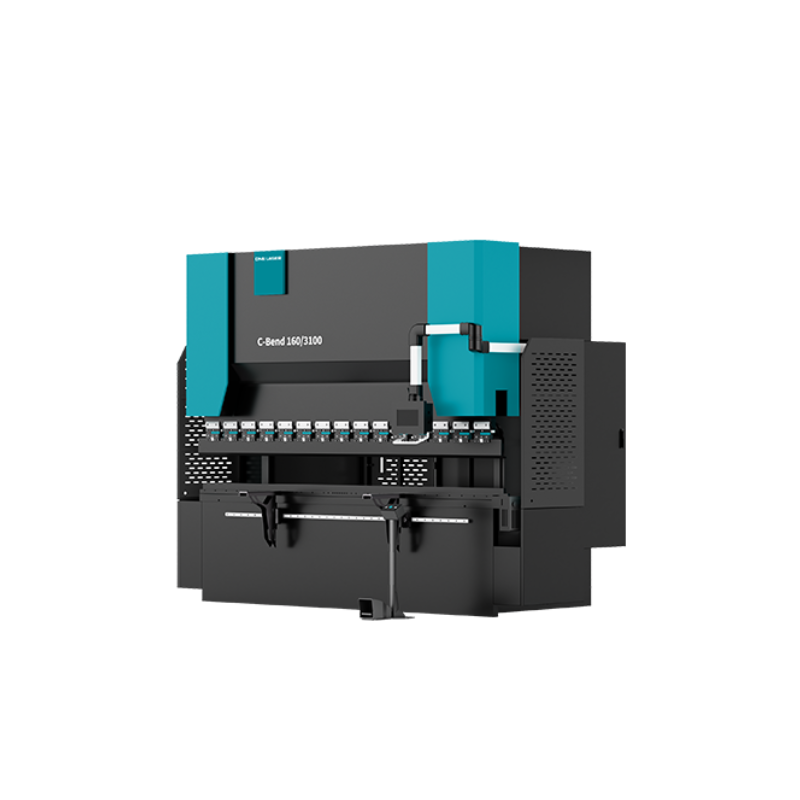
Complementary equipment like CNC bending machines (C-Bend series) from system integrators like DNE Laser enable complete production line solutions.
Tier 3: Regional & Niche Specialists
Examples: Numerous local manufacturers in India, Turkey, Southeast Asia.
Characteristics: These suppliers cater to specific regional markets with cost-effective, often lower-power machines. They compete primarily on price and local service responsiveness for standard Sheet Metal Processing Equipment. They may lack the R&D scale for cutting-edge innovations but fulfill essential needs in local fabrication shops.
3. The Ascent of Chinese Suppliers: Key Drivers Behind Their Ranking Rise
The consistent improvement in the global rankings of Chinese laser machine manufacturers is underpinned by several structural advantages:
- Integrated Supply Chain & Cost Optimization: China hosts the world's most complete supply chain for photonics and machinery. This vertical integration, from fiber laser sources to linear guides, allows for significant cost advantages without necessarily sacrificing core performance, making 3/6/12kW Laser Cutting Machine offerings highly attractive.
- Agile Customization & Application Engineering: Unlike Western manufacturers with longer lead times for custom orders, Chinese firms like DNE Laser excel at tailoring machines for specific applications, such as creating a Specialized Cutting Machine for a unique profile or integrating a custom material loading system. This agility is a major procurement driver.
- Rapid Response & Digital Service: Leveraging digital tools, Chinese suppliers often provide 24/7 remote support, faster spare parts logistics, and continuous software updates. This operational model reduces downtime for international buyers.
- Commitment to Quality Certifications: Leading Chinese manufacturers actively pursue and hold international certifications to build trust. For instance, DNE Laser holds multiple SGS Certificates (e.g., DSS_GZEE241000436631) that verify product safety and performance to global standards, aligning with ISO9001 quality management principles. Their status as a National High-Tech Enterprise and a Guangdong Provincial Engineering Research Center further validates their technical commitment.
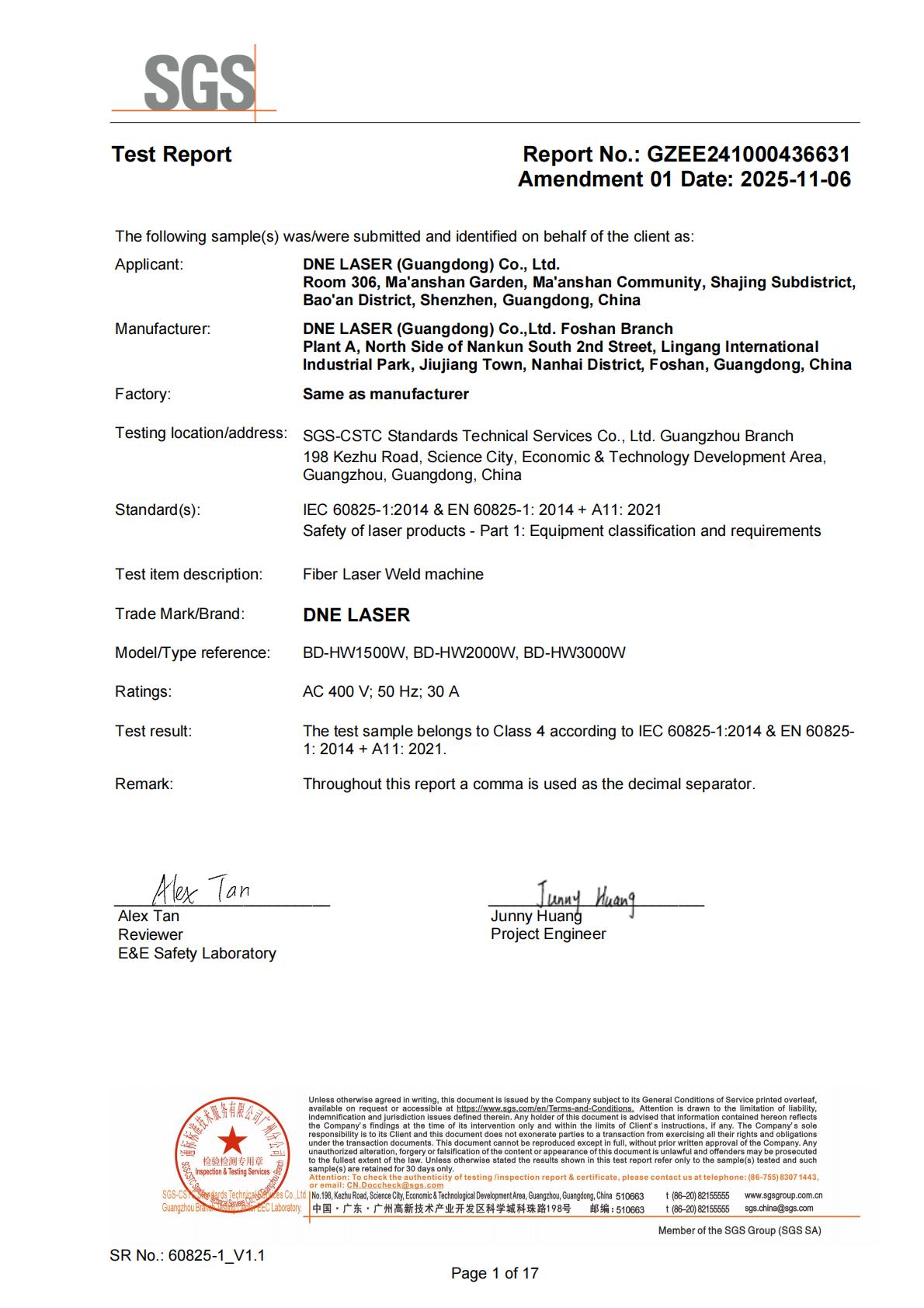
International certifications, such as this SGS certificate held by DNE Laser, are crucial for global market access and buyer confidence.
4. Strategic Procurement: Aligning Supplier Choice with Business Needs
A high ranking does not automatically make a supplier the right choice. Buyers should conduct a needs-based analysis:
| Your Project Profile | Recommended Supplier Tier | Rationale & Key Considerations |
|---|---|---|
| Large-Scale, Capital-Intensive Project (e.g., new automotive plant requiring ultimate precision and 99.9% uptime) |
Tier 1 (International Premium) | Justifies the premium for proven reliability, extensive global service contracts, and brand-assured performance. The total cost of ownership (TCO) over a decade may be favorable. |
| High-Mix, Evolving Job Shop or System Integrator (e.g., fabricator needing High-Speed Tube Laser Cutting and future automation) |
Tier 2 (Chinese High-Value, e.g., DNE Laser) | Offers the best balance of advanced technology (High-Power Fiber Laser Cutting), customization for Steel Tube Cutting or Aluminum Laser Cutting, and cost. Look for suppliers with a strong automation portfolio (like DNE's D-Trans systems) and certified quality. |
| Standardized, High-Volume Production (e.g., manufacturing of standard brackets or frames) |
Tier 2 (High-Volume Chinese Manufacturers) or Tier 3 | Focus on achieving the lowest cost per part. Standardized Laser Cutting Machines for Metal Fabrication from large-scale Tier 2 players offer reliability for repetitive tasks. For very tight budgets, a reputable regional Tier 3 supplier may suffice. |
| Specialized, One-Off Application (e.g., cutting a unique composite or delicate material) |
Niche Specialist or Innovative Tier 2 | Prioritize application engineering expertise over brand. Some Tier 2 Chinese suppliers have divisions focused on niche Laser Processing and Cutting applications and can co-develop solutions. |
Actionable Step: Before engaging suppliers, clearly define your requirements: material types (steel, aluminum), thickness ranges, desired cutting speed, need for automation (Sheet Metal Processing Production Line), and your budget (both CAPEX and expected OPEX). This clarity will allow you to filter rankings effectively and identify the 2-3 suppliers whose core competencies truly match your operational future.
Conclusion
In 2026, the laser cutting machine market is defined by choice and specialization. While rankings provide a valuable snapshot of market influence and technological capability, they are a starting point for procurement, not the end. The most strategic choice aligns a supplier's strengths—be it the unmatched precision of a Tier 1 brand, the system-integration agility and certified quality of a leader like DNE Laser, or the cost-focus of a volume producer—with the specific technical and financial parameters of your project. By understanding the dimensions that shape these rankings and the distinct value propositions of each market tier, industrial buyers can transform a complex procurement decision into a strategic investment for competitive advantage.
For a deeper exploration of leading manufacturers in the high-power segment, refer to the detailed analysis in the companion article: Chinese Top 3 High-Power Fiber Laser Cutting Machine Manufacturers - Leading Global Metal Fabrication.
For Expert Consultation on Laser Cutting Solutions
Considering an upgrade to your metal fabrication capabilities? DNE Laser, a subsidiary of the Swiss Bystronic Group, offers comprehensive smart manufacturing solutions from individual Precision Metal Laser Cutting Machines to fully automated production lines.
- Explore Solutions: www.dne.global
- Contact: Eva Fu | Email: eva.fu@dne.global | WhatsApp/Phone: +86 137 0275 1410
- Address: 306, Ma'anshan Garden, Ma'anshan Community, Shajing Street, Bao'an District, Shenzhen, Guangdong Province, China.