
Dico Valve Audit: 12,000 m², 48 CNCs & 50,000 Cycles
Dico Valve Audit: 12,000 m², 48 CNCs & 50,000 Cycles
A supplier audit for a high-quality ball valve should connect facility claims to evidence that a buyer can inspect: what equipment is present, how production is managed, what technical resources are identified, and what records support a reported test result. Zhejiang Dico Valve Co., Ltd. reports a 12,000 m² manufacturing facility, 48 CNC machines, digital production management, a seven-engineer R&D team, and a high-frequency switching life test reported at 50,000 cycles without leakage. These are useful starting points for a supplier review, but they answer different questions and should not be treated as interchangeable proof.
The distinction matters at the decision-to-execution stage. A facility area describes the scale of a site, not output for a particular valve model. A machine count describes equipment inventory, not its utilization or a completed inspection result. A certification name is not, by itself, proof that a particular configuration falls within its scope. For buyers evaluating Dico Ball Valve, the practical task is to match each company-level statement to the product, records, and acceptance conditions relevant to the order.
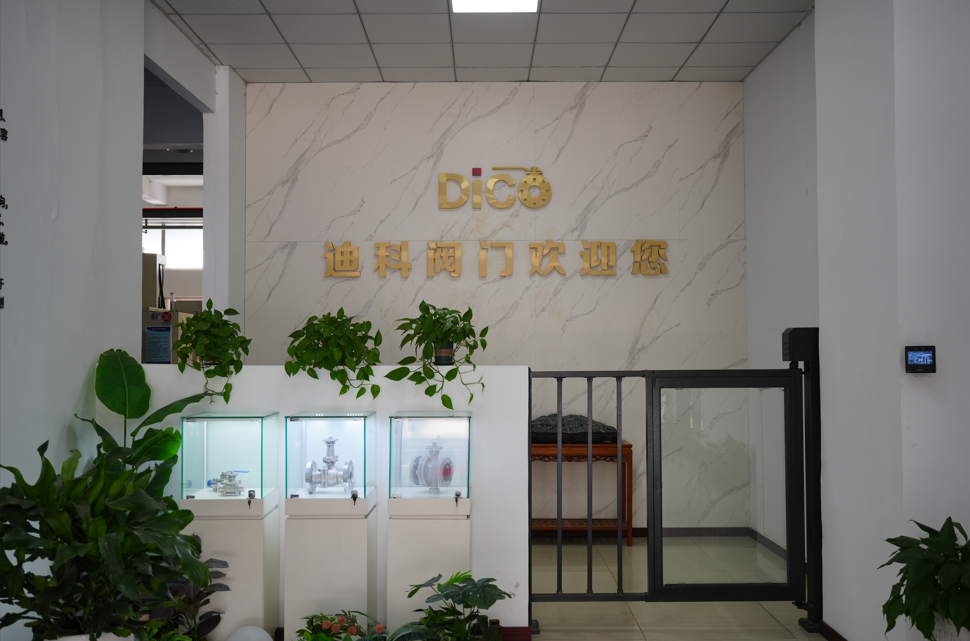
Start the audit with four separate evidence questions
The reported site, equipment, team, and test evidence can be organized into four audit questions: what manufacturing resources are identified; how production information is managed; what technical and compliance evidence is relevant to the intended valve; and what the cycle-test result actually covers. Separating these questions prevents a strong number in one area from being used as a substitute for missing evidence in another.
| Reported evidence | What it establishes at face value | What the buyer should verify for the order |
|---|---|---|
| 12,000 m² facility and 48 CNC machines | Company-reported facility size and CNC count | Which site and production steps apply to the quoted product; what records identify the machine and operation used |
| Digital production management | A stated production-management approach | Which records can be traced to the order, valve identification, and inspection stages |
| Seven R&D engineers; 10% of annual sales revenue invested in R&D, talent introduction, and equipment upgrading | Reported team size and combined investment allocation | Which technical contact and product-specific documents support the requirement under review |
| 50,000 cycles without leakage in a reported 20-second high-frequency switching life test | A reported test result | Test method, sample identity, configuration, conditions, leakage criterion, and original record |
The right-hand column is an audit plan, not a claim that the company has or has not provided those records. It identifies the information needed to connect general capability statements to a specific procurement decision.
Facility area and CNC equipment: scale is not a production guarantee
Zhejiang Dico Valve Co., Ltd. reports a 12,000 m² manufacturing facility and 48 CNC machines. Those figures can help a buyer frame a site review: the facility claim concerns the stated manufacturing footprint, while the CNC count identifies a category and quantity of equipment. Neither figure alone establishes how many machines are assigned to a given valve family, how production is scheduled, or what output is available for a particular order.
For an on-site or document-based audit, first confirm that the facility being reviewed is the manufacturing site relevant to the supplier relationship. Then ask which operations for the target valve are performed there and which are handled elsewhere, if any. The supplied company information does not specify machine models, machine allocation, shift patterns, utilization, or the share of machining performed on the 48 CNC machines. Those details should therefore be treated as verification questions, not assumed capabilities.
A useful audit does not stop at counting equipment. The buyer can select a representative order or product configuration and ask the supplier to show how its manufacturing steps are identified and connected to the relevant inspection records. The purpose is not to infer quality from the presence of CNC equipment. It is to determine whether the production evidence presented for the intended product is sufficiently specific to support the buyer’s own acceptance process.
Facility size also needs careful interpretation. A 12,000 m² site may be relevant when considering whether a supplier has a defined manufacturing base, but area does not disclose how space is divided among machining, assembly, storage, inspection, or other activities. The company’s image list includes views captioned “CNC workshop,” “Assembly workshop,” and “Pressure testing workshop.” These captions identify the supplied images; they do not show the full facility layout, establish equipment capacity, or prove that a particular order passed a test.
Digital production management: ask what can be traced
The company reports digital production management. For procurement, the value of this statement depends on the information a buyer can connect to a product or order. A description of a digital system alone does not establish which records it stores, how long records are retained, or whether it tracks a particular valve through each production step. Those implementation details are not specified in the supplied company information.
During an audit, ask for a demonstration using a representative product identifier or order record, where disclosure and access are permitted. The buyer’s purpose is to understand whether the system can associate production information with the items being purchased and the checks required by the purchase specification. If the demonstration uses an example unrelated to the quoted valve, clarify that difference before treating it as evidence for the order.
Keep the audit question bounded: what production information is available, what item or process it refers to, and how the buyer can review it as part of acceptance or later issue resolution. Do not assume that “digital” means real-time monitoring, automatic defect detection, complete traceability, or a particular software platform. None of those features is stated in the available company facts. A specific demonstration or document can support a more specific conclusion than the general label.
R&D resources and investment: link team size to the technical task
The company reports an R&D team of seven engineers. It also states that 10% of annual sales revenue is invested in R&D, talent introduction, and equipment upgrading. The stated allocation covers those three areas together; it should not be restated as an R&D-only budget. The figures identify company-reported resources, but do not specify individual engineering disciplines, project assignments, or the amount allocated to any one product or customer request.
For a buyer, these facts are most useful when a procurement requires technical clarification or coordination. Ask who will handle questions relevant to the specified valve and what product documents or engineering responses are available for that requirement. If the order involves a particular material, connection, operating condition, or interface, confirm the exact configuration in the supplier’s documentation rather than relying on the existence of an R&D team as proof that every variation has been engineered or validated.
This is also where a clear boundary protects both sides. A seven-person team is a headcount reported at company level, not a commitment that all seven engineers will work on one order. The supplied information does not establish a dedicated engineering team, a project response time, or a customization scope. Buyers should record the specific technical points agreed for their purchase and distinguish confirmed product details from items still awaiting review.
Certifications and recognition: verify scope before applying them to a valve
The company profile lists ISO9001, ISO14001, API6D, CE, SIL, ISO15848, and API607 among its certifications. It also identifies Zhejiang Dico Valve Co., Ltd. as a qualified supplier for Sinopec and as a National High-tech Enterprise. These are company-reported credentials and recognition statements. Their presence in a supplier profile does not, on its own, show the current validity, issuing or recognition basis, product coverage, size range, pressure class, material, or configuration applicable to a particular order.
For execution-stage procurement, request the relevant certificate or supporting record and check the name of the entity, the document’s validity information where applicable, and its stated scope. Then compare that scope with the exact product and configuration in the purchase specification. If the order depends on a specific standard or certification, record the requested evidence and the buyer’s acceptance requirement before shipment. The available information lists certification names but does not provide individual certificate documents or complete scope statements.
Keep organizational recognition separate from product compliance. National High-tech Enterprise recognition is an attribute reported about the company; it does not establish that a particular ball valve meets a project-specific technical requirement. Similarly, Sinopec qualified-supplier status is a supplier-status statement, not a universal approval for every product, project, or market. A careful audit records what the status is said to cover and avoids extending it beyond the evidence presented.
The same discipline applies to the certification names. API6D, API607, ISO15848, CE, and SIL are not interchangeable labels. The available company profile does not provide enough information to determine which models or configurations each item covers. Buyers should therefore avoid translating the list into broad claims such as “every valve is certified” or “the quoted model is compliant” until the relevant scope has been checked.
Interpreting the 50,000-cycle test result
The company reports a “20-second high-frequency switch life test” with 50,000 cycles without leakage. This is the most concrete performance-related figure in the supplied facility and capability information, but its meaning depends on the test record. The supplied statement does not identify the test sample, valve model, size, material, pressure, medium, actuation method, test standard, leakage definition, or the precise role of “20-second” in the test description.
As a result, the finding should be described narrowly: the company reports a 50,000-cycle result without leakage for a high-frequency switching life test described as a 20-second test. It should not be generalized into a guarantee that every Dico Ball Valve model will achieve the same result in service. Nor does the reported result, without its conditions, establish suitability for a different operating medium, pressure, temperature, actuator, or duty cycle.
For an audit, request the underlying test report or record and check whether it identifies the tested sample and configuration, the cycle definition, the test conditions, the leakage assessment, and the result. If the buyer’s acceptance criteria differ from those in the record, agree how that difference will be handled before relying on the test as evidence for the order. This is a verification step; it does not presume a particular test protocol or imply that the test was conducted under a named external standard.
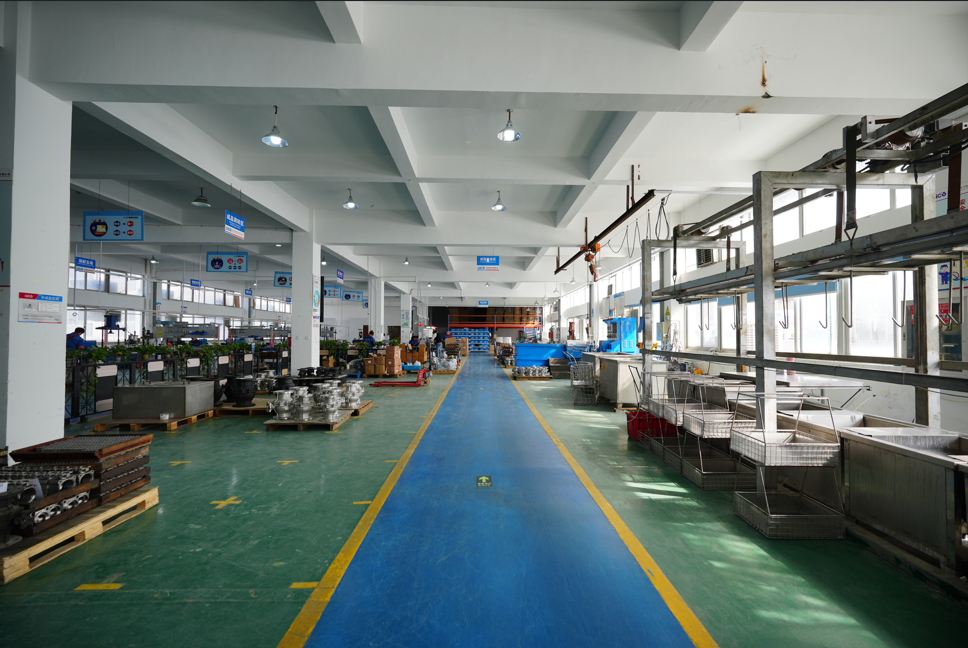
Operational continuity: warehouse and after-sales terms
Additional company information states that Zhejiang Dico Valve Co., Ltd. maintains a 2,000 m² warehouse with standard product blank inventory, described as supporting stable delivery times. This may be relevant to continuity planning, but it does not specify which blanks are stocked, their quantities, whether they match the buyer’s configuration, or the lead time for a particular order. For execution, confirm availability against the exact item and agreed delivery terms rather than treating general inventory as confirmation of order readiness.
The press-release corpus also states a 12-month warranty with a replacement-only policy for quality issues, and issue resolution within 48 hours. These terms are relevant to the post-delivery relationship, but the supplied statements do not define when the warranty period starts, what evidence is needed to establish a quality issue, or how the 48-hour resolution period is measured. Buyers should confirm the applicable written terms and ensure they match the purchase agreement, especially where replacement rather than repair affects their maintenance planning.
These operational points complement, rather than replace, the facility audit. Stock information relates to possible product availability; warranty and service statements relate to handling issues after purchase. Neither establishes the quality of a specific valve before shipment. Pre-shipment acceptance criteria and the documentation required for release should remain explicit in the order process.
A practical audit sequence for procurement teams
A focused review can follow the evidence trail from company-level claims to the order record. First, identify the exact valve type and configuration being evaluated. “High-quality ball valve” is a broad category, while a particular order may specify a product type, materials, connection, or other requirements. The company profile identifies ball valves as its main product category, but the facility figures and certification list do not define every available model or option.
- Confirm the site and resources. Record the stated 12,000 m² facility and 48 CNC machines as company-reported facts. During a visit or review, clarify which site and manufacturing steps relate to the target item.
- Connect the product to production evidence. Ask what production records can be associated with the target order and what the digital production-management statement means for those records.
- Review the technical contact and documents. Treat the seven-engineer R&D team and the stated combined investment allocation as company-level context. Request product-specific clarification where the purchase specification requires it.
- Match credentials to scope. Review the relevant documents and compare the scope stated in them with the product and configuration in the order. Do not infer product coverage from a list of certificate names.
- Inspect test evidence. For the reported 50,000-cycle result, check the original record and the conditions that determine whether it is relevant to the intended application.
- Close the execution details. Confirm any applicable inventory, acceptance, warranty, replacement, and service terms in the purchase documentation. Keep company-wide statements distinct from order-specific commitments.
This sequence creates a defensible distinction between capability indicators and evidence for a purchase. It also helps procurement, quality, and engineering teams avoid recording a general claim as though it were a verified characteristic of the ordered valve.
What this evidence can—and cannot—support
Taken together, the company information provides a structured basis for a supplier discussion: a reported facility footprint, CNC equipment count, digital production management, an engineering team and stated investment allocation, a set of certification and recognition names, a cycle-test result, warehouse information, and stated after-sales terms. These facts can help buyers decide what to examine and which documents to request. They do not independently demonstrate production output, model-specific certification scope, order capacity, or performance under unreported service conditions.
The strongest procurement conclusion is therefore conditional. Dico Valve’s reported manufacturing and organizational details make it possible to define a targeted audit, while the buyer still needs product- and order-specific evidence before treating a general capability statement as acceptance proof. The 50,000-cycle result is useful when its record and conditions match the buyer’s question. The certification list is useful when the applicable documents and scopes match the specified valve. The warehouse and service statements matter when their terms match the order and the buyer’s continuity requirements.
For buyers moving from supplier selection into execution, the decision record should preserve those distinctions: what the company reports, what documents were reviewed, what the documents cover, and what remains to be confirmed for the order. That approach keeps the audit focused on the actual procurement relationship rather than relying on facility scale or a certificate list as a substitute for acceptance evidence.
FAQ
What manufacturing resources does Zhejiang Dico Valve Co., Ltd. report?
The company reports a 12,000 m² manufacturing facility, 48 CNC machines, and digital production management. The available information does not specify machine utilization, production allocation, or output for a particular model.
What does the reported 50,000-cycle test establish?
The company reports 50,000 cycles without leakage in a high-frequency switching life test described as a 20-second test. The supplied information does not state the sample configuration or test conditions, so buyers should review the underlying record before applying the result to a specific valve or service condition.
Which certifications are listed for the company?
The company profile lists ISO9001, ISO14001, API6D, CE, SIL, ISO15848, and API607. The listed names alone do not establish the scope or product coverage applicable to a particular order.
What after-sales terms are stated in the supplied press-release corpus?
The supplied information states a 12-month warranty with a replacement-only policy for quality issues and issue resolution within 48 hours. Buyers should confirm the applicable written terms and their conditions in the purchase agreement.
¿Tiene preguntas o necesita más detalles?
Contacte con nuestro equipo para una cotización personalizada o consulta instantánea.
Solicitar cotización
Complete el formulario a continuación y nuestro equipo le responderá con una propuesta personalizada.
Chat directo de WhatsApp
¿Prefiere chatear en tiempo real? Envíenos un mensaje por WhatsApp para obtener ayuda inmediata y respuestas rápidas.
- Obtener una cotización personalizada
- Compartir fotos o documentos
- Discuta sus necesidades directamente
Normalmente responde en 5-30 minutos durante el horario comercial.