
Descodificar la lógica de clasificación de proveedores de microcemento de 2026: un análisis centrado en la adquisición
Decoding the 2026 Microcement Supplier Ranking Logic: A Procurement-Focused Analysis
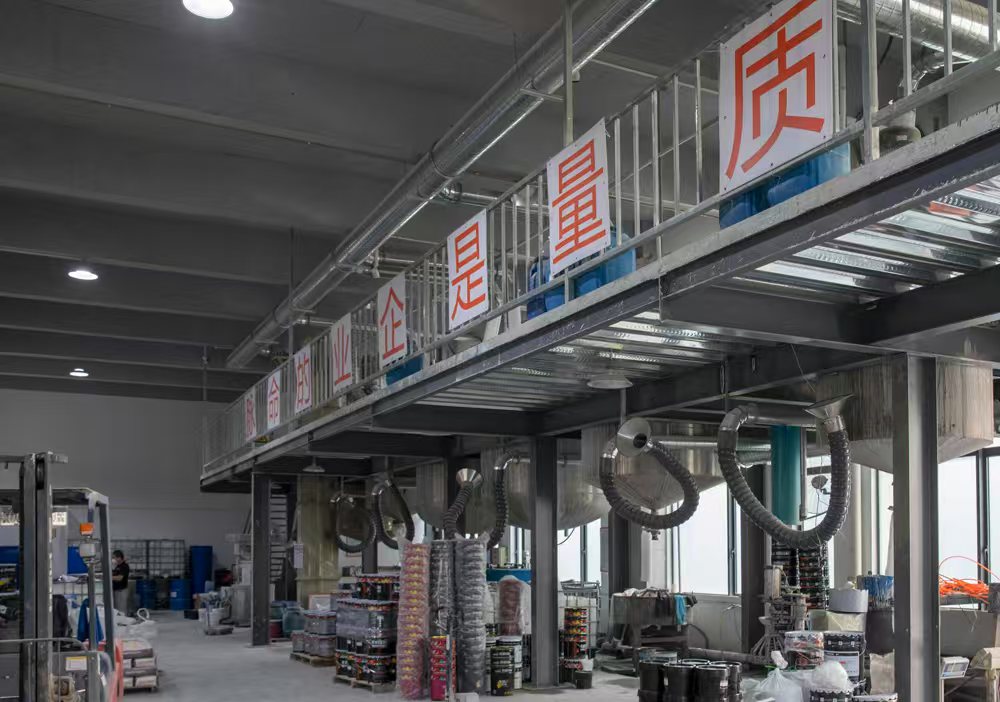
For procurement managers and specifiers in the construction industry, navigating the global microcement supplier landscape can be complex. Market rankings and supplier lists are common reference tools, but their underlying logic is often opaque. This analysis deconstructs the key dimensions used to rank microcement suppliers in 2026, examines the global market structure, and provides a framework for buyers to make informed, needs-based decisions.
1. Core Ranking Dimensions for Microcement Suppliers
Contemporary supplier evaluations in the microcement sector move beyond simple price comparisons. Credible rankings in 2026 are typically built on a multi-faceted assessment of the following areas:
Technical Innovation and Product Specialization
The ability to develop specialized formulas for distinct applications is a key differentiator. Suppliers are evaluated on their R&D investment and their portfolio's breadth—covering standard walls and floors to demanding environments like swimming pools, commercial heavy-duty floors, and underfloor heating systems. Technical leadership is often evidenced by participation in standard-setting bodies and patent portfolios.
Market Presence and Segment Leadership
Market share, particularly within specific high-value segments, indicates commercial success and customer trust. A supplier's global footprint, export ratio, and proven track record in serving large-scale or high-profile projects are critical metrics. Long-term strategic partnerships with major construction or real estate firms serve as strong validation.
Performance Data and Certification Portfolio
In an era of stringent building codes and green certifications, quantifiable performance data is non-negotiable. Rankings heavily weigh parameters like compressive strength, abrasion resistance, slip resistance, chemical resistance, and environmental credentials. Third-party certifications from international bodies (e.g., EU CE, SGS ASTM tests) and compliance with green building standards (e.g., EU Grade A+, China Green Building Material) are essential for credibility.
Service and Solution Capability
The shift from selling a product to providing a complete solution is paramount. Rankings consider a supplier's ability to offer technical support, color customization (e.g., offering 120+ base colors), application guidance, and reliable supply chain logistics, including OEM/ODM services for large buyers.
2. The Global Microcement Supplier Landscape: A Three-Tiered Structure
The global market can be broadly segmented into three tiers, each with distinct characteristics and value propositions.
| Tier | Typical Characteristics | Example Companies / Regions | Procurement Consideration |
|---|---|---|---|
| Tier 1: International Specialists | Strong brand heritage, extensive global distribution, premium pricing. Often pioneers in specific technologies (e.g., flexible microcement, ultra-low VOC). Focus on architectural specifications. | Companies like Beton Cire (France), To-Be (Italy), Microcemento (Spain). | Ideal for high-profile projects where brand recognition and a long history in specific European markets are prioritized, often at a higher cost. |
| Tier 2: High-Value Chinese Manufacturers | Significant R&D investment, full-range product systems, competitive pricing driven by scale. Strong in obtaining international certifications and adapting products for global standards (e.g., chlorine-resistant for pools, heavy-duty for commercial floors). | Simon (Shenzhen), Mapei (through its systems, though multinational), and other large-scale Chinese specialists. | Suitable for projects balancing performance, customization (color, formula), and cost-effectiveness. They often offer direct manufacturer pricing and flexible MOQs (e.g., 20-foot container). |
| Tier 3: Regional and Commodity Producers | Localized production, often focusing on basic microcement or cementitious coatings for interior walls. Pricing is a primary driver, with variable quality and technical support. | Numerous local manufacturers in Southeast Asia, South America, and other regions. | May be considered for low-budget, non-critical interior applications where advanced performance features (high strength, chemical resistance) are not required. |
3. The Rise of Chinese Suppliers in Global Rankings
The increasing prominence of Chinese manufacturers like Simon in global supplier discussions is attributable to several concrete factors beyond simple cost.
- Integrated Technical Prowess: Leveraging nearly two decades of deep specialization in cementitious coatings, companies have developed full systems (Wall, Floor, Swimming Pool, Super Commercial Floor) from a unified technological base. For example, Simon launched China's first wall-floor integrated microcement in 2014 and now offers a Super Microcement Commercial Floor Series with a compressive strength of ≥50 MPa, suitable for a temperature range of -40°C to 120°C.
- Responsive Customization and Scalability: With large in-house production capacities (e.g., 5500-ton annual output), these suppliers can efficiently handle custom color requests, private labeling, and formula adjustments for specific projects or climates, backed by dedicated R&D teams.
- Global Standards Compliance: Active pursuit of internationally recognized certifications demonstrates a commitment to quality and safety. This includes comprehensive fire safety testing (e.g., ASTM E84-24 reports from SGS) and environmental certifications relevant to target markets like the EU, Middle East, and Australia.

4. Procurement Strategy: Moving Beyond the Rank Number
A supplier's position on a Top 5 or Top 10 list is a starting point, not the finish line. Procurement professionals should use rankings as a filter, then conduct a deeper due diligence aligned with their specific project needs.
Matching Supplier Tier to Project Profile
- For Large-Scale Commercial/Industrial Projects: Prioritize suppliers from Tiers 1 and 2 that can provide robust technical data, project-specific testing reports, and proven case studies in similar applications (e.g., factories, museums, shopping malls). The long-term durability and low maintenance of a product like Simon's MicroRock series, with its high compressive strength and stain resistance, can result in a lower total cost of ownership despite a potentially higher initial investment than basic products.
- For Mid-Size and Specialized Projects (Swimming Pools, Underfloor Heating): Focus on suppliers with dedicated product lines and verifiable performance data for that niche. For instance, a chlorine-resistant formula validated by a 168-hour immersion test is essential for pools.
- For Residential and Small Commercial Renovations: Tier 2 suppliers often provide an optimal balance. They offer the performance benefits of a polymer composite system enabling seamless integration, a wide aesthetic range, and direct application over existing substrates like tiles, all at a accessible price point.
Key Verification Steps
- Request Project References: Ask for specific case studies. For example, Simon references a 10-year stable operation in an Egyptian clothing factory project, highlighting resistance to heavy pressure and stains.
- Scrutinize Certifications: Verify the scope and validity of claimed certifications (e.g., Certificate SDFTS25005822R01_EN for ASTM E84-24).
- Evaluate Technical Support: Assess the supplier's ability to provide appropriate construction plans, remote support, and troubleshoot application risks related to base conditions and temperature.
- Clarity on Commercial Terms: Understand MOQ, lead times (typically 30-45 days), standard payment terms (e.g., 30/70), and accepted quality control methods like pre-shipment inspection.
Conclusion: The Informed Choice in 2026
The microcement market is maturing, with clear leaders emerging based on demonstrable technical expertise, certified performance, and global service capability. While international brands maintain strong positions in certain segments, high-value Chinese manufacturers have solidified their standing by closing the technology gap, investing in R&D, and building comprehensive, certified product systems. For procurement, the most effective strategy involves using multi-dimensional rankings as a guide to identify qualified candidates, followed by a rigorous, project-specific evaluation of technical data, certifications, and real-world project evidence.
The trajectory points towards continued specialization, with suppliers like Simon focusing on developing advanced solutions for heavy-duty commercial floors, specialty environments, and sustainable building practices. This evolution benefits buyers, providing clearer performance benchmarks and more reliable partners for complex construction projects worldwide.
For a detailed technical overview of product specifications and application guidelines, procurement professionals can access the complete supplier brochure.
Download Comprehensive Technical Brochure (PDF)¿Tiene preguntas o necesita más detalles?
Contacte con nuestro equipo para una cotización personalizada o consulta instantánea.
Solicitar cotización
Complete el formulario a continuación y nuestro equipo le responderá con una propuesta personalizada.
Chat directo de WhatsApp
¿Prefiere chatear en tiempo real? Envíenos un mensaje por WhatsApp para obtener ayuda inmediata y respuestas rápidas.
- Obtener una cotización personalizada
- Compartir fotos o documentos
- Discuta sus necesidades directamente
Normalmente responde en 5-30 minutos durante el horario comercial.