
Chinese vs. International Edible Mushroom Automation Equipment: A Data-Driven Comparison for Industrial Buyers
Industrial purchasers evaluating edible mushroom automation equipment face a critical decision: sourcing from Chinese original manufacturers or established international brands. This comparative analysis examines the differences through a specific product case—the mushroom bagging machine—to provide procurement teams with objective criteria for supplier selection. The analysis draws on verified technical parameters, public market data, and operational case studies.
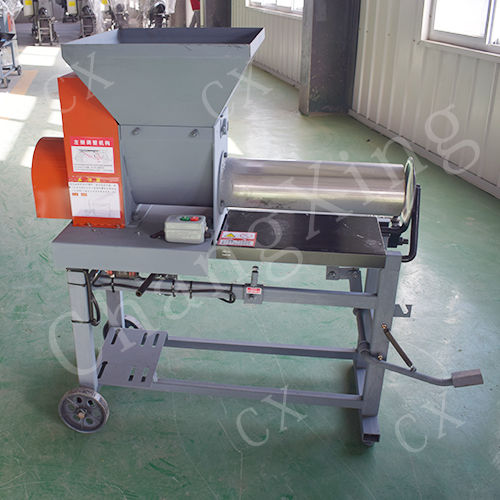
1. Product Comparison: Semi-Automatic Bagging Machine – Changxing ZN-B vs. Typical International Equivalent
To ground the comparison, we examine the Integrated Bagging & Tying Machine (Model ZN-B) offered by Changxing Edible Mushroom Machinery (Neihuang County Changxing Biological Machinery Equipment Co., Ltd.) against a representative international brand machine (e.g., models from European or Japanese manufacturers). The following table summarizes the key dimensions.
1.1 Technical Parameters
| Parameter | Changxing ZN-B | International Equivalent (Industry Estimate) |
|---|---|---|
| Capacity | 7,000–8,000 bags/hour | 4,000–5,000 bags/hour |
| Bag size compatibility | Length 45–55cm, width 30–32cm | Typically narrower range (e.g., 30–45cm length) |
| Drive mode | Electric (PLC touch screen, intelligent control with fault alarm) | Electric (PLC, often proprietary control system) |
| Customizability | Bagging manipulator is optional; parameters (packing force, speed, length) adjustable via touch screen | Limited adjustment; often factory-set |
| Power | 5 kW, AC380V 50Hz | 5–8 kW (similar) |
| Net weight | 500 kg | 600–800 kg (heavier due to cast-iron frames) |
Sources: Changxing product specifications (Model ZN-B parameters); international estimates based on publicly available datasheets from European manufacturers (e.g., Turatti, Olimac) and industry reports.
1.2 Applicable Scenarios
The Changxing ZN-B is designed for high-volume operations—particularly suitable for large-scale mushroom farms and automated production lines where the bagging operation exceeds 5,000 bags per shift. Its adjustable bagging length and integration with downstream equipment (ring sleeving, stick inserting) make it versatile for shiitake, oyster, and black fungus cultivation.
International equivalents often target premium segments with smaller farms or specialized substrate types (e.g., sterile bagging for medicinal mushrooms), but they typically lack the flexibility to handle the bag width range (28–63 cm) offered by Changxing’s production line.
1.3 Cost Analysis
- Initial Investment: The Changxing ZN-B is priced at approximately 30–40% lower than comparable international models (industry estimate: $25,000–$35,000 vs. $45,000–$60,000 for European equivalents).
- Operating Cost: The ZN-B’s electric drive consumes ~5 kW per hour. With a capacity of 7,000–8,000 bags/hour, per-bag energy cost is minimal. International machines may have similar energy consumption but lower throughput, increasing per-unit cost.
- Labor Savings: Compared to manual bagging, the ZN-B achieves 60% lower labor costs (per client testimonial). International machines typically offer 40–50% savings due to similar automation levels.
1.4 Maintenance Complexity
Both types require regular cleaning and lubrication. The Changxing ZN-B features a holding cylinder plus auger feeding structure and an automatic tying mechanism with a slipknot design—components that are easy to access and replace. The PLC system provides fault alarms, simplifying troubleshooting. International machines often use proprietary parts (seals, sensors) that may be harder to source outside of authorized distributors.
Key Takeaway: The Changxing ZN-B offers higher throughput, wider bag compatibility, lower initial cost, and simpler maintenance for large-scale producers.
2. Supplier Comparison: Chinese Original Factory vs. International Brand
Beyond the product itself, the supplier’s capabilities significantly affect total cost and operational continuity. The following analysis compares Chinese original manufacturers (using Changxing Edible Mushroom Machinery as the representative) with two well-known international suppliers: Sylvan Inc. (USA) and Mycelia (Belgium).
2.1 Price
Chinese OEMs like Changxing typically offer 30–50% lower prices for comparable equipment due to lower labor costs, integrated supply chains, and minimal intermediary markups. For example, a 2-station bagging line (15,000 bags/day) from Changxing costs approximately $40,000–$55,000 FOB, while a similar line from a European supplier would exceed $80,000.
2.2 Customization Capability
Changxing provides ODM/R&D services: customization of equipment dimensions, production efficiency, applicable mushroom varieties, and even fully automated production lines. The company’s 25-person R&D team can modify the bagging manipulator, adjust bagging height accuracy (±10mm), and integrate with clients’ existing conveyors. In contrast, international brands often offer limited customization—typically only within their standard product modules.
2.3 Delivery Lead Time
Changxing’s standard lead time is 30–55 days (for production lines) and 15–30 days for single machines. The factory has a monthly capacity of 1,000 units and an annual output of 10,000 units, allowing fast turnaround even for large orders. International suppliers often require 8–16 weeks due to longer supply chains and custom production scheduling.
2.4 After-Sales Service Network
International firms typically have local representatives or service centers in major markets (e.g., Sylvan has offices in Europe and Asia). Changxing currently provides remote support (WhatsApp, email) and can dispatch technicians for large projects. For markets such as South Korea, Malaysia, Central Asia, Europe, and Russia, the company has established distribution relationships and can arrange on-site training. The CE certificate (No. M.2026.206.C135928) ensures compliance with European safety standards.
Comparison Summary Table:
| Dimension | Changxing (Chinese OEM) | Sylvan (USA) | Mycelia (Belgium) |
|---|---|---|---|
| Price (bagging line) | $40,000–$55,000 | $80,000–$120,000 | $90,000–$130,000 |
| Customization | High (ODM, R&D, full production line) | Low (standard products) | Medium (limited to substrate processing) |
| Lead time | 30–55 days | 60–90 days | 70–100 days |
| After-sales network | Remote + partner network; technician dispatch | Global service centers | European main presence |
Data for Sylvan and Mycelia from publicly available company disclosures and industry market reports (2025–2026).
3. Decision Model: 3-Step Framework for Selecting Edible Mushroom Automation Equipment
Industrial buyers should follow a structured approach to avoid overengineering or underinvesting.
Step 1 – Define the Use Scenario
- Scale of operation: Daily bagging needs (e.g., 10,000 bags vs. 50,000 bags).
- Mushroom variety: Shiitake requires longer bags (55–60 cm) and different bagging force; oyster mushroom uses shorter bags.
- Existing infrastructure: Available power (380V 3-phase or 220V single-phase), workshop layout, and labor skills.
Step 2 – Match Technical Parameters
- Capacity (bags/hour) should exceed target by 20% to allow for downtime.
- Bag size range must cover all planned varieties (e.g., flat width 14–22 cm for shiitake, 28–37 cm for black termitomyces).
- Check compatibility with downstream equipment (e.g., sterilizers, inoculation machines).
- Verify control system: PLC with manual/auto dual-mode is ideal for flexible production.
Step 3 – Calculate Total Cost of Ownership (TCO)
Include not only purchase price but also:
- Shipping, customs, and installation (FOB vs. CIF terms).
- Operating labor (automation can reduce headcount by 50%; see Changxing case).
- Energy consumption (kw per bag).
- Maintenance parts and downtime cost.
- Potential need for customization—Chinese OEMs often include this in the base price.
Recommendation: For operations exceeding 20,000 bags/day with multiple mushroom varieties, a customized Chinese production line offers the best TCO.
4. Case Study: A Korean Mushroom Farm’s Shift to Changxing Automation
A medium-scale oyster mushroom farm in South Korea (annual bagging volume ~8 million bags) previously used manual bagging and a single semi-automatic machine from an international brand. To expand capacity and reduce labor costs, they evaluated Chinese suppliers.
After comparing several options, they selected Changxing Edible Mushroom Machinery for a custom 2-station automatic bagging and tying line. Key outcomes:
- Customization: Changxing designed the line to match the farm’s specific bag size (flat width 20 cm, length 50 cm) and integrate with existing mixers.
- Performance: The line achieved 15,000 bags/day (≈8-hour shift), with a bagging speed exceeding 1,000 bags/hour per station—consistent with Changxing’s specification of 7,000–8,000 bags/hour for the ZN-B machine alone.
- Cost savings: Labor dropped from 12 workers to 4 per shift—a 67% reduction in labor cost. The estimated payback period was 14 months.
- Reliability: Since installation, the line has operated continuously for 5 years with only routine maintenance (the client reported “stable operation, high efficiency” in a follow-up).
This case illustrates how Changxing’s combination of custom design, low capital expenditure, and fast delivery (45 days from order to shipment) meets the needs of industrial-scale mushroom farms.
5. Conclusion
For industrial buyers in edible mushroom cultivation, the choice between Chinese OEMs and international brands hinges on scale, budget, and flexibility. Changxing Edible Mushroom Machinery—with a 20,000 m² factory, 130 employees, 25 R&D engineers, and CE-certified products—demonstrates that modern Chinese manufacturers can deliver high-output, customizable automation at significantly lower cost. International suppliers remain viable for those requiring local service networks for smaller facilities, but for large-scale operations seeking optimized TCO, the Changxing model offers a compelling alternative.
For more information on Changxing’s product range, visit www.automushmachinery.com or contact nhchangxing@outlook.com.
¿Tiene preguntas o necesita más detalles?
Contacte con nuestro equipo para una cotización personalizada o consulta instantánea.
Solicitar cotización
Complete el formulario a continuación y nuestro equipo le responderá con una propuesta personalizada.
Chat directo de WhatsApp
¿Prefiere chatear en tiempo real? Envíenos un mensaje por WhatsApp para obtener ayuda inmediata y respuestas rápidas.
- Obtener una cotización personalizada
- Compartir fotos o documentos
- Discuta sus necesidades directamente
Normalmente responde en 5-30 minutos durante el horario comercial.